10 Nerdy TV Shows That Shaped Modern Fandoms
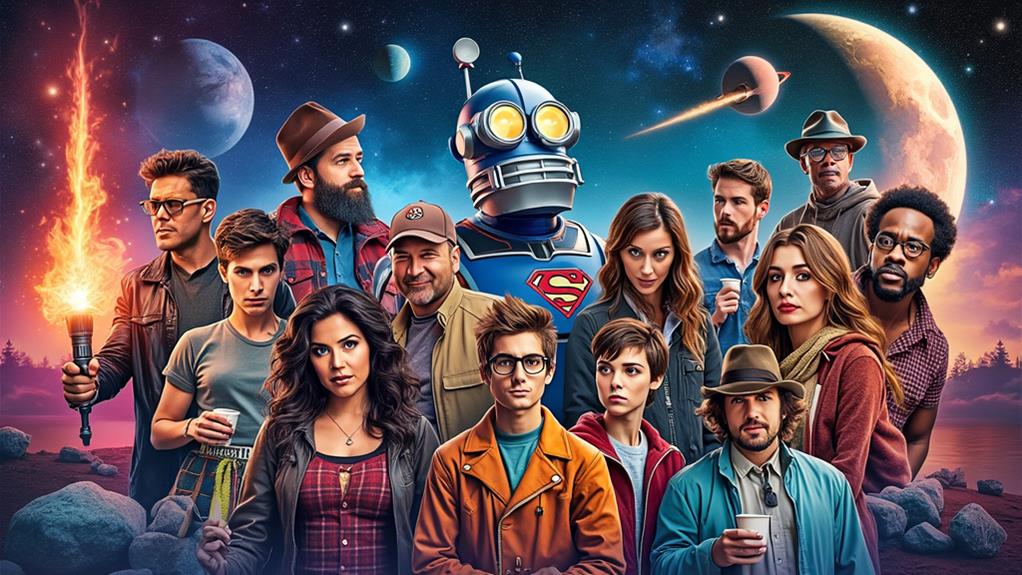
You might not realize just how much certain TV shows have influenced today's fandom culture. From the galaxy-spanning saga of *Star Trek* to the time-traveling adventures of *Doctor Who*, these series have done more than entertain—they've created communities and shaped how fans interact. Think about how *Rick and Morty's* intricate plots challenge viewers or how *The Mandalorian* brings fresh stories to a beloved universe. Each show on this list has a unique way of engaging audiences, and their impact extends beyond the screen. Curious to see which other series made the cut and why they matter?
Star Wars Franchise
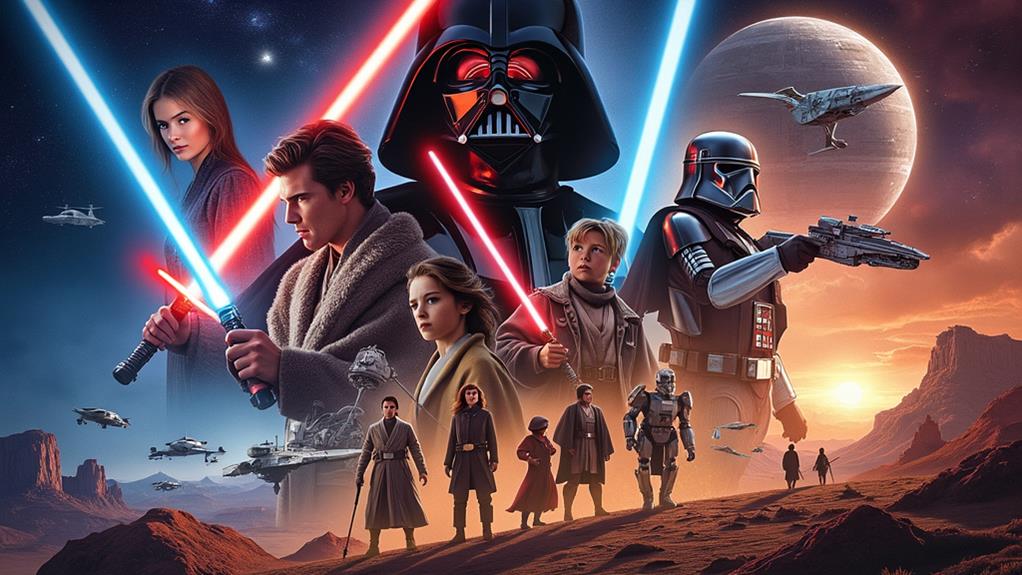
Debuting in 1977, the Star Wars franchise has become a cornerstone of modern geek culture, captivating audiences with its epic narrative of good versus evil. From the first encounter with iconic characters like Luke Skywalker, Darth Vader, and Princess Leia, you're drawn into a universe that skillfully blends heroism, redemption, and rebellion. These characters have not only become cultural icons but have also set a high standard for character development in science fiction.
Star Wars' groundbreaking artistic design and world-building have elevated visual storytelling, influencing countless other sci-fi works. Watching a Star Wars film or TV series means immersing yourself in a meticulously crafted universe. The franchise's expansion into animated series, books, comics, and video games offers endless avenues for exploration, further enriching its lore.
The successful launch of series like "The Mandalorian" has expanded the Star Wars universe, introducing new characters such as "The Child" (Baby Yoda) and captivating a new generation of fans. Star Wars continues to shape geek culture and remains a pivotal part of the sci-fi genre.
Back to the Future
Back to the Future premiered in 1985, captivating audiences with its inventive time-travel storyline and memorable characters, Marty McFly and Doc Brown. This science fiction classic, featuring iconic performances by Michael J. Fox and Christopher Lloyd, became a staple of pop culture. The DeLorean time machine, central to the plot, not only enthralled fans but also left a lasting impression on both geek culture and automotive design.
The franchise expanded with two successful sequels, *Back to the Future Part II* and *Back to the Future Part III*, which delved into original concepts like alternate timelines and the consequences of time travel. These ideas have influenced numerous works across various media, solidifying the franchise's impact on science fiction and popular culture.
The enduring appeal of *Back to the Future* has fostered a dedicated fan base, extensive merchandise, and a stage musical adaptation that premiered in 2020. Its influence is evident in modern shows like *Stranger Things*, underscoring its significant role in shaping contemporary fandoms. Undoubtedly, this franchise remains a cornerstone of modern pop culture.
Doctor Who
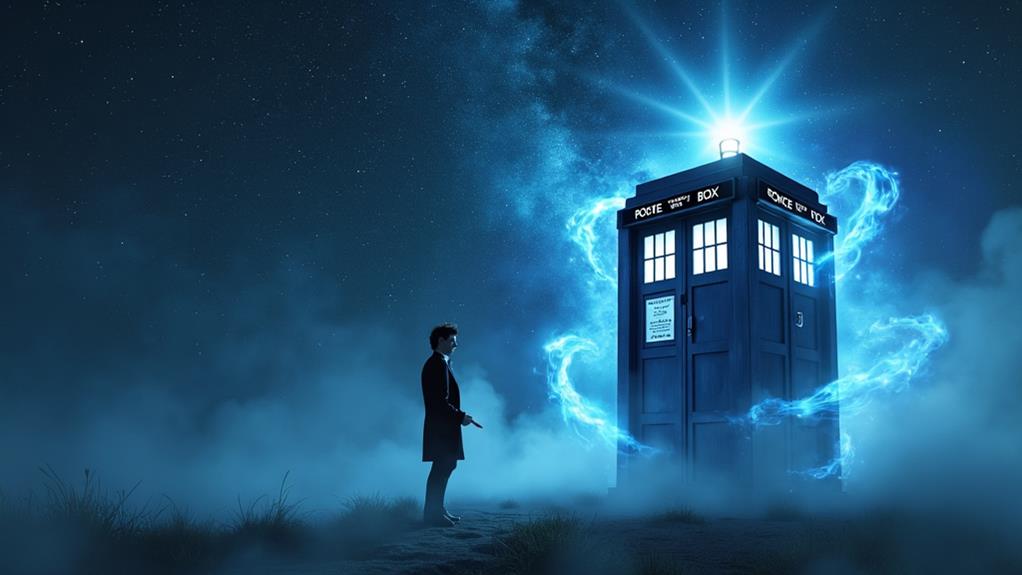
Let's shift from the adventures of Marty McFly and Doc Brown to the vast universe of *Doctor Who*. Premiering in 1963, *Doctor Who* has captivated audiences with its innovative storytelling. At its core is the Doctor, a Time Lord traveling through time and space in the TARDIS, a time machine disguised as a British police box. This unique premise allows for endless adventures, exploring themes like morality, identity, and the consequences of time travel.
A standout feature of the show is the Doctor's ability to regenerate, allowing different actors to portray the character. From Tom Baker to David Tennant, each actor brings their own interpretation, keeping the series fresh and engaging. The show has also introduced iconic villains like the Daleks and Cybermen, adding layers of tension and excitement.
*Doctor Who*'s cultural impact is immense. It has influenced countless sci-fi narratives and become a cornerstone of British television. The 2005 revival brought the series to a new generation, expanding its global reach and solidifying its place in modern fandom. Whovians, the dedicated fanbase, engage deeply with the show's intricate plots and complex characters, making *Doctor Who* a timeless staple in the world of science fiction.
The Avengers
In 2012, Marvel's *The Avengers* transformed the superhero genre with its ensemble cast and interconnected storytelling. Directed by Joss Whedon, this film marked a pivotal moment in the Marvel Cinematic Universe (MCU) by bringing together iconic characters like Iron Man, Thor, and Captain America. It wasn't just another superhero film; it was a groundbreaking success that grossed over $1.5 billion worldwide, becoming the third highest-grossing film of all time at its release.
*The Avengers* effectively blended action, adventure, and humor, setting a new standard for superhero films and influencing the tone and style of subsequent MCU entries. This success led to a series of interconnected films, culminating in record-breaking crossover events like *Avengers: Infinity War* (2018) and *Avengers: Endgame* (2019), further solidifying its cultural impact.
The enduring popularity of *The Avengers* has cultivated a vast and dedicated fanbase, engaging in extensive merchandise, fan theories, and conventions celebrating the characters and stories. The cultural impact of the MCU is undeniable, beginning with the iconic assembly of *The Avengers*.
Harry Potter

The Harry Potter series is a hallmark of magical storytelling, captivating millions with its themes of bravery and friendship. Its devoted fan base has fostered a vibrant subculture, complete with conventions, fan fiction, and online communities that keep the magic alive. Whether through books, films, or theme parks, Harry Potter continues to shape modern fandoms in profound ways.
Immersive Magical Universe
Often hailed as a cornerstone of modern fantasy, the Harry Potter franchise has captivated millions with its richly detailed magical universe. This world, teeming with supernatural beings, enchanted objects, and spellbinding adventures, centers around Hogwarts School of Witchcraft and Wizardry. It serves as the backdrop for unforgettable stories of friendship and the eternal struggle between good and evil.
The Harry Potter fandom is among the most dedicated and active communities in the world. Fans have found countless ways to keep the magic alive, from fan fiction to cosplay. Here are some highlights that make this fandom so special:
- Fan Engagement: The community thrives on platforms like LeakyCon, where fans gather to celebrate their shared love for the magical world.
- Expanded Universe: Beyond the original books, the franchise has grown to include films, a stage play, and Wizarding World theme parks.
- Cultural Impact: With over 500 million copies sold, Harry Potter has left an indelible mark on modern pop culture.
- New Stories: The "Fantastic Beasts" series continues to expand the universe with fresh characters and adventures.
- Creative Expression: Fan fiction and art keep the stories and characters evolving.
In this community, you're not just a reader or viewer; you're part of a lively, ever-growing magical world.
Enduring Themes of Bravery
The magic of the Harry Potter universe extends beyond spells and enchantments to the enduring themes of bravery that resonate deeply with fans. Throughout the series, Harry and his friends embark on a journey filled with challenges that test their courage. Harry's repeated confrontations with Voldemort epitomize true bravery, as he consistently stands up for what is right despite overwhelming fear and adversity.
Bravery in the Harry Potter series isn't confined to grand gestures. It is also evident in everyday acts of loyalty and friendship. Characters like Hermione Granger and Ron Weasley consistently support Harry, proving that courage often involves standing together. Their unwavering solidarity underscores that bravery can manifest through teamwork and mutual support.
Neville Longbottom's transformation from a timid boy to a courageous hero further enriches this theme. His journey illustrates that bravery isn't innate but can be discovered and nurtured. This evolution encourages fans to find their inner strength, no matter their starting point.
The Harry Potter series has left a lasting impact, inspiring countless discussions and communities centered on its themes of bravery, friendship, and moral choices, shaping modern fandoms in profound ways.
Community of Dedicated Fans
Harry Potter fans, often called "Potterheads," have cultivated one of the most passionate and engaged communities in modern fandom. This vibrant community is fueled by the success of J.K. Rowling's novels, which have sold over 500 million copies worldwide, making Harry Potter one of the best-selling book series in history. As a Potterhead, you've likely engaged in diverse forms of media, such as fan fiction, fan art, and cosplay, contributing to a rich online community and numerous conventions celebrating the series.
Consider these highlights of the Potterhead community:
- Fan-driven events: Quidditch matches and trivia competitions showcase your dedication to the magical universe.
- Wizarding World theme parks: Locations in Orlando and Hollywood attract millions, further solidifying the franchise's cultural impact.
- Active online presence: You engage in discussions, share merchandise, and stay updated on new adaptations like the Fantastic Beasts films.
- Sense of belonging: The fandom fosters a lifelong sense of identity and connection among fans.
- Creative contributions: Fan fiction and fan art keep the magical world alive and constantly evolving.
Your commitment has turned Harry Potter into a cultural phenomenon that shows no signs of fading, continuously enriching the fandom and community.
X-Men
Debuting in 1992, the *X-Men* animated series quickly became a cultural phenomenon, captivating audiences with its intricate storytelling and multifaceted characters. This TV series was more than just another cartoon; it was a pioneering show that introduced superhero narratives to a broader audience, setting the stage for the comic book movies that would later dominate the box office. Through its character-driven narratives, viewers became acquainted with iconic mutants like Wolverine, Cyclops, and Storm, whose personal struggles and victories deeply resonated with the audience.
The series addressed real-world social issues such as acceptance, identity, and prejudice, making it profoundly relatable. This approach fostered a dedicated following that remains passionate even today. By tackling these complex themes, the show not only entertained but also educated and inspired, reflecting the societal challenges of its time.
*X-Men* played a crucial role in shaping the landscape for future superhero adaptations, influencing both TV series and films in the 2000s and beyond. The franchise's legacy continues to thrive with new adaptations and spin-offs, demonstrating its enduring impact on pop culture and modern fandoms.
Rick and Morty
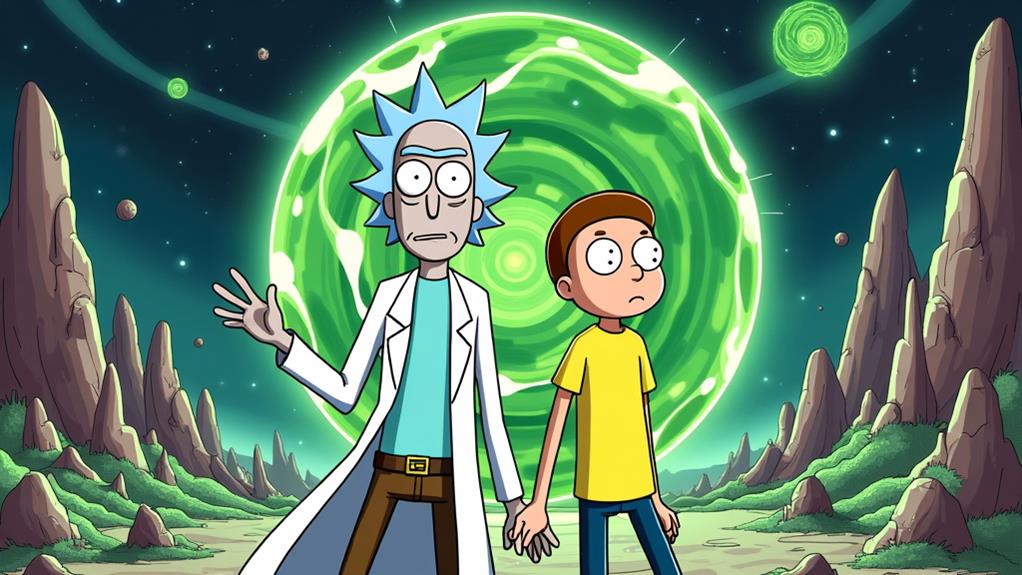
Watching *Rick and Morty* immediately immerses you in its dark humor and groundbreaking storytelling. The series masterfully fuses science fiction with existential themes, offering a unique narrative that challenges perceptions. This innovative method has captivated a vast audience, solidifying its status in contemporary fandom.
Dark Humor and Sci-Fi
Rick and Morty, an animated series that premiered in 2013, masterfully blends dark humor with intricate sci-fi narratives, creating a unique viewing experience. The chaotic adventures of Rick Sanchez, a brilliant but unhinged scientist, and his impressionable grandson, Morty Smith, span diverse dimensions and timelines. The show's dark humor and complex plotlines explore existential themes, offering a mix of absurd comedy and deep philosophical questions.
What makes Rick and Morty stand out are its:
- Dark Humor: The comedy often delves into the macabre, making you laugh while questioning your own morals.
- Innovative Sci-Fi Concepts: Episodes introduce groundbreaking sci-fi elements, from alternate realities to mind-bending technologies.
- Existential Themes: The show tackles profound questions about the meaning of life, identity, and the universe, often leaving you pondering long after the episode ends.
- Complex Plotlines: Episodes are filled with intricate story arcs and clever twists, keeping you engaged and eager for more.
- Social Commentary: The show critiques societal norms and behaviors, providing a satirical look at modern life.
Innovative Storytelling Techniques
*Rick and Morty* is often celebrated for its innovative storytelling, employing a multi-layered narrative structure that seamlessly integrates episodic adventures with overarching themes. This complexity allows viewers to enjoy standalone episodes while delving deeper into character development across seasons.
The show's inventive approach features non-linear storytelling and unexpected plot twists, keeping viewers constantly engaged. The creators' willingness to defy traditional narrative conventions in animated series results in a unique viewing experience. By blending genres such as science fiction, horror, and dark comedy, each episode offers something fresh and engaging.
Episodes often explore philosophical themes, examining existentialism and the nature of reality. This prompts viewers to think critically while being entertained by the show's humor and absurdity. Rich cultural references and intertextuality create a shared language among fans, transforming the show into a cultural phenomenon.
Here's a quick breakdown of the show's key storytelling elements:
| Element | Description | Impact on Viewers |
|---|---|---|
| Narrative Complexity | Multi-layered stories with deep character development | Engages viewers on multiple levels |
| Genre Blending | Mix of sci-fi, horror, and dark comedy | Appeals to a diverse audience |
| Philosophical Themes | Examines existentialism and reality concepts | Encourages critical thinking |
| Inventive Structure | Non-linear storytelling and unexpected plot twists | Keeps the audience guessing |
*Rick and Morty*'s groundbreaking storytelling techniques have set a high bar for future animated series, shaping modern fandoms and influencing contemporary animation.
Sherlock
Diving into the world of *Sherlock*, you'll discover a modern twist on Arthur Conan Doyle's classic detective tales that has left a lasting mark on contemporary fandoms. This adaptation, which premiered in 2010, stars Benedict Cumberbatch as Sherlock Holmes and Martin Freeman as Dr. John Watson. The show cleverly reimagines the iconic detective stories with contemporary settings and innovative storytelling techniques, earning critical acclaim and a devoted fanbase.
Sherlock Holmes' unique perspective, enriched with visual and textual clues, offers a gripping mystery experience that keeps viewers on the edge of their seats. Over its four-season run, culminating in 2017, *Sherlock* received numerous awards, including BAFTAs and an Emmy for Cumberbatch's outstanding performance.
Fans engage in dynamic discussions, elaborate fan theories, and create intricate fan art. This engagement has significantly influenced modern TV fandoms, demonstrating the show's impact on popular culture.
- Gripping mysteries set in modern-day London
- Innovative use of visual and textual storytelling
- Benedict Cumberbatch's award-winning portrayal of Sherlock Holmes
- A dedicated fanbase driving discussions and fan creations
- Resurgence of interest in original detective stories
*Sherlock*'s legacy continues to shape the landscape of detective genres and modern adaptations.
The Mandalorian
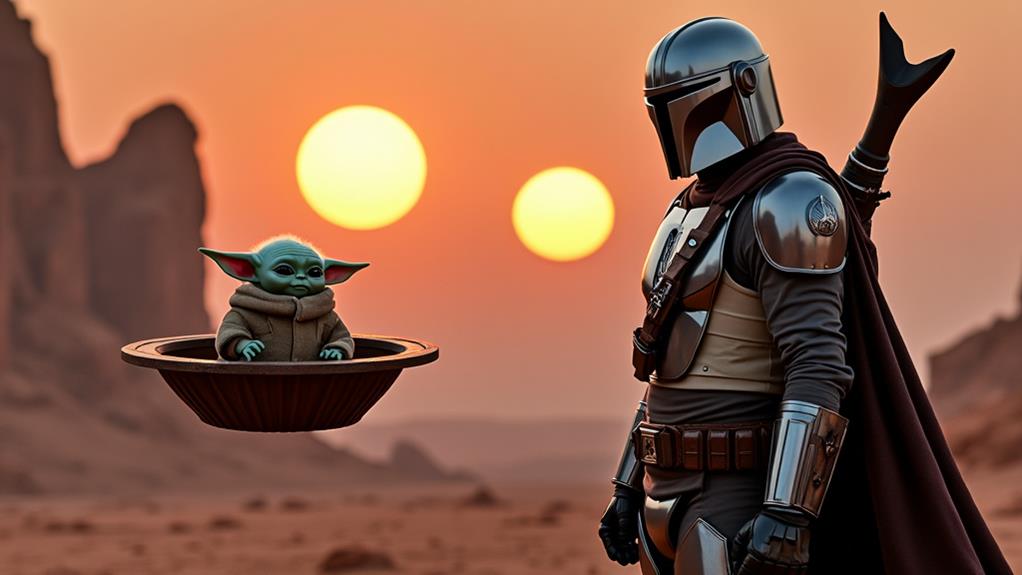
*The Mandalorian* has captivated audiences with its fresh exploration of the Star Wars universe. Premiering in November 2019 on Disney+, the series is set after the fall of the Empire and follows a lone bounty hunter traversing the galaxy's outer reaches. Created by Jon Favreau, the show has been praised for its high production quality, innovative storytelling, and unique blend of western and samurai influences, earning multiple Primetime Emmy Awards.
The series quickly became a cultural phenomenon, largely due to the introduction of "The Child," affectionately known as Baby Yoda. This character alone sparked immense merchandise sales and endless online discussions. *The Mandalorian* not only expanded the Star Wars lore with new characters and themes of honor, family, and loyalty, but also played a significant role in the success of Disney+. Its initial season became one of the most-watched series on the platform, attracting millions of subscribers and cementing its place in modern fandom.
In essence, *The Mandalorian* has redefined what a Star Wars story can be, blending nostalgia with innovative storytelling that deeply resonates with fans.
The Witcher
The Witcher immerses you in a world where rich storytelling and deep character development take center stage. The series' intricate narrative and morally complex characters, such as Geralt, Yennefer, and Ciri, keep you engaged. This focus on character depth and a multifaceted plot has captivated fans, fostering a loyal and passionate community.
Rich Storytelling Depth
Amidst a sea of modern television, *The Witcher* distinguishes itself through its rich storytelling depth, anchored by Andrzej Sapkowski's novels. The intricate lore and complex characters woven into the series captivate audiences. Geralt of Rivia, for instance, defies the archetypal hero, grappling with destiny, identity, and the moral implications of his monster-hunting profession, offering a refreshing departure from one-dimensional protagonists.
The narrative structure of *The Witcher* is another standout feature. Its non-linear storytelling intertwines various timelines and perspectives, inviting viewers to piece together the narrative puzzle. This method not only enhances engagement but also fuels endless discussions among fans.
Furthermore, the world-building in *The Witcher* is unparalleled. The series immerses you in a meticulously crafted universe filled with diverse cultures, magical elements, and politically charged conflicts. These components create a rich tapestry that invites deeper exploration.
The series also delves into thought-provoking philosophical themes. It examines concepts such as free will versus fate and the nature of good and evil, prompting viewers to reflect on their own moral beliefs.
- Rich Source Material
- Complex Characters
- Narrative Structure
- World-Building
- Philosophical Themes
Character Development Focus
Character development in *The Witcher* stands out as one of the show's most compelling elements, driven by the complex evolution of its characters. This is evident in Geralt of Rivia, whose moral ambiguity and identity struggle as a monster hunter explore themes of acceptance and humanity. His character development is enriched through his relationships, particularly with Yennefer and Ciri, revealing his emotional depth and personal growth.
Ciri's journey is another focal point, evolving from a frightened girl into a powerful figure of destiny. Her transformation reflects the show's emphasis on personal growth amid challenges, showcasing her resilience and strength in the face of adversity.
Yennefer's story contributes significantly to the series' acclaim. Her transformation and empowerment highlight the nuanced portrayal of female characters, adding emotional depth to the narrative.
The use of flashbacks and nonlinear storytelling provides deeper insight into characters' backstories and motivations, enhancing viewer engagement and empathy. This approach allows for a profound connection with the characters, making *The Witcher* a standout in character development.