Flamingos in Art History: A Symbol of Elegance and Exoticism
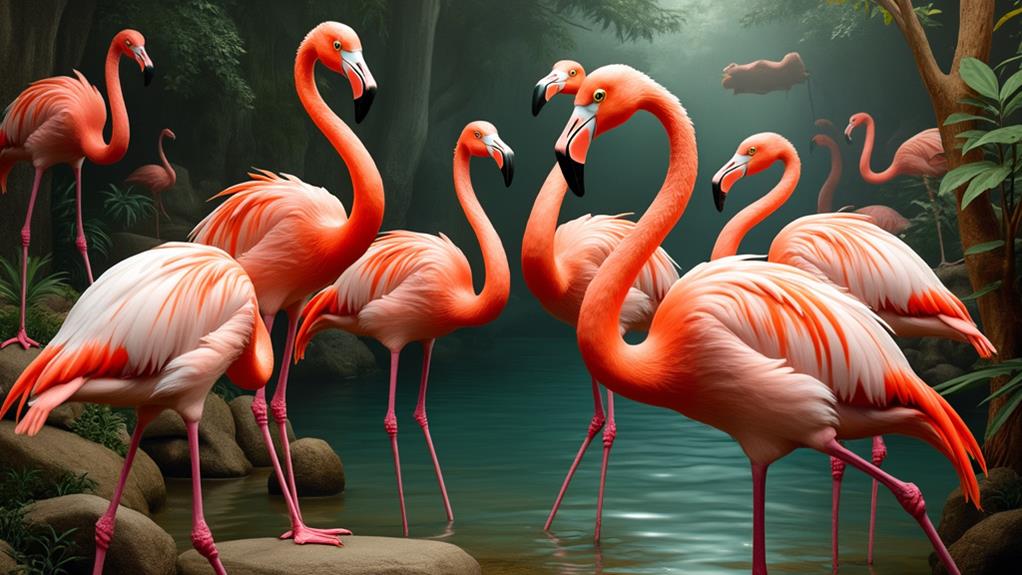
Uncover how flamingos have embodied elegance and exoticism in art history. In ancient Egypt, they symbolized beauty and divinity, guiding souls with their striking pink hue. During the Renaissance, artists captured their allure to improve their compositions. The Baroque period showcased each feather with intricate precision, reflecting grandiosity. Victorians adored flamingos for their exotic charm in art and decor. Art Nouveau highlighted their graceful forms, while Surrealists placed them in fantastical settings. Mid-century modern trends adopted their sleek design, and contemporary pop art features them in lively and playful scenes. Delve further to reveal more fascinating details.
Ancient Egyptian Depictions
Ancient Egyptian art brilliantly captures the elegance and significance of flamingos. When you look at these depictions, you'll notice flamingos aren't just pretty birds; they're imbued with deep ancient symbolism. Egyptians saw flamingos as sacred birds, often associating them with the sun god Ra. You can find evidence of this in the lively wall paintings and intricate carvings adorning temple walls and tombs.
The flamingo's graceful form and striking pink color made it a perfect symbol of beauty and divinity. When you investigate Egyptian artifacts, you'll see these birds often depicted in scenes of nature, symbolizing life and rebirth. Their presence in art wasn't just for aesthetic purposes; it carried a profound spiritual meaning. Egyptians believed flamingos had a connection to the afterlife, guiding souls to their final resting places.
Renaissance Interpretations
As we move into the Renaissance, you'll notice that flamingos take on a fresh yet likewise enchanting role in art. During this timeframe, artists accepted the blend of naturalism and idealism, and flamingos fit seamlessly into this new paradigm. Their striking pink hue and graceful form became powerful symbols within the context of renaissance aesthetics.
In Renaissance art, flamingo symbolism often represented elegance, beauty, and sometimes, the exotic allure of far-off lands. You'd find these birds in the backgrounds of elaborate frescoes or as central figures in detailed oil paintings. Their presence wasn't just for visual pleasure; it carried meaning. The flamingo's distinct posture and vivid color palette raised the compositions, embodying the period's fascination with nature and symmetry.
Additionally, the Renaissance's renewed interest in classical antiquity meant that many artists drew inspiration from earlier depictions, including those from Ancient Egypt. However, they reinterpreted these influences through a contemporary lens, fusing them with the timeframe's focus on humanity and the natural world. By incorporating flamingos into their works, Renaissance artists emphasized a balance between the familiar and the exotic, encapsulating the essence of the period's artistic innovation.
Baroque Period Elegance
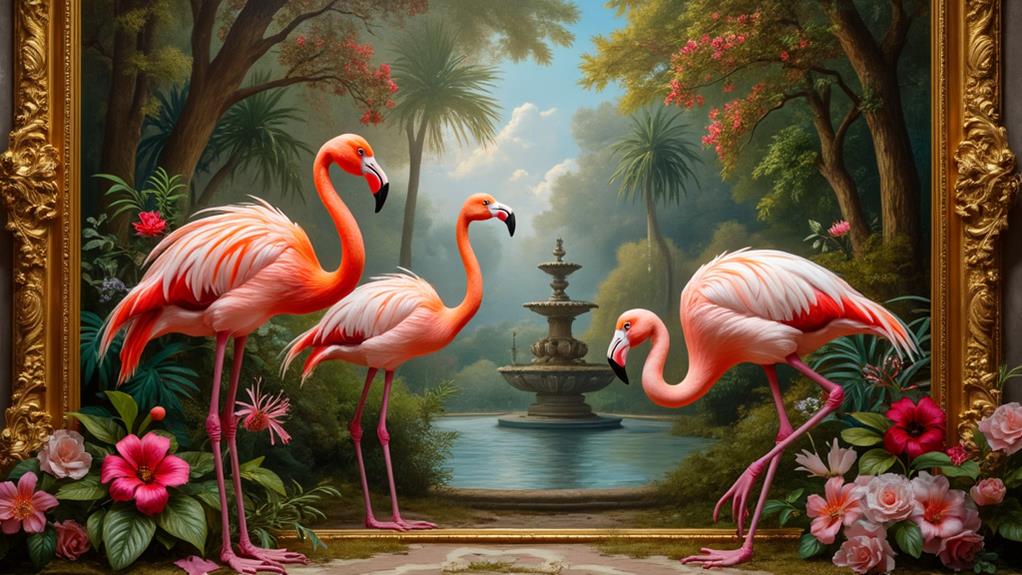
Diving into the Baroque Age, you'll find that flamingos continued to captivate artists and audiences alike. This period, known for its exuberance and grandeur, perfectly matched the flamboyant nature of flamingos. Artists of the time welcomed baroque fashion, which was characterized by intricate patterns and lavish fabrics, to depict these exotic birds. Flamingos' lively pink feathers and graceful postures lent themselves beautifully to the ornate detailing that defined Baroque art.
You can see flamingos in different works of this time, often surrounded by elaborate floral arrangements and rich, decorative backgrounds. The bird's elegance was mirrored in the period's artistic choices, from the sweeping curves and dramatic contrasts to the careful attention to texture and color. These elements were not just about beauty but also about showcasing wealth and sophistication.
When you observe Baroque paintings featuring flamingos, notice how the artists carefully rendered each feather, reflecting the period's obsession with detail. The birds often symbolized a touch of the exotic, enhancing the allure of the artwork. Flamingos in Baroque art weren't just subjects; they were icons of elegance and opulence, seamlessly blending with the period's stylistic flair.
Victorian Era Symbolism
During the Victorian Age, flamingos took on new layers of meaning, becoming rich symbols within the art of the time. You'll notice that Victorian symbolism often used these birds to evoke a sense of the exotic and the refined. The Victorian period was marked by a fascination with the natural world, and exotic birdwatching emerged as a popular pastime among the upper classes. This pastime wasn't merely about the birds themselves but what they represented: the allure of distant lands and the sophistication of the natural world.
Artists of the Victorian age capitalized on this fascination. When you see flamingos in Victorian art, they often signify elegance, beauty, and the mysterious charm of the unknown. The vivid pinks and graceful forms of the flamingos made them ideal subjects to embody these qualities. You'll find that their presence in artwork added both a dash of color and an air of exoticism that captivated viewers.
Victorian symbolism wasn't limited to paintings. Flamingos appeared in literature, fashion, and home decor, reinforcing their status as icons of sophistication. By incorporating flamingos, artists and designers tapped into the age's broader cultural currents, making these birds enduring symbols of Victorian elegance and exoticism.
Art Nouveau Influence
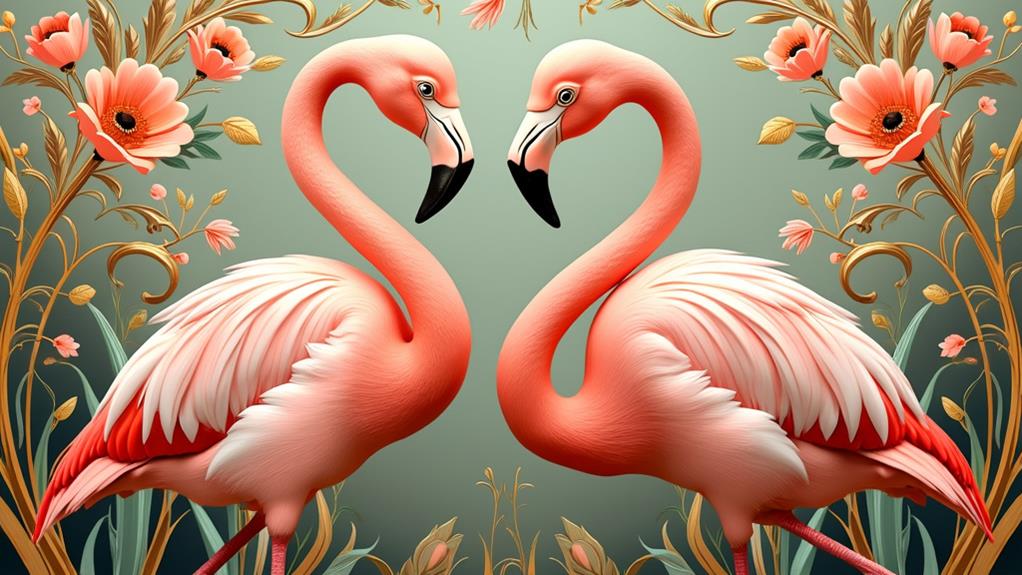
Many recognize Art Nouveau for its fluid lines, organic forms, and intricate designs, and flamingos found a natural fit within this movement. You can see how the elegant curves of a flamingo's neck and body seamlessly blend into the period's aesthetic. Artists of the time often depicted these birds using stylized forms, emphasizing their graceful silhouettes and long, slender legs. The Art Nouveau focus on nature and its beauty made flamingos a perfect subject for works that sought to capture the exotic and the elegant.
When you look at Art Nouveau pieces featuring flamingos, you'll notice the distinct color palettes that artists used. They often favored soft pastels and earthy tones, which complemented the naturalistic themes of the movement. This approach allowed the flamingos' pink hues to stand out, drawing attention to their unique charm and enhancing the overall composition of the artwork.
Surrealist Representations
As the fluid elegance of Art Nouveau gave way to the more experimental and abstract approaches of the Surrealist movement, flamingos continued to captivate artists' imaginations. In surrealist dreamscapes, flamingos often appear in unexpected and fanciful juxtapositions. Imagine Salvador Dalí's fantastical landscapes, where these birds might be perched on elongated, spindly legs, or even morphing into entirely different forms. The surrealists loved playing with reality and illusion, using flamingos to challenge viewers' perceptions and invite them into worlds that defy logic.
You might find a flamingo standing nonchalantly next to a melting clock, or perhaps floating in a sky, blending seamlessly with the clouds. The surrealist fascination with dreams and the subconscious made flamingos an ideal subject—they're exotic, elegant, and just strange enough to feel otherworldly.
Mid-Century Modern Trends
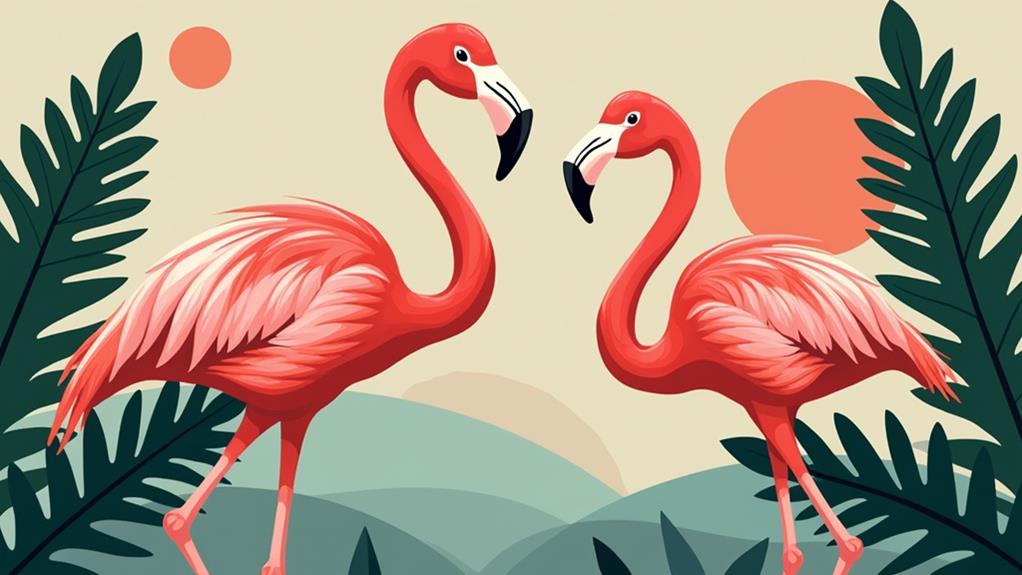
Mid-century modern trends saw flamingos take flight into the domain of sleek lines and organic forms. You'd find these elegant birds adorning everything from minimalist furniture to chic wallpaper, embodying a sense of flair and sophistication. They became synonymous with the period's emphasis on bringing nature indoors, blending seamlessly with the clean, uncluttered aesthetic that defined the time.
In mid-century design, color palettes often featured muted tones with pops of lively hues, and flamingos fit right into this scheme. Their delicate pink plumage provided the perfect accent to neutral backgrounds, creating a striking visual impact. You'd see them paired with colors like teal, mustard, and olive green, which were staples of the era.
Design motifs of the period frequently incorporated natural elements, and flamingos, with their graceful forms, became a favored subject. Their images graced everything from textiles to ceramics, embodying the organic shapes and playful spirit emblematic of mid-century modern aesthetics. You'd notice their presence in both high-end designer pieces and more accessible, mass-produced items, making them a versatile symbol of the time. Fundamentally, flamingos captured the age's blend of elegance and exoticism, leaving a lasting impression on mid-century modern design.
Contemporary Pop Art
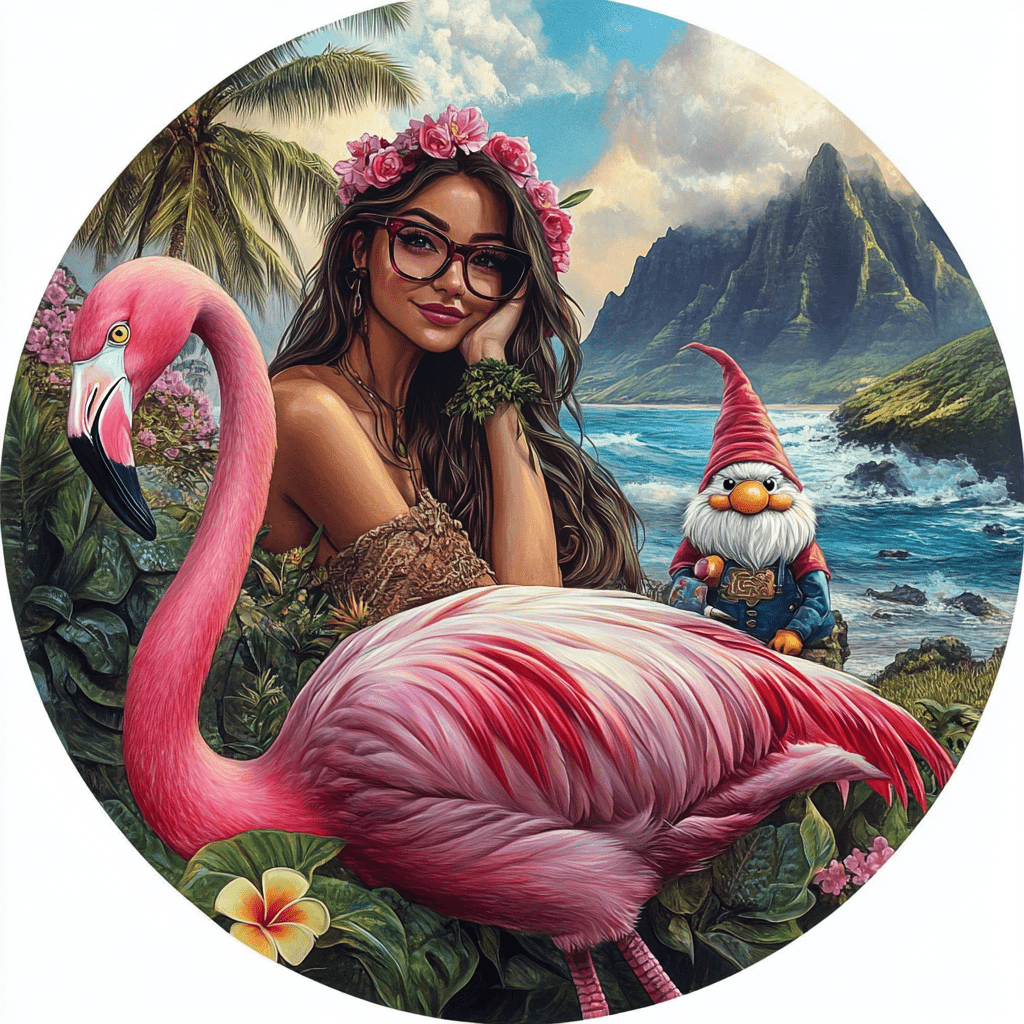
In the domain of Contemporary Pop Art, flamingos have re-emerged as lively icons, embodying a playful and fanciful aesthetic. You'll notice them in bright compositions that use colorful motifs to capture your attention. These artworks often feature flamingos amidst bold, brilliant backgrounds, creating a striking contrast that's hard to ignore. By incorporating playful aesthetics, artists invite you to engage with their work on a more fanciful level.
When you look at these pieces, you'll see that flamingos are not just birds but symbols of fun and freedom. Their exaggerated pink hues and elegant forms make them perfect subjects for Pop Art, which thrives on turning the ordinary into the extraordinary. You might find them paired with other quirky elements like oversized fruits or abstract shapes, adding layers of visual interest.
As you investigate this genre, it's clear that flamingos serve as a bridge between nature and the imaginative world of Pop Art. They allow artists to experiment with bright palettes and unconventional compositions, pushing the boundaries of traditional art. So next time you encounter a flamingo in Contemporary Pop Art, take a moment to appreciate its role in this colorful, playful aesthetic.
Global Cultural Impact
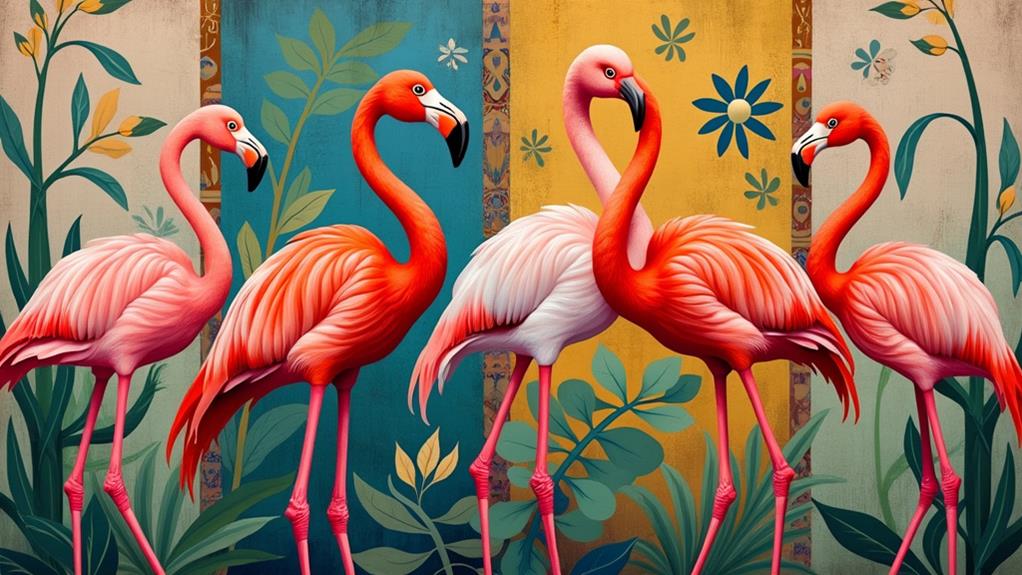
Flamingos have made a significant mark on global culture, transcending their natural habitats to become symbols in assorted societies. Their lively pink feathers and elegant posture are more than just an aesthetic appeal; they embody cultural symbolism that connects worldwide. In many cultures, flamingos are seen as symbols of beauty, balance, and grace, often appearing in folklore and mythology.
You can find their influence in fashion inspiration, where their striking colors and unique forms are echoed in clothing, accessories, and even interior design. Artists have employed multiple artistic techniques to capture their essence, from traditional painting to modern digital art. The birds' migration patterns also inspire themes of travel and freedom, making them a global icon.
Furthermore, flamingos highlight significant environmental themes. Their presence in art often raises awareness about conservation efforts, emphasizing the importance of preserving their natural habitats. This underscores their global influence, as people from different corners of the world unite to protect these magnificent creatures.
In understanding flamingos' cultural impact, you appreciate how these birds symbolize a blend of nature's beauty and humanity's artistic expression, reinforcing their timeless charm and relevance in global culture.