Flamingos in Literature: Stories, Poems, and Symbolism
You'll find flamingos fascinating readers' imaginations through their lively symbolism and enchanting presence in literature. In children's stories, they teach values like friendship and acceptance. Classic literature uses them to symbolize beauty and elegance, while modern fiction investigates themes of transformation and resilience. Poets celebrate flamingos as metaphors for grace, introspection, and personal growth. Cultural narratives and folklore often highlight their enchanting qualities, representing mystery and metamorphosis. Flamingos' unique color and social behaviors reflect deeper truths about human experience and community. Keep investigating to uncover the full spectrum of their literary significance.
Flamingos in Children's Stories
Flamingos have often found their way into children's stories, enchanting young readers with their lively colors and graceful presence. You can see these flamingo characters setting off on colorful adventures that spark the imagination and teach valuable lessons. Regardless of whether they're solving mysteries, exploring magical lands, or simply making new friends, flamingos capture the hearts of young readers everywhere.
In many tales, flamingo characters aren't just there for their beauty; they're often portrayed as wise, kind, and sometimes even a bit quirky. This makes them relatable and memorable for children. For example, you might come across a flamingo who helps other animals find their true colors or one who leads a parade to bring joy to a gloomy town.
These stories aren't just entertaining; they also encourage kids to accept diversity and the unique qualities that make each individual special. By following the colorful adventures of flamingos, children learn about friendship, empathy, and the importance of being true to oneself. So, next time you're looking for a delightful read, consider a flamingo tale that's sure to bring a splash of color and wisdom into your life.
Flamingos in Classic Literature
In classic literature, the lively presence of flamingos often serves as a striking symbol of beauty and elegance. You'll find these birds making memorable appearances in numerous works, where their vivid plumage and graceful movements capture the imagination. Flamingo representations in classic literature aren't just about their physical beauty; they often carry deeper symbolic meanings.
For instance, in Lewis Carroll's "Alice's Adventures in Wonderland," the flamingo is used as a croquet mallet, adding a fanciful and surreal touch to the story. This peculiar use of the bird highlights the absurdity and unpredictability of Wonderland. When you conduct a literary analysis of this scene, you might notice how the flamingo's elegance contrasts with the chaotic environment, emphasizing the theme of order versus disorder.
In Gabriel Garcia Marquez's "One Hundred Years of Solitude," flamingos appear during the magical realism-infused episodes, contributing to the dreamlike and mystical atmosphere. Here, the flamingo representations underscore the blending of reality and fantasy, making the ordinary seem extraordinary.
Flamingos in Modern Fiction
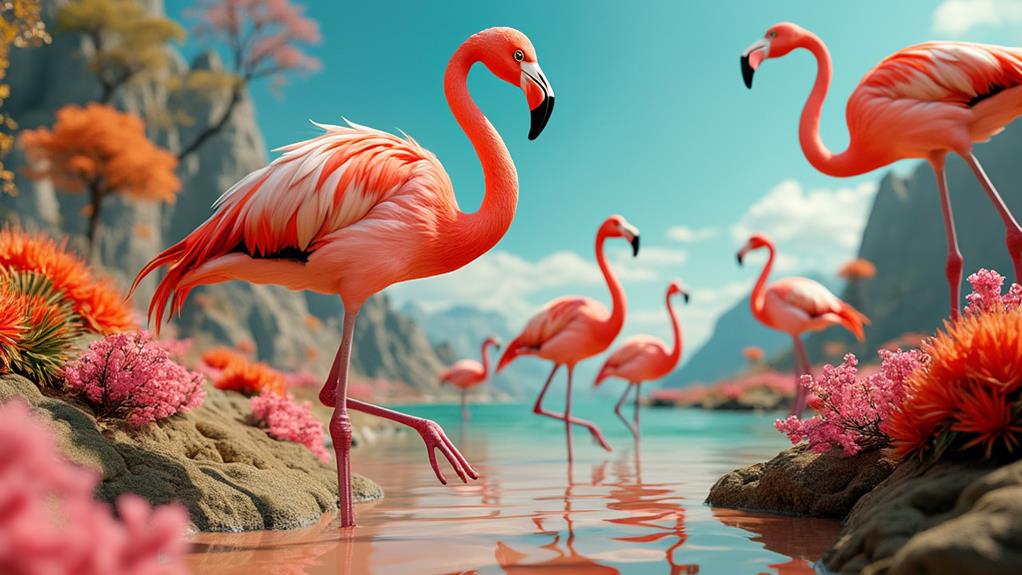
While classic literature often imbues flamingos with symbolic beauty and elegance, modern fiction takes these representations into new and intriguing directions. You'll find that contemporary authors use flamingo characters to investigate themes of transformation, resilience, and even absurdity. These pink-plumed birds often appear in unexpected settings, carrying layers of meaning that challenge traditional views.
In some novels, flamingo imagery serves to highlight the exotic and the surreal. For example, in magical realism, a flock of flamingos might suddenly appear in a mundane town, shaking up the ordinary and inviting characters to see the world differently. This use of flamingo imagery can create a stark contrast between the everyday and the extraordinary, pushing readers to question reality itself.
Other stories use flamingo characters as metaphors for social issues. A flamingo might symbolize an outsider's struggle to fit into a conformist society, its lively feathers setting it apart in a monochrome world. By doing so, modern fiction invites you to empathize with those who stand out and face adversity.
Flamingos in Poetry
Poetry, with its rich tapestry of imagery and metaphor, often finds the flamingo to be a compelling symbol of grace and complexity. When you encounter flamingo imagery in poems, you're immediately transported to lively, exotic landscapes. These birds, with their striking pink feathers and elegant posture, evoke a sense of otherworldliness and beauty. Poets use flamingos to investigate themes of transformation, love, and even solitude.
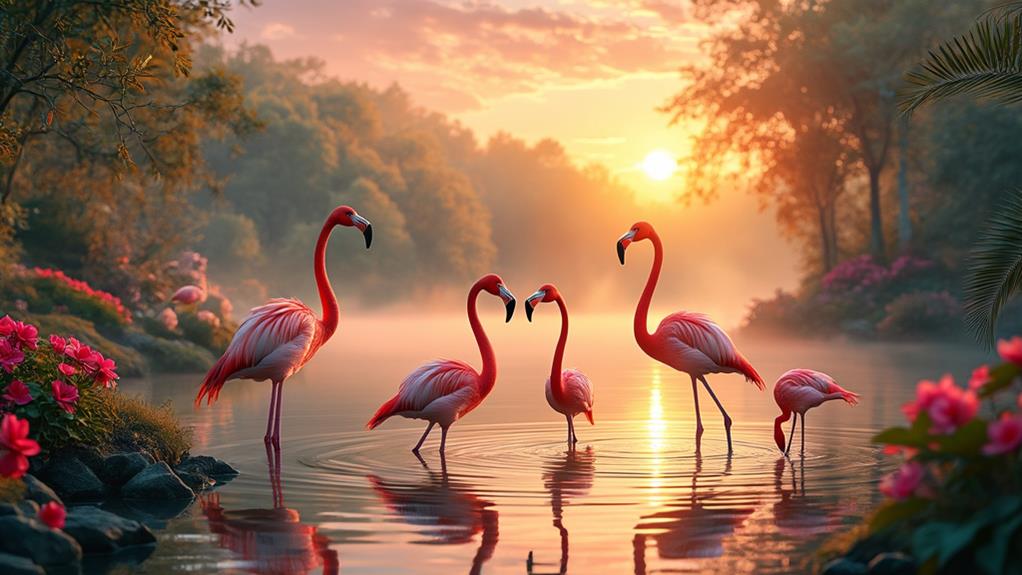
Imagine reading a poem where the poet describes a flamingo standing alone in a serene lagoon. The bird's reflection in the water might symbolize a deeper introspection or the duality of human nature. The flamingo's lively symbolism doesn't stop at mere beauty; it often examines the idea of resilience. Their ability to balance on one leg can be a metaphor for finding stability in an unstable world.
In your investigation of poetry, you'll notice how flamingos are not just decorative elements but serve as powerful metaphors. They remind you to look beyond the surface and appreciate the layers of meaning that poets weave into their verses. The next time you read a poem featuring a flamingo, consider the rich symbolism and the emotional depth it brings to the piece.
Symbolism of Flamingos
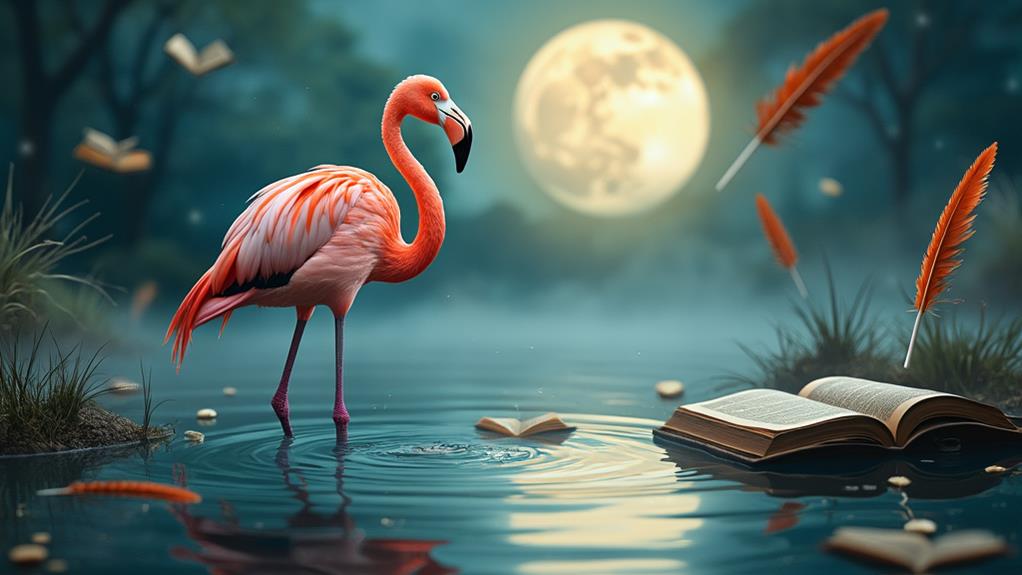
A multitude of cultures and literary works have imbued flamingos with rich symbolism, making these birds resonate far beyond their physical beauty. You'll find that flamingo symbolism often revolves around several key themes that stir the imagination and emotions.
- Color Significance: The striking pink and red hues of flamingos symbolize passion, love, and liveliness. This lively color palette makes them a guiding light of beauty ideals in literature, highlighting their allure and exotic imagery.
- Elegant Movement: The graceful and fluid movements of flamingos evoke a sense of elegance and poise. Their ability to balance on one leg often symbolizes stability and mindfulness, reminding you to seek balance in life.
- Social Behavior: Flamingos are known for their strong social bonds and communal living. This aspect of their behavior represents unity, cooperation, and the importance of community, encouraging you to value relationships and teamwork.
- Environmental Representation: The habitat significance of flamingos in wetlands and lagoons speaks to their role as environmental indicators. They symbolize the delicate balance of ecosystems and remind you of the need to protect natural habitats.
Cultural Significance
Flamingos hold an esteemed place in numerous cultures, often symbolizing grace and beauty. When you explore the cultural significance of flamingos, you'll find that their striking appearance and behaviors have inspired diverse cultural representations. In many societies, flamingo symbolism connects deeply with themes of elegance, balance, and renewal.
For example, in ancient Egypt, flamingos were associated with the sun god Ra, reflecting their vivid color and majestic presence. This cultural representation underscores their revered status and connection to divinity. In a different context, Caribbean cultures often view flamingos as symbols of balance and community, mirroring their social nature and graceful posture.
You'll also notice that in modern Western cultures, flamingos have taken on new meanings. They've become emblematic of exotic beauty and tropical luxury, frequently appearing in art, fashion, and home décor. This contemporary flamingo symbolism often evokes a sense of escape and leisure, resonating with the allure of far-off paradises.
Flamingos in Folklore and Myth
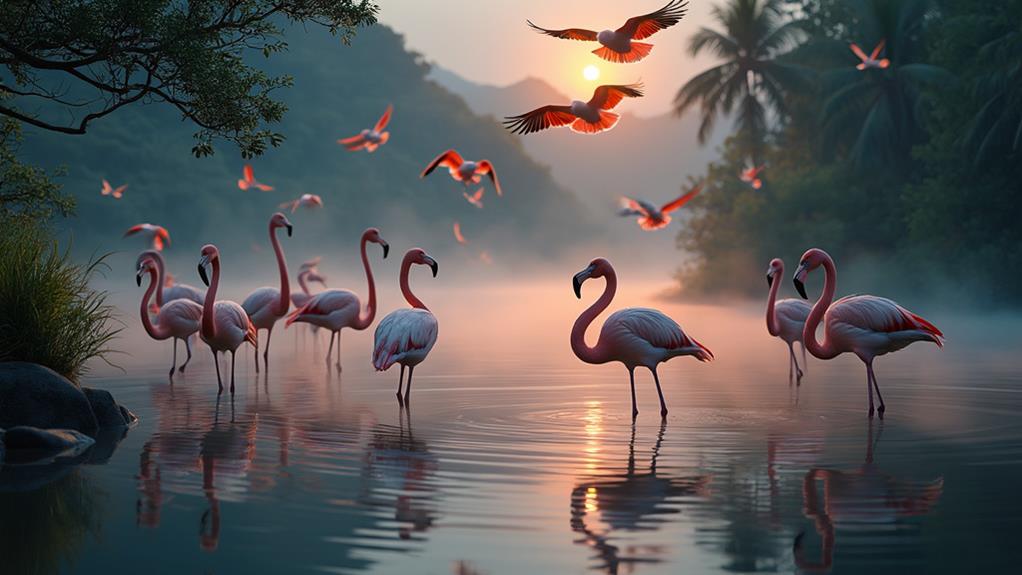
In many folkloric narratives and myths, flamingos often stand as bright symbols of transformation and mystery. You'll find these mythical birds gracing the stories of diverse cultures, where they embody more than just their striking appearance. Flamingo legends are rife with themes of metamorphosis, grace, and hidden truths. These birds have long captivated human imagination, and their presence in folklore is as fascinating as it is distinct.
Consider the following enchanting elements of flamingo legends:
- Metamorphosis: In some tales, flamingos transform from ordinary beings into majestic birds, symbolizing profound change and spiritual awakening.
- Mystery: The lively pink hue of flamingos often represents hidden secrets and the revelation of deeper truths, making them perfect symbols for the unknown.
- Grace: Their elegant movements and striking beauty inspire stories of ethereal beings, highlighting the grace and poise that flamingos embody.
- Resilience: Flamingos are often depicted as enduring creatures, thriving in harsh environments, which can mirror human perseverance and adaptability.