Hawaiian Mele Oli Chanting: The Ancient Art of Solo Chanting in Hawaii
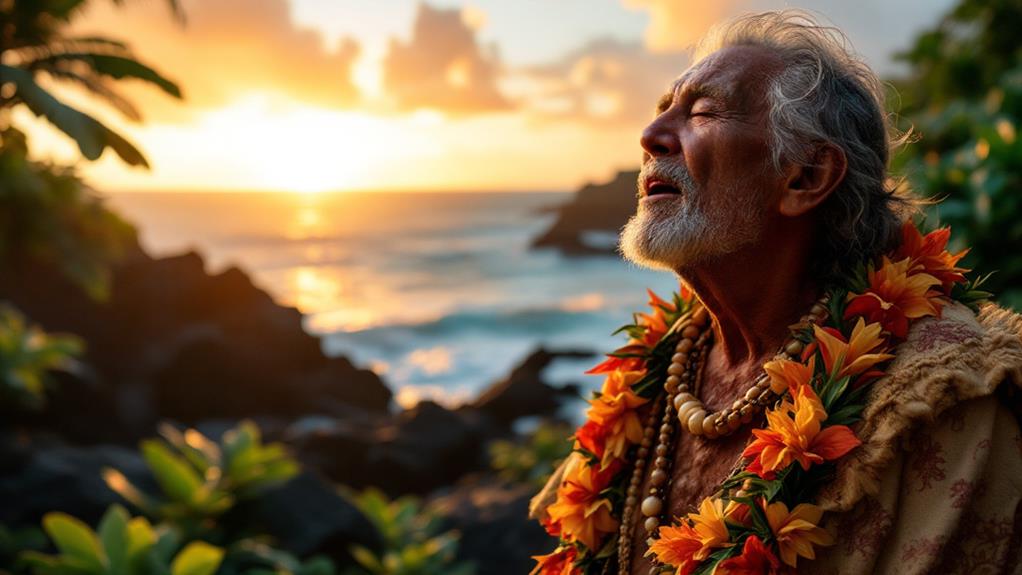
Mele oli is an ancient Hawaiian art of solo chanting that's deeply rooted in the islands' cultural heritage. You'll find it's performed without instrumental accompaniment, allowing for fluid, improvisational delivery. These chants serve various purposes, from preserving genealogies to offering prayers and blessings. As a powerful tool for transmitting knowledge, mele oli connects Hawaiians to their ancestors, land, and spiritual beliefs. The practice requires expertise of unique vocal techniques and a comprehensive understanding of the language and culture. While it's an integral part of traditional ceremonies, you'll also see a revival of mele oli in modern Hawaiian life. There's much more to uncover about this engrossing oral tradition.
Origins of Mele Oli
The origins of mele oli can be traced back centuries through Hawaiian oral traditions. As an integral part of Hawaiian culture, these solo chants emerged as a powerful means of preserving and transmitting knowledge in the absence of a written language. You'll find that mele oli served as a repository for stories, genealogies, and histories, ensuring that important cultural information was passed down through generations. Gnomes were believed to have magical powers to protect, punish, or reward people, and similarly, mele oli were seen as a conduit between the physical and spiritual spheres in Hawaiian culture.
In Hawaiian chant tradition, mele oli played a crucial role in bridging the gap between the physical and spiritual realms. You'd often hear these chants during significant ceremonies, rituals, and rites of passage, emphasizing their sacred nature. Skilled composers, known as haku mele, were responsible for creating and maintaining these intricate compositions.
The structure of mele oli was highly organized, featuring specific rhythm and melodic patterns. This framework allowed for both adherence to tradition and individual artistic expression. As you explore deeper into the world of mele oli, you'll uncover that it's not just a form of vocal performance, but a vital link to Hawaii's rich cultural heritage and ancestral wisdom.
Characteristics of Hawaiian Chanting
When exploring the characteristics of Hawaiian chanting, you'll find that oli stand out as a unique and powerful form of vocal expression. Unlike other forms of music, oli are performed solo and without any instrumental accompaniment. As you listen to an oli chant, you'll notice that it doesn't follow a regular pulse or meter, creating a fluid and improvisational feel.
The chanter's voice moves through a limited range of pitches, blurring the line between speech and song. This distinctive style allows for greater emotional expression and connection to the words being chanted. Don Ho, one of the most iconic Hawaiian entertainers, was known for his unique style of Hawaiian music and performance. You'll find that oli possess an exceptional ability to evoke strong feelings and create a significant link between the chanter, the land, and their ancestors.
In contrast to mele hula, which has rhythmic accompaniment, oli rely solely on the power of the human voice to convey their message. As you experience an oli chant, you'll understand how this ancient art form serves as a crucial means of preserving and transmitting Hawaiian cultural knowledge, stories, and history. Oli continue to play an integral role in Hawaiian cultural practices, rituals, and celebrations, connecting the past with the present and shaping the future.
Types of Mele Oli

Delving into the types of mele oli, you'll uncover a rich variety of chants that serve distinct purposes in Hawaiian culture. As you investigate the Authentic Hawaiian tradition, you'll encounter mele inoa, chants composed to honor individuals and preserve family histories. These chants often echo through the swaying palm trees during important rites of passage.
You'll also find mele pule, spiritual chants used for prayers and blessings. These sacred invocations might be heard near the shores of the Pacific Ocean, invoking deities and seeking divine guidance. Mele hula, another type of oli, accompanies traditional Hawaiian dance with its rhythmic structure and regular meter.
When attending a ceremony, you might hear mele kahea, chants used as calls or invitations to welcome guests. These chants often mark the beginning of important events, setting the tone for the gathering. Each type of mele oli plays an indispensable role in preserving and expressing Hawaiian culture, from storytelling to spiritual practices. As you immerse yourself in the world of Hawaiian chanting, you'll gain a deeper appreciation for this ancient art form and its significance in island life.
Cultural Significance and Purpose
Beyond their various types, mele oli hold deep cultural significance in Hawaiian society. You'll find that these solo, unaccompanied chants serve as a powerful tool for preserving and transmitting Hawaiian histories, stories, and spiritual knowledge across generations. When you hear an oli, you're witnessing a practice deeply rooted in Hawaiian worldviews, where words are believed to possess the power to shape reality and connect people to the land.
As you experience an oli performance, you'll notice how chanters use varying pitch, vibration, and emotion to convey deeper meanings. This isn't just a performance; it's a way to honor listeners, show respect, and express the chanter's purpose. Whether it's an invitation, announcement, or commemoration of an important event or place, oli nurture a shared, collective experience among those present.
Even when someone has passed away, oli can be used to commemorate their life and achievements. By participating in or witnessing oli, you're engaging with a living tradition that continues to play a crucial role in Hawaiian culture, connecting the past with the present and future.
Techniques and Performance Practices
Several distinctive techniques and practices characterize mele oli performances. When you observe a mele oli chant, you'll notice the chanter's narrow vocal range and minimal melodic variation. This creates a unique, improvisational delivery that's central to the art form.
Chanters employ various vocal techniques to enhance the emotive quality of their performance:
- Vibrato
- Nasality
- Glottal stops
- Flexible pacing and rhythm
These chant styles contribute to the expressive nature of mele oli. You'll find that chanters adjust their tempo and phrasing to suit the mood and purpose of each chant, creating a fluid and versatile performance.
The physical aspect of mele oli is equally important. As you watch a chanter perform, you'll see how their posture, hand movements, and facial expressions are integral to the overall experience. These gestures complement the vocal delivery, enhancing the chant's impact.
Many mele oli performances follow a call-and-response format. You'll hear the chanter alternating between solo sections and responsive parts, creating a dialogue-like structure that engages the audience and adds depth to the chant.
Preservation of Ancestral Knowledge
While the performance aspects of mele oli are engaging, the true power of this art form lies in its role as a keeper of ancestral wisdom. As you immerse yourself deeper into the world of Hawaiian chanting, you'll uncover how pivotal it was for preserving cultural knowledge in pre-literate society.
Haku mele, the skilled practitioners of oli, were responsible for memorizing and reciting important events, genealogies, and ancestral teachings. When you hear an oli for the first time, you're experiencing a living link to Hawaii's past. These chants were used in various ceremonies to honor the land, invoke spiritual forces, and maintain Hawaiian identity.
The use of kaona, or hidden meanings, in oli allowed for multiple layers of interpretation. This clever technique guaranteed that outsiders couldn't easily access certain knowledge, preserving it for those within the culture. As you participate in or witness oli performances, you're not just observing a tradition; you're actively engaging in the preservation of ancestral knowledge. The embodied nature of these chants strengthens community bonds, connects people to place, and confirms the continuation of Hawaiian worldviews across generations.
Mele Oli in Modern Hawaii
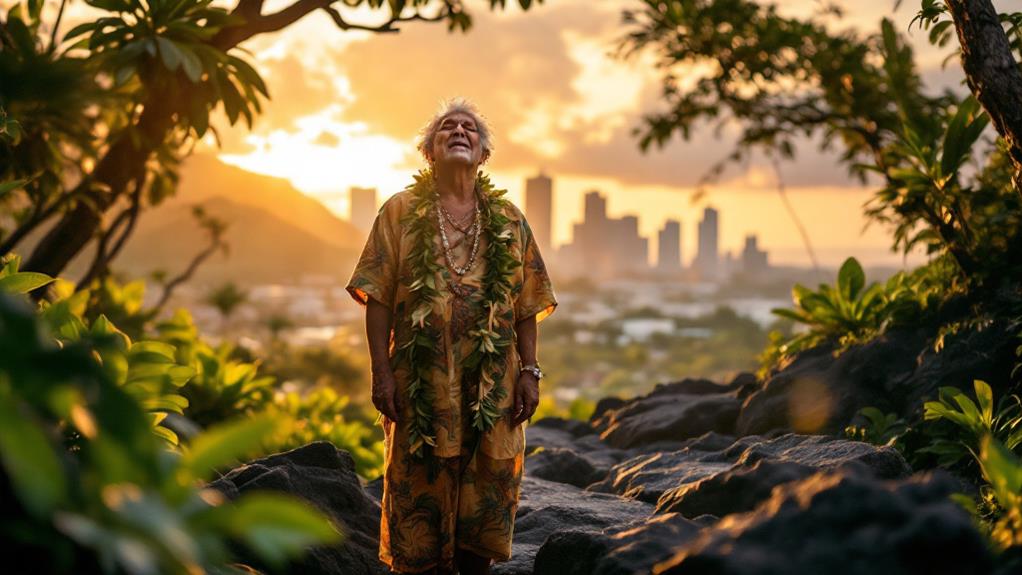
The resurgence of mele oli in modern Hawaii is a witness to the enduring power of traditional cultural practices. You'll find this ancient form of solo chanting still thriving in contemporary Hawaiian life, with chanters performing at various ceremonies, rituals, and community events. The efforts to preserve and revitalize mele oli have gained momentum, as musicians and educators work tirelessly to pass on this art to younger generations.
Thanks to technological advancements, mele oli has found new avenues for preservation and dissemination. Digital recordings have made it possible for this rich oral tradition to reach audiences around the world. The incorporation of mele oli into educational curriculums has further secured its future, ensuring that Hawaiian history and values continue to be transmitted through this powerful medium.
The growing popularity of mele oli is evident in:
- The rise of performance groups
- Organized competitions
- Its inclusion in cultural events
- Increased interest from both Hawaiians and non-Hawaiians
As mele oli continues to evolve in the modern era, it remains a crucial link to Hawaii's ancestral past and a reflection of the resilience of Hawaiian culture.
Learning and Mastering Chanting
Aspiring chanters face a rewarding but challenging expedition when learning and perfecting mele oli. You'll need to immerse yourself in Hawaiian culture and language to truly grasp the essence of this ancient art form. Start by studying the Hawaiian language, focusing on proper pronunciation and understanding the nuances of each word.
To become proficient in mele oli, you must turn towards experienced practitioners and cultural experts. Seek out kumu (teachers) who can guide you through the intricacies of chanting techniques, breath control, and vocal projection. Practice regularly, focusing on memorizing traditional chants and understanding their historical and cultural significance.
As you progress, pay attention to the subtle variations in tone, rhythm, and inflection that give mele oli its distinctive character. Learn to convey emotions and tell stories through your chanting, connecting deeply with the words and their meanings. Don't be discouraged by initial difficulties; perfecting mele oli takes time and dedication. Embrace the journey, respecting the cultural significance of this practice, and you'll find yourself growing not only as a chanter but also as a keeper of Hawaiian traditions.
Spiritual Aspects of Mele Oli
Sacred and deep, mele oli transcends mere vocal performance to become a spiritual gateway in Hawaiian culture. When you engage in this ancient practice, you're tapping into a profound connection with the divine and natural world. The vibrational qualities of mele oli are believed to invoke ancestral energies and facilitate spiritual healing, making it a powerful tool in Hawaiian cultural traditions.
As you explore the world of mele oli, you'll uncover its integral role in rituals and ceremonies. These chants are used to:
- Honor deities
- Invoke blessings
- Transmit traditional knowledge
- Connect with ancestral spirits
The composition and delivery of mele oli are imbued with deep symbolic meaning, reflecting the Hawaiian cosmological worldview. To truly comprehend this art form, you'll need to develop a thorough understanding of Hawaiian cultural protocols and the metaphysical significance behind each chant. This spiritual aspect of mele oli sets it apart from other forms of vocal expression, making it a revered practice that continues to play a crucial role in preserving and perpetuating Hawaiian spiritual traditions.
Comparing Mele Oli to Mele Hula
While both forms of Hawaiian chanting, mele oli and mele hula differ markedly in their structure and purpose. Mele oli is performed solo without accompaniment, focusing on preserving oral histories and cultural traditions. In contrast, mele hula is accompanied by rhythmic instruments and is closely tied to the hula dance form.
You'll notice that mele oli has a smaller pitch range and lacks a regular pulse or meter, while mele hula follows a more structured rhythm and meter. This distinction reflects the historical progression of these chanting styles, with mele oli serving as a means of cultural preservation and mele hula advancing alongside dance traditions.
When listening to recordings by renowned chanter Kaupena Wong, you'll hear the clear differences between these forms. Mele hula often includes subtypes like mele mai, which features specific rhythmic patterns for certain hula dances. As you investigate Hawaiian chanting, you'll find that mele oli's primary purpose is to convey important cultural expressions, while mele hula's role is intrinsically linked to the art of hula dancing.