How Did Disco Fashion Emerge in the 1970s?
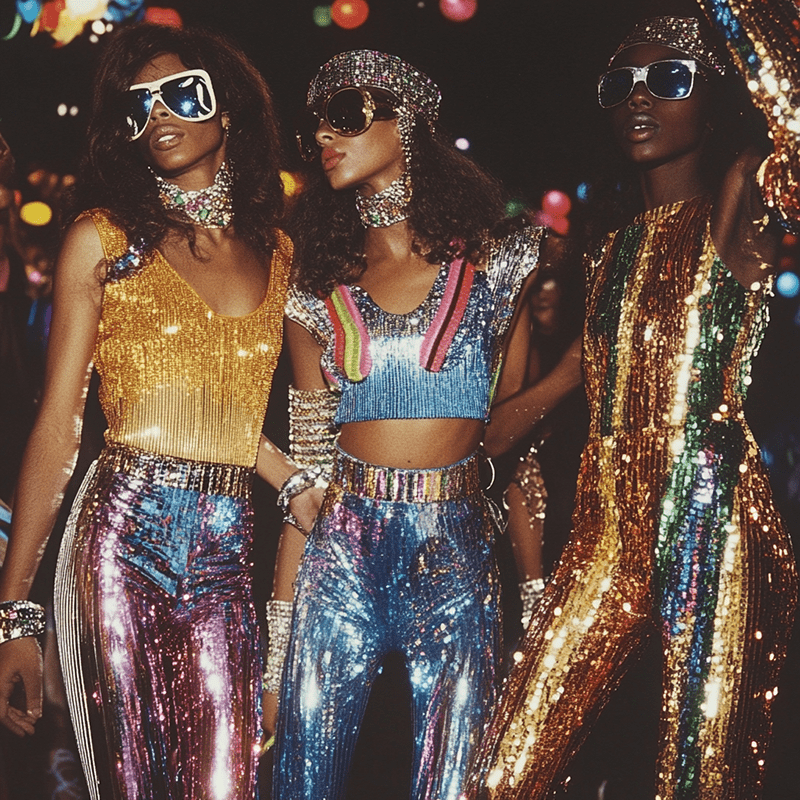
Disco fashion emerged in the vibrant 1970s, rooted in the inclusive atmosphere of New York City's gay underground clubs. These venues, notably Studio 54, were epicenters of freedom and self-expression, sparking a bold and glamorous style.
Daring fabric choices, vibrant colors, and luxurious materials began to influence mainstream wardrobes. Key elements included sequins, spandex, and platform shoes, while influential designers like Halston and Diane von Fürstenberg played pivotal roles. This fashion revolution not only defined a cultural phenomenon but also transformed the nightlife and club scene.
Origins of Disco Fashion
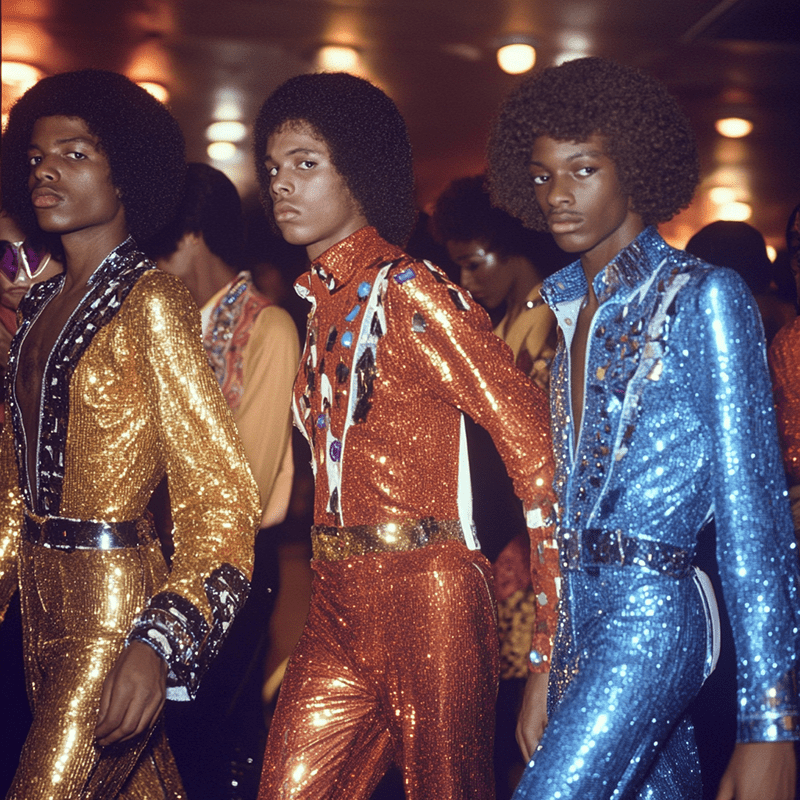
The origins of disco fashion can be traced back to the vibrant and flamboyant styles embraced by the gay underground clubs of 1970s New York City. These venues were the heart of the disco dance culture, where individuals expressed their uniqueness and flamboyance through bold fashion choices. Clothing wasn't just about appearance; it was a statement of individuality.
In these clubs, fashion boundaries were pushed with gender-bending and androgynous styles, allowing for a fluidity in clothing choices. Both men and women wore sequins, tight pants, and patterned shirts, creating a visually striking atmosphere. This fashion wasn't merely about being noticed; it celebrated freedom and self-expression during a time when such liberties weren't universally accepted.
As disco music gained popularity, so did its associated fashion. The 1977 film 'Saturday Night Fever' played a crucial role in bringing these bold styles into the mainstream. What began in the underground clubs of New York City soon became a global trend. Disco fashion's roots lie in a culture that challenged norms, celebrated diversity, and energized the 1970s dance scene.
Key Elements of Style
Disco fashion is characterized by bold fabric choices and glamorous accessories. Key elements include shimmering sequins, metallic fabrics, and glitzy jewelry. These elements weren't only popular but central to the disco aesthetic.
Bold Fabric Choices
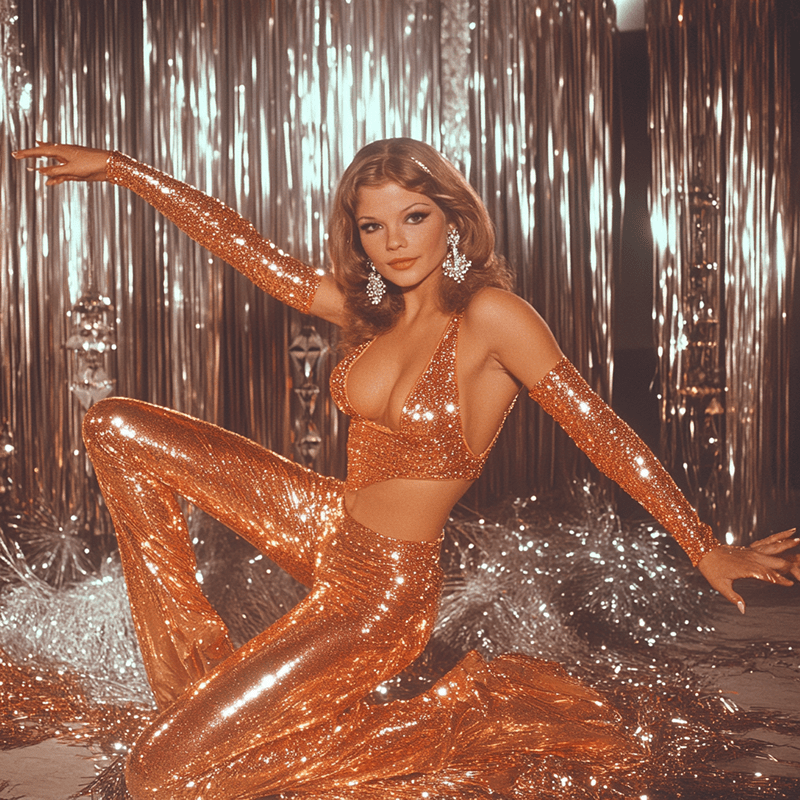
Step into the dazzling world of 1970s disco fashion, where bold fabric choices like sequins, metallics, and shiny materials reign supreme. This era thrived on creating eye-catching, glamorous looks that captured the light and energy of the disco ball.
Sequins adorned dresses, tops, and pants, making every movement shimmer. Metallics, in gold and silver hues, added a futuristic edge to outfits, while shiny materials like Lurex brought a sparkle that was hard to ignore.
Polyester and spandex were the go-to synthetic fabrics, known for their stretch and sheen. These materials allowed for form-fitting styles that hugged the body, enhancing the dance floor experience. Vibrant colors—from electric blues to fiery reds—and bold prints were staples of the disco wardrobe, ensuring you'd stand out in any crowd.
Bold fabric choices extended to luxurious materials like satin, velvet, and silk, adding a touch of opulence to the disco scene. These fabrics not only looked glamorous but also felt indulgent, embodying the lavish spirit of the times.
Glamorous Accessories Trends
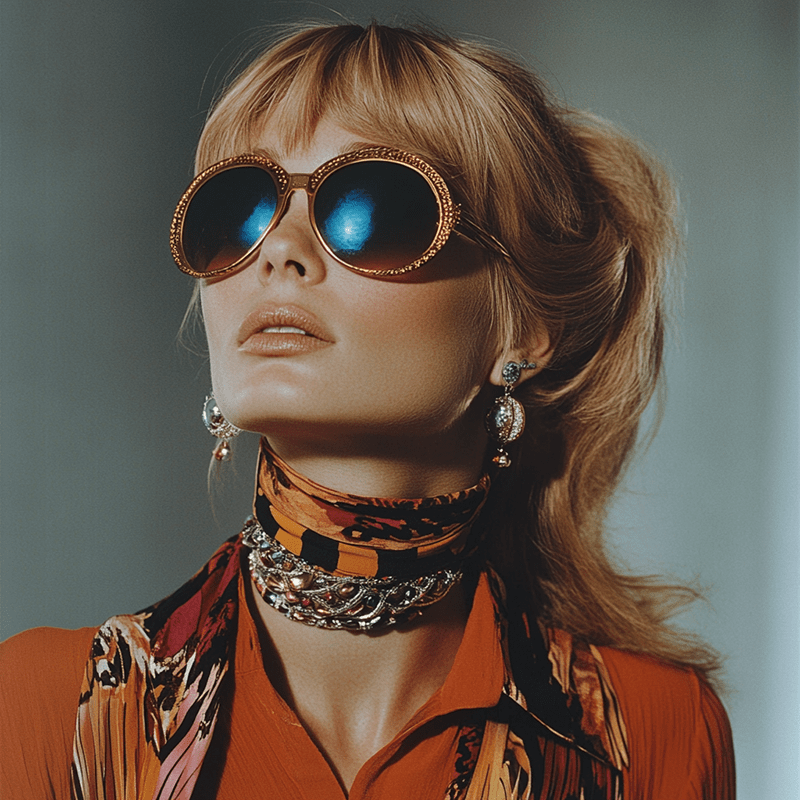
Glamorous accessories in 1970s disco fashion included chokers, handcrafted neck ornaments, and natural element jewelry, all adding a striking touch to any outfit. These accessory trends were crucial for making a statement on the dance floor.
Chokers, often adorned with sparkling gems or intricate designs, hugged the neck, drawing attention and exuding elegance. Handcrafted neck ornaments showcased unique artistry, while natural element jewelry, such as wooden or stone pieces, added an earthy yet sophisticated vibe.
Belts were another key accessory. Skinny belts cinched the waist, accentuating the figure, while wide belts made bold fashion statements, often in flashy metallics or vivid colors. Mood rings captured the playful spirit of the era, changing colors based on body temperature to supposedly reflect one's mood.
Minimalistic designs also found their place in disco accessories, balancing the extravagance of disco clothing. Scarves added a versatile touch, whether tied around the neck, waist, or hair. Ankle boots completed the look, combining comfort with style. These boots, often featuring platform soles or shiny finishes, were perfect for dancing the night away. Embracing these trends encapsulates the essence of 1970s disco fashion.
Influential Icons and Designers
When considering disco fashion, it's impossible to overlook the trendsetters of Studio 54, notably Bianca Jagger and Cher. Designers like Halston redefined the era with sleek, minimalist styles that epitomized the period. Cher's iconic, sequin-adorned outfits set the benchmark for glamorous and daring disco attire.
Studio 54 Trendsetters
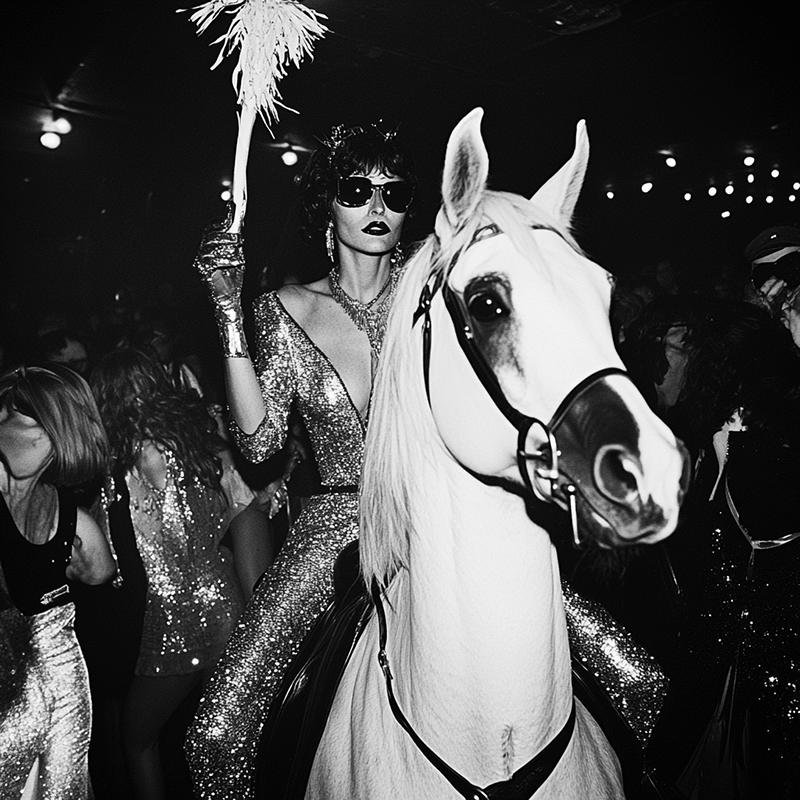
Studio 54's legendary status as a disco hotspot was cemented by trendsetters like Bianca Jagger, Andy Warhol, and Liza Minnelli, who redefined fashion with their bold choices. These icons, regularly seen at the club, set the standard for glamorous and daring styles that defined the period. Bianca Jagger's entrance on a white horse epitomized Studio 54's extravagant flair and has become an iconic moment in fashion history.
Designers like Halston, Diane von Fürstenberg, and Yves Saint Laurent were also regulars at Studio 54, shaping the disco fashion scene with their creative designs. Halston's sleek silhouettes, von Fürstenberg's iconic wrap dresses, and Saint Laurent's luxurious creations became staples of the disco wardrobe. Their presence at Studio 54 not only showcased their designs but also influenced the fashion choices of others.
Celebrities like Cher and Grace Jones added to Studio 54's eclectic and flamboyant atmosphere. Cher's daring outfits and Grace Jones's androgynous look pushed the boundaries of fashion, encouraging others to express their individuality. The club's anything-goes culture fostered an environment where bold and extravagant fashion thrived, leaving a lasting impact on 1970s disco fashion.
Halston's Signature Styles
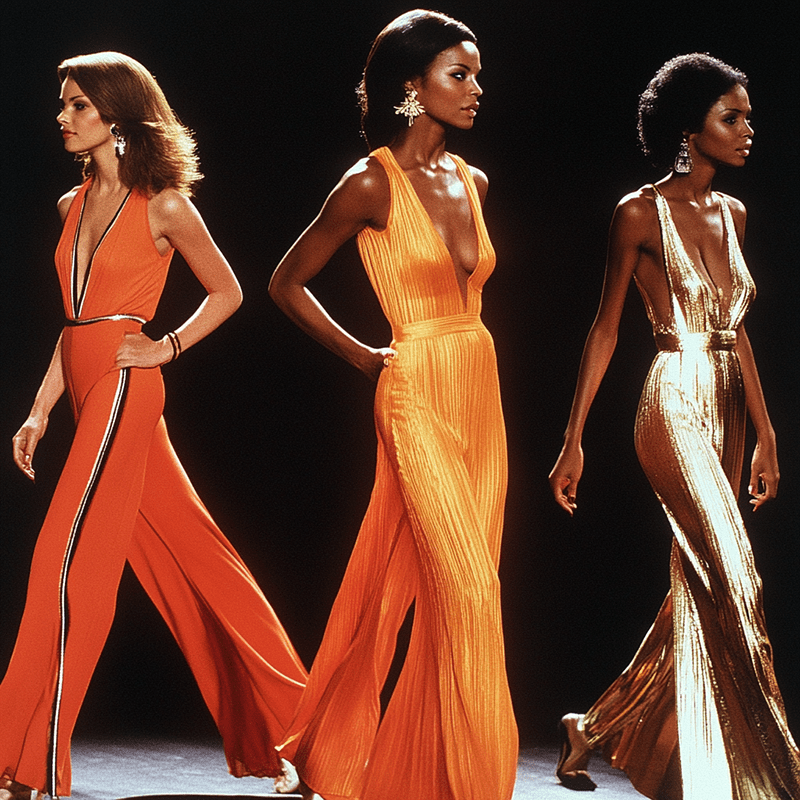
Halston's minimalist and elegant designs, characterized by ultra-glamorous evening wear and sleek jumpsuits, became synonymous with the sophisticated chic of 1970s disco fashion. As an iconic American fashion designer, Halston's influence was unparalleled. His creations, often made from luxurious fabrics such as jersey and silk, struck the perfect balance between comfort and style, making them favorites among celebrities and socialites.
When envisioning the disco era, it's impossible not to picture the glamorous clientele of Studio 54, adorned in Halston's designs. His sleek jumpsuits and elegant evening wear were the preferred choices for those wanting to capture the essence of disco fashion. The simplicity and elegance of his designs allowed the wearers to shine, making them feel both sophisticated and effortlessly stylish.
Halston's impact on 1970s fashion was immense, and his enduring legacy continues to inspire contemporary designers. The timeless appeal of his minimalist approach and luxurious fabric choices has cemented his place in fashion history. Whether reflecting on vintage disco fashion or observing current trends, Halston's influence remains unmistakable.
Cher's Iconic Outfits
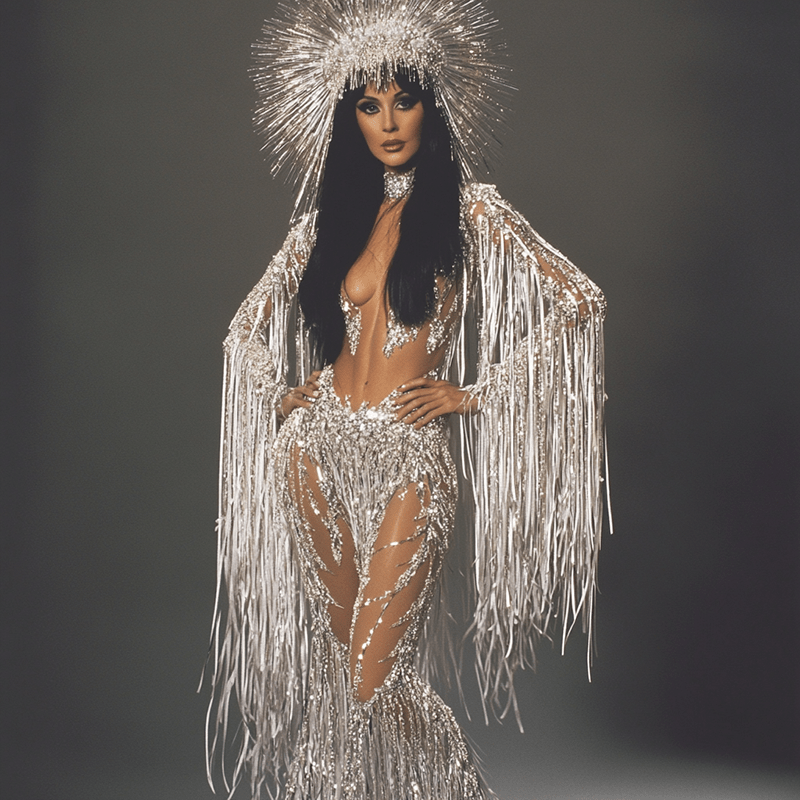
Cher's bold and flamboyant outfits in the 1970s, often designed by Bob Mackie, cemented her status as a defining fashion icon of the disco era. When thinking of disco fashion, Cher's iconic outfits immediately come to mind. Her collaboration with Mackie produced some of the most extravagant and provocative costumes, epitomizing the daring spirit of the disco age. Sequins, feathers, and bold cutouts were hallmarks of her style, making every appearance a statement.
One of her most memorable looks was the sheer bodysuit she wore to the 1974 Met Gala. This outfit, adorned with sequins and feathers, pushed boundaries and set new fashion trends. Cher's fearless approach to fashion didn't just turn heads; it redefined what it meant to be a fashion icon.
| Cher's Iconic Outfits | Key Features |
|---|---|
| 1974 Met Gala Look | Sheer bodysuit, sequins, feathers |
| TV Show Appearances | Bold cutouts, extravagant designs |
| Concert Performances | Daring, provocative costumes |
Cher's influence extended beyond the 1970s, inspiring generations of designers and artists with her fearless and boundary-pushing style. Her iconic outfits continue to symbolize the bold and extravagant essence of disco fashion.
Nightlife and Club Scene
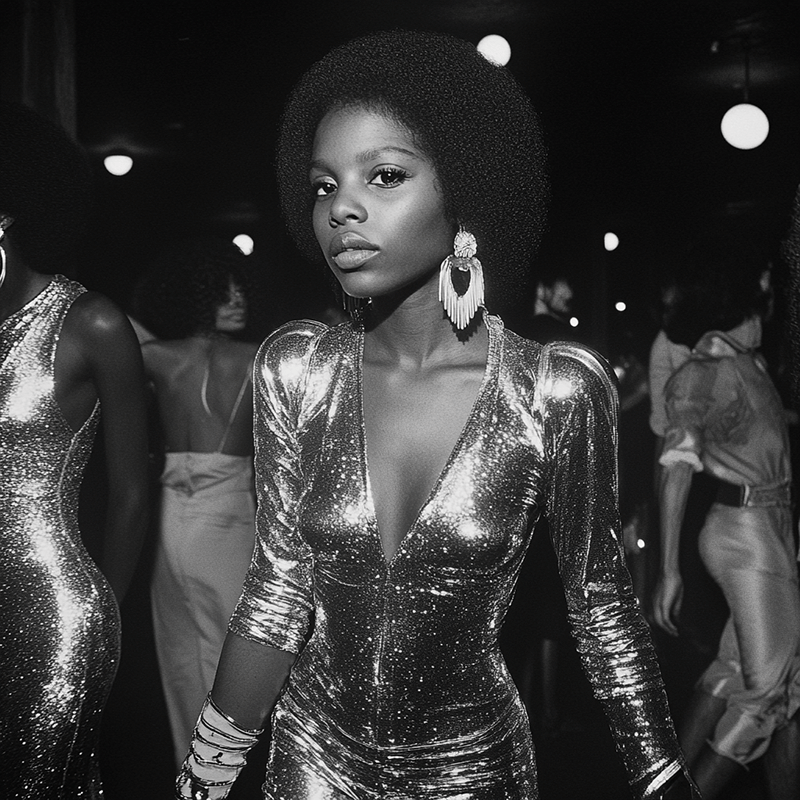
The 1970s nightlife and club scene burst with energy, catalyzing the rise of iconic disco fashion. Cities like New York saw their nightlife thrive, with disco culture becoming a significant influence. Legendary clubs like Studio 54 provided the perfect backdrop for self-expression through flamboyant clothing. People flocked to these hotspots, donning flashy outfits that mirrored the pulsating beats of disco music.
In these clubs, extravagant outfits adorned with sequins, glitter, and metallic fabrics were commonplace. The atmosphere encouraged everyone to stand out, pushing the boundaries of conventional fashion. The nightlife and club scene wasn't just about the music; it was a visual spectacle where fashion took center stage.
Three key elements defined this period:
- Studio 54: This iconic club was the epicenter of disco culture, attracting celebrities and setting trends with its extravagant parties.
- Self-Expression: The scene encouraged individuality, with people using their attire to make bold statements.
- Flashy Outfits: From sequined dresses to metallic jumpsuits, the clothing was as vibrant as the nightlife itself.
In essence, the 1970s club culture didn't just inspire disco fashion; it made it a cultural phenomenon.
Impact on Mainstream Fashion
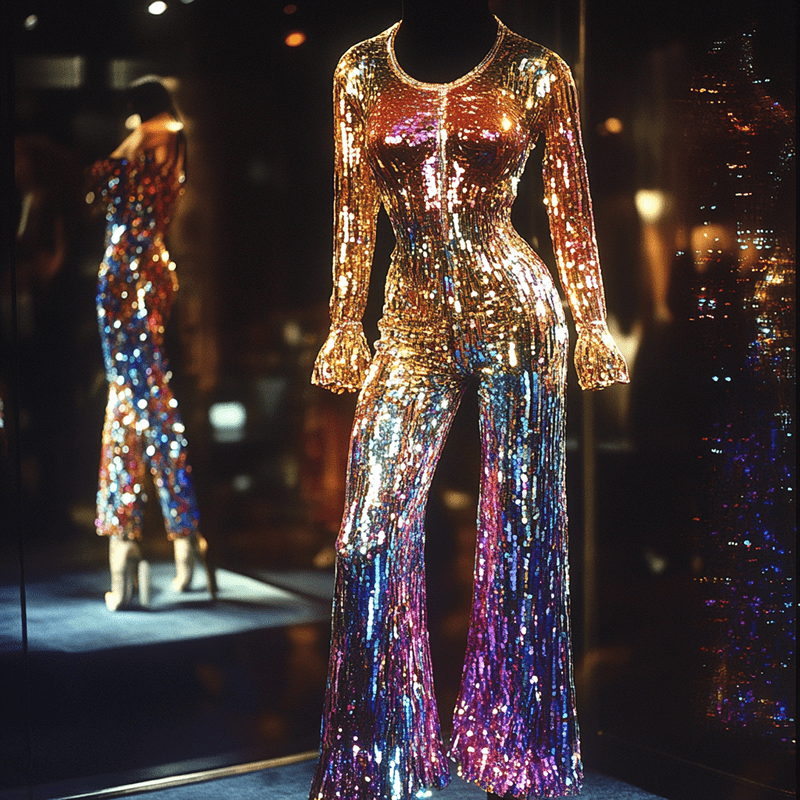
Disco fashion's vibrant and eclectic style rapidly permeated mainstream fashion, revamping everyday wardrobes with bold choices. The disco music scene, originating in gay underground clubs in New York, surged into popular culture.
Women's fashion embraced the disco trend with sequined dresses, bell bottoms, and skin-tight spandex, infusing the streets with glamour and boldness. For men, disco fashion introduced patterned shirts, tight pants, and chunky platform shoes, crafting a distinct and memorable look.
Iconic venues like Studio 54 in New York City were instrumental in popularizing these extravagant styles. These hotspots attracted celebrities who showcased the latest disco trends, setting fashion standards that quickly infiltrated mainstream culture.
The 1977 release of 'Saturday Night Fever' cemented the disco look as a cultural phenomenon. Consequently, the flashy outfits that once dominated the dance floor became everyday attire. As disco music conquered the airwaves, its associated fashion became a wardrobe staple, embodying the era's exuberance and flair.
Legacy and Modern Influence
The influence of disco fashion is still evident today, as its bold and expressive elements continue to shape modern styles. The legacy of disco fashion endures through vibrant styles, extravagant outfits, and a strong emphasis on self-expression. Fashion icons and designers often draw inspiration from this period, integrating its flamboyant spirit into contemporary clothing.
Modern interpretations of disco fashion may be more subdued, yet they still capture the essence of bold looks and creative choices. Metallic fabrics, sequins, and dramatic silhouettes frequently appear in current fashion collections.
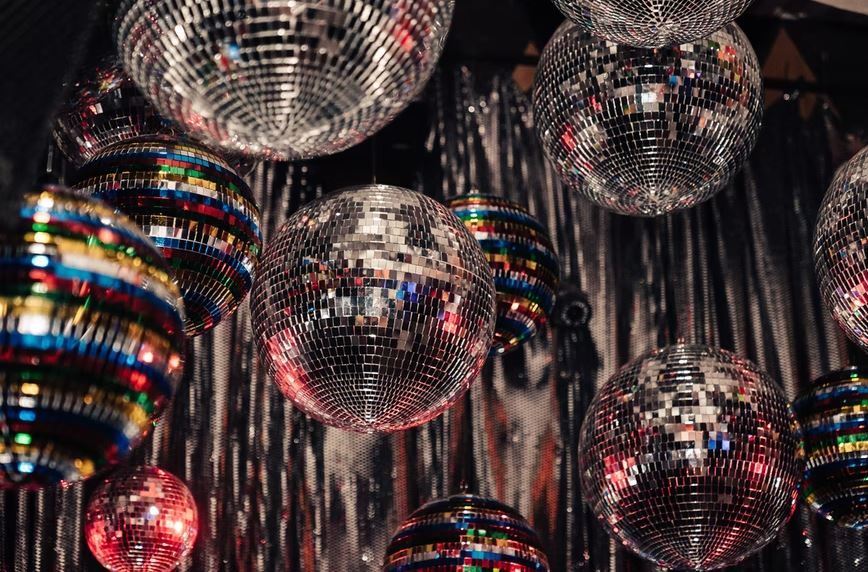
Disco fashion also remains a popular party theme, allowing people to relive the era's exuberance and freedom. The iconic disco ball, once a centerpiece of 70s nightclubs, often makes a comeback at themed events, highlighting the lasting influence of disco's vibrant style.
Disco fashion continues to leave its mark in several ways:
- Runway Shows: Designers incorporate elements like sequins and metallics, paying homage to disco's extravagant outfits.
- Street Style: Everyday fashion sometimes features bold, disco-inspired pieces.
- Celebrity Fashion: Modern fashion icons channel disco with daring, eye-catching ensembles.
The legacy of disco demonstrates that the period's emphasis on self-expression and creativity continues to resonate today.
Conclusion
Disco fashion emerged in the 1970s, propelled by the vibrant energy of New York City's underground clubs. Characterized by bold fabrics, vibrant colors, and luxurious materials, this style was more than just visually striking; it was a statement of freedom and individuality.
Influential icons and designers played significant roles in shaping this fashion movement, with nightclubs serving as the ideal stage for its display. Even today, the daring style of disco continues to inspire and influence modern fashion trends.