How Did Disco Influence 70s and 80s Fashion?
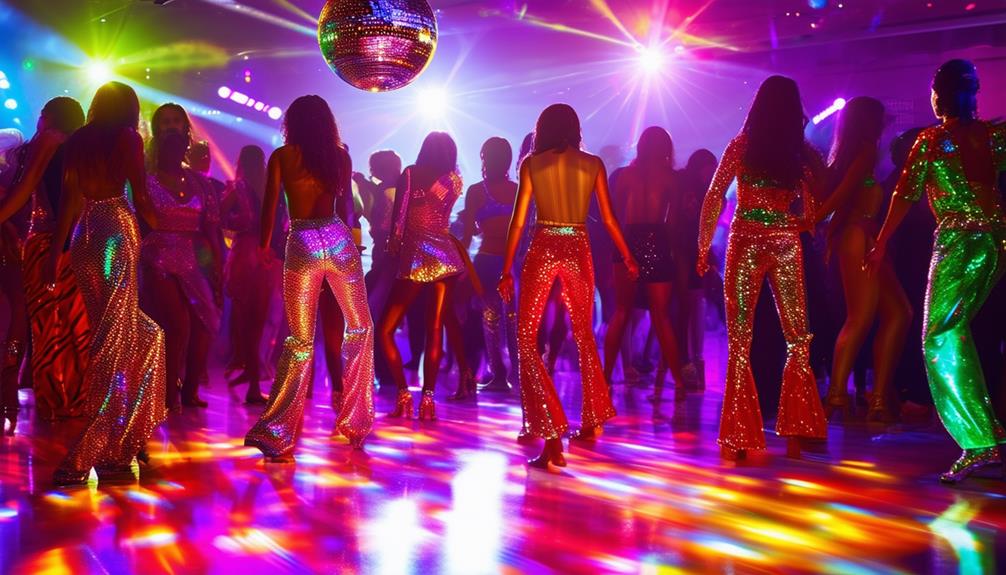
Disco's impact on 70s and 80s fashion goes beyond the glitz and glamour of Studio 54, though sequins and metallics were certainly prominent. Disco revolutionized how people expressed themselves through clothing, championing bold, body-conscious styles and introducing gender-fluid fashion, which challenged societal norms. These elements permeated everyday wardrobes and continue to inspire modern trends. Let's explore how disco reshaped the fashion landscape during these iconic decades.
Iconic Disco Fashion Elements
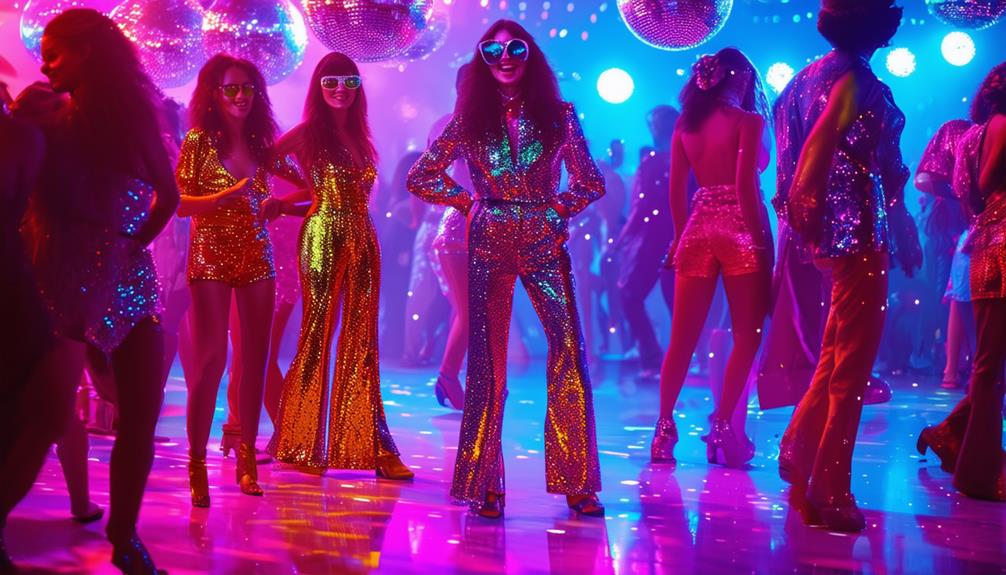
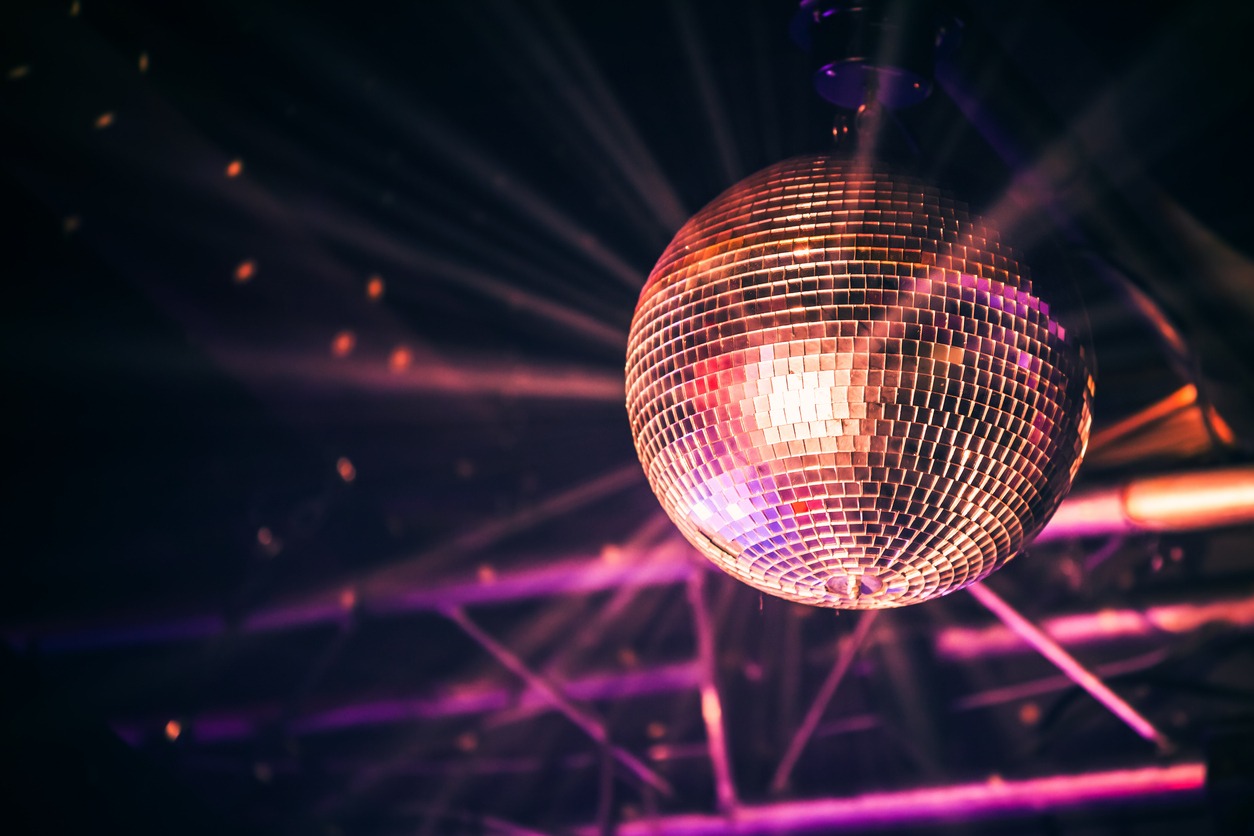
Disco fashion's iconic elements, such as sequins, metallics, and bold colors, perfectly captured the vibrant energy of the era. The flashy, eye-catching styles that dominated the dance floors are what come to mind when you think of disco fashion.
For both men and women, bell-bottom pants were essential. These flared pants allowed for easy movement and added drama to every dance step. Men often paired their bell-bottoms with leisure suits, featuring wide lapels and bold patterns, epitomizing disco glam. Women, on the other hand, gravitated towards wrap dresses and flowing gowns that highlighted their silhouettes and shimmered under the disco lights.
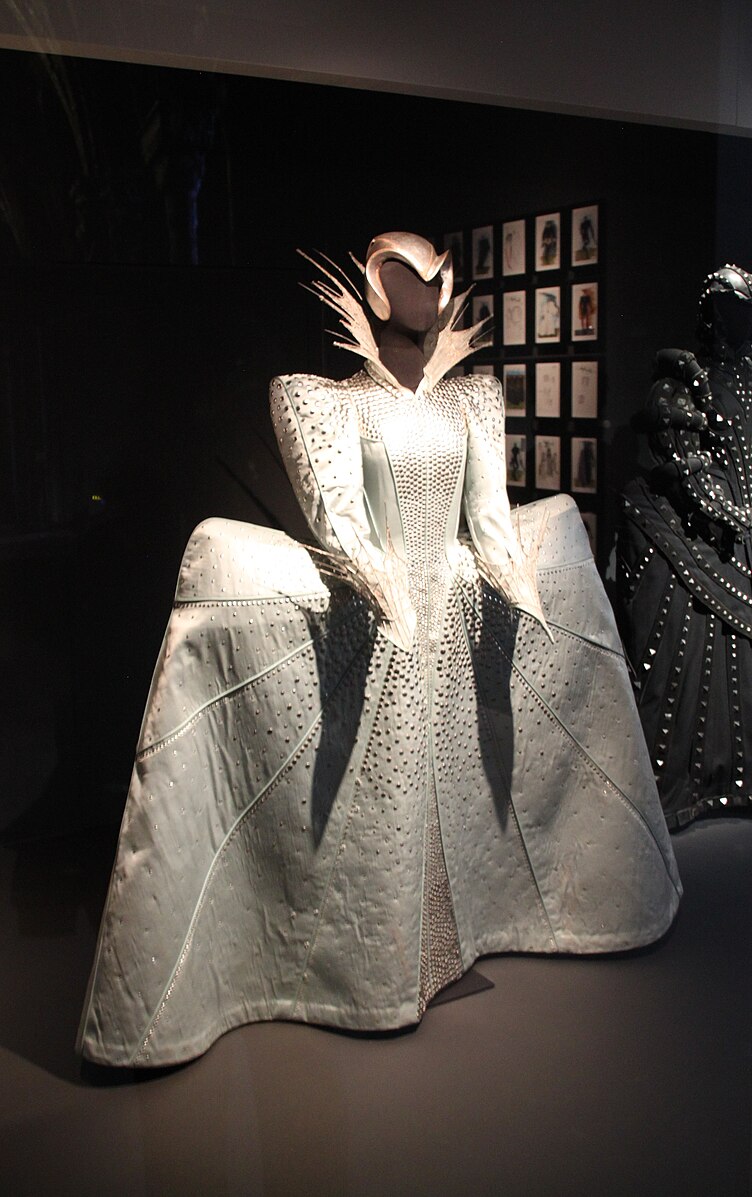
Mastering disco style was about mixing and matching textures and colors. Metallic fabrics and sequins were ubiquitous, giving every outfit a sparkly and futuristic feel. This wasn't just about looking good; it was about standing out and expressing yourself through your clothes.
The iconic fashion elements of the disco period did more than reflect a style; they embodied a cultural movement. Dressing in disco fashion meant being part of something vibrant and full of life.
Gender-Bending Trends
The 1970s and 1980s marked a revolutionary era in fashion as androgynous styles began to dissolve traditional gender norms, inviting people to explore fashion beyond societal expectations. Disco trends were instrumental in this evolution, offering a platform for individuals to express their gender identities more freely. Icons such as David Bowie and Grace Jones epitomized this movement, challenging conventional norms with their daring and flamboyant aesthetics.
Disco fashion transcended clothing, influencing hairstyles and makeup, and promoting gender-fluid fashion. This celebration of individuality and self-expression during the disco era contributed to a broader acceptance of diverse gender identities. Whether through sequins or platform shoes, the disco scene encouraged a playful and experimental approach to fashion.
Here's how these trends manifested:
| Element | Description |
|---|---|
| Clothing | Sequins, jumpsuits, and unisex outfits |
| Hairstyles | Long hair for men, short hair for women |
| Makeup | Bold colors and glitter for all genders |
| Accessories | Platform shoes, big belts, and jewelry |
Influence on Mainstream Fashion
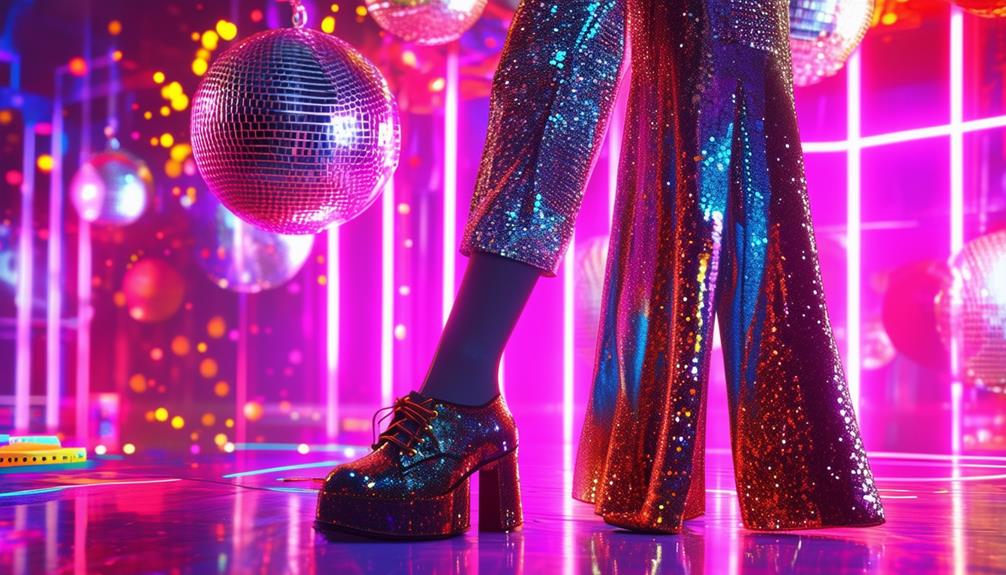
Mainstream fashion in the 1970s and 1980s underwent a vibrant transformation as disco culture introduced flashy, body-conscious clothing to the masses. Driven by disco music's high-energy vibes, people embraced bold, glam-inspired fashion featuring sequins, metallics, and form-fitting silhouettes. Disco fashion transcended dance floors, influencing everyday wardrobes and changing how people dressed for various occasions.
Legendary disco clubs like Studio 54 played a crucial role in popularizing these extravagant trends. Celebrities and fashion icons donned daring outfits that pushed the boundaries of mainstream fashion. This iconic period also embraced gender-bending and androgynous styles, encouraging experimentation with vibrant colors, bold patterns, and exaggerated accessories.
As a result, disco fashion became a cultural phenomenon, impacting not just party attire but also everyday looks. The legacy of this era remains evident today in contemporary party wear and themed events. The 1970s and 1980s disco era left a lasting impact on modern style, demonstrating that its bold and vibrant spirit is timeless.
Disco-Inspired Fabrics and Colors
Disco fashion was synonymous with flashy fabrics and vibrant colors. Sequins, Lurex, and metallics in gold and silver defined its glamorous look, lighting up dance floors with their eye-catching sparkle. Beyond the shine, disco celebrated bold hues like electric blue, neon pink, and vivid red, ensuring outfits stood out in any crowd.
Polyester became a staple for its durability and sheen, while satin and velvet added luxurious drape, perfect for fluid, glamorous looks that moved with the music. Form-fitting materials like Spandex allowed maximum movement, making it easy to dance the night away.
Bold patterns and prints, such as geometric shapes and psychedelic swirls, were also hallmarks of disco fashion. These dynamic elements made each outfit a statement piece. Together, these fabrics, colors, and patterns defined the extravagant, energetic essence of disco fashion, ensuring you were always ready to hit the dance floor.
Modern Disco Fashion Revival
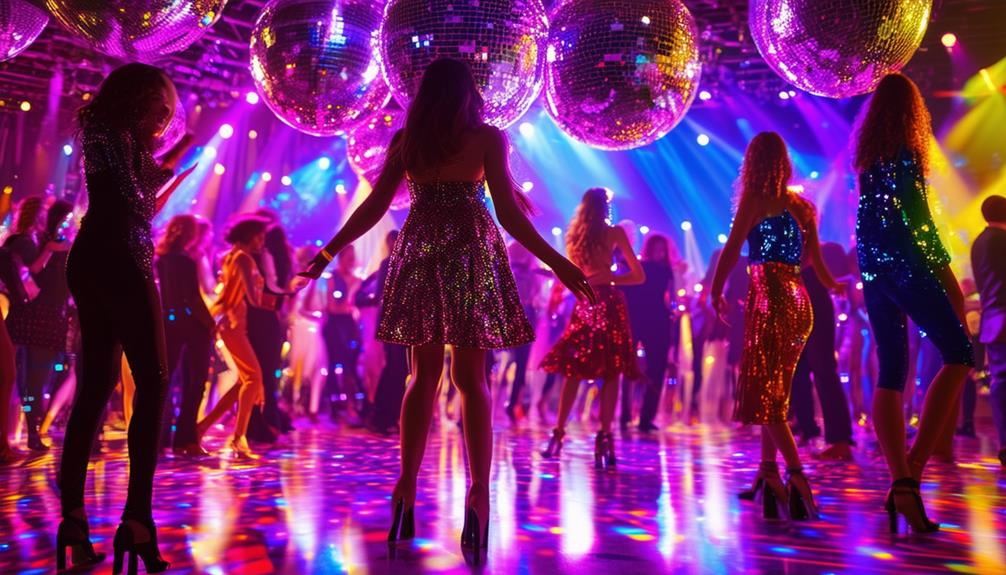
Celebrities and designers are bringing back disco fashion with dazzling sequins, bold patterns, and iconic bell bottoms. This resurgence is visible everywhere, from contemporary runways to streetwear. The modern disco fashion revival blends the best of 70s and 80s styles with contemporary twists.
Imagine updated versions of iconic disco attire—think jumpsuits with sleeker cuts, platform shoes with modern comfort, and metallic fabrics that shine brighter than ever.
Today's fashion scene embraces retro elements with a fresh spin. Sequins now adorn everything from dresses to accessories, adding that signature disco sparkle to your wardrobe. Bell bottoms have made a stylish comeback, paired with bold patterns that feel anything but outdated. Designers are reimagining these classic pieces with modern updates, ensuring they fit seamlessly into current styles.
Statement accessories complete the look. Oversized sunglasses, chunky jewelry, and glittery clutches add extra flair. The influence of disco fashion is unmistakable in current trends, blending nostalgia with innovation.
Conclusion
Disco's bold and glamorous style significantly influenced 70s and 80s fashion. With its iconic elements, gender-bending trends, and vibrant fabrics, disco transcended the dance floor to permeate mainstream fashion. Today, its influence is still evident in modern party wear and themed events. Whether it's sequins, metallics, or androgynous looks, disco's legacy continues to inspire and celebrate self-expression in fashion.