How Do Flamingos Sleep? Understanding Their Unique Sleeping Habits

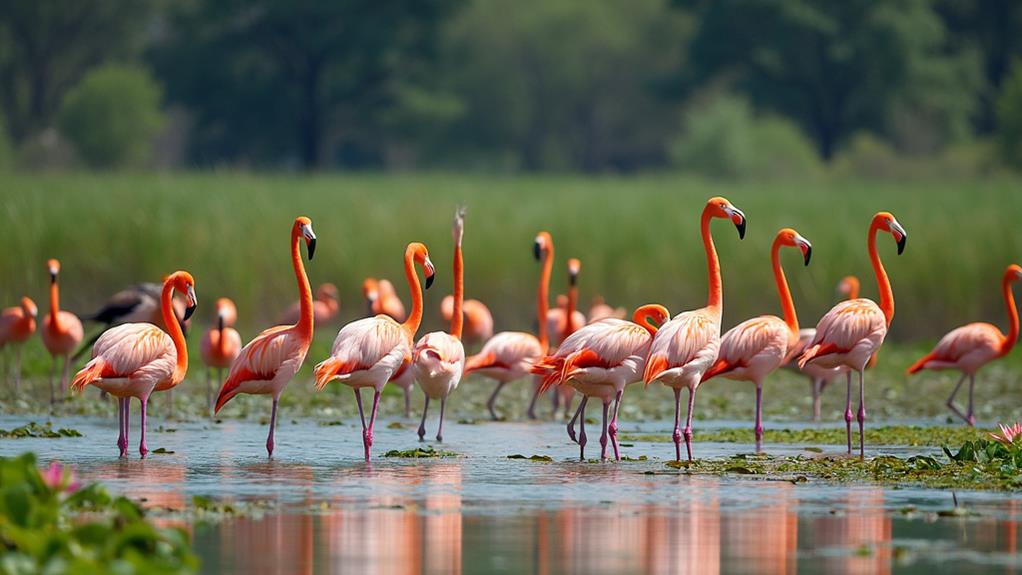
Flamingos sleep standing on one leg, which minimizes muscle fatigue and helps retain body heat. They rest with one brain hemisphere awake, staying alert to predators. By choosing shallow water spots, they create natural barriers against threats. Group sleeping provides safety in numbers, with juveniles positioned centrally for added warmth and protection. Tucking heads under wings and using their feather insulation help them stay warm. This unique blend of physical adaptations and social behaviors guarantees flamingos are always ready to respond to danger. For deeper insights into these fascinating habits, there's much more to investigate about how they manage rest and vigilance.
One-Legged Sleeping
Have you ever wondered why flamingos often sleep standing on one leg? It's all about flamingo leg mechanics and optimizing their rest. Flamingos have a unique skeletal and muscular structure allowing them to lock one leg in place with minimal effort. This locking mechanism helps reduce muscle fatigue and allows them to maintain balance even while asleep.
By standing on one leg, flamingos can reduce the amount of body heat lost to the surrounding air or water. This is vital for maintaining their body temperature, especially during longer sleep durations. The one-legged stance fundamentally cuts down the surface area exposed to cold environments, conserving energy and warmth.
Moreover, alternating between legs gives each leg a break from supporting the entire body weight, preventing overexertion and potential injuries. This switch happens seamlessly, ensuring that neither leg gets too tired.
Unihemispheric Sleep
While flamingos impress with their one-legged sleeping stance, their sleep habits become even more fascinating with unihemispheric sleep. This unique ability lets them rest one brain hemisphere at a time while the other remains alert. You might wonder why this is significant. Well, it allows flamingos to stay vigilant against potential threats even as they catch some rest.
Imagine only half of your brain going through sleep cycles while the other half stays awake. This is fundamentally what flamingos do. When one hemisphere of their brain is in a deep sleep, the other is in a wakeful state, scanning the environment for danger. By alternating between the two hemispheres, flamingos guarantee they get the rest they need without ever being completely unconscious.
This adaptation is vital for their survival, especially in the wild where predators are always a threat. It's not just flamingos that have this ability; some other birds and marine mammals also exhibit unihemispheric sleep. But for flamingos, it's a perfect blend of vigilance and rest, allowing them to thrive in their often unpredictable habitats. Isn't it amazing how evolution equips animals with such specialized skills?
Finding Safe Sleeping Spots
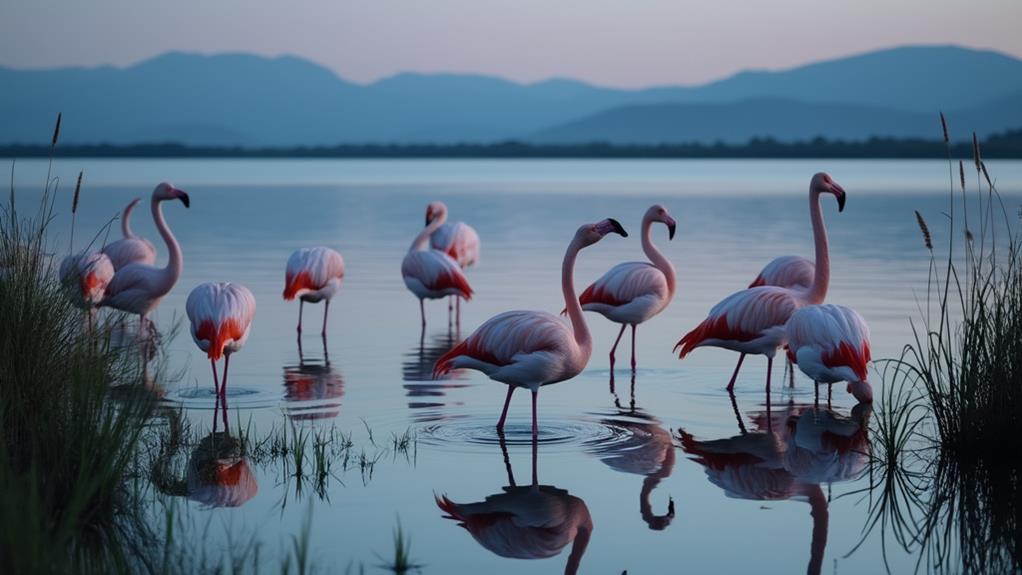
Flamingos' ability to sleep with one eye open isn't their only trick for staying safe. Regarding finding the perfect sleeping spot, flamingos are quite strategic. They often choose nesting sites that are surrounded by water. This acts as a natural barrier against predators. The shallow waters provide an early warning system, as any approaching threat will create ripples, alerting the sleeping birds.
Environmental factors play a significant role in these choices. Flamingos are highly sensitive to changes in their surroundings. They seek out areas with stable water levels and minimal human disturbance. This guarantees a peaceful environment where they can rest without constant threats. Furthermore, they prefer locations with ample food supply nearby to minimize the energy expended on foraging.
You'll also notice that flamingos tend to avoid areas with high vegetation. Dense foliage can hide predators, making it risky for them to sleep. By choosing open spaces, they maintain a clear line of sight, enhancing their safety. So, the next time you see a flock of flamingos standing serenely in the water, keep in mind that their choice of sleeping spot is a well-thought-out strategy for survival.
Group Sleeping Behavior
Regarding sleeping in groups, flamingos exhibit fascinating social behavior. They engage in communal roosting, which not only provides safety in numbers but also improves their social interactions. By sleeping in large flocks, flamingos can better communicate and maintain their tight-knit communities, ensuring everyone is aware of potential dangers and environmental changes.
When observing a group of sleeping flamingos, you'll notice:
- Close Proximity: Flamingos often sleep tightly packed together, reducing individual exposure to predators.
- Synchrony: Many flamingos will rest and wake at the same times, showing a high level of coordination.
- Standing on One Leg: Even while sleeping, flamingos frequently stand on one leg, which helps conserve body heat.
- Head Tucking: Flamingos tuck their heads under their wings, a position that seems to add comfort and protection.
- Vocal Communication: Despite being at rest, flamingos will occasionally make soft calls, maintaining social bonds even while asleep.
This communal roosting isn't just about safety; it's also about fostering strong social ties within the flock. By sleeping in groups, flamingos create a supportive network that boosts their general chances of survival.
Nighttime Vigilance

Nighttime vigilance is a essential aspect of a flamingo's survival strategy. You might wonder how these elegant birds manage to stay safe during the dark hours. Flamingos possess a fascinating blend of nocturnal behavior and unique sleep cycles that help them remain alert to potential threats.
When night falls, flamingos don't fully succumb to sleep like many other animals. Instead, they adopt a semi-restful state, allowing one half of their brain to sleep while the other remains awake. This unihemispheric slow-wave sleep is imperative for maintaining vigilance. It lets them quickly respond to predators while still getting some rest.
Their nocturnal behavior is finely tuned to the rhythm of their environment. Flamingos often sleep in groups, where they can take turns being on alert. This shared responsibility guarantees that there are always a few individuals watching for danger, even in the dead of night. By rotating their sleep cycles, they balance the need for rest with the necessity of staying watchful.
This combination of group dynamics and specialized sleep patterns shows just how adapted flamingos are to their habitats. By understanding their nighttime vigilance, you can appreciate the remarkable strategies these birds use to stay safe and thrive.
Resting in Water
Many flamingos opt to rest in water, utilizing their unique anatomy and behavior to guarantee safety and comfort. When you observe flamingos, you'll notice they often stand on one leg in shallow waters, which offers them a stable foundation. This water stability is essential as it helps them avoid predators that might lurk on dry land. By partially submerging themselves, they maintain a level of alertness while still getting the rest they need.
The sleep duration for flamingos isn't long, but frequent short naps throughout the day allow them to stay vigilant. Here's a closer look at how they make the most of their watery rest spots:
- One-legged stance: This reduces muscle fatigue and improves balance.
- Shallow waters: Guarantees they can quickly wake and react to threats.
- Group sleeping: Staying close to other flamingos offers mutual protection.
- Half-brain sleep: Allows them to rest while remaining semi-alert.
- Long necks: Can be tucked into their feathers to conserve heat.
Temperature Regulation

Although flamingos are often associated with warm, tropical environments, their ability to regulate body temperature is vital for survival. You might not realize it, but flamingos face temperature fluctuations that can be quite challenging. Their unique sleeping habits play a significant role in managing these changes. Feather insulation is one of their key adaptations. Flamingos have a dense layer of feathers that trap air close to their bodies, helping to maintain a stable body temperature even when the environment shifts from warm days to cooler nights.
When flamingos sleep, they often tuck one leg up into their bodies, which reduces heat loss through their limbs. This behavior is not just for balance; it's an effective way to conserve energy and retain warmth. By standing on one leg, they minimize the amount of exposed skin, further improving temperature regulation.
Additionally, flamingos sometimes sleep with their heads tucked under their wings. This position helps to shield sensitive body parts from the cold, using their feather insulation to its full advantage. So, next time you see a flamingo resting on one leg, remember it's not just about comfort—it's a sophisticated strategy for staying warm.
Impact of Predators
While temperature regulation is vital for flamingos, the presence of predators also greatly influences their sleeping habits. You'll find that predator avoidance plays a significant role in how and where flamingos choose to rest. Flamingos often sleep standing on one leg, but did you know they also prefer shallow waters for sleeping? This tactic helps them detect vibrations and disturbances, giving them an early warning of approaching threats.
Flamingos face numerous environmental pressures from predators like large birds, such as eagles and vultures, and land predators, including foxes and jackals. These threats drive flamingos to develop unique sleeping behaviors aimed at staying safe.
Consider these adaptive behaviors:
- Shallow Water Sleeping: Reduces the risk of land predators.
- Group Sleeping: Safety in numbers helps detect threats early.
- Standing on One Leg: Quick getaway mode if needed.
- Rotating Sleep Patterns: Guarantees some flamingos are always alert.
- Choosing Locations with Clear Visibility: Easier to spot approaching danger.
Understanding these behaviors highlights how predator avoidance is deeply ingrained in flamingo sleeping habits. By adapting to these environmental pressures, flamingos have evolved ways to minimize the risk of predation while they rest.
Juvenile Sleeping Patterns

Understanding the sleeping patterns of juvenile flamingos provides insight into their early development and survival strategies. When you observe juvenile flamingos, you'll notice they often sleep in different nesting locations compared to adults. These young birds tend to stay closer to the center of the colony where they are better protected from predators. This strategic positioning not only guarantees their safety but also helps them stay warm, as they rely on the collective body heat of the group.
Social interactions play a vital role in how juvenile flamingos sleep. You'll find that these young birds tend to huddle together, creating a sense of security and stability. This close physical contact promotes bonding and helps regulate their body temperature. Juveniles often mimic the sleeping postures of adult flamingos, such as standing on one leg, although they may not be as adept initially.
Adaptations for Sleep
Juvenile flamingos provide a fascinating glimpse into the early stages of flamingo life, but let's now investigate the intriguing adaptations these birds have developed for sleep. You might wonder how these elegant creatures manage to rest on one leg without toppling over. Their unique sleep posture is the primary clue. By tucking one leg up and standing on the other, flamingos reduce muscle fatigue and maintain balance more efficiently.
Flamingos have also evolved specific adaptations to keep their feathers in prime condition during sleep. Proper feather maintenance is essential, as it guarantees insulation and buoyancy. They often tuck their heads into their feathers, keeping them warm and protected.
Here are some key adaptations that highlight flamingo sleeping habits:
- One-legged stance: Reduces muscle strain and helps with balance.
- Head tucked into feathers: Keeps the head warm and feathers protected.
- Feather maintenance: Keeps feathers aligned and functional.
- Semi-conscious state: Allows them to remain alert to potential threats.
- Group sleeping: Provides added security and warmth through numbers.
These adaptations demonstrate how flamingos have perfected the art of sleep, balancing rest and vigilance in their unique environments.