How Flamingos Communicate: Vocalizations and Social Interactions
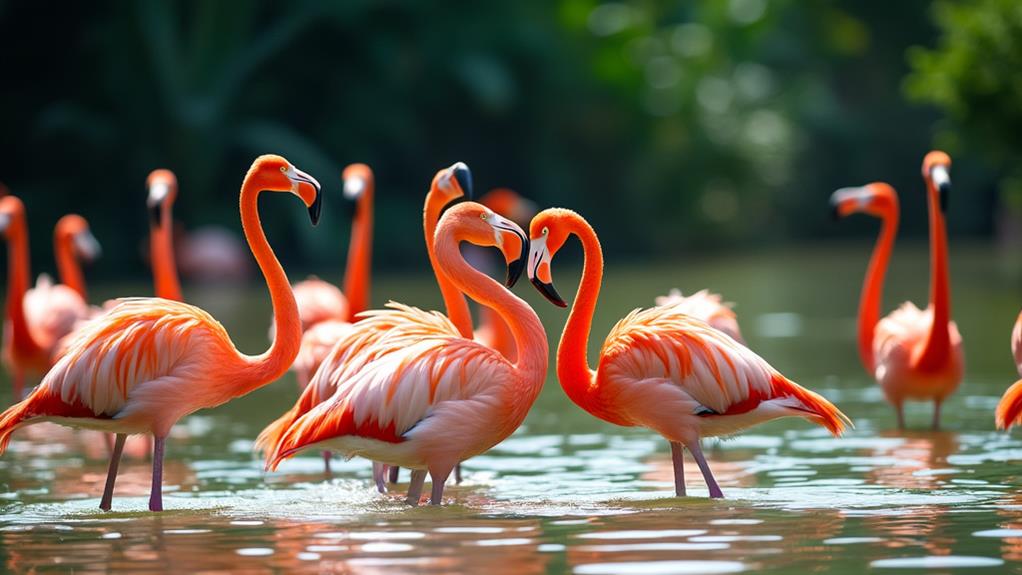
Flamingos use a blend of vocalizations and social behaviors to communicate. You'll hear contact calls to maintain group cohesion, sharp alarm calls for danger alerts, and melodic mating calls during breeding times. Their social structure relies on visual signals and vocal cues to establish hierarchies, with dominant birds flaunting bright plumage and larger wing spans. Courtship rituals are elaborate, featuring synchronized dances and soft cooing. Parents even have unique vocal calls to identify their chicks. By observing their coordinated movements and threat displays, you'll uncover the complex ways flamingos thrive in large colonies.
Vocal Communication Basics
In the fascinating world of flamingos, vocal communication plays a fundamental role in maintaining social bonds and coordinating group activities. You'll find that flamingo vocalizations are incredibly varied, serving multiple purposes that are essential to their survival and social structure. These birds rely on a range of sounds to convey messages, from alerting others to potential dangers to reinforcing social hierarchies within the flock.
Over time, the evolution of communication among flamingos has become more nuanced. This evolution allows them to adapt to their environments and maintain strong, cohesive groups. Their vocalizations might seem simple at the outset, but they're actually quite sophisticated, enabling flamingos to interact efficiently in large colonies. By producing distinct sounds, they can identify each other, even amid thousands of individuals, ensuring that family units stay together.
You'll notice that flamingos often engage in synchronized vocal displays, which are critical for both mating rituals and deterring predators. These behaviors highlight the important role vocal communication plays in their daily lives. By understanding these basics, you can better appreciate the complex social dynamics and evolutionary adaptations that make flamingo communication so captivating.
Types of Flamingo Calls
Expanding on the basics of vocal communication, let's investigate the specific types of calls flamingos use. Flamingo call types are diverse, each serving a unique purpose in their social structure. These vocalization patterns include contact calls, alarm calls, and mating calls.
Contact calls, often described as honks or grunts, help flamingos maintain group cohesion. When you listen closely, you'll notice these calls are frequent and rhythmic, ensuring members stay in touch, especially in large flocks.
Alarm calls are sharper and more urgent. These calls alert the flock to potential dangers. You might hear a sudden, high-pitched squawk if a predator is nearby. This immediate and distinct vocalization pattern prompts quick and coordinated responses, vital for their survival.
Mating calls, on the other hand, are more melodic and intricate. During the breeding season, males produce these calls to attract females. If you observe closely, you'll see that these calls are often accompanied by elaborate visual displays, making the mating ritual a multisensory experience.
Functions of Vocalizations
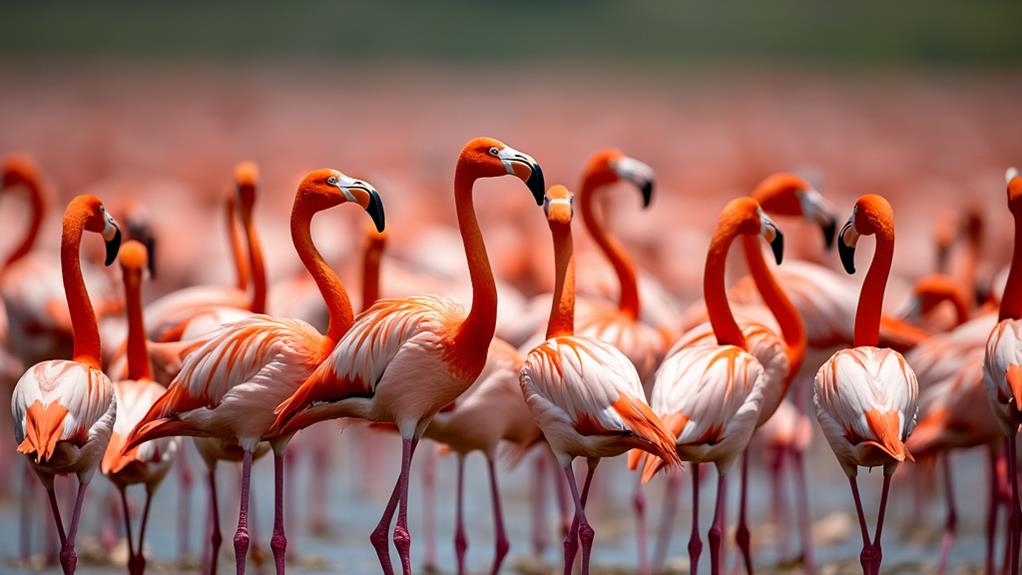
Understanding the functions of vocalizations in flamingos is fundamental for grasping their social dynamics. When you observe flamingos, you'll notice they produce a variety of sounds that aren't just random calls. Each vocalization serves a specific purpose. For instance, flamingo dialects allow these birds to recognize and bond with members of their own group. These dialects can vary between different colonies, helping flamingos identify friend from foe.
Sound variations also play an important role in their daily lives. Flamingos use distinct calls to signal alarm, ensuring the entire flock is alert to potential dangers. These warning calls are usually sharp and loud, designed to travel long distances. On the flip side, softer, more rhythmic sounds are used during courtship rituals, helping flamingos attract mates and establish pair bonds.
Moreover, vocalizations are significant for parent-offspring interactions. Chicks learn to recognize the unique calls of their parents, which is crucial in crowded colonies where visual identification might be challenging. By understanding these functions, you can appreciate how intricate and important vocal communication is in maintaining the social fabric of flamingo communities.
Social Structures in Colonies
Social hierarchy is a significant aspect of flamingo colonies, shaping interactions and behaviors among individuals. When you observe a flamingo colony, you'll notice that it's not just a random gathering of birds; there's a complex social structure at play. Flamingo hierarchies are fundamental for maintaining order and reducing conflicts within the colony.
In these social structures, higher-ranking flamingos often have priority access to resources like food and nesting sites, which impacts the colony dynamics considerably. You can see dominant flamingos asserting their status through specific behaviors, such as standing taller and spreading their wings. These displays help reinforce their position within the group and guarantee that the social order is maintained.
Moreover, social bonds in flamingo colonies are critical for their survival. You might observe flamingos engaging in synchronized activities such as preening and feeding, which aren't just for show; they strengthen social ties and promote unity within the group. This collective behavior is essential for the overall health and stability of the colony, as it helps individuals cooperate and support each other in different situations.
Understanding these social structures provides valuable insights into flamingo behavior and highlights the significance of hierarchy in their daily lives.
Establishing Hierarchies
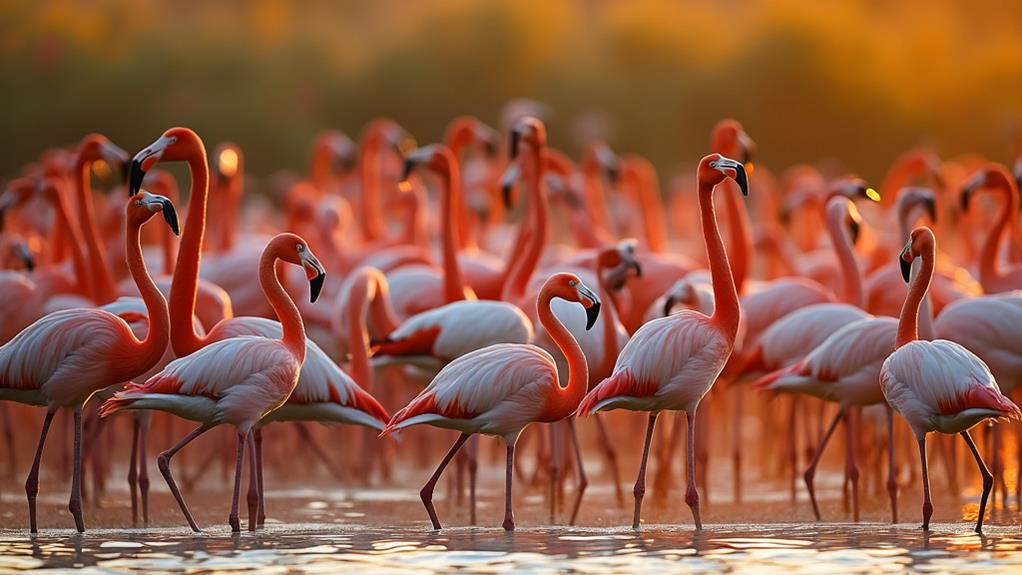
Observing the intricate social structures in flamingo colonies leads us to question how these hierarchies are established in the initial place. Flamingos use a variety of tactics to establish and maintain their ranks within the group. Dominance signals and visual displays play a vital role in this process. For example, a flamingo might stretch its neck and spread its wings to assert authority.
Here's a breakdown of how these behaviors contribute to hierarchy formation:
- Dominance Signals: Flamingos use specific postures and movements to assert their dominance over others.
- Visual Displays: Bright plumage and expansive wing spans are used to intimidate rivals and establish rank recognition.
- Territory Disputes: When conflicts arise over space, flamingos engage in direct confrontations to secure their spot.
- Social Bonding: Strong bonds within smaller groups improve overall group cohesion and help in determining leadership roles.
These behaviors aren't just about aggression; they also play a part in conflict resolution. By recognizing each other's ranks, flamingos can avoid unnecessary fights, ensuring smoother interactions within the colony. This complex web of social interactions helps maintain order and stability, fundamental for the group's survival and well-being.
Courtship and Mating Rituals
How do flamingos attract their mates in such colorful and flourishing colonies? It all starts with elaborate courtship displays that are as mesmerizing as they are effective. You'll notice that groups of flamingos engage in synchronized movements, a spectacle often referred to as mating dances. These dances are vital for grabbing the attention of potential mates.
During these courtship displays, male flamingos stretch their necks, flap their wings, and march in unison. These orchestrated movements not only showcase their physical fitness but also help establish compatibility among potential partners. You might think of it as a grand performance where the audience is made up of prospective mates.
The mating dances don't stop there; they intensify as flamingos get closer to pairing up. Almost like a choreographed routine, the birds mirror each other's movements, creating a strong visual bond. This synchronization is important for building trust and ensuring that both partners are similarly committed.
In these lively colonies, courtship and mating rituals are more than just displays of affection; they're strategic efforts to find the best possible match. So, next time you see flamingos dancing, remember, it's all about winning hearts and securing a mate.
Parental Communication
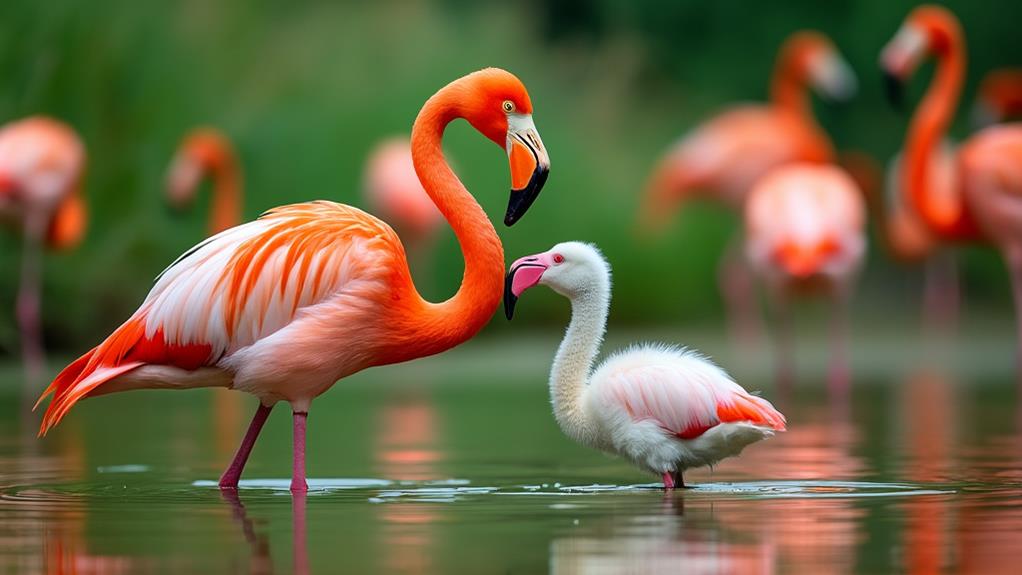
Ever wondered how flamingo parents communicate with their chicks in lively, noisy colonies? Flamingo parents have developed precise methods to guarantee their chicks get the care they need. One fundamental aspect is chick recognition. Amidst hundreds of similar-looking chicks, each parent can distinguish their own through unique vocalizations. These calls are developed early and are crucial for maintaining the bond in the crowded environment.
To visualize this, imagine the following:
- Distinct Calls: Each chick has a unique call that the parent recognizes amidst the cacophony.
- Feeding Cues: Parents and chicks use specific sounds to signal feeding time, making sure the chick gets nourishment.
- Visual Markings: Subtle differences in appearance also aid in individual recognition.
- Location Memory: Parents remember the specific area where they left their chick, aiding in quick reunions.
Feeding cues play a significant role in their communication. When a chick is hungry, it emits a particular sound, prompting the parent to regurgitate food. This interaction guarantees that the chick's nutritional needs are met promptly. Through these sophisticated communication techniques, flamingos maintain strong family bonds, even in the midst of vibrant colonies.
Coordinating Group Activities
While flamingo parents painstakingly care for their chicks, these birds also exhibit remarkable coordination in their group activities. You'll notice that flamingos move in unison, creating stunning displays of synchronized movements. This coordination isn't just for show; it's vital for their survival and social structure.
Flamingos use vocalizations and body language to maintain group dynamics. When you watch them, you'll see how they communicate through a series of calls and postures, ensuring everyone stays together. This is critical when they forage for food, as it helps them cover large areas efficiently and protect each other from predators.
In addition to vocal cues, flamingos rely on visual signals to coordinate their activities. You might observe them performing intricate preening rituals or moving in waves during feeding times. These synchronized movements are a product of their highly developed social interactions. Each bird knows its role within the group, allowing them to function as a cohesive unit.
Threat Displays and Warnings
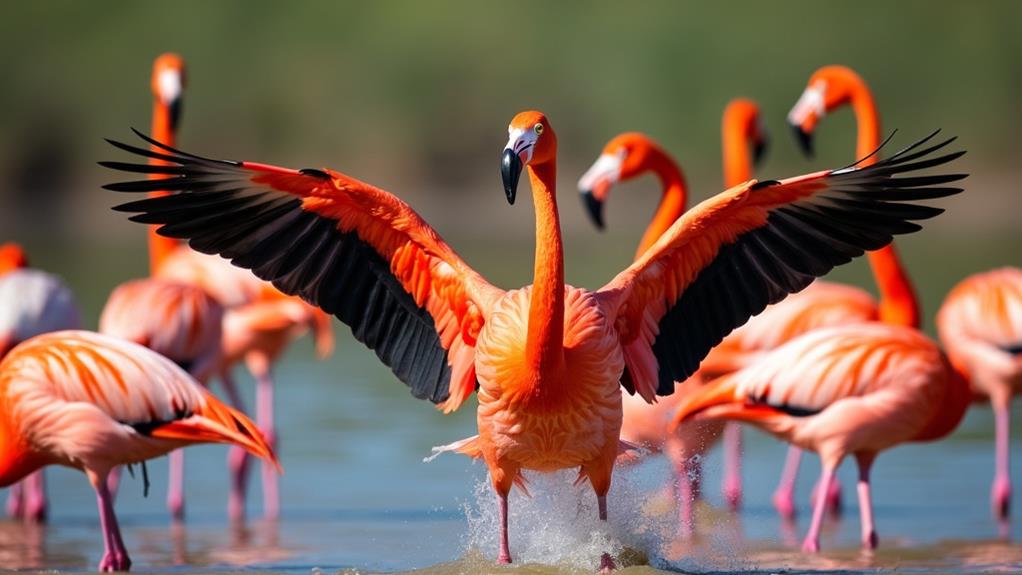
Flamingos have developed a fascinating array of threat displays and warnings to protect their groups from potential dangers. When a flamingo perceives a threat, it engages in specific behaviors to alert the flock. You might notice a series of actions that signal the presence of danger, each designed to communicate efficiently.
- Raised Neck and Head: Flamingos will stretch their necks and raise their heads high, scanning the area for any potential threats.
- Wing Spreading: To appear larger and more intimidating, they'll spread their wings wide, showcasing their striking plumage.
- Alarm Calls: Flamingos emit loud, sharp calls to warn others. These alarm calls ripple through the flock, rapidly increasing their collective threat perception.
- Group Movement: The flock may move closer together, creating a tighter formation that can confuse or deter predators.