How to Incorporate Fiber Optic Lighting Into Your Home Design for a Cool and Unique Look
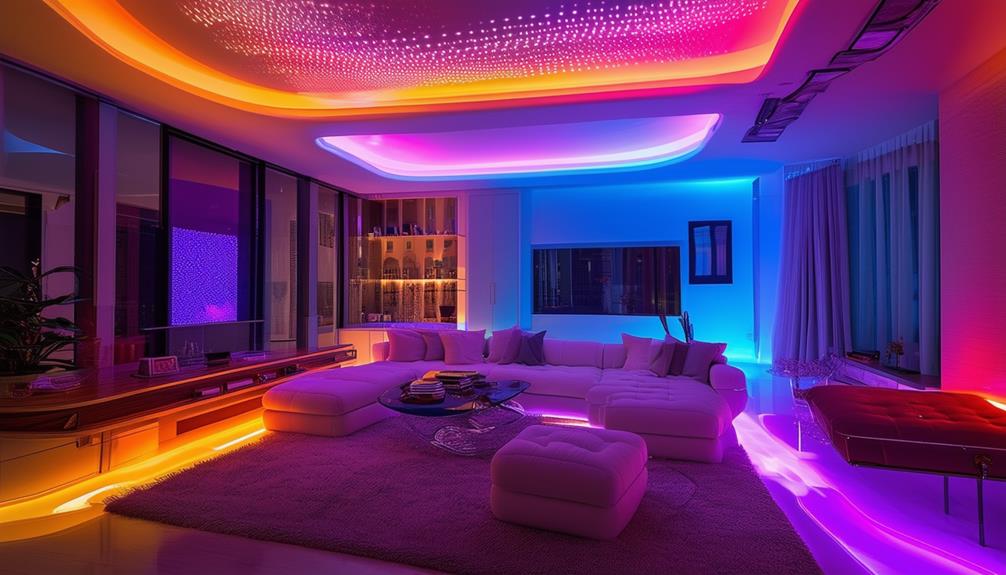
Incorporating fiber optic lighting into your home design can significantly enhance its aesthetic appeal, giving it a modern and sophisticated edge. You might wonder where to begin—should you start with understanding the technology or mapping out the perfect spots?
Imagine creating a starry night sky on your ceiling or highlighting your favorite artwork with subtle, glowing accents. These possibilities not only boost the visual appeal but also add a layer of customization you won't find with traditional lighting. Curious about the steps involved in making this transformation a reality? Let's explore the key aspects to get you started.
Understanding Fiber Optic Lighting
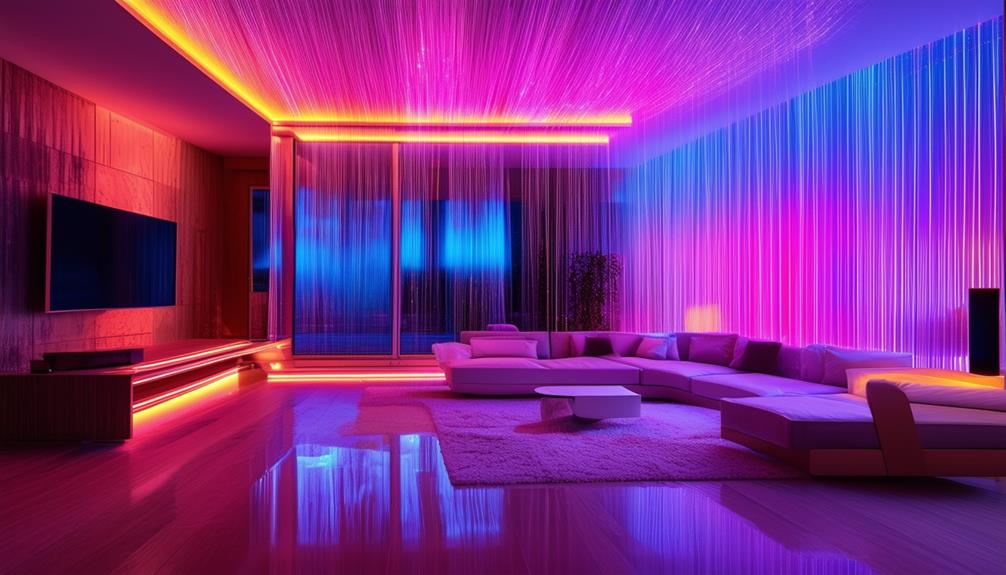
Fiber optic lighting employs specialized fibers to transmit light, offering exceptional design flexibility and versatility. These fibers channel light from a single source to multiple points, enabling the creation of unique and captivating lighting effects throughout your home. Imagine transforming any room with enchanting ambiance by simply adjusting the light's intensity or color.
A standout feature of fiber optic lighting is its energy efficiency. The centralized light source combined with the fibers' role in merely transporting light results in significantly reduced electricity bills. Additionally, fiber optic lights are long-lasting and require minimal maintenance, making them a cost-effective option.
Another advantage is the lack of heat emission. This ensures safe integration into any space without concerns of overheating or discomfort. They can be used in areas where traditional lighting poses safety risks, such as near fabrics or delicate materials.
Incorporating fiber optic lighting into your home design can elevate its aesthetic appeal. It allows for the creation of stunning, mesmerizing lighting effects, making your home both unique and inviting.
Choosing the Right Location
When deciding where to install fiber optic lighting, focus on areas that will benefit most from its unique and visually appealing ambiance. Consider spaces like ceilings, walls, or floors where the glow can truly shine. Evaluate the functionality and purpose of each room. Are you aiming for task lighting, decorative accents, or mood improvement? Each objective will guide your choice of location.
Consider areas with minimal natural light. These spots will optimize the impact of fiber optic lighting, creating an alluring glow that stands out. Opt for locations where you can conceal the light sources or illuminator, maintaining a seamless and enchanting effect. Ideal spots include behind furniture, inside cabinets, or above false ceilings. This approach keeps the focus on the light itself, rather than the mechanics behind it.
Don't forget about practicality. Installation and maintenance are key factors. Ensure the chosen location allows easy access to fiber optic cables and light sources for any future upkeep. This ensures you'll remain satisfied with your design in the long run.
Designing Your Layout
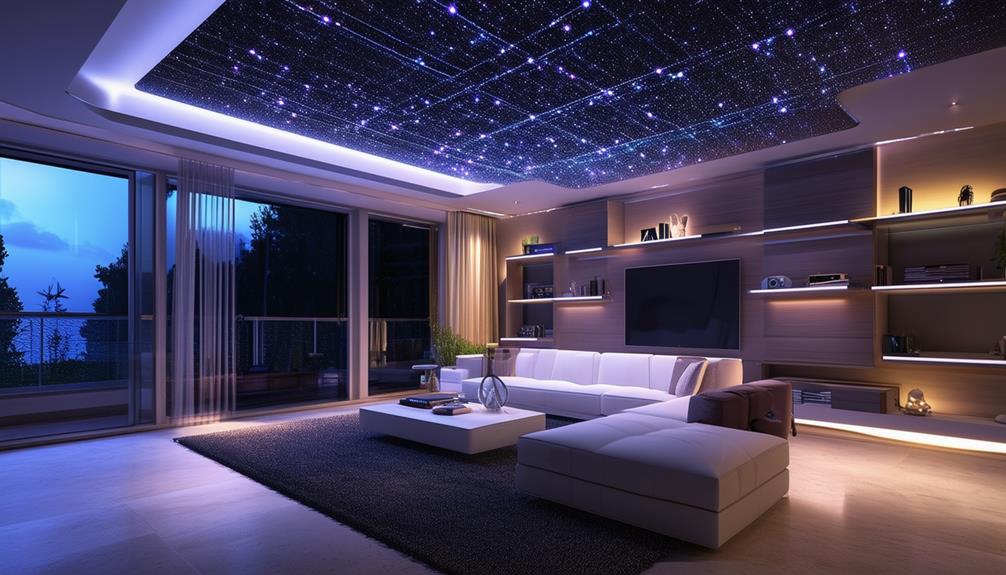
When designing your layout, consider the placement and spacing of the fiber optic strands to ensure even illumination. Plan power sources and connectivity to keep wires hidden and maintain a clean appearance.
Placement and Spacing
To achieve a balanced and visually appealing effect in your space, strategically place your light sources. When using fiber optics, consistent placement and spacing are crucial for even light distribution. This ensures a harmonious ambiance and effectively highlights key areas.
For a creative touch, vary the spacing between fiber optic strands. Closer spacing can produce a more intense light effect in focal points, while wider spacing offers a subtler glow. This allows for different lighting zones or patterns, adding uniqueness to your design.
Consider the distance between the light source and the fiber optics, as this affects optimum light transmission and brightness. Careful planning of your layout will enhance the overall ambiance and highlight specific features such as architectural details or artwork, making them stand out. Properly spaced and placed fiber optic elements can significantly improve the aesthetic appeal of your space.
Power and Connectivity
Efficiently planning the power source and connectivity for your fiber optic lighting ensures a streamlined design with minimal visible wiring. Begin by determining the optimal location for your power source. Choose a spot that's easily accessible yet discreet, ensuring your setup remains neat and unobtrusive.
Next, carefully map out the layout of your fiber optic strands. This step is crucial for achieving a cohesive and visually appealing design that complements your home decor. Consider the pathways the strands will follow and how they'll connect to the power source.
Utilize connectors and splitters to distribute power efficiently. These components enable you to connect multiple fiber optic strands, creating a seamless lighting effect. Connectors allow you to join strands without excessive wiring, while splitters let you branch out from a single power source to several strands, maintaining a clean look. Incorporating a remote control system enhances your design by offering easy operation and customization. You can effortlessly adjust colors and brightness levels.
Installing Fiber Optic Strands
Cut the fiber optic strands at a 45-degree angle to ensure they pass smoothly through fabric or ceiling tiles. This initial step is crucial for a seamless installation of your fiber optic lighting. Once cut, secure the strands in place using a glue gun to prevent any retraction or loosening, ensuring a sturdy and long-lasting setup.
When inserting the strands through the fabric or ceiling tiles, create a random pattern for full coverage and a natural-looking lighting effect. Route bundles of fiber optic strands to designated areas to achieve a cohesive and uniform lighting effect, enhancing the ambiance of your space.
Placement is key. Ensure that the bundles are routed effectively to avoid congestion and overlapping. Secure each bundle with care, maintaining a clean and organized layout. This professional approach simplifies future maintenance or adjustments.
Connecting to a Light Engine
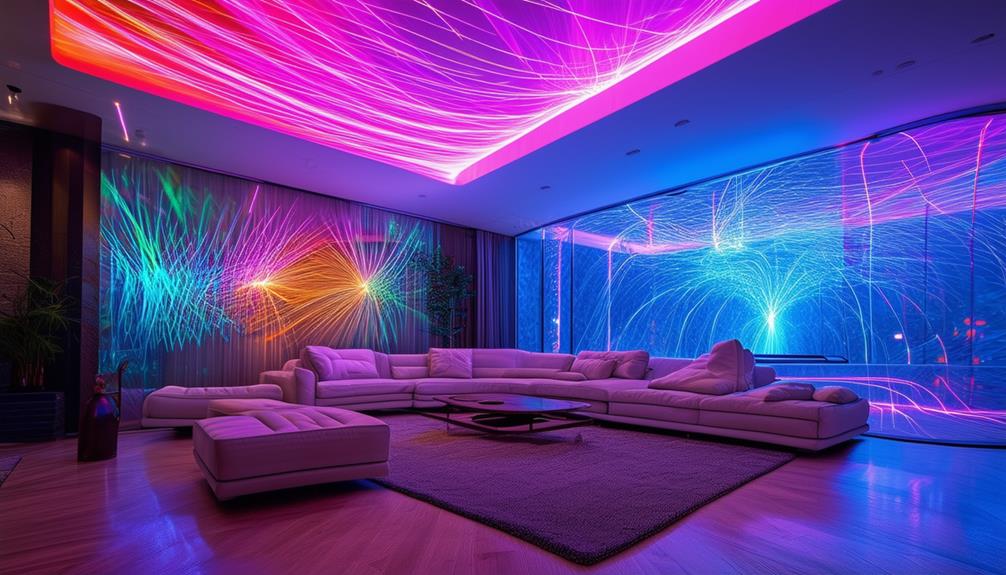
Connecting to a Light Engine for Optimal Fiber Optic Performance
To ensure peak performance when connecting your fiber optic strands to the light engine, follow these steps:
- Equal Distribution: Divide your fiber optic bundles into equal parts to guarantee an even distribution of light.
- Organized Routing: Route the fiber optic cables above the drop ceiling. This keeps your installation neat and prevents any unsightly mess.
- Secure Connection: Connect the fiber optic strands to the light engine by securely fitting each bundle into the designated ports. Ensure each connection is tight and stable to prevent any disruptions in the lighting effects, as loose connections can lead to inconsistent illumination.
- System Testing: Light engines typically come with a remote control and power source, allowing you to customize your lighting. After everything is connected, test the system to ensure it's functioning correctly. Adjust the settings on the light engine to achieve your desired lighting effects.
- Final Check: A secure and stable connection between the fiber optic strands and the light engine is vital for peak performance and longevity of your lighting system.
Enhancing Your Home Ambiance
Transform your living space into an enchanting sanctuary by incorporating fiber optic lighting to enrich your home's ambiance. Fiber optic lights offer versatile design possibilities that can enhance the aesthetic appeal of your home with mesmerizing light effects. Their energy-efficient, durable, and safe nature makes them an ideal choice for home decor.
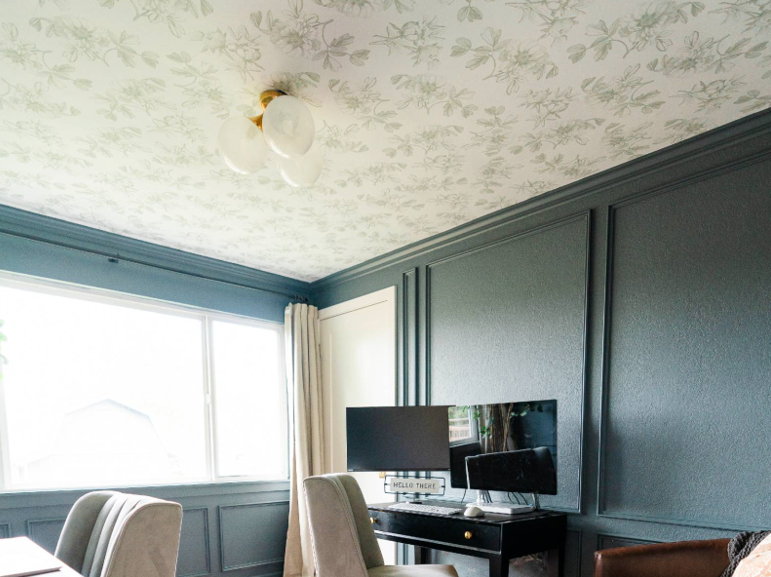
Imagine walking into a room where the ceiling mimics a starlit sky. Fiber optic ambient lighting can bring this magical touch to your home, creating a serene and alluring environment. These lights can also be used to highlight architectural features, making every corner of your home a focal point.
Consider the following ideas to evoke emotion and transform your home:
- Starlit Ceilings: Create a dreamy, celestial atmosphere in your bedroom or living area.
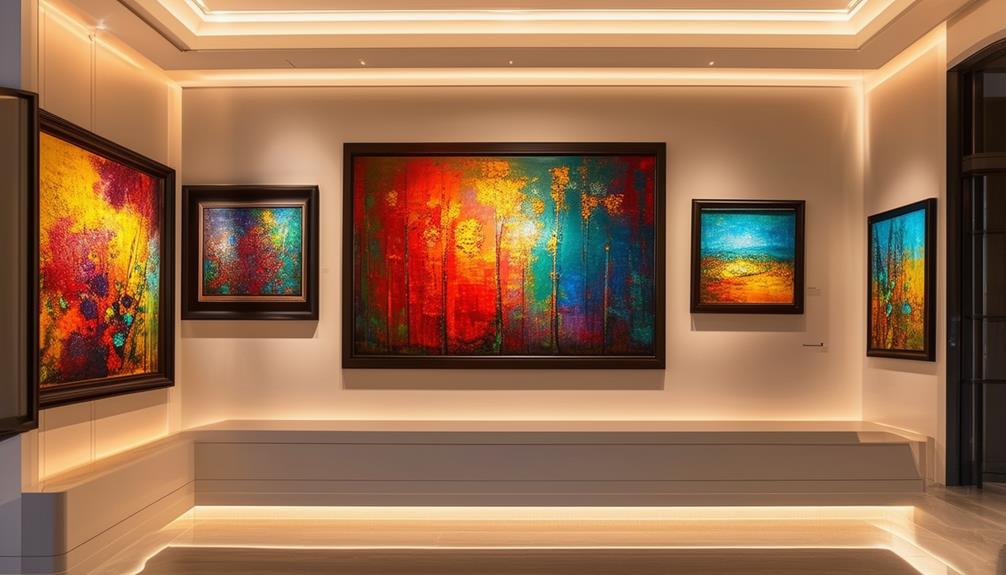
- Art Illumination: Make your artwork stand out with subtle, focused fiber optic lighting.
- Architectural Highlights: Draw attention to unique architectural features, like alcoves and columns, with ambient lighting.
With endless creative applications, fiber optic lights can transform your home into a captivating and stylish haven. Delve into the design possibilities and let your home shine with a unique and cool ambiance.
Conclusion
Incorporating fiber optic lighting into your home design creates a modern and customizable ambiance that's both unique and futuristic. The process, from selecting the ideal location to designing and installing the strands, is straightforward and rewarding. Integrate the lighting system with a compatible light engine to transform your space. Explore the endless possibilities fiber optic lighting offers to turn your home into a visually stunning environment that's sure to impress.