Miami in the Movies: Iconic Films That Captured the Magic City
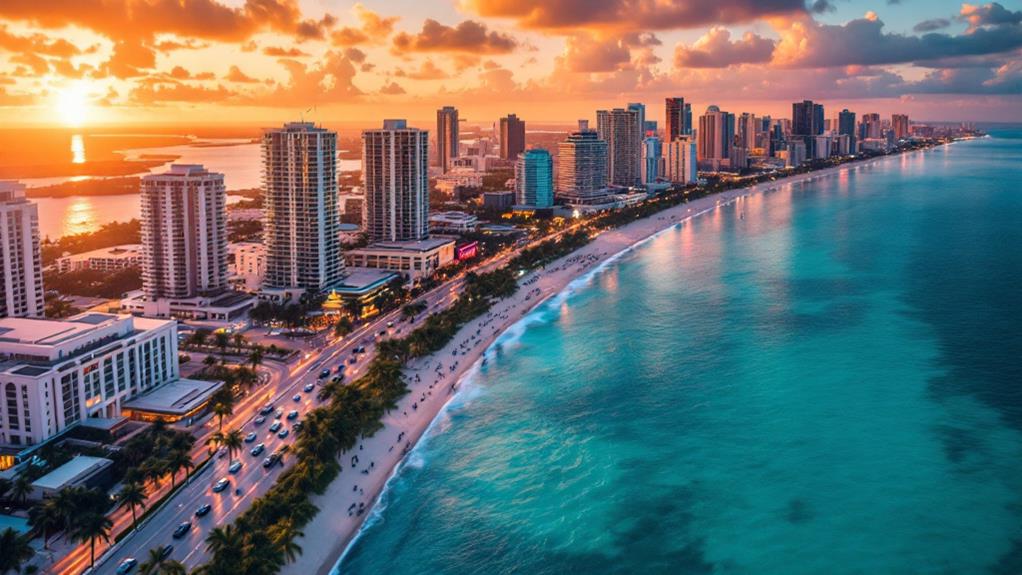
Miami's vibrant essence has been immortalized on screen through iconic films that showcase its diverse facets. You'll witness the city's cocaine-fueled underworld in "Scarface," experience its authentic neighborhoods in "Moonlight," and feel the adrenaline rush of high-octane action in "Bad Boys." South Beach's charm comes alive in "The Birdcage," while "Miami Vice" defines the city's 80s aesthetic. These movies capture Miami's sun-drenched landscapes, electric atmosphere, and complex cultural tapestry. From glitzy beaches to gritty streets, filmmakers have painted a multifaceted portrait of the Magic City. Exploring these cinematic gems will unveil the many layers of Miami's captivating allure.
Scarface: Miami's Cocaine-Fueled Legacy
Infamy and glamour collide in Brian De Palma's 1983 cult classic, "Scarface." Set against the backdrop of Miami's cocaine-fueled underworld during the Mariel boatlift, the film follows Cuban-American gangster Tony Montana's rise and fall. You'll witness the Magic City's dark underbelly as the movie probes into the shady deals and corruption that plagued Miami during this era. The preservation of approximately 800 iconic buildings in Miami's Art Deco District has contributed to the city's vivid visual milieu, which is prominently featured in "Scarface."
Shot on location, "Scarface" captures Miami's ebullient essence, from neon-lit streets to opulent mansions and lush tropical backdrops. The film's stylized cinematography cements its status as a defining visual representation of 1980s Miami excess. You'll recognize iconic locations like the Elser Hotel Miami, which serve as backdrops for the city's decadence.
Despite initial mixed reviews, "Scarface" has become deeply ingrained in popular culture, influencing subsequent Miami-set films and TV shows. Its primal fascination with the Cuban-American community and the city's malaise has contributed to Miami's enduring reputation as a hub for drug trafficking and organized crime. The movie's legacy continues to shape perceptions of Miami, solidifying its association with violence and complex cultural realities.
Moonlight's Authentic Miami Experience
A stark departure from the glitz and glamour often associated with Miami's cinematic representation, "Moonlight" offers a raw and intimate portrayal of the city's lesser-known corners. Filmed across various neighborhoods, including Liberty City, Coconut Grove, and Downtown Miami, the Oscar-winning film authentically captures the diverse culture and essence of the Magic City.
Director Barry Jenkins, drawing from his personal connection to Miami, grounds the story in tangible realities by utilizing real locations like Jimmie's Eastside Diner. This approach provides you with a nuanced perspective on identity and sexuality in the city, centering on a gay, black man's coming-of-age experience in Liberty City.
"Moonlight's" contemplative aesthetic and character-driven storytelling, based on Tarell Alvin McCraney's play, challenge conventional depictions of Miami. You'll experience a more introspective and accessible version of the city, far removed from the typical portrayals in mainstream media.
The film's success and acclaim have highlighted Miami's potential as a hub for authentic, character-driven narratives. It's opened doors for future filmmakers to investigate the city's rich tapestry of stories, promising a transformative era of Miami-based cinema that goes beyond surface-level stereotypes.
Bad Boys' High-Octane Action
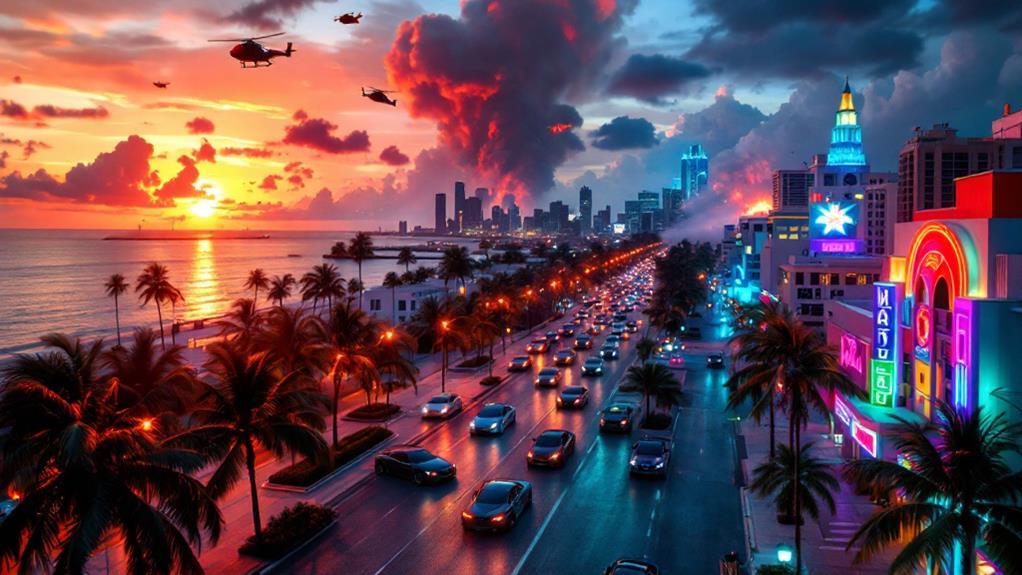
Frequently contrasting with "Moonlight's" introspective approach, the "Bad Boys" franchise propels you into Miami's high-octane world of action cinema. As detectives fighting crime, Will Smith and Martin Lawrence traverse Miami's streets and alleyways in adrenaline-fueled car chases and explosive action sequences. Director Michael Bay's signature style is on full display, showcasing the city's versatility as a favored location for Hollywood blockbusters.
Miami offers the perfect base for the franchise, with its vibrant nightlife, sunny beaches, and iconic Art Deco architecture providing an ideal backdrop for the movies' over-the-top action and comedic banter. The city's downtown and causeway locations become integral to the films' high-intensity pursuits and confrontations.
But it's not just "Bad Boys" that capitalizes on Miami's cinematic appeal. "2 Fast 2 Furious" also employs the city's causeways and nightlife settings for its high-speed street racing scenes. These films shot in Miami have become synonymous with the city's reputation as a hub for action-packed entertainment, cementing its status as a go-to destination for filmmakers seeking excitement and visual splendor.
The Birdcage's South Beach Charm
While action films showcase Miami's high-energy side, "The Birdcage" offers a different yet equally animated viewpoint of the city. This 1996 comedy captures the essence of Miami Beach's South Beach neighborhood, highlighting its eclectic vibe and inclusive culture.
You'll find the film's primary location, the Carlyle Hotel on Ocean Drive, still standing as a testament to the area's iconic art deco architecture. As you stroll along Biscayne Boulevard or plunge into the vibrant streets of South Beach, you'll recognize the setting that made "The Birdcage" so memorable.
The movie's portrayal of South Beach's flamboyant nightlife and diverse LGBTQ+ community helped solidify the neighborhood's reputation as a progressive enclave. It showcased a welcoming and tolerant atmosphere that contrasted sharply with the more conservative attitudes prevalent in other parts of Miami at the time.
When visiting the city, you'll experience the cultural diversity that "The Birdcage" so vividly illustrated. The film's success played a significant role in cementing South Beach's status as a unique cultural destination and one of the most distinctive neighborhoods featured in Miami-set films.
Miami Vice: Defining 80s Aesthetic
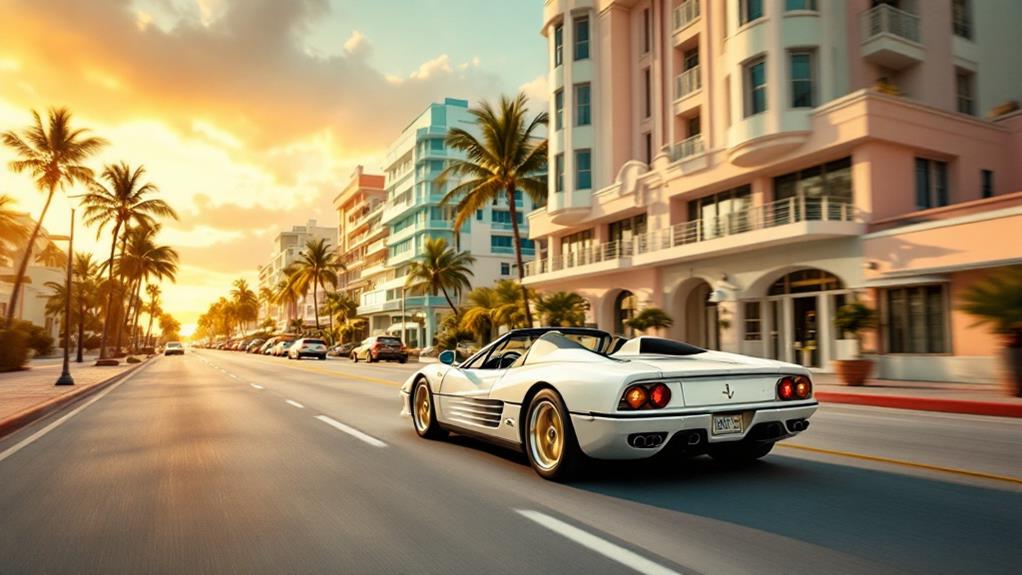
When you think of 1980s Miami, it's hard not to conjure up images of Don Johnson and Philip Michael Thomas cruising down Ocean Drive in a sleek Ferrari. "Miami Vice," the iconic TV series that aired from 1984 to 1990, didn't just capture the city's essence; it defined it. The show revolutionized Miami's portrayal on television, presenting the city as a character in its own right with its stunning visuals and frenetic energy.
Set in Miami and filmed in Miami, "Miami Vice" showcased the picturesque settings of South Beach and Downtown, cementing the city's status as a prime filming destination. The series' impact on Miami's reputation and popularity is undeniable, offering viewers a glimpse into the vibrant South Florida lifestyle.
Here's why "Miami Vice" remains a cultural touchstone:
- Defined the iconic 1980s Miami aesthetic
- Featured sleek visuals with pastel colors and expensive sports cars
- Portrayed Miami as a character, not just a backdrop
- Revolutionized TV's approach to location shooting
- Influenced fashion trends and pop culture
Though modern adaptations like the 2006 film starring Colin Farrell and Jamie Foxx (with Trevante Rhodes in a supporting role) have tried to recapture the magic, nothing quite compares to the original series' impact on Miami's image and allure.
Documentaries Unveiling Miami's Underbelly
Beyond the glitz and glamour portrayed in "Miami Vice," a darker, grittier side of Miami has captured the attention of documentary filmmakers. "Cocaine Cowboys" (2006), directed by Billy Corben and Alfred Spellman, stands out as a riveting exploration of Miami's cocaine empire. The film's kinetic pace and thrilling narrative have enthralled audiences, prompting the directors to plan a third installment as the city's drug story continues to unfold.
While not strictly a documentary, "Suddenly We Jumped" (2014) uses the artist's nude body as a metaphorical weapon, highlighting the struggles of local visual artists and filmmakers in Miami. This short silent film reflects the need to "weaponize their craft" in the face of limited support and industry biases.
Other films like "Absence of Malice" (1981) and "Moonlight" (2016) further expose Miami's complex underbelly. The former depicts the city's corrupt mentality, while the latter creates an accessible art-house film using iconic Miami locations. These documentaries and films spotlight a multifaceted city, showcasing its unique culture, challenges, and the resilience of its inhabitants.