Pink Flamingos as a Symbol of Wealth and Status
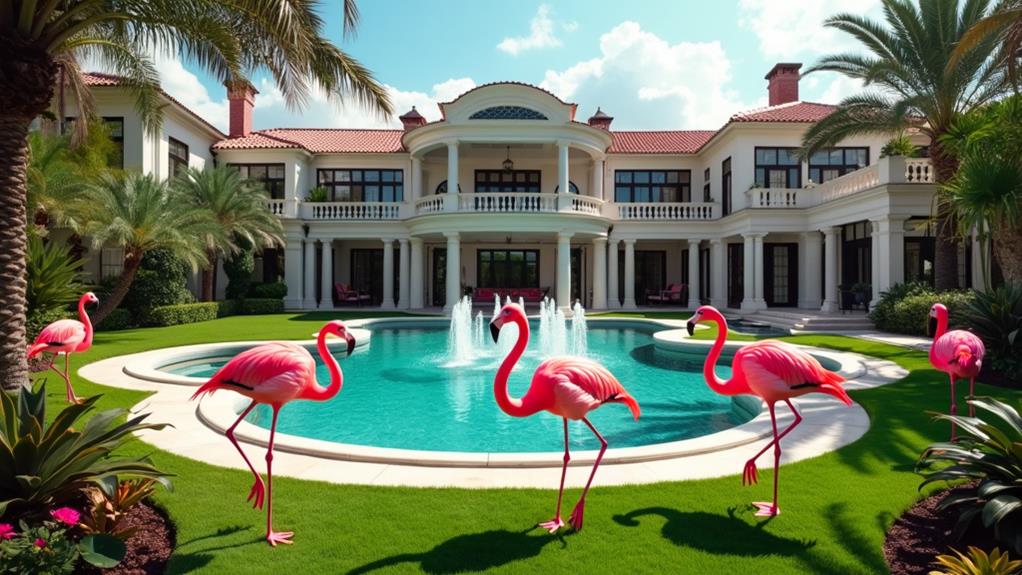
Pink flamingos have long been symbols of wealth and status. In ancient Egypt, they represented prosperity and divine beauty. Romans considered flamingo tongues a delicacy, signifying great wealth. In modern times, pink flamingos are playful symbols of opulence and a relaxed, lavish lifestyle. Their presence in mid-20th-century American yards marked a shift from exclusive symbol to kitschy staple. Today, these lively birds re-emerge as trendy décor items, showcased by celebrities and influencers. Their ironic charm and historical roots continue to captivate, hinting at deeper cultural significance that's worth exploring further.
Historical Origins
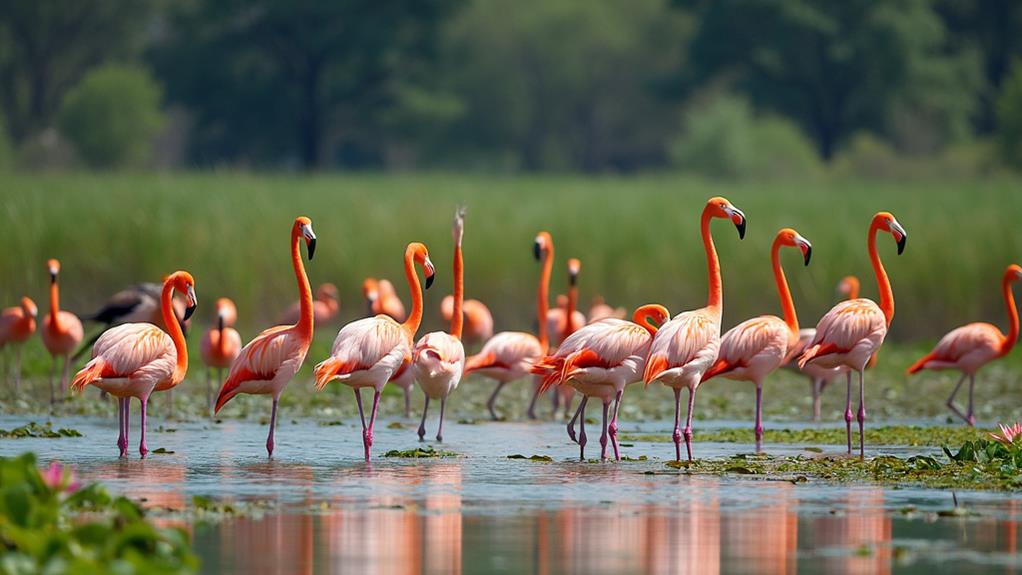
The historical origins of pink flamingos as a symbol of wealth can be traced back to ancient civilizations. You'd find that in ancient Egypt, flamingos were revered for their elegance and vivid coloration. These birds often appeared in hieroglyphics and art, representing prosperity and divine beauty. Their presence in Egyptian society wasn't merely decorative; they served as ancient symbolism for the rich and powerful.
Moving forward to the Roman Empire, the aristocratic associations of flamingos became even more pronounced. Romans were known for their opulent feasts, where they showcased exotic animals and rare foods. Flamingo tongues were considered a delicacy, signifying the host's immense wealth and social standing. It wasn't just about the food, though; owning and displaying flamingos in private gardens became a status symbol among the elite.
In medieval Europe, the trend continued as flamingos were seen as exotic creatures from distant lands. You'd notice that owning such rare animals indicated one's connections and influence. Aristocrats often included flamingos in their menageries, further cementing the bird's association with affluence. Consequently, the pink flamingo's link to wealth has ancient roots, deeply embedded in diverse cultures.
Cultural Significance
Beyond their historical origins, pink flamingos hold significant cultural value in modern times. You might be surprised at how these lively lawn ornaments have evolved into powerful symbols with diverse meanings. In some cultures, pink flamingos represent opulence and a carefree lifestyle. When you see a yard adorned with these birds, it often signals a playful nod to extravagance or a tongue-in-cheek display of wealth.
Pink flamingos also appear in an array of cultural references. In movies and television, they're frequently used to evoke a sense of campy, retro charm or to set the scene in suburban settings. You'll find them in everything from art installations to fashion, often used as a statement piece that challenges conventional norms.
The symbolic meanings of pink flamingos extend beyond mere decoration. For some, they embody a sense of nostalgia, harking back to mid-20th century Americana. For others, they serve as an emblem of rebellion against the mundane. By placing a pink flamingo in your yard, you're making a bold statement—one that blends humor, irony, and a touch of whimsy into your personal or cultural identity.
Evolution in Popularity
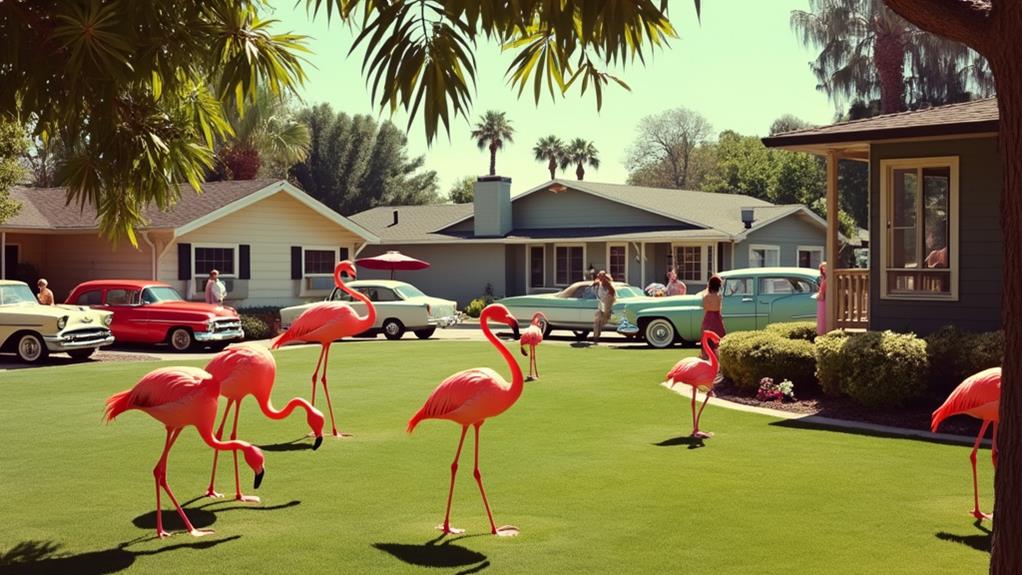
As you investigate the cultural significance of pink flamingos, it's clear that their popularity has undergone fascinating changes over the years. Initially, pink flamingos were exclusive to the affluent, adorning the lawns of the wealthy as a status symbol. However, their evolution didn't stop there.
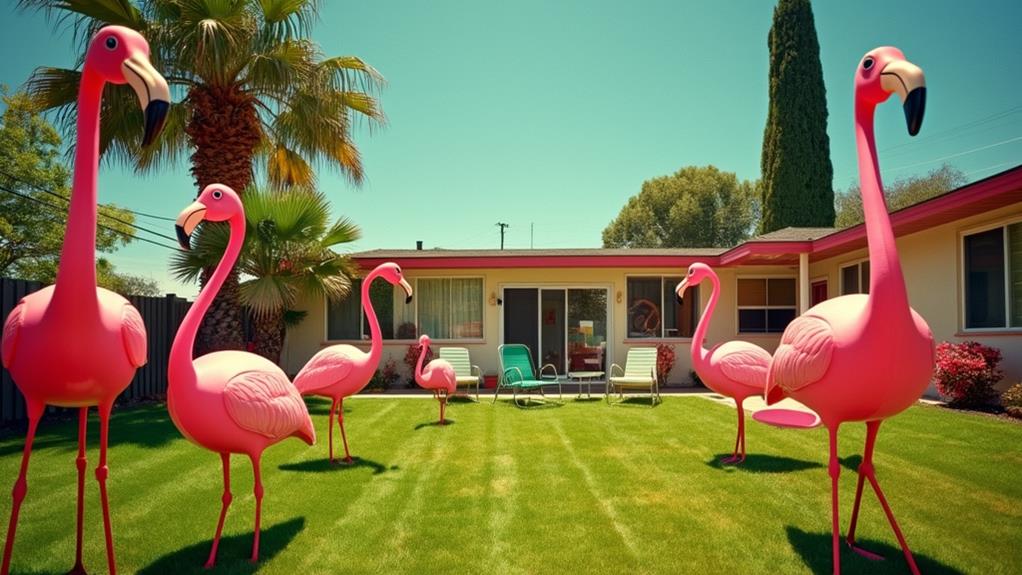
In the mid-20th century, plastic pink flamingos became a kitschy staple in American yards, symbolizing suburban life. They were both loved and mocked, creating a complex cultural iconography. The tide shifted again with the rise of social media. Platforms like Instagram and Pinterest turned pink flamingos into trendy décor items. Influencers began showcasing them in chic outdoor settings, further embedding them into popular culture.
Celebrity influence also can't be ignored. Stars like Katy Perry and Miley Cyrus have used flamingo imagery in their music videos and fashion, pushing the motif into the mainstream once more. This celebrity endorsement has revitalized the pink flamingo's status, making it a fashionable symbol of fun and whimsy.
Through these shifts, pink flamingos have maintained their allure, adapting to the changing tastes and trends facilitated by social media and celebrity influence. Their progression from elite symbol to pop culture icon is truly remarkable.
Modern Interpretations
Currently, pink flamingos frequently serve as versatile symbols in modern decor and fashion. You see them everywhere, from quirky home accessories to stylish clothing pieces. This trend owes much to social media, where influencers and designers showcase flamingo-themed items, making them highly desirable. The bright, eye-catching color of pink flamingos attracts attention, making them perfect for Instagram posts and Pinterest boards that aim to project a sense of fun and sophistication.
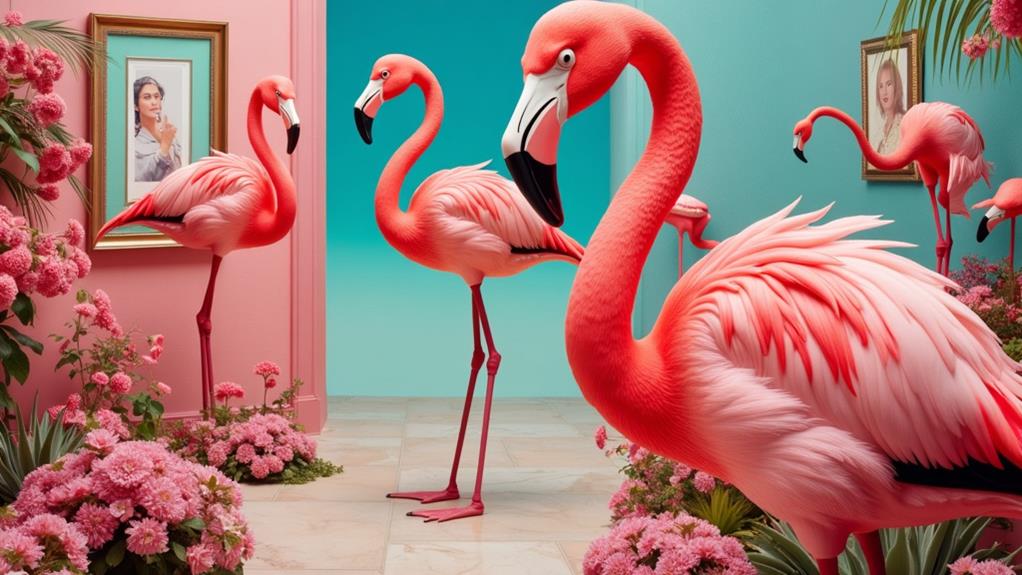
In addition to social media, artistic representations of pink flamingos have evolved. Contemporary artists often use flamingos in their work to comment on themes of kitsch, wealth, and even environmental awareness. You might come across murals, paintings, and digital art featuring flamingos, each piece contributing a unique spin to the classic symbol. These artistic interpretations keep the symbol fresh and relevant in the present culture.
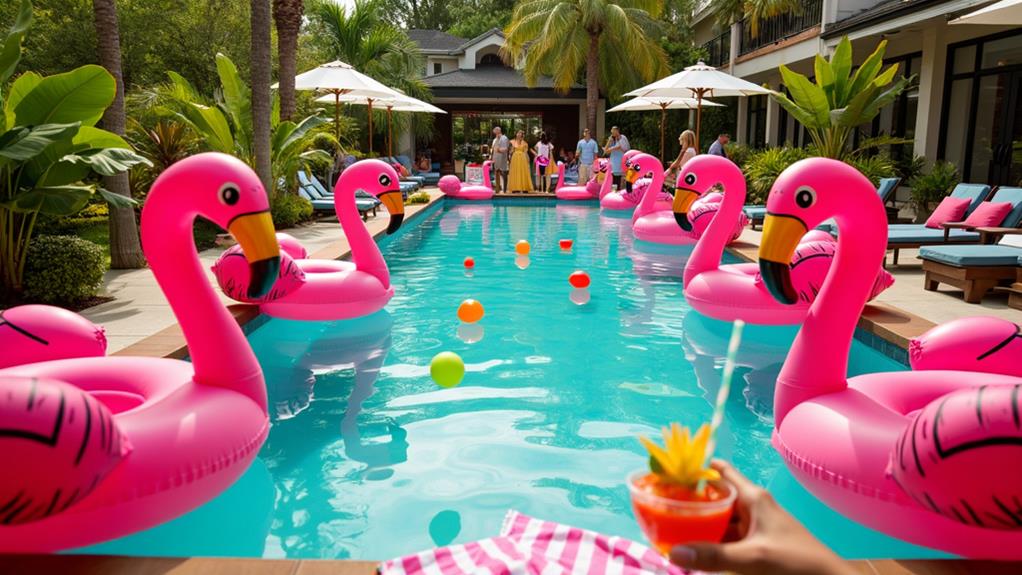
Using pink flamingos in your decor or wardrobe can subtly signal your awareness of these modern trends. Regardless of whether you're posting a photo of a flamingo-themed pool float or wearing a flamingo print dress, you're participating in a broader cultural conversation. Embracing this symbol allows you to blend traditional notions of wealth with contemporary aesthetics.
Flamingos in High-End Landscaping
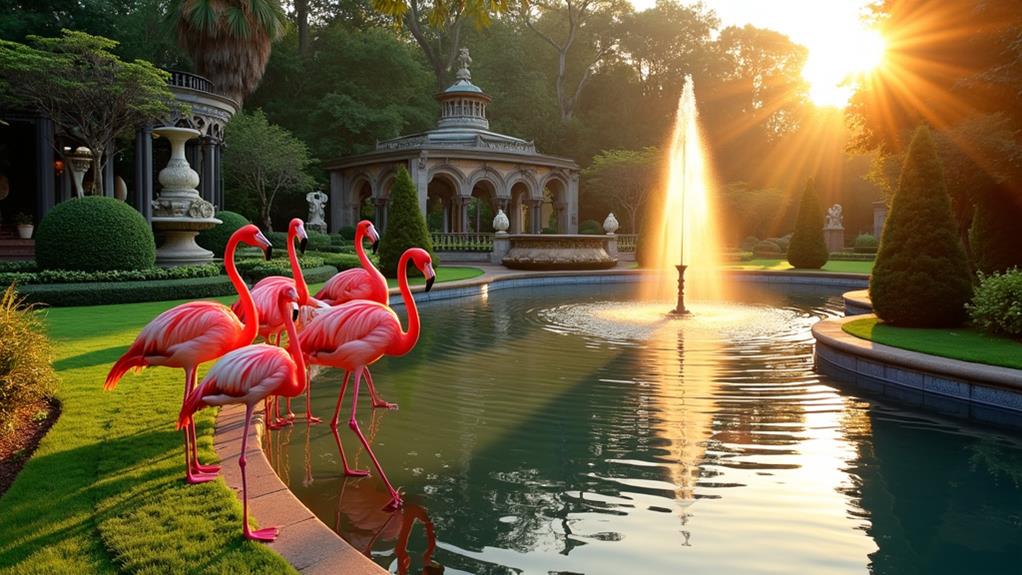
Flamingos have become a staple in high-end landscaping, serving as eye-catching focal points that exude sophistication and whimsy. When you incorporate flamingos into your luxury gardens, you're not just adding a decorative element; you're making a statement about your taste and status. These ornamental features are perfect for creating an atmosphere of exclusivity and elegance.
In luxury gardens, flamingos are often strategically placed to draw attention. Regardless of whether you position them near a serene water feature or amidst lush greenery, these lively birds bring a touch of glamour and a pop of color that improves the complete aesthetic. Their graceful stance and striking pink hue make them an instant conversation starter, elevating the ambiance of your outdoor space.
You can choose from a variety of flamingo designs, from lifelike statues to abstract sculptures, each adding a unique flair to your garden. By integrating flamingos as ornamental features, you're not just beautifying your landscape; you're also showcasing your ability to blend art and nature seamlessly. In a world where initial impressions matter, a well-placed flamingo in your garden speaks volumes about your refined taste and attention to detail.
The Irony Factor
The irony factor comes into play when you consider the origins of the flamingo as a symbol of wealth. Initially, pink flamingos were cheap, mass-produced lawn ornaments, epitomizing kitsch appeal rather than luxury. Yet, their very kitschiness became a form of social commentary, a tongue-in-cheek statement about taste and class.
Here's where the irony deepens:
- Affordable Beginnings: Flamingos started as inexpensive plastic decorations, far from the opulence they now symbolize.
- Kitsch Appeal: Their exaggerated, lively appearance was initially mocked but later accepted for its bold, unapologetic style.
- Cultural Commentary: Placing a flamingo on your lawn became a way to poke fun at the conventions of wealth and status.
- Reclaimed Symbolism: Over time, what was once considered tacky and lowbrow was adopted by affluent circles, turning the flamingo into a paradoxical emblem of high status.