Popular Music Genres in Hawaii: What Locals and Tourists Love to Hear
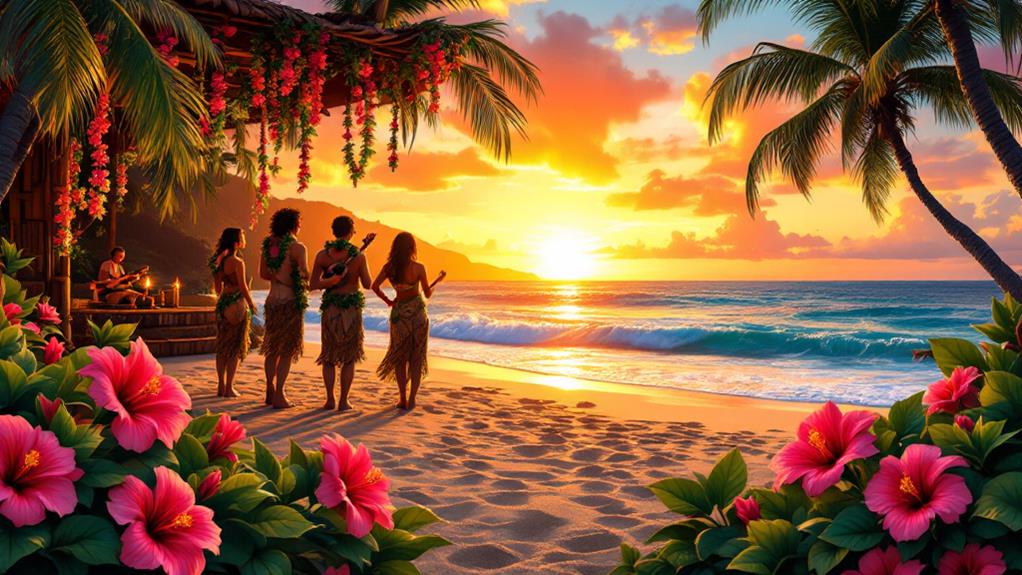
Hawaii's music scene offers a diverse array of genres that enthrall both locals and tourists. You'll encounter traditional Hawaiian folk music, including mele oli and mele hula, which preserve the islands' rich cultural heritage. Slack-key and steel guitar melodies create a soothing, iconic sound unique to Hawaii. The Hawaiian Renaissance brought a revival of traditional music, while Jawaiian blends Hawaiian and reggae rhythms. Contemporary Hawaiian pop fusion incorporates traditional elements with modern pop, R&B, and reggae influences. From legendary artists like Queen Liliuokalani to current stars like Kimie Miner, Hawaii's music continues to evolve while honoring its roots. Exploring these genres will deepen your appreciation for the islands' musical fabric.
Traditional Hawaiian Folk Music
Historically, traditional Hawaiian folk music has been at the heart of the islands' cultural expression. When you explore this rich musical heritage, you'll discover two primary forms: mele oli and mele hula. Mele oli are unaccompanied ritual chants that preserve Hawaiian history and culture, while mele hula are more complex chants accompanied by dance movements.
You'll be captivated by the Aloha Oli mele oli, which express welcome and intimacy, showcasing the nuanced meaning and refined phrasing of traditional Hawaiian songs. The unique a cappella vocal stylings and intricate rhythms of this music have influenced contemporary Hawaiian musical genres, including falsetto and hapa haole music. Crafting a Pau skirt is a testament to the artistry and ingenuity of its maker, reflecting the connection to Hawaiian culture and land that is also embodied in the traditional folk music.
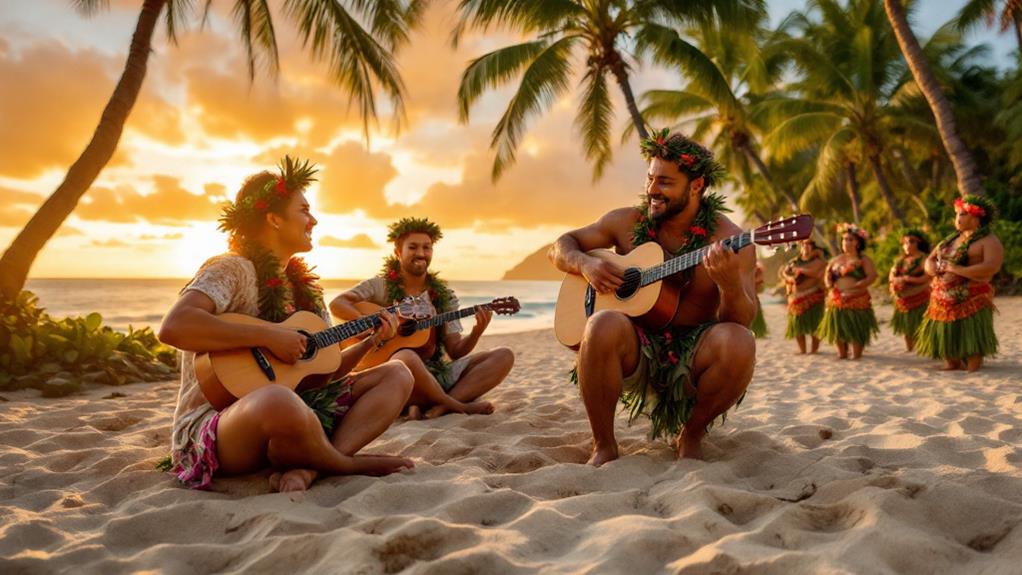
Traditional Hawaiian music relies heavily on percussion instruments made from natural materials like gourds, bamboo, coconuts, wood, and sharkskin. These include the ipu (gourd drums), kā'eke'eke (bamboo drums), and 'ohe hano ihu (bamboo nose flutes). As you listen to kani ka pila (Hawaiian-style music), you'll appreciate how these instruments blend with the Hawaiian language to create a distinctive sound that continues to charm both locals and tourists alike.
Slack-Key Guitar and Steel Guitar
In the late 19th century, Hawaii's musical setting was altered by the introduction of two distinctive guitar styles: slack-key and steel guitar. These techniques, born from the influence of Spanish and Mexican cowboys, would become synonymous with Hawaiian music.
Slack-key guitar, or kī hō'alu, is a fingerstyle technique featuring open tunings that create a soothing, intricate sound. It's become a cornerstone of Hawaiian music, with artists like Gabby Pahinui and Leonard Kwan pioneering its popularity. The steel guitar, developed by Sol Ho'opi'i, introduced the unique sliding sound that's now iconic in Hawaiian melodies.
You'll hear these styles in both traditional and contemporary Hawaiian songs, from classic recordings to modern interpretations by groups like Na Leo. The expertise of slack-key and steel guitar is highly respected in Hawaii, with renowned artists such as Keola Beamer and Ledward Kaapana carrying on the legacy.
When you visit Hawaii, you're likely to encounter these enthralling sounds in live performances, recordings, and even in unexpected places like hotel lobbies or beachside gatherings. They're not just instruments; they're the heartbeat of Hawaiian musical culture.
Hawaiian Renaissance and Jawaiian
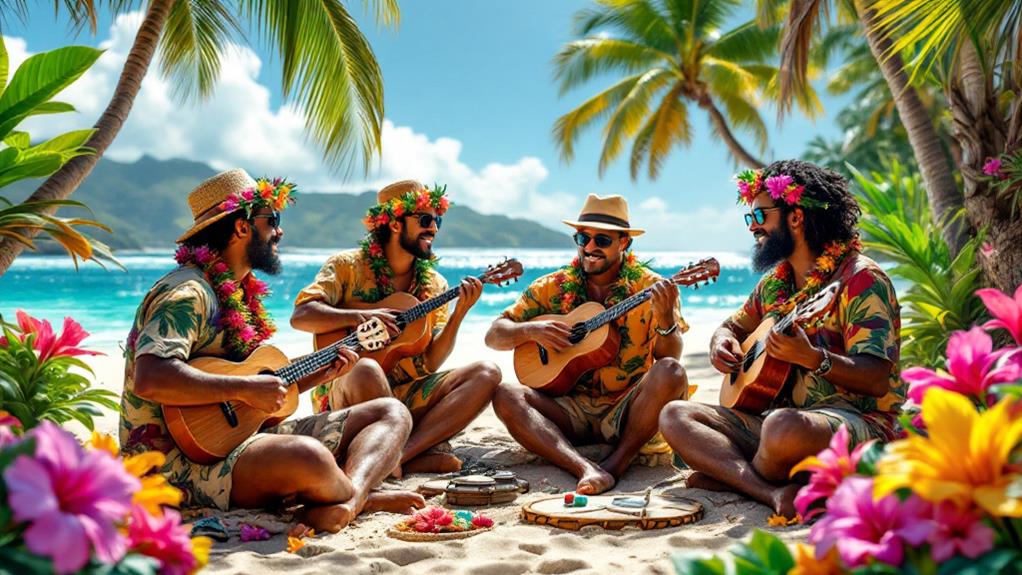
Emerging from a cultural awakening, the Hawaiian Renaissance of the 1970s and 1980s sparked a renewed interest in traditional Hawaiian music and practices. This revival set the stage for an innovative musical fusion that would captivate locals and tourists alike: Jawaiian.
In the 1980s, Jawaiian burst onto the scene, blending Hawaiian melodies with Jamaican reggae rhythms. This unique local genre quickly gained popularity, with artists like Natural Vibes and Kapena leading the charge. They skillfully combined Hawaiian language, Pidgin English, and reggae beats to create a sound that resonated with the island's diverse population. The Hawaiian Renaissance also gave rise to a growing appreciation for the exceptional musical talents and emotional depth of Queen Liliuokalani, whose composition "Aloha Oe" became one of Hawaii's most cherished songs.
You'll find Jawaiian dominating local Hawaiian radio stations, evoking both nostalgia and criticism for its repetitive nature. Despite mixed opinions, Jawaiian's success demonstrates Hawaiian music's ability to evolve while maintaining its cultural roots. By incorporating contemporary styles, it has kept the spirit of Hawaiian music alive and relevant.
As you survey Hawaii's musical landscape, you'll come across how Jawaiian represents the islands' rich cultural heritage and its openness to global influences, creating a sound that's uniquely Hawaiian yet universally appealing.
Contemporary Hawaiian Pop Fusion
A new wave of Hawaiian music has emerged in recent years, blending traditional island sounds with modern pop sensibilities. This contemporary Hawaiian pop fusion seamlessly integrates slack-key guitar, falsetto singing, and Hawaiian language with pop, R&B, and reggae elements. You'll hear artists like Kimie Miner, Anuhea, and HAPA crafting catchy, radio-friendly tunes that maintain authentic Hawaiian roots.
As you investigate this genre, you'll notice how it's gaining global popularity, introducing Hawaiian culture to new audiences worldwide. The fusion often features collaborations between local musicians and mainland artists, creating a unique cross-cultural sound that appeals to both locals and tourists.
This evolving genre reflects the adaptability of Hawaiian musical traditions, showcasing how the islands' rich cultural heritage can thrive in a shifting context. When you listen to contemporary Hawaiian pop fusion, you're experiencing the latest chapter in Hawaii's musical story. It's a reflection of the enduring power of Hawaiian culture and its ability to inspire and connect with people across generations and geographical boundaries.
Influential Hawaiian Music Artists
While contemporary fusion artists are shaping Hawaii's current musical terrain, it's important to recognize the influential figures who paved the way. You can't talk about Hawaiian music without mentioning Queen Liliuokalani, a prolific composer who gave us the iconic "Aloha 'Oe". Her contributions to Hawaiian music are immeasurable, capturing the essence of the Hawaiian spirit in her compositions.
When it comes to instrumental prowess, you'll want to know about Gabby Pahinui, the expert of slack key guitar. He pioneered kī hō'alu, the unique Hawaiian fingerpicking style that's become synonymous with the islands' laid-back vibe. Sol Hoopii took things a step further by developing the pedal steel guitar, helping to popularize Hawaiian music genres worldwide.
For powerful vocals, you need not look any further than Raiatea Helm. Her falsetto interpretations of traditional Hawaiian songs will give you chicken skin (goosebumps). If you're interested in music that celebrates Hawaii's natural wonders, check out Kuana Torres Kahele's albums. His work pays homage to different Hawaiian islands, blending modern sounds with traditional themes like hula kahiko.