The 1950s Atomic Age Decor: Starbursts and Boomerang Shapes
When considering the 1950s, the iconic Atomic Age decor often comes to mind, characterized by distinctive starbursts and boomerang shapes. These designs were not merely aesthetic choices; they symbolized the era's optimism and fascination with scientific advancements. Starbursts, representing energy and excitement, became common in clocks and fabric patterns. Boomerang shapes, on the other hand, introduced playful futurism to furniture design. But what drove this unique style, and how did it leave a lasting impact on modern interiors? Let's delve deeper into these questions.
Historical Context of Atomic Age
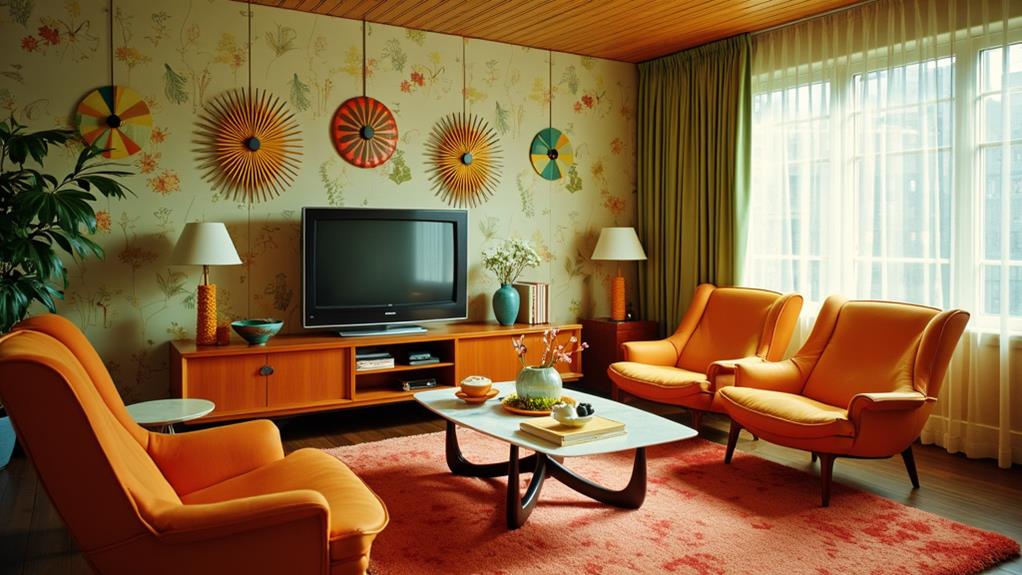
The Atomic Age began in the 1940s, following World War II, spurred by groundbreaking advancements in nuclear technology. This period marked a significant shift in societal outlook, as people grappled with both the promise and peril of atomic power. The newfound fascination with nuclear energy and the dawn of the Space Age didn't just revolutionize science; it also permeated everyday life, particularly in design and decor.
In an Atomic Age home, optimism about atomic energy was evident. The decor often featured bold colors and geometric shapes, reflecting a futuristic vision. Starbursts and boomerang shapes became iconic, symbolizing the era's technological and scientific advancements. These motifs weren't confined to art and architecture; they appeared in household items, furniture, and even advertising.
Space Age design further amplified this futuristic vibe. Inspired by the excitement of space exploration, homes began to incorporate sleek, modern elements that looked both advanced and stylish. This influence was seen in streamlined furniture and innovative uses of materials, creating a sense of modern consumerism and optimism about the future. This cultural shift made the Atomic Age a unique and transformative period in design history.
Key Features of Atomic Decor
Key features of atomic decor include iconic motifs such as starbursts and boomerangs, reflecting the era's fascination with science and futurism. The vibrant color palettes, often featuring bold and metallic hues, infuse designs with energy and excitement. The use of modern materials like plastics and metal enhances the sleek, groundbreaking aesthetic of this mid-century style.
Iconic Atomic Motifs
Iconic atomic motifs from the 1950s, like starbursts and boomerang shapes, vividly capture the period's fascination with atomic energy and futuristic design. These designs are hallmarks of midcentury-modern aesthetics, reflecting the era's optimism and technological advancements.
Starburst patterns, prominent in textiles, wallpaper, and decor, symbolize atomic reactions. These patterns typically feature lively colors and radiating lines, evoking motion and energy. Incorporating starburst patterns into your space not only brings a touch of the Atomic Era into your home but also celebrates the dynamic spirit of the 1950s.
Boomerang shapes, recognized by their curved and angular forms, were commonly used in furniture and home accessories. Their playful, modern aesthetic adds a unique flair to any room. Integrating boomerang shapes can achieve a retro-inspired look that's both stylish and nostalgic.
Incorporating these motifs into your decor pays homage to the creative spirit of the era. Both starburst and boomerang shapes continue to influence contemporary design, proving their lasting impact. Welcome these iconic motifs to create a space that's timeless and inspired by the Atomic Era.
Vibrant Color Palettes
Vibrant color palettes are a hallmark of Atomic Period decor, reflecting the era's enthusiasm for life and innovation. This epoch's vivid palettes often feature bold hues like turquoise, orange, and yellow, frequently paired with metallic accents such as chrome and gold to infuse a touch of futuristic glamour.
Envision a living room with a turquoise sofa adorned with boomerang patterns, set against sunny yellow walls. The interplay between primary colors and pastels creates a dynamic, lively aesthetic in furniture and textiles. It's not merely about the colors; it's about their interaction, emphasizing the sleek, streamlined designs that define Atomic Era decor.
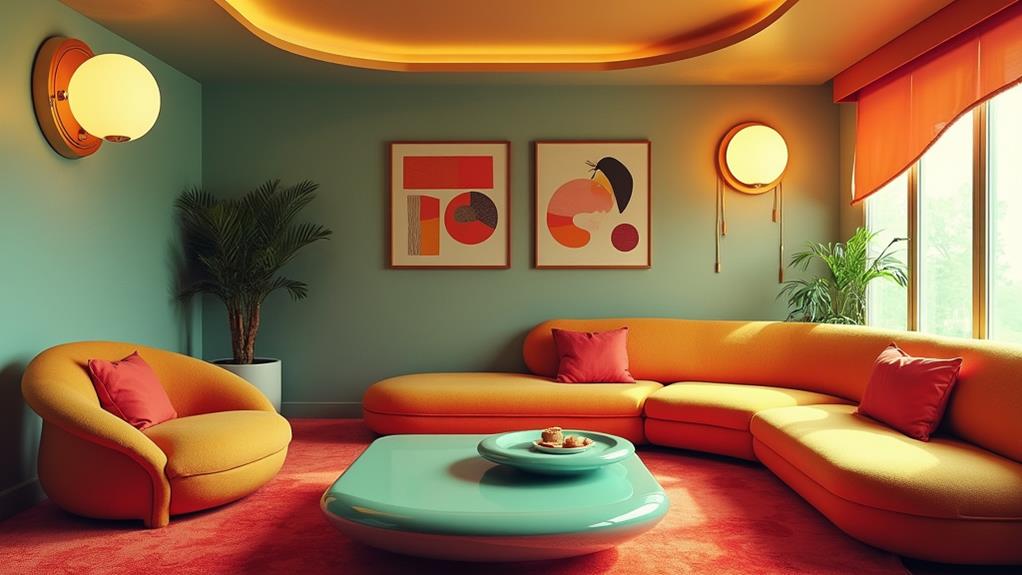
Bright, saturated colors were typically combined with geometric patterns like starbursts and boomerangs, enhancing the energetic vibe. Picture vivid orange chairs against pastel pink walls, accompanied by chrome-legged tables featuring boomerang shapes. These elements collectively reflect an optimistic outlook and a celebration of modernity and innovation. By incorporating these vivid color palettes into your decor, you're not just decorating; you're celebrating an entire epoch of forward-thinking design.
Modern Materials Usage
At the heart of Atomic Period decor is the groundbreaking use of contemporary materials, which revolutionized design and aesthetics. This era marked a shift from traditional wood and fabric to innovative materials like plastics, metals, and fiberglass. These modern materials didn't just change the appearance of furniture and decor; they transformed manufacturing processes and functionality.
Lightweight materials such as clear lucite and acrylic became essential, making decor more accessible and versatile. These materials were used in everything from jewelry to furniture, showcasing their flexibility and futuristic appeal. In Atomic Period design, streamlined furniture often featured chrome and powder-coated steel, reflecting the sleek, industrial vibe that defined the era.
Textiles also played a significant role. Bold atomic patterns were printed using advanced techniques, creating striking visual elements that were both dynamic and modern. The use of biomorphic shapes and asymmetrical designs pushed the boundaries of traditional forms, emphasizing the innovative spirit of the time.
Key features of modern materials in Atomic Period decor include:
- Plastics: Enabled inventive designs and vibrant colors.
- Lucite and Acrylic: Lightweight and versatile, transforming jewelry and decor.
- Chrome and Steel: Streamlined furniture with an industrial aesthetic.
- Bold Textiles: Atomic patterns using advanced printing techniques.
This pioneering use of modern materials defined the Atomic Period design, making it an unforgettable chapter in decor history.
Influence of Starburst Shapes
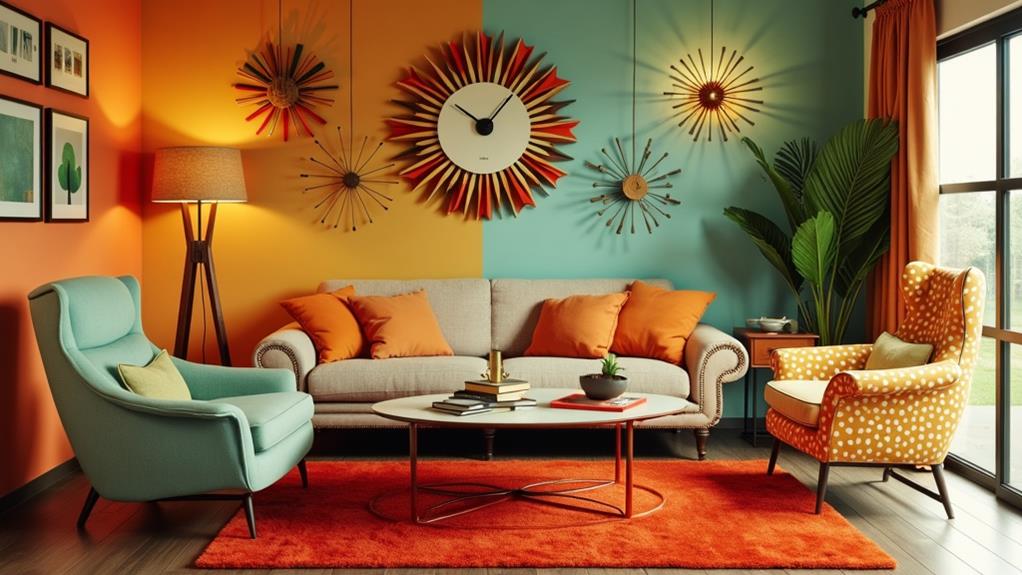
When you think of Atomic Period decor, starburst shapes instantly come to mind as symbols of atomic energy and the era's scientific enthusiasm. These iconic motifs, with their energetic, radiating lines, added a dynamic and optimistic touch to mid-century modern aesthetics. Their design versatility is evident, appearing in everything from wall clocks to textiles, and even in contemporary decor that nods to retro styles.
Symbol of Atomic Energy
The starburst motif, with its dynamic lines and radiant energy, became an iconic symbol of atomic energy during the 1950s. It captured the explosive nature of nuclear reactions and the era's optimism about the future of nuclear power. This energetic design was a key feature in midcentury modern decor, reflecting society's fascination with scientific and technological advancements. Starbursts appeared in a variety of household items, infusing everyday life with a sense of futuristic excitement.
The influence of these shapes was widespread, appearing in:
- Textiles: Fabrics and curtains with starburst patterns added vibrancy to living spaces.
- Ceramics: Dishes and pottery adorned with these designs often served as conversation starters.
- Furniture: Tables and lamps featuring starburst accents combined aesthetic appeal with functionality.
- Graphic Design: Advertisements and media incorporated these shapes, embedding them deeply into the cultural fabric of the time.
Beyond home decor, starbursts also influenced fashion, particularly jewelry. They symbolized not only atomic energy but also a hopeful and innovative future. This aesthetic reflected the era's enthusiasm for the possibilities of the Atomic Age.
Iconic Retro Aesthetic
Starburst shapes didn't just symbolize atomic energy; they became the heartbeat of the iconic retro aesthetic that defined the 1950s. These dynamic, radiating lines captured the essence of the Atomic Age, infusing everyday objects with a sense of futuristic excitement. Starburst motifs adorned textiles, wallpaper, and ceramics, often in lively color palettes featuring bold hues and metallic accents. This design aesthetic celebrated progress and innovation.
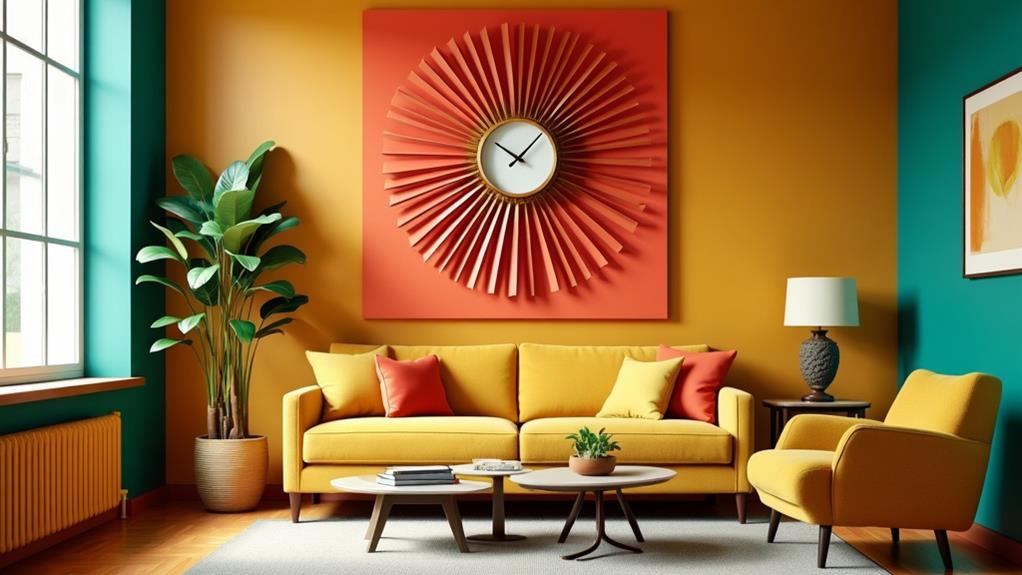
The George Nelson Ball Wall Clock (1949) is a perfect example. Its starburst design epitomized mid-century modern style. Starburst shapes symbolized the era's optimism and fascination with atomic energy and space exploration. Furniture, lighting fixtures, and decorative objects frequently featured these motifs, making them staples in 1950s decor.
Here's where you might have spotted these iconic designs:
| Design Element | Starburst Application |
|---|---|
| Textiles | Fabrics with starburst patterns |
| Wallpaper | Bold, dynamic starburst designs |
| Ceramics | Plates and vases with starburst art |
| Furniture | Tables and chairs with starburst inlays |
Starburst shapes didn't just decorate homes; they encapsulated the spirit of adventure and exploration of the times.
Versatility in Design
During the Atomic Period, starburst shapes became a defining motif, symbolizing atomic energy and the optimism of the era. Characterized by dynamic lines radiating from a central point, these designs were prevalent in various aspects of home decor, including clocks, furniture, textiles, and accessories. Notably, the George Nelson Ball Wall Clock epitomized this trend, reflecting the technological advancements of the 1950s.
The adaptability of starburst shapes allowed them to be crafted from diverse materials such as metal, plastic, and glass. This versatility ensured their seamless integration into mid-century modern decor, where they became iconic elements.
- Clocks: Iconic timepieces like the George Nelson Ball Wall Clock.
- Furniture: Starburst motifs on coffee tables, chairs, and sideboards.
- Textiles: Patterns on curtains, upholstery, and rugs.
- Accessories: Decorative items like mirrors, wall art, and lighting fixtures.
Today, starburst designs continue to influence contemporary home decor, fashion, and graphic design, showcasing their enduring appeal. The atomic-inspired aesthetic remains captivating, demonstrating that great design is truly timeless.
Boomerang Shapes in Design
Boomerang shapes, often associated with the futuristic flair of the 1950s, became key design elements that captured the period's zest for movement and innovation. Emblematic of the Atomic Age, these shapes reflected society's fascination with dynamism and progress. They were prominently featured in furniture design, especially in tables and chairs, where they added a playful and whimsical touch.
These shapes extended beyond furniture to diverse home decor items, enhancing the playful and energetic character of Atomic Age design. Designers like George Nelson and Eero Saarinen were pioneers in incorporating boomerang shapes into their work, making them iconic symbols of mid-century modern aesthetics.
Bold colors and sleek lines often accompanied these designs, aligning perfectly with the lively color palettes popular during the Atomic Age. This motif also found its way into textiles and wallpaper, creating cohesive and visually appealing home environments.
In retrospect, boomerang shapes played a vital role in defining the 1950s' style. They encapsulated the optimism and forward-thinking spirit that characterized the Atomic Age, making them a timeless element in design history.
Cultural Impact of Atomic Decor
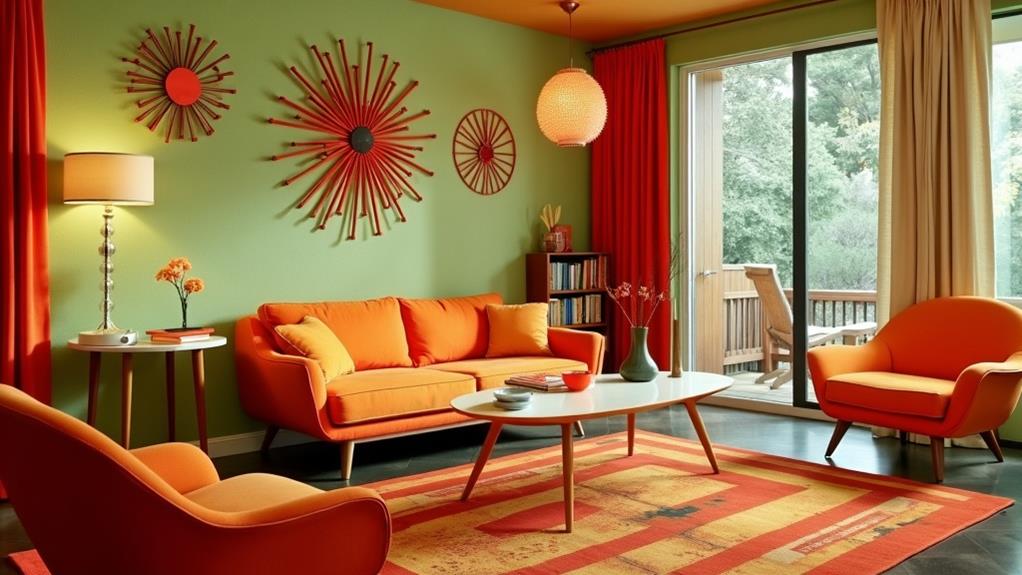
Atomic Age decor, characterized by starburst and boomerang shapes, epitomizes the mid-century optimism and technological enthusiasm of the 1950s. The vibrant colors and bold geometric patterns were not merely aesthetic choices but reflections of a society brimming with hope and excitement for the future. This era, captivated by space exploration and atomic energy, saw these themes permeate every aspect of daily life, including home decor.
Designers like George Nelson popularized starburst motifs in clocks and furniture, making them iconic representations of the era's cultural values. These designs symbolized progress and modernity, influencing:
- Household items such as clocks and lamps
- Commercial architecture with dynamic facades
- Fashion accessories featuring bold patterns
- Advertising that highlighted futuristic themes
The Atomic Age's decor became a staple in popular culture, representing a collective aspiration for a brighter, technologically advanced future. Even today, nostalgic representations of atomic decor continue to inspire modern design, demonstrating its lasting appeal. Incorporating these elements into your home taps into a rich cultural history that celebrates innovation and optimism.
Iconic Atomic Age Furniture
Iconic Atomic Age furniture is distinguished by its boomerang shapes, capturing the era's fascination with futuristic aesthetics. These pieces were more than functional; they were bold statements of style and innovation. A prime example is the "Boomerang" coffee table, characterized by its smooth curves and angular forms, representing a playful yet sophisticated design ethos.
Starburst motifs were another hallmark, often found on clocks and light fixtures. These designs symbolized the atomic energy and optimism of the post-war period, adding a touch of Art Deco flair to modern homes. Imagine a starburst clock on your living room wall, blending functionality with artistic expression.
Designers like Charles and Ray Eames revolutionized furniture with pieces that combined practicality and atomic-inspired designs. The Eames Lounge Chair, for instance, remains a timeless classic, showcasing how mid-century modern furniture embraced both comfort and cutting-edge design.
Materials like molded plywood, fiberglass, and chrome were staples in Atomic Age furniture. These materials allowed for sleek lines and vibrant colors, making each piece not just furniture, but a work of art that transformed your living space into a futuristic haven.
Innovations in Materials and Techniques
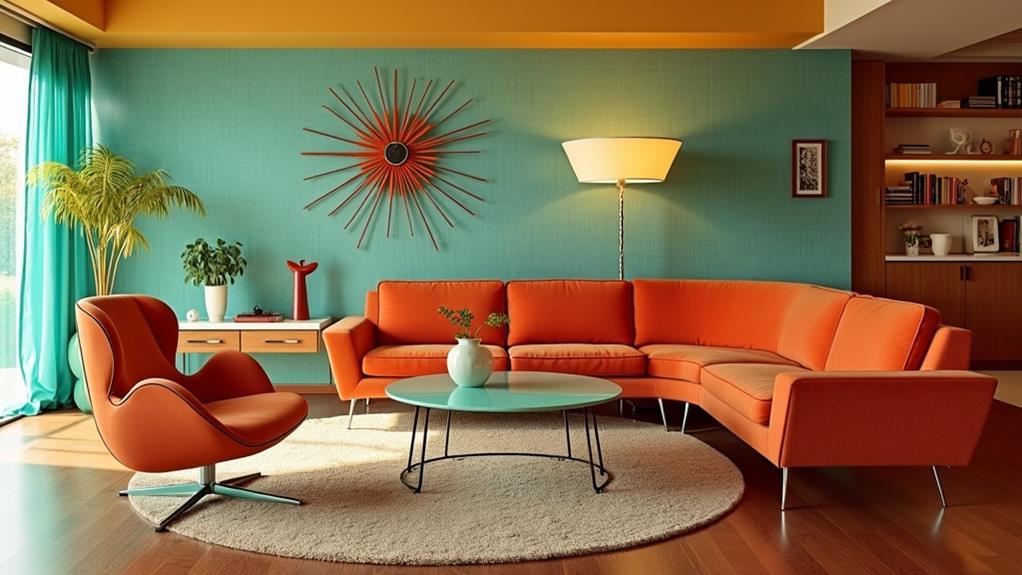
The true revolution of Atomic Period furniture lay in its groundbreaking materials and techniques, beyond just its inventive shapes and bold aesthetics. The 1950s saw the advent of innovative materials like plastics, which made designs lighter and more colorful, facilitating a surge in creativity that brought previously impossible shapes to life.
Techniques such as molding and casting enabled the creation of unique forms, including the iconic starburst and boomerang motifs. These methods, combined with the era's fascination with outer space, infused a sense of futuristic optimism into everyday homes.
Advancements extended beyond form to finishing touches. The introduction of metallic finishes, particularly chrome and powder-coated steel, provided a sleek, modern aesthetic. These materials complemented the bold geometric patterns characteristic of Atomic era design.
Additionally, printing technology advanced significantly, making it easier to produce intricate atomic motifs on textiles and wallpapers. This development made the period's distinct aesthetic more accessible to a wider audience.
Key innovations included:
- Lightweight and colorful plastic designs
- Molding and casting techniques for unique shapes
- Sleek metallic finishes like chrome and powder-coated steel
- Advanced printing technology for intricate motifs
These innovations mirrored the era's excitement about science and technology, blending organic and geometric shapes to create a decor style that was both modern and whimsical.
Atomic Age Decor Today
Atomic Era decor has made a noticeable comeback in today's home design landscape, merging nostalgic elements with modern aesthetics. Starburst clocks and boomerang-shaped furniture are not only found in vintage boutiques but also featured in contemporary design collections. These iconic pieces are often crafted from acrylic and metal, offering a modern twist while honoring the bold, geometric patterns of the 1950s.
Modern Atomic Era decor typically features muted color palettes and minimalist aesthetics, seamlessly integrating into contemporary homes. However, the essence of the original designs—vibrant hues and striking shapes—remains intact. This blend of old and new creates a unique style that is both timeless and trendy.
Social media platforms have significantly contributed to this resurgence. Enthusiasts share curated collections and DIY projects, making it easier than ever to incorporate Atomic Era elements into your home. From pop culture-inspired decor to sleek furnishings, the Atomic Era aesthetic is now more accessible and popular than ever.