The 1960S Love Affair With Psychedelic Patterns and Colors
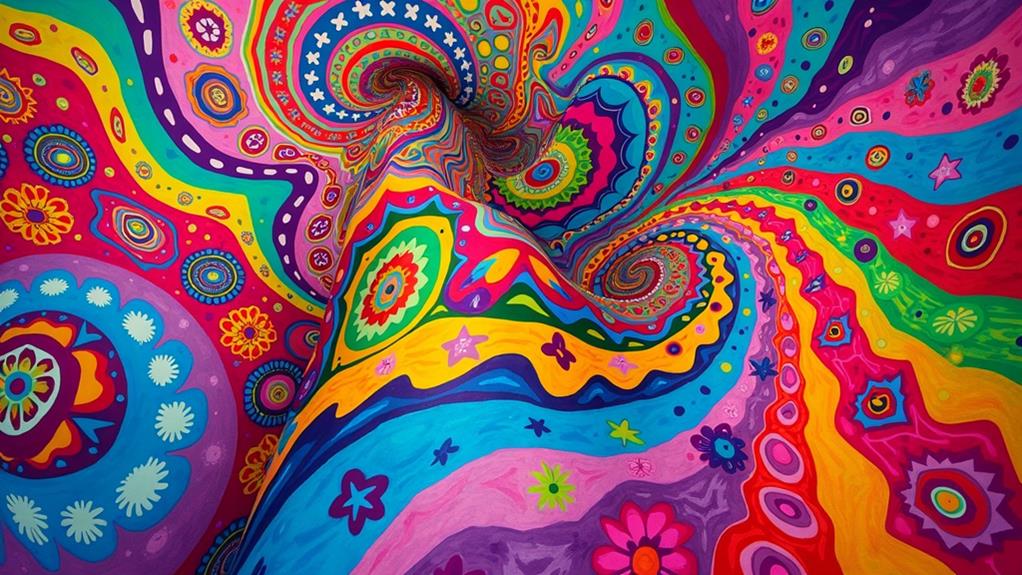
The 1960s' infatuation with psychedelic patterns and colors had an undeniable impact, reflecting the era's counterculture and spiritual pursuits. Swirling motifs and vivid hues were more than artistic choices; they were visual manifestos of peace, love, and rebellion. Iconic events like the Summer of Love and Woodstock were infused with these dynamic designs, permanently altering the landscape of music and art. What drove artists to embrace such a kaleidoscopic aesthetic? Hallucinogens played a significant role, offering a deeper understanding of the cultural heartbeat of the time.
The Rise of Psychedelia
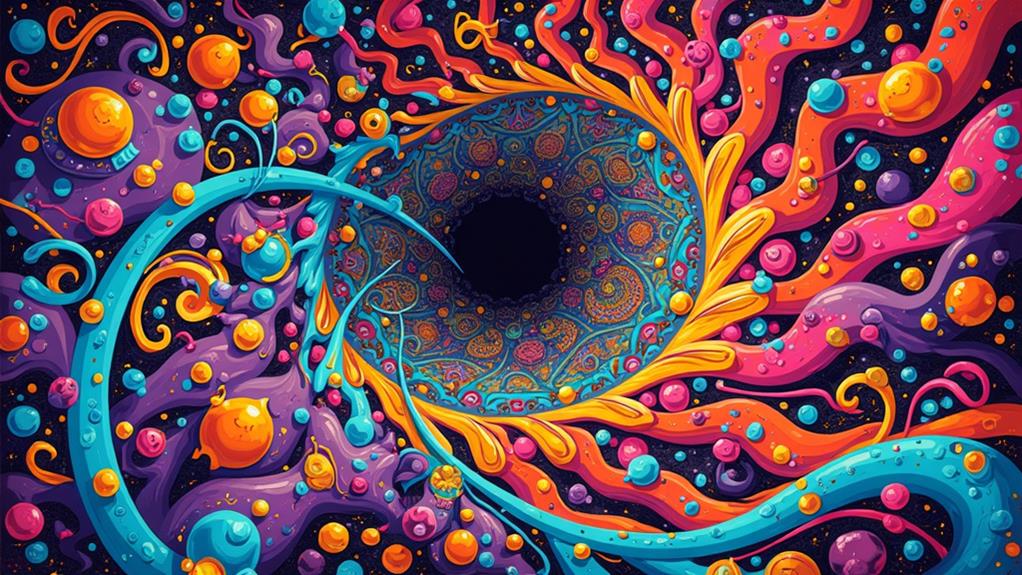
The rise of psychedelia in the 1960s, a vibrant offshoot of the counterculture movement, was closely linked to the widespread use of hallucinogenic drugs like LSD. This dynamic movement gained significant momentum in San Francisco, particularly during landmark events such as the Summer of Love in 1967. Music festivals became sensory experiences, with psychedelic art adorning posters and album covers, capturing the spirit of the era.
Psychedelic art often featured swirling patterns, vivid colors, and surreal imagery, aiming to evoke altered states of consciousness and transcendental experiences. Renowned artists like Wes Wilson and Victor Moscoso became icons of this style, shaping the psychedelic poster art scene. Their work created a visual language that deeply resonated with the music and cultural ethos of the period.
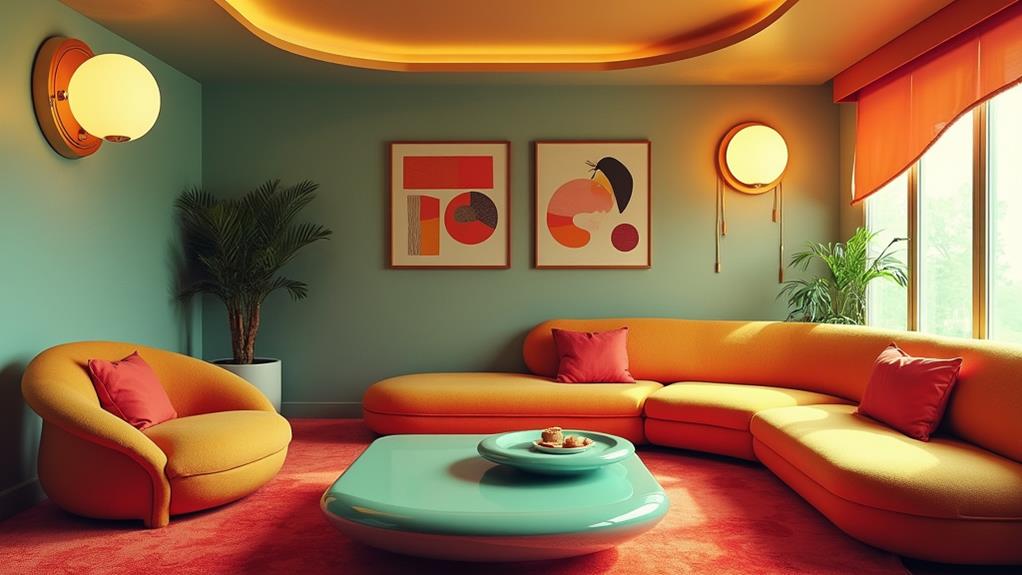
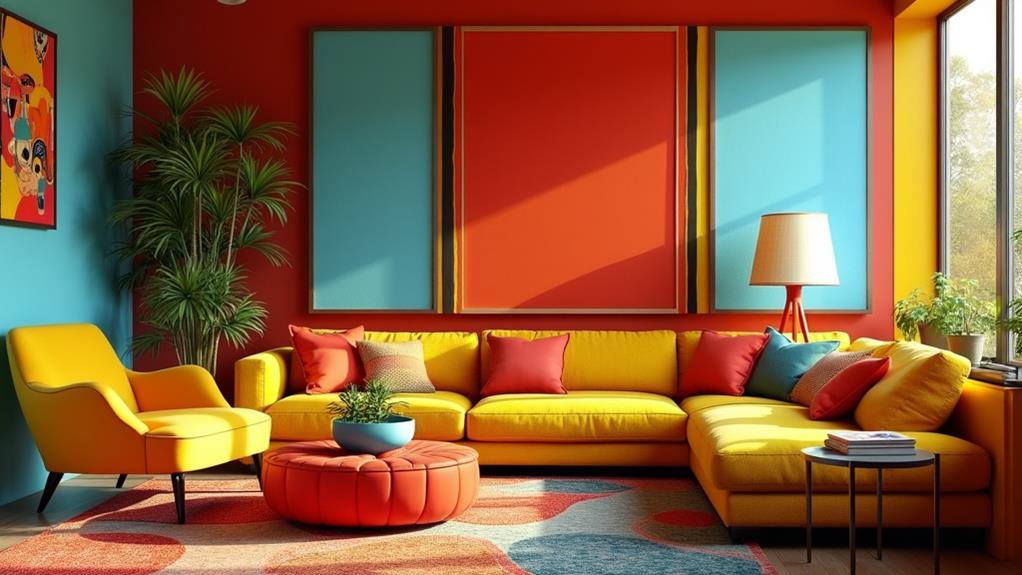
The influence of psychedelic art extended beyond posters, infiltrating fashion, interior design, and even advertising, leaving a lasting legacy. Contemporary design trends featuring bold colors and intricate patterns often reflect the enduring impact of 1960s psychedelia.
Cultural Impact and Significance
The explosion of psychedelic art in the 1960s wasn't just a fleeting trend; it had profound cultural implications that extended far beyond its initial impact. The psychedelic movement became a visual representation of the counterculture, promoting ideals of peace, love, and freedom while rejecting conventional societal norms. This cultural revolution was vividly showcased at key events like the Woodstock Festival in 1969, where psychedelic art became a symbol of the period's collective identity.
Psychedelic art transcended pure aesthetics; it served as a form of protest against the Vietnam War and social injustice, reflecting the sentiments of youth culture and their desire for political change. Influential artists such as Wes Wilson and Victor Moscoso embedded these dynamic visuals into popular culture through iconic concert posters and album covers.
The lasting cultural impact of the psychedelic movement is evident today:
- Modern design, fashion, and art continue to draw inspiration from psychedelic motifs.
- The movement's themes of altered consciousness remain a subject of fascination.
- Psychedelic patterns symbolize freedom and self-expression.
- The period's art serves as a historical record of social and political upheavals.
- The movement's influence underscores the enduring power of art in driving cultural change.
The 1960s psychedelic movement remains a testament to the enduring power of art in shaping cultural landscapes.
Visual Elements and Themes
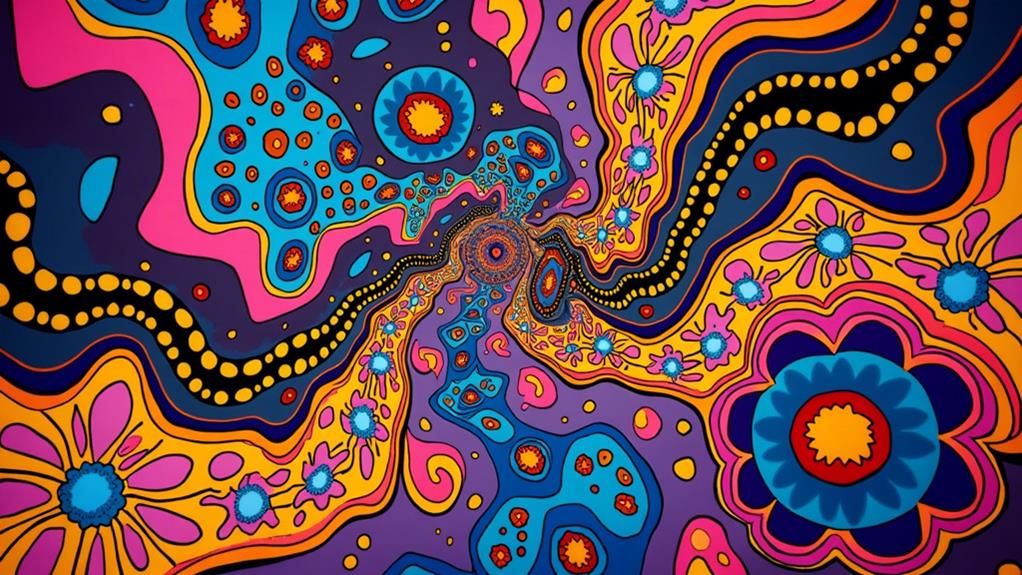
Psychedelic patterns of the 1960s featured vivid color palettes and surreal imagery. Artists employed optical illusions and contrasting colors to create dynamic visuals that seemed to pulse with life. These techniques aimed to evoke altered states of consciousness, drawing viewers into a lively, dream-like world.
Vivid Color Palettes
Psychedelic art is renowned for its use of vivid color palettes that seem to pulse with energy, drawing viewers into a vibrant visual experience. This effect is achieved through the clever juxtaposition of complementary colors on the color wheel, creating a sense of visual vibration that is both captivating and emotionally evocative.
Artists like Wes Wilson exemplified this style, using vivid colors in their work to capture the essence of the counterculture movement. His concert posters, for instance, were designed not just as announcements but as visual experiences meant to captivate and elicit emotional responses. Common elements in psychedelic art include:
- Electric blues that evoke a sense of calm yet intense awareness.
- Fiery oranges that bring warmth and excitement.
- Neon greens that add a surreal, otherworldly quality.
- Swirling patterns that mimic the visual distortions associated with hallucinogenic experiences.
- Intricate floral motifs and organic shapes that reflect a deep connection to nature and spiritual exploration.
These elements make psychedelic art a feast for the eyes, creating a dynamic visual experience where colors don't just stand still—they dance, vibrate, and come alive.
Surreal Imagery Influence
Transitioning from the vibrant color palettes that characterize psychedelic art, surreal imagery takes a prominent role, mirroring altered states of consciousness. Psychedelic art often features dream-like themes, echoing the visual distortions experienced during an acid trip. Twisting forms and melting objects challenge traditional notions of reality, prompting you to question what is real and what is an illusion. These elements do more than depict a scene; they immerse you in a vivid, otherworldly journey.
Hallucinogenic substances significantly influenced these visuals. Artists, drawing from their own psychedelic experiences, translated the hallucinatory effects into bold designs. Eye-catching colors amplify the visual impact, making the art almost come alive, drawing you into its depths.
The art of this period also incorporates motifs from popular culture and comic books, deeply resonating with the youth of the 1960s. This collective expression was more than just aesthetics; it was a cultural movement. Fractals and surrealistic elements like optical illusions are common, aiming to evoke transcendence and a sense of unity with the cosmos. Psychedelic art was not merely seen; it was felt, challenging and expanding perception.
Optical Illusions Techniques
Optical illusions became a hallmark of psychedelic art, encapsulating the essence of altered perception. Swirling patterns and fractals often evoke a sense of movement and depth, mirroring the visual effects of hallucinogenic experiences. These illusions were meticulously crafted to immerse viewers in a dynamic, ever-changing visual landscape.
Artists employed flowing lines and color vibration techniques, positioning complementary colors side by side to enhance visual impact. This approach produced a dynamic, pulsating effect that instantly captured attention. Distorted typography, featuring letters that appear to bend or melt, contributed to the artwork's engaging, dream-like quality, making it almost seem alive.
Key elements include:
- Swirling patterns: Evoke movement and depth.
- Flowing lines: Enhance the feeling of continuous motion.
- Color vibration: Use of complementary colors for dynamic effects.
- Distorted typography: Letters bending or melting for an engaging experience.
- Surreal imagery: Melting forms and dream-like landscapes for an otherworldly feel.
These techniques invited viewers into a visually enchanting realm, solidifying the 1960s as an unforgettable era for psychedelic art.
Key Psychedelic Artists
Exploring the vibrant world of 1960s psychedelic art reveals influential figures who shaped its unique visual language. Artists like Peter Max, Wes Wilson, and Victor Moscoso created iconic posters and album covers that became emblematic of the era's counterculture. Their pioneering designs, characterized by bold colors and surreal imagery, continue to captivate and inspire audiences today.
Influential Poster Designers
The psychedelic art movement of the 1960s was profoundly shaped by a small cadre of influential poster designers who left an indelible mark on the visual culture of the period. These artists utilized their graphic design expertise to create visually arresting posters that resonated deeply with the counterculture of the time.
Wes Wilson, often hailed as the father of concert poster design, revolutionized the field with his groundbreaking fonts. His letters seemed to move or melt, creating a dynamic visual language that encapsulated the psychedelic experience. Bonnie MacLean contributed significantly to the scene by producing over 30 iconic posters, drawing heavily from Medieval Gothic imagery to create a unique fusion of past and present.
The collaboration among the Big Five psychedelic artists—Wes Wilson, Victor Moscoso, Rick Griffin, Stanley Mouse, and Alton Kelley—resulted in some of the most memorable artwork of the time. Victor Moscoso's use of vibrant colors and optical illusions captivated audiences, making his posters an integral part of the psychedelic aesthetic. Additionally, Aubrey Beardsley's flowing and intricate styles from the late 19th century served as a significant inspiration, blending historical and contemporary design elements seamlessly.
- Wes Wilson's groundbreaking melting fonts
- Bonnie MacLean's Gothic-inspired posters
- Victor Moscoso's optical illusions
- The collaborative works of the Big Five
- Aubrey Beardsley's stylistic influence
Iconic Album Cover Artists
The 1960s marked a significant era for album covers, driven by the burgeoning psychedelic art movement that redefined visual aesthetics. Peter Max played a pivotal role during this period with his vibrant, abstract designs rich in imaginative themes and bold colors, epitomizing the psychedelic style.
Stanley Mouse, another key figure, collaborated with the Grateful Dead to create the iconic "Aoxomoxoa" album cover, featuring intricate and surreal imagery that encapsulated the psychedelic experience. Similarly, Rick Griffin contributed to the Grateful Dead's visual legacy with his detailed "Waves" artwork, characterized by its blend of surrealism and elaborate line work.
Victor Moscoso was a pioneer in rock poster art, crafting vivid and dynamic designs for bands like The Doors and Jefferson Airplane. His use of striking colors and innovative typography set new standards for psychedelic posters and album covers. Wes Wilson, often regarded as the father of concert poster design, introduced a distinctive psychedelic font that gave letters a melting appearance, a hallmark of many album covers and promotional materials of the era.
Pioneers of Psychedelic Imagery
Pioneers of psychedelic imagery in the 1960s didn't just create art; they reshaped an entire visual culture. These trailblazing artists merged vibrant colors, surreal patterns, and innovative typography to mirror the era's hallucinatory experiences. Their work became synonymous with the psychedelic movement, influencing concert posters, album covers, and more.
- Wes Wilson: Often called the father of concert poster design, Wilson's iconic psychedelic fonts made letters appear to move or melt, creating a dynamic visual language that defined the era.
- Victor Moscoso: A trailblazer in rock poster art, Moscoso's use of vivid colors and intricate patterns captured the essence of the psychedelic experience.
- Rick Griffin: Renowned for his surrealist creations, Griffin's detailed and narrative-rich works became cornerstones of psychedelic art.
- Peter Max: Famed for his vibrant abstract paintings, Max combined pop culture with psychedelic elements, resulting in visually striking works that epitomized the spirit of the 1960s.
- Stanley Mouse: Known for his collaboration with the Grateful Dead, Mouse produced ornate album covers and posters that blended intricate illustrations with bold colors, emblematic of the psychedelic art movement.
These pioneers didn't just capture the spirit of their time; they defined it, leaving a lasting legacy on visual culture.
Influence of Hallucinogens
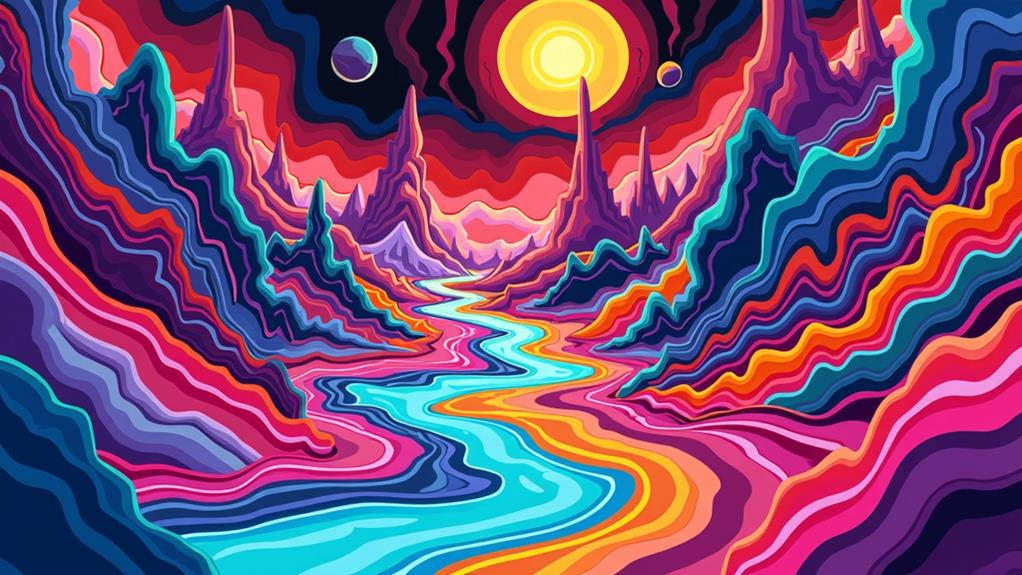
The psychedelic patterns and colors of the 1960s were profoundly influenced by hallucinogens like LSD and psilocybin. These substances allowed artists to explore altered states of consciousness and transcendental experiences, forming the backbone of psychedelic art. The use of hallucinogens led to the creation of radiant colors, intricate patterns, and surreal imagery, all designed to evoke a sense of unity with the cosmos and challenge traditional artistic norms.
Artists frequently reported that their experiences under the influence of hallucinogens inspired the vividness and complexity of their work. The visual distortions and emotional sensations experienced during these trips were mirrored in their designs, resulting in iconic visual motifs such as swirling shapes, fractals, and kaleidoscopic colors. These elements became hallmarks of the psychedelic movement, directly reflecting the sensory perceptions induced by hallucinogens.
Psychedelic art also expressed the counterculture's values, notably the rejection of materialism and the embrace of spiritual and communal experiences. This distinctive aesthetic deeply resonated with the cultural upheaval of the period, making it an enduring symbol of the 1960s.
Psychedelic Art in Music
Psychedelic art, closely intertwined with the 1960s music scene, became a defining feature of the era's rock bands and music festivals. Bands like The Grateful Dead and Jefferson Airplane used vibrant posters and album covers to embody the counterculture movement's ideals. This art form wasn't just visually stunning; it encapsulated the mind-altering themes of the music.
At major music festivals like Woodstock, artists created visuals that captured the essence of peace, love, and communal experiences. Renowned artists such as Wes Wilson and Victor Moscoso designed concert posters with swirling patterns and vivid colors, embodying the psychedelic experience.
Iconic album covers from the period, like The Beatles' "Sgt. Pepper's Lonely Hearts Club Band," featured these elements to enhance the listening experience. The fusion of psychedelic art and music extended beyond static images; visual effects like light shows, pioneered by groups like the Joshua Light Show, combined captivating visuals with live music, creating an engaging, multi-sensory experience for audiences.
Psychedelic art and music fused to create a multi-sensory experience that defined an entire generation, making it a culturally significant phenomenon.
Legacy in Modern Design
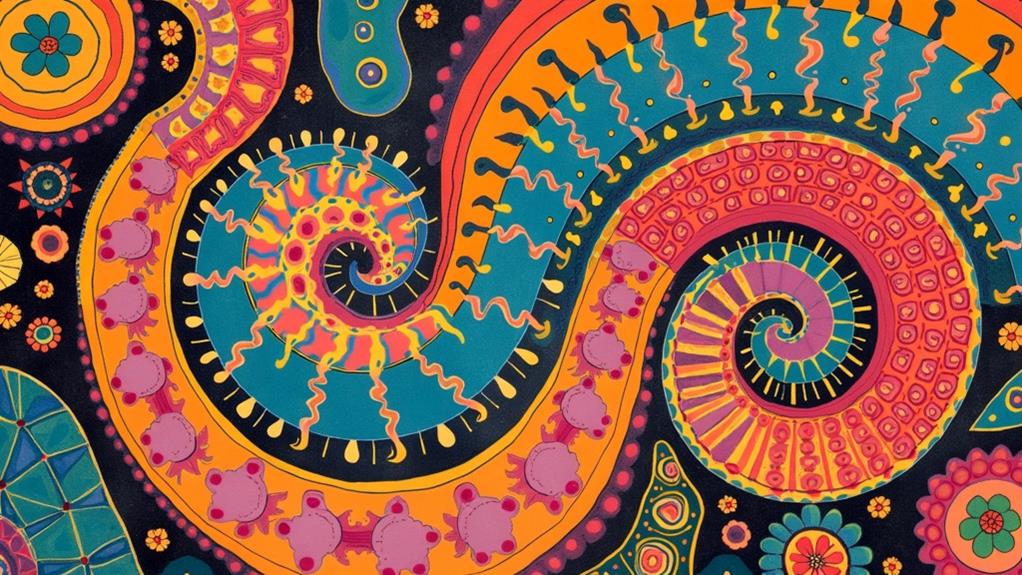
The vibrant energy of 1960s psychedelic art, integral to the music scene, continues to influence modern design. Its dynamic colors and intricate patterns can be seen in current fashion, branding, and graphic design. Modern designers evoke emotional responses with bold aesthetics, drawing from the legacy of psychedelic posters. Jewel tones and abstract forms have made a comeback, particularly in advertising and product packaging, reflecting a renewed interest in expressive and visually captivating styles.
In contemporary graphic design, advanced software tools enable artists to recreate the swirling patterns and vivid colors that defined the original movement. This influence is evident in the resurgence of maximalist design trends. Designers now embrace complexity and lively visuals, offering a counterpoint to minimalist aesthetics. This approach pays homage to the 1960s while incorporating modern elements.
Brands increasingly adopt psychedelic-inspired designs to convey messages of creativity and individuality. By integrating these elements into their visual identities, they capture the spirit of the counterculture. Whether in marketing campaigns or product packaging, the legacy of psychedelic art continues to inspire and captivate, demonstrating its timeless appeal.
Revival in Contemporary Culture
The resurgence of psychedelic patterns and colors is a vivid hallmark of contemporary creative spaces. This revival manifests in the dynamic designs prominently featured in today's fashion and home decor, reflecting a growing inclination toward self-expression and individuality. Modern designers are incorporating psychedelic motifs into branding, particularly within the food and beverage industry, to evoke a sense of artistry and environmental awareness.
Artistic movements such as neo-spiritualism and energy work have embraced these themes, integrating them into visual communication and experiential art. The accessibility of digital design tools has empowered contemporary artists to experiment, leading to a renaissance of hand-drawn illustrations inspired by the 1960s aesthetic.
Platforms like Adobe Stock showcase this fascination, offering new interpretations that resonate with current cultural trends.
To illustrate:
- Fashion: Vibrant, intricate patterns on clothing and accessories.
- Home Decor: Energetic wallpapers and textiles enlivening interior spaces.
- Branding: Psychedelic poster designs in product packaging.
- Graphic Design: Bold, swirling patterns in modern advertisements.
- Experiential Art: Immersive installations with kaleidoscopic visuals.
This revival underscores how historical influences continue to shape and inspire contemporary artistic expressions.