The 1960s Space Age Decor: Futuristic Furniture and Accessories
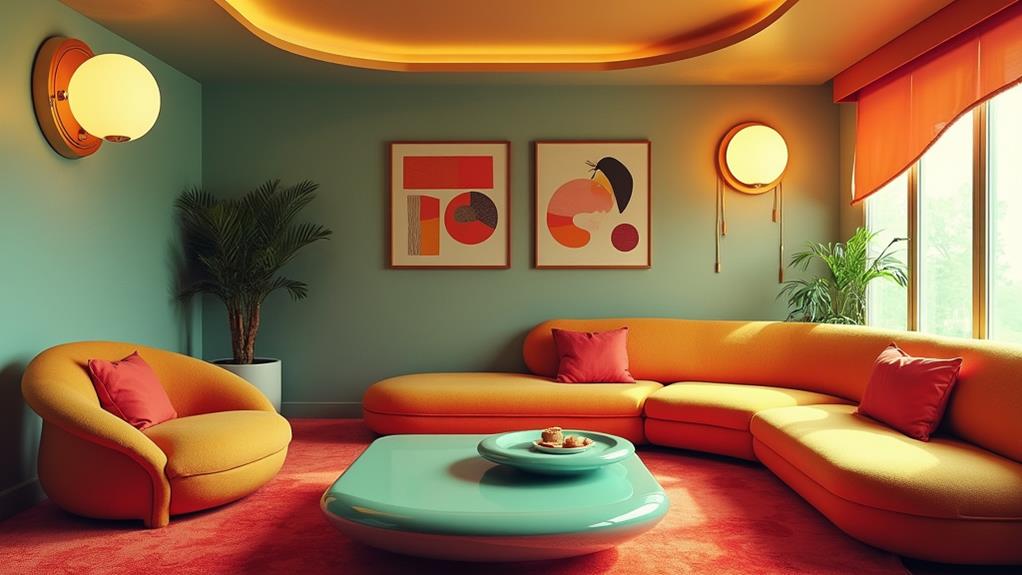
Imagine stepping into a room where every element, from the sleek Ball Chair to the vibrant orange pendant lamp, reflects the optimism and innovation of the 1960s. The Space Age decor didn't just furnish homes; it embodied a cultural shift towards the future, utilizing groundbreaking materials like plastic and fiberglass. You're surrounded by dynamic colors and shapes that challenge traditional design norms. But what exactly influenced this bold style, and how did it manage to blend functionality with artistic expression? The answers might surprise you.
Origins of Space Age Design
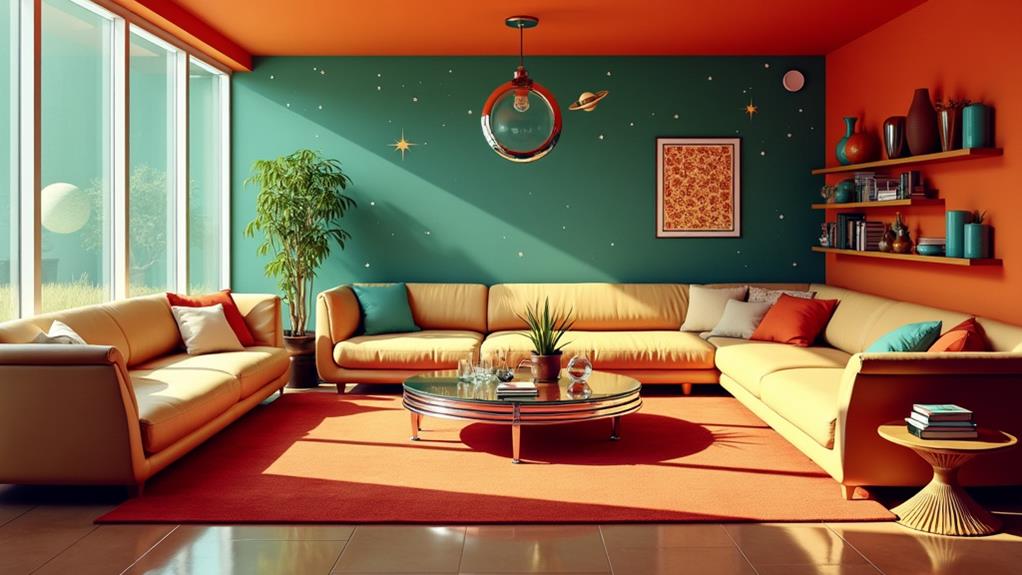
The Space Age Design movement emerged in the late 1950s, catalyzed by the launch of Sputnik in 1957, which sparked a global fascination with space exploration and advanced technology. This enthusiasm birthed Space Age Design, a subset of Mid-Century Modern that embraced sleek lines and futuristic motifs. Designers of the era harnessed the optimism of the period, crafting furniture and décor that mirrored a hopeful vision of the future.
Innovative materials like plastic and fiberglass were pivotal, enabling the creation of bold, curvaceous forms that appeared to defy gravity. Iconic pieces such as Eero Aarnio's Ball Chair and Verner Panton's Panton Chair epitomize this aesthetic. These designs were not solely about aesthetics; they embodied functionality and a spirit of adventure, directly influenced by the space race between the United States and the USSR.
Science fiction literature and films also significantly inspired designers, leading to the incorporation of futuristic motifs in their work. Although the movement's popularity waned in the 1970s, its legacy endures, continuing to influence contemporary design and making these pieces highly collectible today.
Iconic Space Age Materials
As Space Age design took flight, the materials used became a defining feature of the movement. Plastic emerged as a key material, allowing designers to craft futuristic furniture with sleek, smooth surfaces. This advancement led to iconic designs like Joe Colombo's modular living systems, which emphasized versatility and efficiency.
Fiberglass also played a significant role in Space Age decor. Its ability to be molded into unique, organic shapes enabled the creation of standout pieces like Eero Aarnio's Ball Chair. This chair, with its rounded, pod-like form, epitomized the era's fascination with space and technology.
Chrome became synonymous with Space Age design, thanks to its sleek, reflective qualities. It added a touch of modernity and was prominently featured in designs like Eero Saarinen's Tulip Chair. This chair's minimalist yet striking look perfectly captured the futuristic spirit of the 1960s.
The integration of lively colors and bold patterns in textiles and accessories further enhanced the futuristic appeal of these materials. By combining cutting-edge materials like plastic, fiberglass, and chrome with bright hues, designers created a cohesive, forward-thinking aesthetic that remains iconic to this day.
Popular Space Age Colors
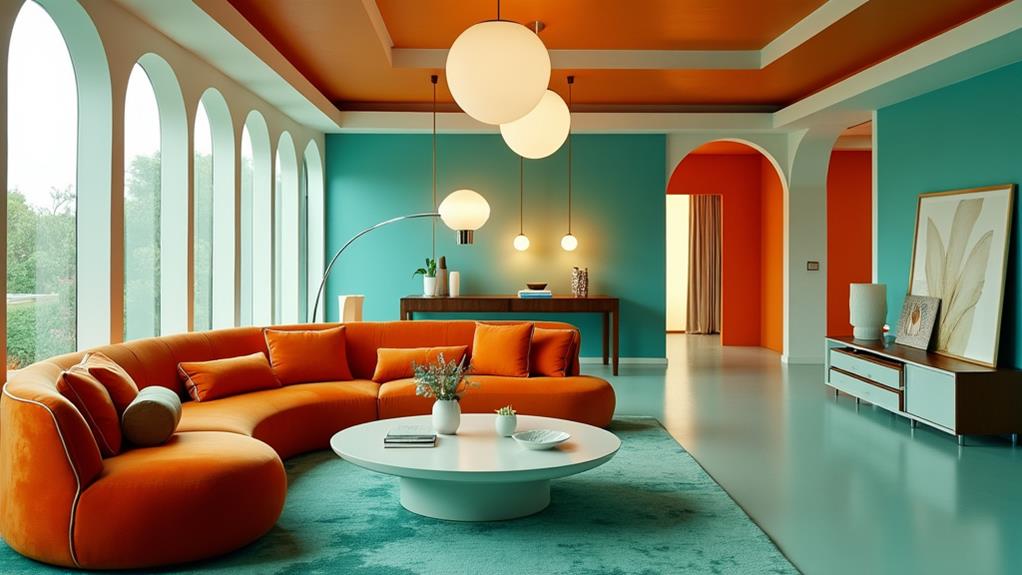
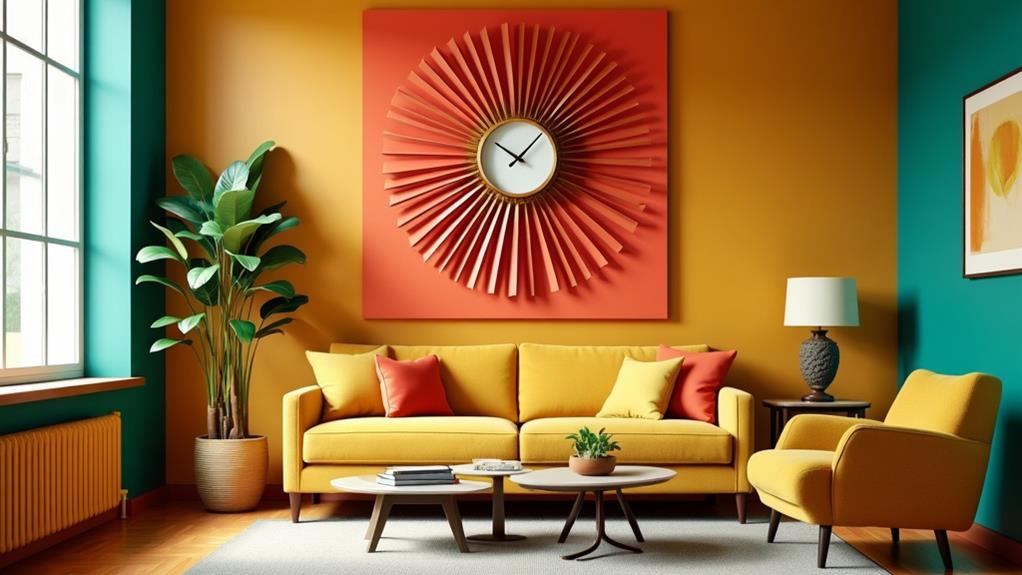
When you think of Space Age decor, vibrant colors like orange and yellow come to mind, reflecting the era's optimistic spirit. Metallic finishes, particularly chrome and silver, were essential for achieving that futuristic, tech-inspired aesthetic. Additionally, eye-catching neon hues and bold patterns contributed a playful, modern twist to interior spaces.
Bold Primary Colors
Imagine stepping into a room where bright reds, yellows, and blues immediately catch your eye, setting the tone for a space brimming with optimism and innovation. These bold primary colors were a hallmark of 1960s Space Age decor, reflecting the period's excitement about the future. Iconic pieces like Eero Aarnio's Ball Chair and Verner Panton's Panton Chair made striking use of these vivid hues, embodying the cultural zeitgeist of an era fascinated by the Space Race and its boundless possibilities.
Incorporating bold primary colors into furniture, lighting fixtures, and home accessories created a dynamic contrast against the sleek, futuristic aesthetics that defined Mid-Century modern design trends. Whether it was a bright red lounge chair or a vivid blue lamp, these pieces brought a playful yet sophisticated look to any room. Today, many vintage Space Age pieces remain highly collectible, and their lively color palettes continue to inspire contemporary designers. By embracing these bold primary colors, you can capture the same sense of excitement and exploration that made the 1960s a revolutionary period in design.
Metallic Finishes Trend
Embrace the futuristic allure of 1960s Space Age decor with metallic finishes that transformed ordinary rooms into cutting-edge environments. These finishes, featuring materials like aluminum, chrome, and stainless steel, were not just about durability; they exuded high-tech aesthetics, making every piece of furniture feel ahead of its time.
The iconic Ball Chair by Eero Aarnio and the Panton Chair by Verner Panton exemplified the era's fascination with glossy metallic finishes and sculptural forms. Reflective surfaces elevated visual appeal and created an illusion of spaciousness—a key aspect of Space Age style. Bold colors such as silver, gold, and metallic orange were staples, inspired by technological advancements and the excitement surrounding space exploration.
| Material | Color | Effect |
|---|---|---|
| Aluminum | Silver | High-tech appeal |
| Chrome | Gold | Sleek sophistication |
| Stainless Steel | Metallic Orange | Modern innovation |
| Plastic | Silver | Futuristic design |
| Fiberglass | Metallic Blue | Reflective surfaces |
These metallic finishes didn't just decorate rooms; they captured the spirit of an era focused on innovation and the endless possibilities of the future.
Vibrant Neon Hues
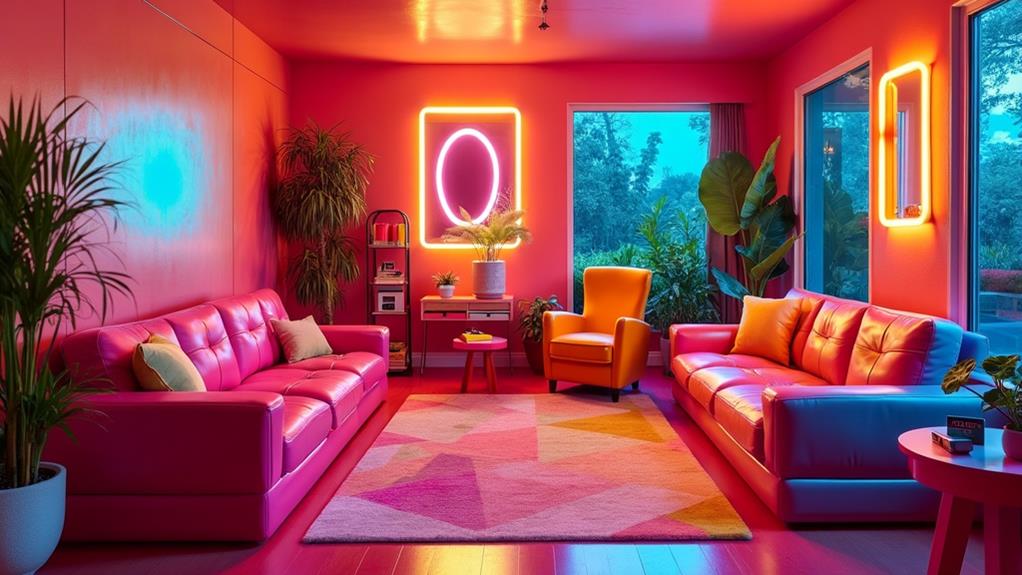
Transitioning from metallic finishes to vibrant neon hues, the Space Age decor of the 1960s was marked by an enchanting color palette that defined its futuristic aesthetic. Radiant neon hues such as electric blue, vivid orange, and bright yellow were emblematic of the period's optimism and creativity, infusing any room with an energetic vibe.
Plastic and fiberglass furniture, often in these lively colors, took center stage. These materials not only underscored the playful and futuristic essence of the Space Age but also allowed for sleek, geometric forms that enhanced the decor's dynamic feel. The use of bright colors extended beyond furniture to home accessories, lighting fixtures, and other decor items, creating a cohesive and striking visual environment.
These neon hues complemented popular patterns featuring abstract shapes and motifs, enriching the overall vibrant color palette. The combination of bold colors and geometric forms fostered a sense of movement and energy, reflecting the excitement surrounding space exploration. Incorporating these elements into your interior design can transform your space into a true homage to the creative spirit of the 1960s Space Age.
Futuristic Furniture Pieces
When considering Space Era decor, iconic chairs such as Eero Aarnio's Ball Chair and Eero Saarinen's Tulip Chair are pivotal, redefining modern seating with their innovative designs. Additionally, modular storage solutions like Kartell's Componibili units introduced both flexibility and ingenuity to interiors, capturing the era's progressive spirit. These pieces not only enhanced functionality but also stood out as statement elements in any Space Era-inspired room.
Iconic Space Age Chairs
Space Age decor isn't complete without iconic chairs that embody the futuristic spirit of the time. One standout piece is Eero Aarnio's Ball Chair from 1966. This molded fiberglass chair encapsulates you in a cocoon-like structure, perfectly capturing the Space Age's futuristic aesthetic. Similarly captivating is Marco Zanuso's Astro Chair, known for its smooth, organic shapes and lively colors. Introduced in the 1960s, it emphasizes both comfort and innovation, making it a quintessential Space Age piece.
Verner Panton's Panton Chair, created in 1960, transformed chair design with its gravity-defying S shape. Made from a single piece of molded plastic, this chair is a marvel of futuristic furniture engineering. Another iconic design is Olivier Mourgue's Djinn Chair, famously featured in "2001: A Space Odyssey." This chair combines functionality with avant-garde style, epitomizing the Space Age's fascination with futuristic forms and materials.
Lastly, don't overlook George Nelson's Marshmallow Sofa, which uses a playful arrangement of circular cushions on a minimalist frame. This design reflects the experimental spirit of Space Age furniture, blending whimsy with modernity. Each of these iconic chairs brings a unique, futuristic flair to any Space Age-themed decor.
Retro Modular Storage
While iconic chairs certainly set the tone for Space Era decor, no futuristic interior is complete without groundbreaking storage solutions that reflect the period's forward-thinking spirit. Retro modular storage pieces, like the Kartell Componibili by Anna Castelli, epitomize Space Era design with their stackable form and lively colors. Priced at CZK 24,869.11, these units offer both aesthetic appeal and functional storage.
The vintage IKEA "Vajer" dresser from the 1990s, now on sale for CZK 6,674.39 (20% off), showcases a minimalist aesthetic with modular capabilities, making it a perfect supplement to any modernist home. Space Era furniture often utilized innovative materials like plastic and fiberglass, creating versatile storage solutions that catered to modern lifestyles and emphasized functionality.
Another standout piece is the Flair media storage side table, designed for cassettes and records. Priced at CZK 5,235.60, it blends retro style with practical storage. Vintage modular desk drawers, marked down to CZK 1,492.00 (20% off), highlight the adaptability and space-saving principles inherent in Space Era furniture design. These pieces not only enhance your decor but also provide efficient storage solutions.
Space Age Lighting Fixtures
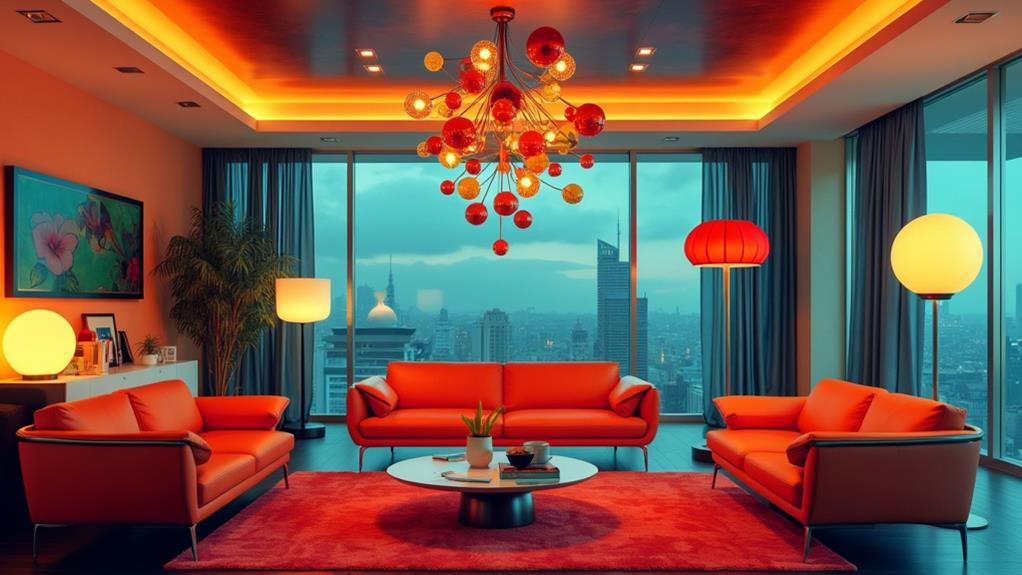
Space Age lighting fixtures are defined by bold, futuristic designs that can transform any room into a scene straight out of a sci-fi movie. These pieces often incorporate materials like plastic, chrome, and glass, capturing the optimism of the 1960s. More than just sources of illumination, Space Age lighting fixtures are statements of style and creativity.
Take, for example, the vintage Space Age orange pendant lamp from Denmark, priced at CZK 7,329.84. This lamp embodies the period's lively color palette and innovative lighting solutions. Similarly, the Tellurian pendant lamp, with its Nordic design, priced at CZK 11,294.12, showcases a groundbreaking approach to mid-century design. The playful aesthetics are also evident in the orange donut lamp, inspired by 1960s design and priced at CZK 3,141.36.
To emphasize the multifaceted nature of these pieces:
- Bold color choices, such as orange, add vibrancy to any room.
- Materials like plastic and chrome reflect a cutting-edge vibe.
- Multifunctional furniture often incorporates lighting elements.
- Designs are both playful and sophisticated.
- Each piece tells a story of mid-century creativity.
Whether you are a fan of vintage Space Age designs or seeking retro lighting solutions, these fixtures are perfect for adding a cutting-edge flair to your home.
Innovative Storage Solutions
Innovative storage solutions from the Space Exploration era exemplify the period's ingenuity and forward-thinking design. The iconic modular Kartell Componibili by Anna Castelli is a prime example. These groundbreaking storage units didn't just serve a functional purpose; they embodied the era's sleek, high-tech design ethos. Incorporating such pieces into a retro-inspired home adds both style and utility.
Another standout is the vintage space exploration beige plastic bathroom cabinet. Affordable and stylish, it epitomizes the period's focus on practicality and visual appeal. The Flair media storage side table, designed for cassettes and records, showcases the multifunctionality that was a hallmark of Space Exploration furniture.
For those who appreciate playful design, the vintage container side table by Kartell brings creativity into your living space. This piece merges decor with utility, a signature of the era. Finally, the vintage space exploration black and orange swivel chair, which integrates storage and seating, reflects the futuristic living concepts popular during the 1960s.
Accessories and Decor Items
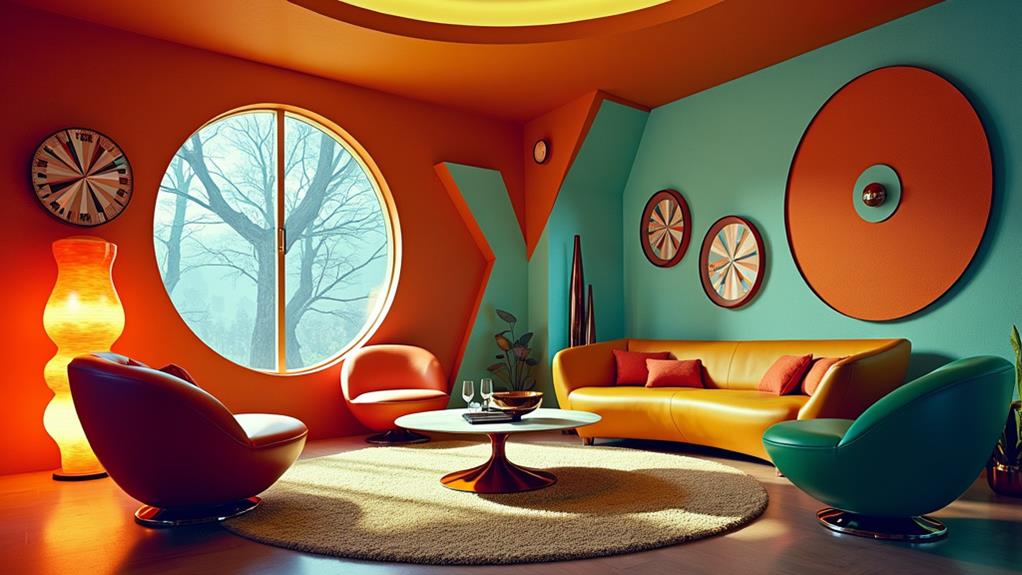
In the realm of Space Era decor, accessories and decor items are crucial in capturing the period's distinctive style. Items like the vintage Space Era orange pendant lamp from Denmark, priced at CZK 7,329.84, epitomize the bold colors and creative materials that define the era's design aesthetics. Retro lighting solutions, such as the orange donut lamp inspired by 1960s design, available for CZK 3,141.36, are essential for creating a futuristic atmosphere in your home.
Unique home accessories, like the vintage Danish dollhouse set featuring three cantilever chairs designed by Steen Ostergaard in 1966, priced at CZK 1,763.67, showcase the playful yet sophisticated style of Space Era decor. Decorative items such as the Cessna 402 Businessliner mirror-polished chrome airplane propeller sculpture, priced at CZK 16,352.94, reflect the fascination with aviation and space exploration of the time.
Consider the following items to achieve the perfect Space Era look:
- Vintage Space Era orange pendant lamp
- Orange donut lamp inspired by 1960s design
- Vintage Danish dollhouse set with cantilever chairs
- Cessna 402 Businessliner chrome airplane propeller sculpture
- BubbleOne mirror panel
These items, blending functionality with artistic expression, bring the futuristic furniture and design aesthetics of Space Era decor into your living space.
Influence on Modern Design
The accessories and decor items of the Space Age did more than define a style; they laid the groundwork for modern design principles. This period popularized the use of innovative materials such as plastic, fiberglass, and chrome, which remain prevalent in contemporary furniture today. Designers like Eero Aarnio and Verner Panton introduced iconic pieces such as the Ball Chair and Panton Chair, emphasizing playful forms and vibrant colors. These elements set a precedent for today's ergonomic and aesthetic designs.
The retro-futuristic aesthetics of Space Age decor, characterized by swooping shapes and bold patterns, continue to inspire current trends in interior design. This influence is particularly noticeable in eclectic and mid-century modern styles. The integration of technology into furniture design during the Space Age is reflected in modular and multifunctional pieces, paving the way for modern furniture solutions that prioritize versatility and space efficiency.
The enduring appeal of Space Age design has led to a revival of vintage pieces in the market. Contemporary designers incorporate nostalgic elements while emphasizing sustainability and creative craftsmanship, ensuring that the Space Age's legacy endures in the present-day design landscape.
Collecting Space Age Pieces
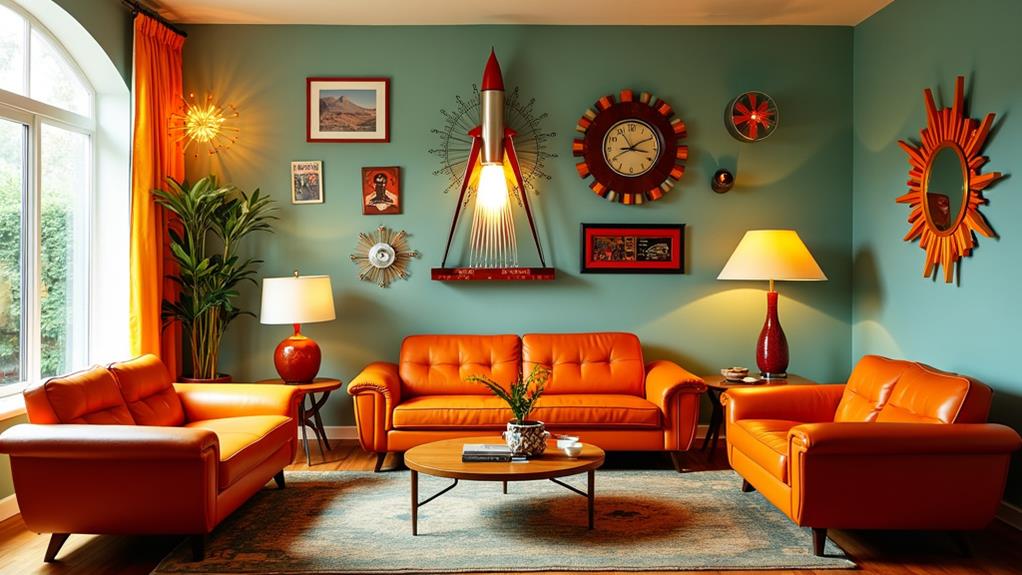
Collecting Space Age pieces offers an exciting journey into a realm where futuristic design intersects with mid-century innovation. As a collector, you'll be captivated by iconic works from renowned designers like Eero Aarnio and Joe Colombo. Their creations, such as the Ball Chair and Panton Chair, exemplify groundbreaking uses of materials like fiberglass and chrome. These items are not merely furniture; they are artistic statements that often command high prices at auctions due to their rarity and design significance.
The Space Age aesthetic is characterized by bold colors and futuristic shapes, making these pieces highly desirable. Collectors typically focus on specific categories:
- Lighting fixtures such as the Guzzini UFO Ceiling Lamp
- Modular furniture like Kartell Componibili units
- Decorative accessories that encapsulate the era's spirit
- Iconic designs from legendary designers
- Vintage furniture blending style and function
Online marketplaces and vintage stores are treasure troves for these Space Age finds, giving you the opportunity to discover and acquire unique pieces. Whether you're seeking lighting fixtures or modular furniture, each acquisition adds a touch of futuristic elegance to your home decor.