The 1980S Obsession With Glass Block Walls
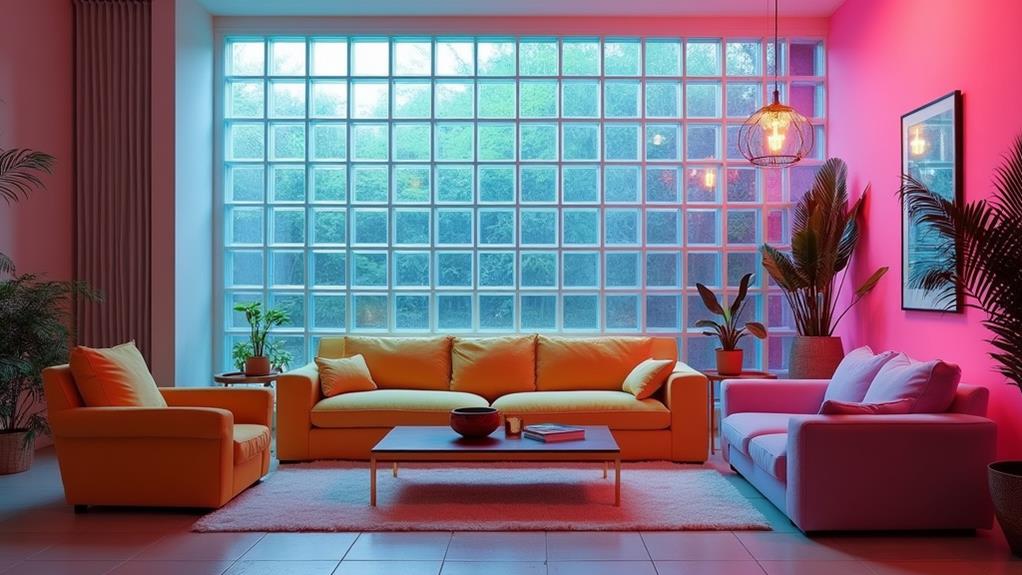
You might recall the 1980s fascination with glass block walls, a trend that swept through homes, particularly in kitchens and bathrooms. These walls weren't just about aesthetics; they balanced privacy with the flow of natural light. Their bold geometric shapes and vibrant colors defined the period's design ethos. But have you ever wondered how this trend started and why it became so iconic? The origins of glass block walls and their evolution into a modern classic reveal much about the innovative spirit of the 80s. What sparked this sudden surge in popularity?
Origins and Rise of Glass Block
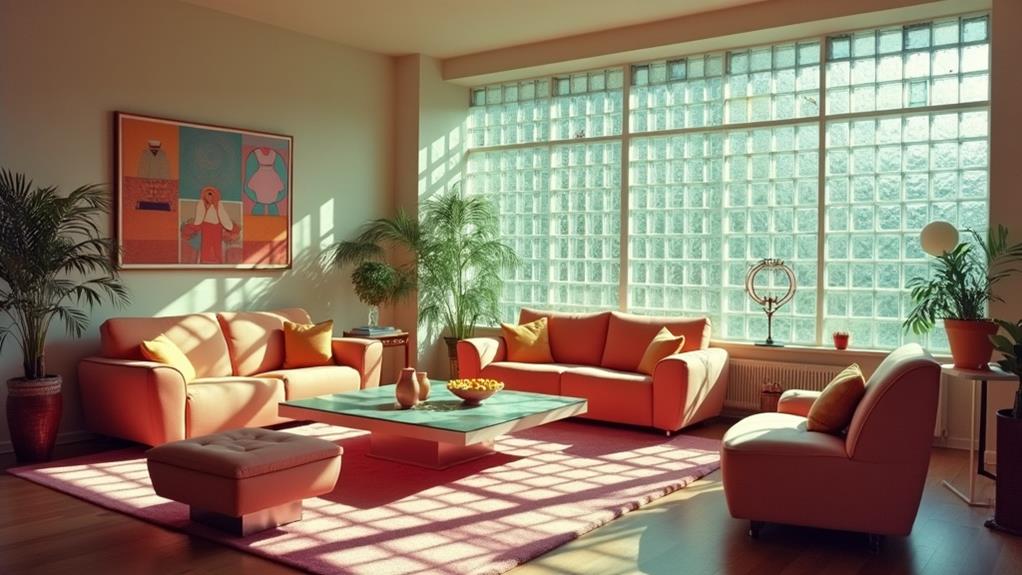
Glass blocks, originating in the early 20th century, were initially designed for industrial use to provide natural light for factory workers. Interestingly, these utilitarian objects quickly transcended their original purpose. By the 1920s, Art Deco architects began incorporating glass blocks into architectural designs, marking a significant shift from industrial to aesthetic applications. These blocks became more than just a source of natural light; they turned into a symbol of modernity and style.
In the 1980s, glass blocks experienced a revival, particularly in residential spaces like bathrooms and kitchens. They offered a blend of privacy and natural light, fitting seamlessly into the bold, geometric aesthetics of the period. The lively design trends of the 1980s, characterized by daring colors and shapes, made glass blocks a staple in modern architectural designs.
Iconic 80s Design Trends
The 1980s were characterized by bold design choices, with glass block walls emerging as a defining feature of the period's interior aesthetics. These walls offered a unique blend of privacy and natural light, making them a popular choice for bathrooms and kitchens. The vibrant color schemes—such as dark peach and bold reds—added to their appeal, creating a distinctive mix of retro charm and modern flair.
To appreciate the iconic design trends of the 1980s, consider these standout elements:
- Glass Block Walls: These were not only functional but also a statement piece. Their ability to diffuse light while maintaining privacy made them a versatile addition to any room.
- Color Schemes: Shades like dark peach and bold reds were prevalent, bringing warmth and energy to home interiors.
- Architectural Details: Diamond-shaped windows and elongated glass block installations became striking focal points, adding visual interest to spaces.
- Nostalgia Factor: The 1980s left a lasting impact, and today's renewed interest in glass block walls reflects a longing for the era's playful and bold design elements.
Key Features and Styles
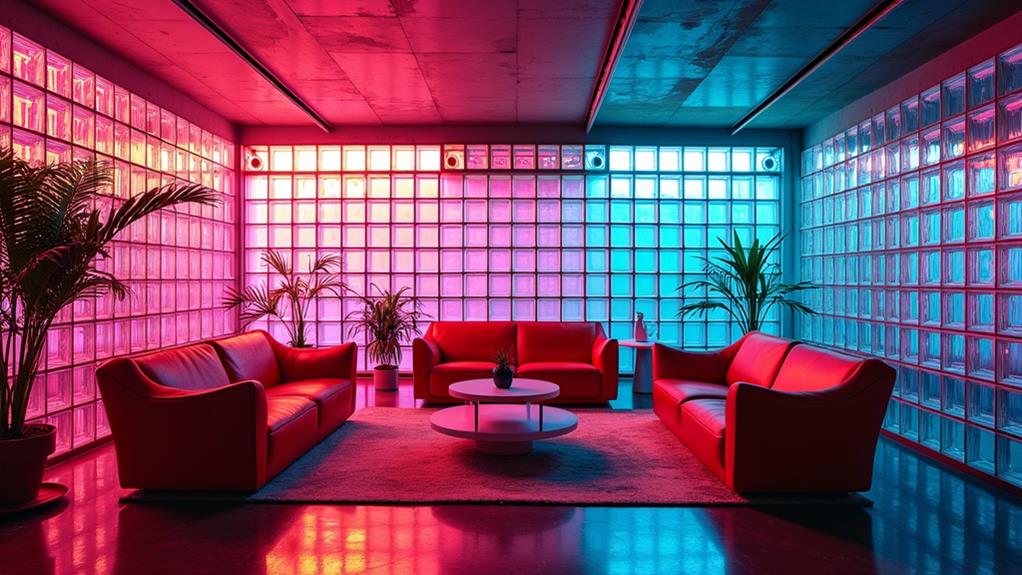
One of the standout aspects of 1980s design, glass block walls, encapsulated both functionality and style, making their mark in both residential and commercial architecture. These walls became popular for providing natural light without compromising privacy, a vital feature in areas like bathrooms and living spaces.
The aesthetic of the time welcomed bold colors and unique patterns. Glass blocks came in diverse designs, including frosted, cross-hatched, and fluted blocks, each adding a distinct touch to the space. Elongated glass block windows often served as striking focal points, frequently paired with dark peach marble or lively color schemes like red and gray.
| Design Element | 1980s Feature |
|---|---|
| Glass Block Windows | Elongated, often focal points |
| Fluted Blocks | Added texture and visual interest |
| Color Schemes | Dark peach marble, lively reds, grays |
Diamond-shaped windows and tile inserts were commonly used to enhance the retro feel, seamlessly integrating into the overall palette of 1980s architecture. The versatility of glass blocks allowed their use in various settings, effortlessly blending into both residential and commercial spaces. These elements not only enhanced the nostalgic appeal of the time but also demonstrated the innovative ways glass blocks could be used to provide light without sacrificing privacy.
Modern Reinterpretations
Several contemporary architects and designers have revitalized the use of glass block walls, employing innovative techniques like cross-hatched, frosted, and fluted designs to transcend the traditional aesthetics of the 1980s. Glass blocks have evolved from being mere retro elements to becoming integral components in modern architecture. Pioneers like Brad Swartz and Henry Wilson demonstrate the versatile potential of these materials.
Modern reinterpretations emphasize natural light while ensuring privacy, making glass blocks ideal for urban environments with limited space. These contemporary designs often use glass blocks as subtle accents rather than dominant features, enhancing open floor plans and adding a touch of retro charm without overwhelming the space.
To understand the impact of these modern reinterpretations on contemporary design, consider these points:
- Innovative Designs: Cross-hatched, frosted, and fluted blocks offer new aesthetic possibilities.
- Natural Light: Glass blocks optimize light flow while maintaining privacy.
- Versatile Integration: They seamlessly integrate as accents in open floor plans.
- Nostalgic Appeal: These designs evoke the 80s but with a fresh, modern twist.
Functional and Aesthetic Benefits
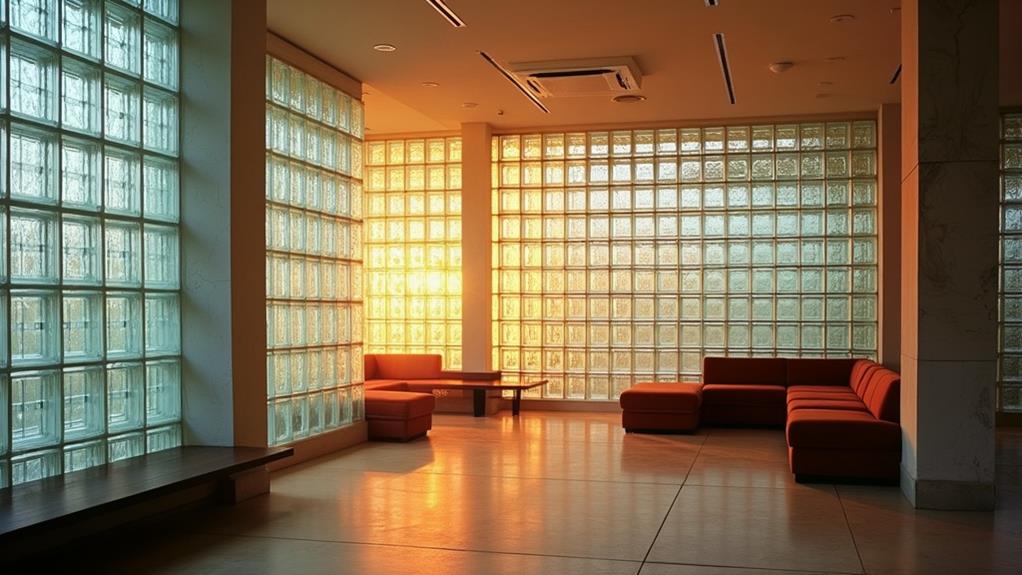
Why are glass block walls experiencing a resurgence in both residential and commercial spaces? They offer an ideal balance between light transmission and privacy. Glass blocks diffuse natural light beautifully, creating a warm and inviting atmosphere without compromising privacy. This makes them perfect for bathrooms and urban living areas where both light and seclusion are essential.
Additionally, glass blocks are highly durable and moisture-resistant, requiring less maintenance than traditional windows. Their robustness ensures they can withstand everyday wear and tear, making them a practical option for various environments. Moreover, glass blocks offer significant sound insulation benefits. They provide a quiet, serene space in noisy urban areas or open floor plans, enhancing their appeal.
Aesthetically, glass blocks are versatile enough to complement both modern and retro design styles. Whether you're aiming for a sleek, contemporary look or a nostalgic 1980s vibe, glass blocks can enhance your interior's visual appeal. The unique light play they create further enriches the ambiance of any room, making them a timeless choice for improving both functionality and aesthetics in any space.