The 1990s Love for Tuscan-Inspired Interiors
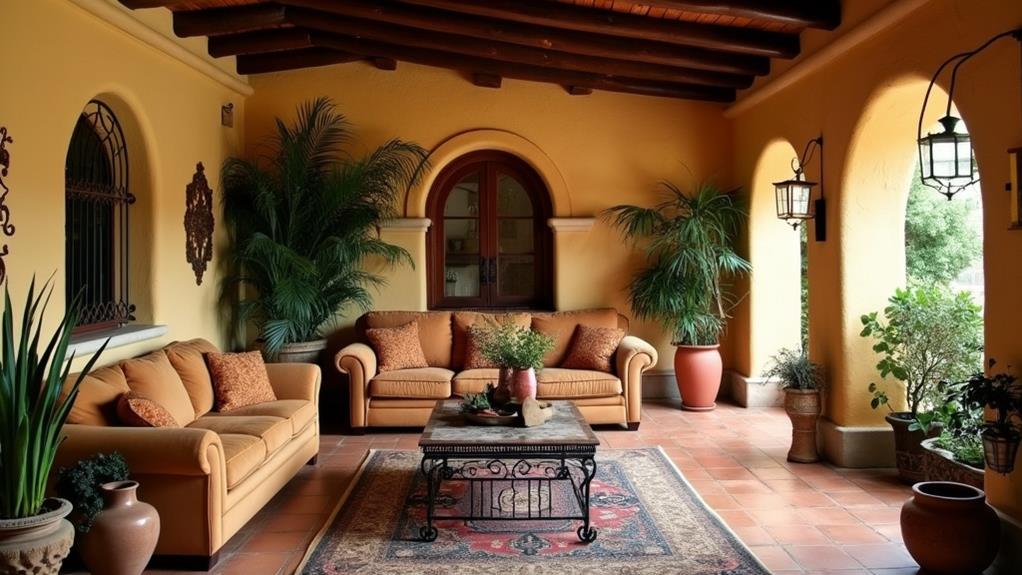
The 1990s saw a widespread fascination with Tuscan-inspired interiors, where homes exuded the warmth and rustic elegance of the Italian countryside. This design trend emphasized textured walls, terracotta tiles, and wrought iron fixtures, creating spaces that felt both authentic and inviting. Homeowners aimed to evoke traditional craftsmanship, incorporating vintage ceramics, heavy fabrics, and exposed wooden beams. But why did this particular style resonate so deeply, and how did it shape modern interior design trends? Let's explore the timeless appeal and lasting impact of this beloved aesthetic.
Embracing the Tuscan Aesthetic
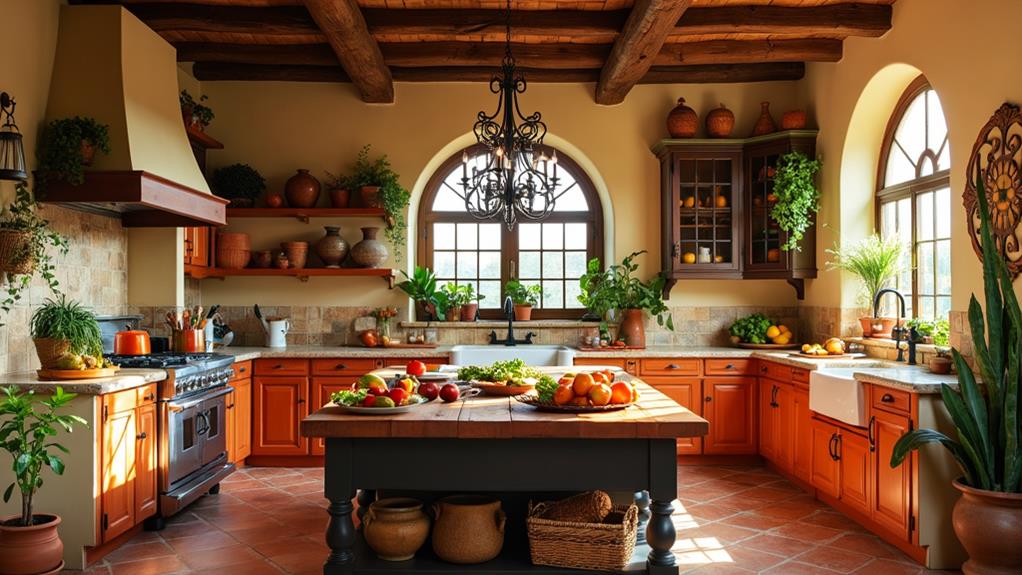
When you step into a Tuscan-inspired interior, you're immediately enveloped by the warmth of earth tones like burnt sienna, umber, and ocher, creating a cozy and inviting atmosphere. The Tuscan style emphasizes natural materials and traditional craftsmanship, lending each space authenticity and timelessness.
The rustic furniture, often crafted from solid wood, adds a sense of durability and history. Wrought iron fixtures provide both functionality and old-world charm. Decorative details, from intricately designed tiles to hand-painted ceramics, enhance the aesthetic.
Textured wall finishes, such as stucco or plaster, give the walls a rich, lived-in look, while terracotta tiles on the floor contribute to the rustic appeal. These elements combine to create a space that feels both elegant and grounded. The use of materials like wood, stone, and clay connects you to the landscape, making the interior feel like a natural extension of the Tuscan countryside. Embracing the Tuscan aesthetic means creating a space where warmth and tradition come together beautifully.
Key Features of Tuscan Interiors
Stepping into a Tuscan-inspired interior immediately reveals its distinctive charm through key features that define the style. Warm, earthy tones like burnt red, olive green, and golden brown create a cozy and inviting atmosphere. In a Tuscan kitchen, dark wood elements, such as cherry cabinets, add richness and luxury.
Architectural details are significant in Tuscan interiors. Arched doorways and exposed wooden beams provide rustic charm, while wrought iron fixtures add elegance. Decorative touches like sponge painting techniques and tile backsplashes often depict vineyard landscapes, bringing a piece of the Italian countryside into your home.
Travertine flooring is another signature element, valued for its durability and aesthetic appeal. These floors are often paired with intricate area rugs, adding texture and warmth to the room. Layered fabrics, such as heavy drapes and upholstered furniture, enhance the luxurious feel, making the space both grand and comfortable.
With these key features, a Tuscan-inspired interior effortlessly transports you to the serene and rustic landscapes of Tuscany.
Popular Tuscan Color Palettes
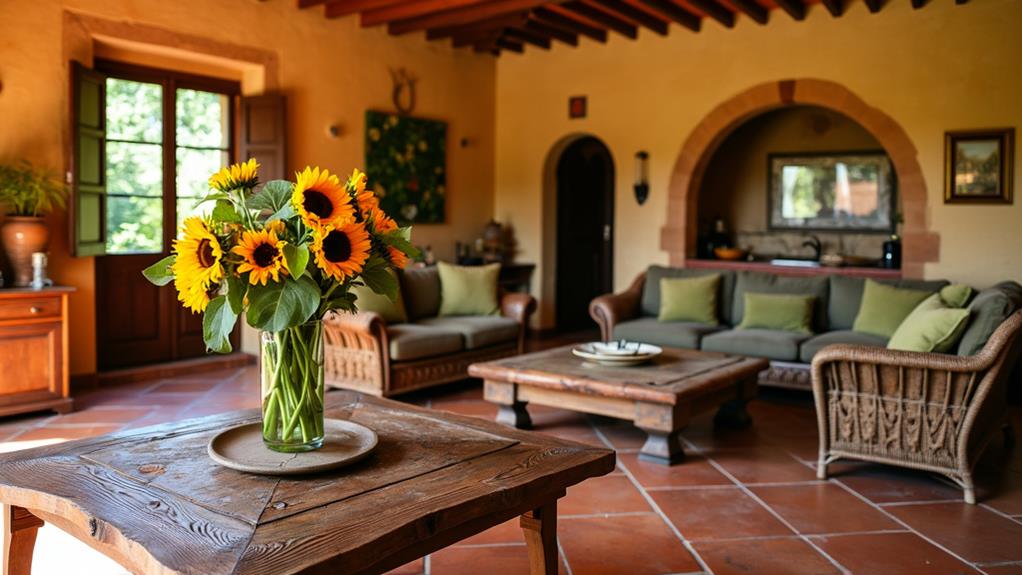
Tuscan-inspired interiors are celebrated for their warm, inviting color palettes that reflect the natural beauty of Tuscany's landscapes. To achieve this aesthetic, incorporate earth tones like burnt sienna, golden yellow, and olive green. These colors evoke warmth and coziness, making your space feel welcoming and homely.
Key to the Tuscan ambiance are deep, rich colors such as terracotta and rust. Pair these with dark wood accents and ornate details to enhance the luxurious feel. To balance the vibrancy, use creamy whites and soft neutrals to brighten rooms and prevent them from feeling too heavy or dark.
Accent colors also play a significant role in Tuscan design. Deep reds and muted golds can add pops of color and uplift the overall look. Textured finishes like sponge painting and antiqued effects on walls complement these color palettes, adding depth and character. By carefully selecting and combining these elements, you can capture the timeless beauty of Tuscan-inspired decor.
Rustic Materials and Textures
Embracing rustic materials and textures is essential for capturing the authentic charm of Tuscan-inspired interiors. Weathered wood, wrought iron, and terracotta form the backbone of this warm and inviting style, reminiscent of Italian farmhouses. These rustic materials create a cozy atmosphere, making your home feel welcoming and lived-in.
Textures play a crucial role in bringing the Tuscan aesthetic to life. Plaster walls, exposed beams, and stone accents introduce a layered, tactile environment that emphasizes a deep connection to nature. The use of travertine and tumbled marble further enhances this earthy quality, adding depth and character to your spaces. The aim is to create a space that feels grounded and authentic.
Fabrics are another fundamental element. Heavy linens and cottons in rich, warm colors enhance the tactile experience and comfort, making every room feel like a sanctuary. Don't overlook decorative elements like vintage ceramics and handwoven textiles, which can enrich the texture palette. These small details contribute greatly to the inviting and character-filled ambiance synonymous with Tuscan design. By focusing on these rustic materials and textures, you'll effortlessly capture the essence of Tuscan-inspired interiors.
Incorporating Travertine Elegantly
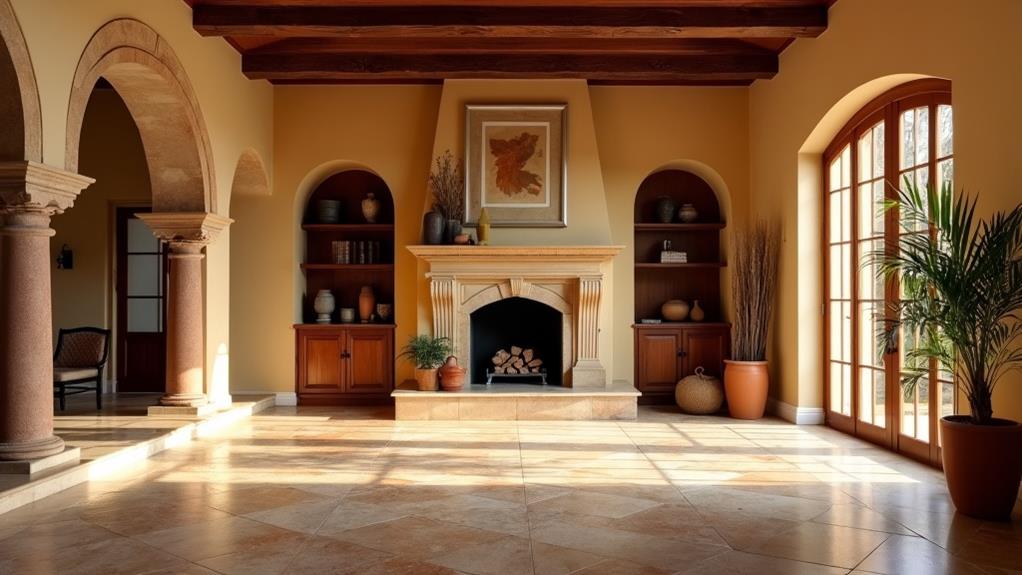
Incorporating travertine elegantly into your Tuscan-inspired interiors requires a keen eye for balance and harmony. Start with travertine floors, a durable and moisture-resistant choice that offers a timeless appeal. To enhance the natural variations of travertine, select low-contrast paint colors for your walls and decor. This approach softens the visual impact and helps the floors blend seamlessly with other elements in the room.
Pairing travertine with warm wood tones can further enrich the space. Consider using reclaimed wood for furniture or exposed beams to create a cohesive, rustic look. Soft neutral color palettes, like beige, taupe, and ivory, complement travertine's earthy tones, adding warmth and depth to your interior.
You can also elevate the elegance of travertine by incorporating it into focal points. A travertine fireplace or kitchen backsplash can serve as a stunning centerpiece, drawing attention while maintaining a contemporary feel. Thoughtful design choices, such as integrating travertine with modern furnishings, ensure that your Tuscan-inspired space remains both stylish and functional.
Modernizing Tuscan Cabinetry
Modernizing Tuscan cabinetry often begins with a fresh coat of light linen or soft neutral paint, instantly enhancing the room's spaciousness and light reflection. Refinishing dark cherry or oak cabinets with these modern colors not only brightens the space but also updates the overall aesthetic. Contemporary cabinet hardware, such as clean-lined antique brass or brushed nickel, can significantly elevate the look.
Consider a low-contrast color scheme to complement existing travertine or stone features, maintaining a connection to Tuscan roots while providing a refreshed appearance. Neutral tones and textured materials in the cabinetry can foster a more inviting atmosphere, moving away from heavy, traditional designs.
Updating Tuscan Wall Colors
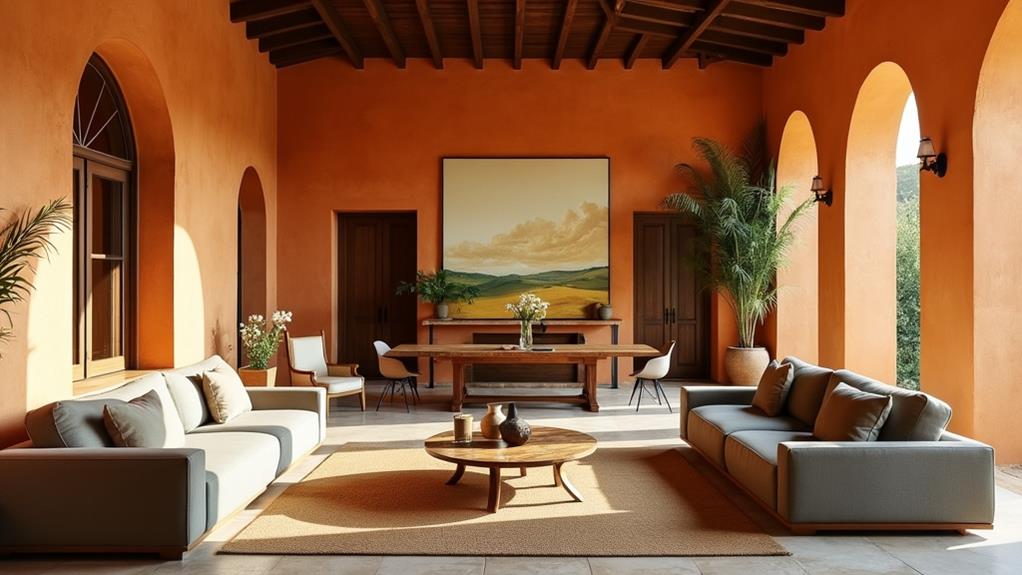
When updating Tuscan wall colors, replacing deep tones like golden yellow with softer neutrals such as creamy beige or light gray can create a brighter and more welcoming atmosphere. Consistent color schemes throughout your home promote visual calmness and enhance the sense of spaciousness, which is ideal for modern living. Light neutral walls, particularly light gray, balance out the heaviness of traditional Tuscan elements, making your space feel more contemporary and inviting.
Natural light greatly affects how wall colors look, so consider room orientation when choosing new paint hues. Testing colors under different lighting conditions ensures you achieve the desired aesthetic, especially when working with warm undertones that complement existing dark cabinetry and travertine. By opting for lighter shades, you can create a harmonious environment that feels both updated and timeless.
| Room Orientation | Suggested Wall Color | Lighting Condition |
|---|---|---|
| North-facing | Light gray | Cooler light |
| South-facing | Creamy beige | Warm light |
| East/West-facing | Light pink undertone | Varied light |
Creating Modern Focal Points
To create modern focal points in your Tuscan-inspired interiors, start by incorporating contemporary textiles and furnishings to balance traditional elements like travertine. Large art pieces and framed windows with drapery can draw attention away from outdated features. Using a low-contrast color palette will help blend new and old materials, offering a cohesive and refreshed look.
Diversify With Modern Textiles
Incorporating modern textiles into a Tuscan-inspired interior breathes new life into the space, creating striking focal points that balance tradition with contemporary flair. By introducing fabrics like bouclé or geometric patterns, you can effortlessly transform your home into a blend of old-world charm and contemporary elegance. These textiles provide a novel contrast to the heavy travertine and dark wood cabinetry typical of Tuscan design.
Layering textiles, such as throw pillows and area rugs, softens the overall aesthetic while injecting contemporary appeal. This layering not only adds depth but also makes the space feel more inviting and updated. Consider fabrics in lively blues and greens to rejuvenate your Tuscan-inspired rooms. These spirited hues bring a revitalizing contrast that amplifies the warmth and richness of traditional materials.
Additionally, clean-lined, contemporary furniture upholstered in modern textiles can bridge the gap between the old Tuscan style and a more current, accessible design. This approach ensures that your space feels cohesive yet modern. By thoughtfully incorporating these elements, you create a harmonious blend where the past meets the present, making your home a timeless sanctuary that feels both classic and contemporary.
Emphasize Large Art Pieces
Large art pieces can transform your Tuscan-inspired interiors by creating modern focal points that draw attention and add sophistication. In a Tuscan-style home, these striking artworks can effectively divert attention from dominating features like travertine, enhancing the overall aesthetic without compromising traditional charm.
Introducing large art pieces isn't merely about decoration; it's about crafting a balanced visual composition. Modern textiles and furnishings paired with these artworks can beautifully complement the timeless elements of your Tuscan-style home. This blend ensures that the classic and contemporary coexist harmoniously, making your space inviting and stylish.
Opt for low-contrast colors in your artwork to help it integrate seamlessly with existing materials like travertine. This approach softens the visual impact of such materials, fostering a cohesive and serene atmosphere. Additionally, framing windows with drapery or incorporating large-scale artwork can add depth and dimension to your rooms, making them feel more spacious and elegant.
Thoughtful placement of these art pieces allows you to showcase your personal style while modernizing the Tuscan design aesthetic. By carefully curating your choices, you can transform any room into a sophisticated haven that reflects your unique taste.
Integrate Low-Contrast Colors
Incorporating low-contrast colors in your Tuscan-inspired interiors can enhance the space by creating modern focal points that are both subtle and striking. By selecting a cohesive color scheme that includes soft beige tones, muted greens, and warm grays, you can harmonize the overall aesthetic and reduce visual clutter. These colors blend seamlessly with traditional Tuscan elements like travertine and dark wood cabinetry, diverting attention from overwhelming textures and creating new focal points.
Integrate these low-contrast hues into your design by framing windows with neutral-toned drapery and selecting large art pieces featuring understated tones. This approach not only draws the eye away from heavy architectural features but also adds a modern touch to your space. Additionally, incorporating design elements like shiplap or metal accents in soft, muted colors can further modernize your interiors while maintaining their traditional charm.
Pay close attention to your wood furniture. Choose pieces with finishes that complement your chosen color scheme, ensuring they enhance rather than overpower the room. This thoughtful integration of low-contrast colors will create an inviting, cohesive space that beautifully balances classic Tuscan warmth with contemporary elegance.
Integrating Blues and Greens
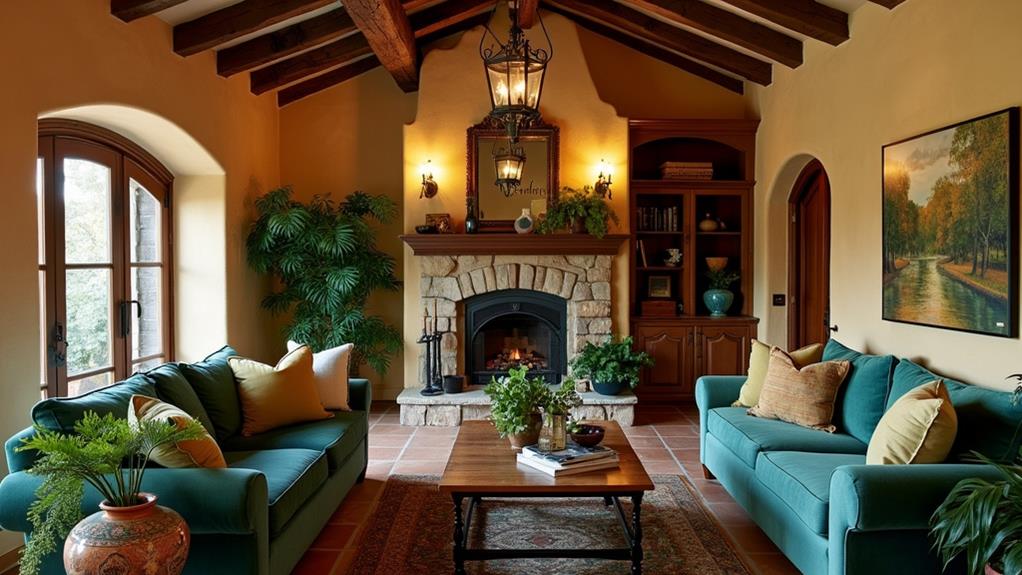
Revitalizing your Tuscan-inspired interiors can be effectively achieved by integrating blues and greens. These colors create a refreshing contrast to the warm tones of stained wood and travertine, which are essential in traditional Tuscan design. Navy blue acts as a versatile neutral, harmonizing with the earthy palette while adding depth and sophistication. Soft greens, on the other hand, enhance the natural elements and evoke tranquility, making your space more inviting.
By using textiles, accessories, and wall treatments, you can introduce these hues without overwhelming your existing decor. For example, consider navy blue throw pillows or a soft green area rug to modernize your living room. Flat lay inspirations can assist in selecting combinations that cohesively blend with your current materials.
| Element | Blue Ideas |
|---|---|
| Textiles | Navy blue throw pillows |
| Accessories | Blue vases, green candles |
| Wall Treatments | Soft green accent walls |
| Flat Lay | Blue-green color swatches |
Integrating blues and greens can uplift your Tuscan-inspired interiors, maintaining timeless warmth while adding a modern twist. This blend of traditional and contemporary elements ensures your space remains both classic and invigorating.