The Anatomy of a Flamingo: Understanding Their Long Legs and Curved Beaks
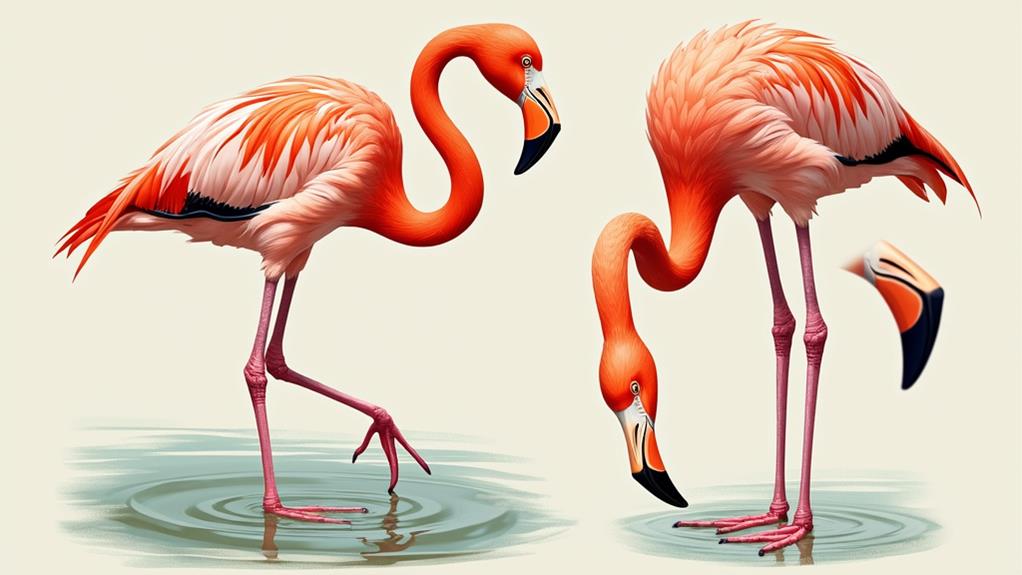
You'll find that flamingos' long legs and curved beaks are fascinating adaptations. Their lengthy, powerful legs allow them to wade into deeper waters, giving them access to unique food sources while traversing muddy terrains effortlessly. The curved beaks function as natural sieves, filtering out mud and water while trapping tiny edible organisms. This filter-feeding mechanism not only sustains them but also contributes to their striking pink hue. With strong legs and specialized beaks, flamingos have evolved to thrive in their specific habitats. Keep going to uncover the full story behind these remarkable birds.
Flamingo Leg Structure
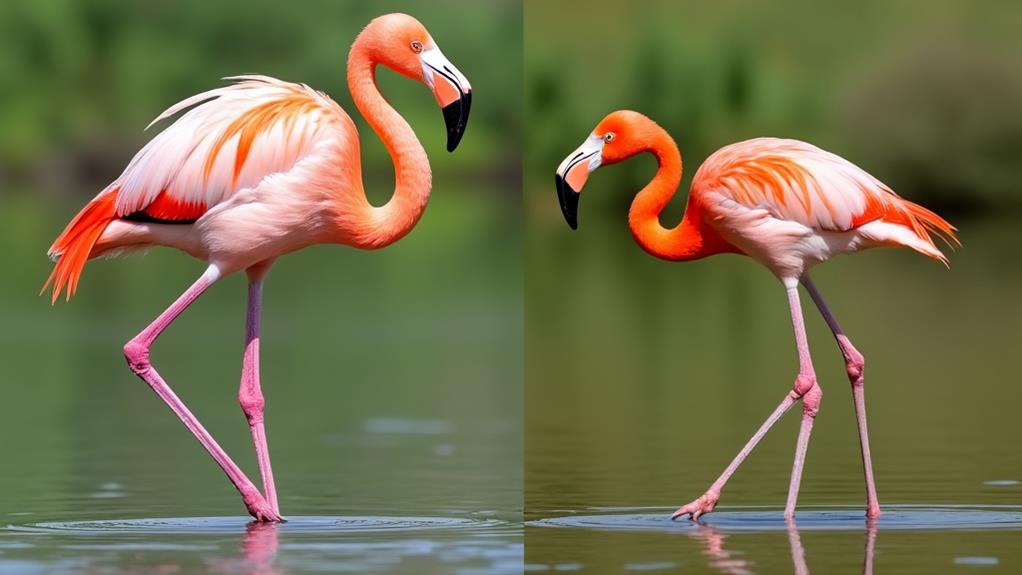
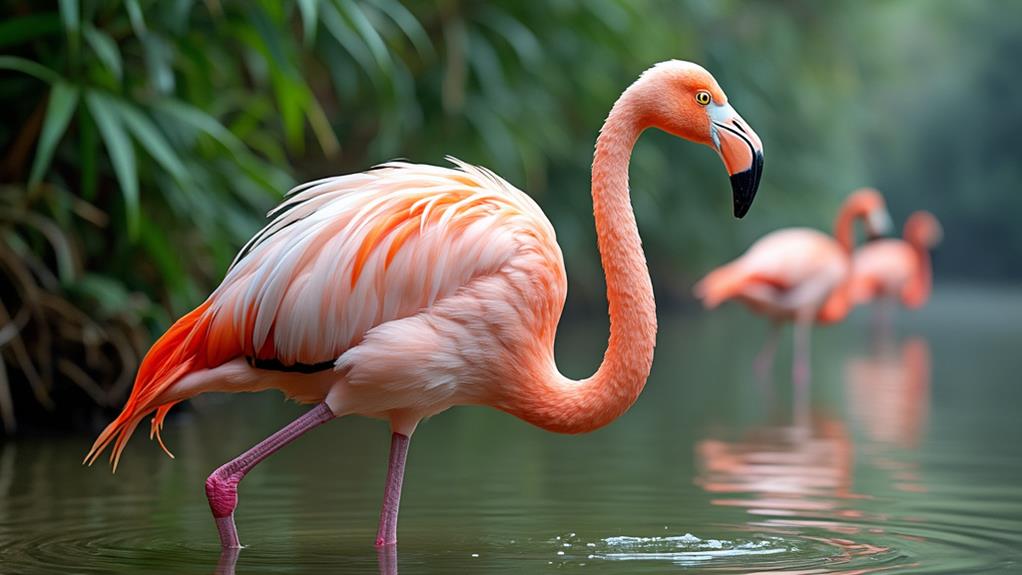
When you look at a flamingo, one of the most striking features is its long, slender legs. These legs aren't just for show; they play an essential role in the bird's daily life. You'll notice that flamingo leg muscles are exceptionally developed, allowing for both strength and flexibility. This muscle structure supports their unique standing posture and enables them to move gracefully through their habitats.
Interestingly, there are leg length variations among different flamingo species. Some species have legs that are proportionally longer compared to others, which can affect their general height and how they interact with their environment. The greater flamingo, for instance, boasts some of the longest legs in the flamingo family, making it one of the tallest species.
These variations aren't just random; they're adaptations that help each species thrive in its specific habitat. Longer legs can be particularly advantageous for reaching deeper waters and accessing food sources that shorter-legged species might miss. So, when you observe a flamingo, take a moment to appreciate the intricacies of its leg structure. It's a fascinating blend of muscle and bone that's perfectly adapted to their lifestyle.
Adaptations for Wading
Flamingos have several remarkable adaptations for wading through water, making them well-suited to their aquatic habitats. Their long legs allow them to wade into deeper waters where other birds can't reach, giving them access to food sources with less competition. You'll notice that their legs are not only long but also quite strong, supporting their weight as they navigate through muddy terrains and shallow waters.
Flamingos' wading behavior is crucial for their survival. By standing on one leg, they can conserve body heat while the other leg stays submerged. This unique stance also helps them balance on uneven surfaces and reduces fatigue. Their webbed feet are another key adaptation, preventing them from sinking into soft, muddy bottoms and allowing them to stride effortlessly through water.
When it comes to habitat preferences, flamingos are typically found in shallow lakes, lagoons, and estuaries. These environments provide the perfect conditions for their wading behavior, offering ample food and the right water depth for foraging. Their specialized legs and feet enable them to thrive in areas where few other species can, making flamingos a fascinating example of adaptation to aquatic life.
Beak Anatomy

Beyond their impressive wading abilities, another fascinating aspect of flamingo anatomy is their unique beak structure. When you look closely, you'll notice that a flamingo's beak is unlike most other birds'. It's distinctly curved, which plays a vital role in their feeding strategies. This curvature isn't just for show; it allows flamingos to eat in a way that's highly specialized and efficient.
The beak shapes of flamingos are perfectly adapted to their diet. Unlike straight beaks designed for pecking or tearing, flamingo beaks are bent downward. This unique shape helps them scoop up food while their heads are upside down in the water. The upper part of the beak is thinner and fits snugly into the lower, broader part, creating a sort of natural sieve.
The structure of their beaks also assists in filtering out mud and silt while retaining edible organisms. This design is essential for their survival, as it allows them to efficiently separate food from debris. So, next time you see a flamingo feeding, take a moment to appreciate how their specialized beak shapes enable their unique feeding strategies.
Filter-Feeding Mechanism
Thanks to their specialized beak anatomy, flamingos utilize a sophisticated filter-feeding mechanism that sets them apart from other birds. This adaptation allows them to efficiently extract their specialized diet from the water. When you observe a flamingo feeding, you'll notice it often tilts its head upside down, submerging its beak. This unique position enables the bird to filter-feed by pumping water in and out using its tongue.
Here's how it works:
- Water Ingestion: Flamingos suck in water filled with tiny organisms like algae and crustaceans.
- Filtering Process: Their beaks have lamellae, comb-like structures that trap food particles while letting water escape.
- Tongue Action: The muscular tongue acts like a piston, pushing water out while retaining the food.
- Swallowing: Ultimately, the bird swallows the captured food, rich in nutrients vital for its survival.
This filter feeding behavior is a marvel of nature, allowing flamingos to thrive in environments where other birds might struggle. Their specialized diet of small aquatic organisms not only sustains them but also gives their feathers that iconic pink hue. So next time you see a flamingo, you'll appreciate the intricate feeding strategy behind its graceful appearance.
Evolutionary Significance
Understanding how flamingos feed gives us insight into their evolutionary path. Over millions of years, flamingo ancestry has been shaped by unique evolutionary pressures. Their long legs and curved beaks didn't appear by chance; these features are adaptations that allowed them to thrive in their specific habitats.
Imagine a time when flamingo ancestors faced intense competition for food. Those with longer legs could wade deeper into water, accessing food sources others couldn't reach. Meanwhile, a curved beak evolved to filter-feed efficiently, allowing them to consume small organisms like algae and crustaceans. These evolutionary pressures gradually honed their specialized anatomy.
Related posts