The Flamingo’s Habitat: Where to Find These Colorful Birds in the Wild
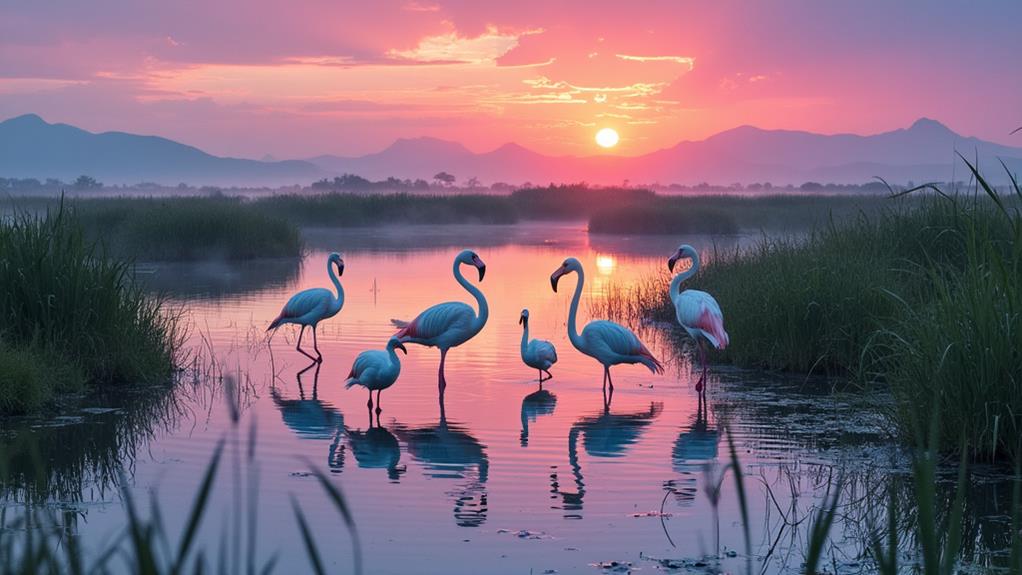
You can find flamingos in different lively habitats across the globe, from the alkaline Rift Valley lakes in Africa to the shallow lagoons of the Caribbean Islands. They thrive in South America's lush wetlands, the salt flats of the Middle East, and India's coastal regions with rich feeding grounds. European lagoons also provide perfect conditions for these colorful birds. Preferring warm climates and shallow waters, flamingos favor areas abundant with algae and small crustaceans to maintain their striking pink hues. Keep following along to uncover even more about these fascinating habitats and their essential role in flamingo survival.
African Rift Valley Lakes
Situated along the African Rift Valley, you'll find some of the most stunning lakes that serve as prime habitats for flamingos. These lakes, such as Lake Nakuru and Lake Bogoria, are rich in the alkaline waters that flamingos favor for breeding. The high salinity and abundance of cyanobacteria provide an ideal environment for these birds to thrive and reproduce. By visiting these lakes, you can witness the incredible sight of thousands of flamingos gathered together, forming a mesmerizing pink blanket over the water.
Flamingo breeding in these areas is imperative, not just for the species, but also for the broader ecosystem. The presence of flamingos helps maintain the ecological balance by controlling algae growth, which can otherwise bloom excessively and disrupt the habitat. Their feeding habits also aid in nutrient cycling, benefiting both aquatic and terrestrial life forms.
When you investigate the African Rift Valley Lakes, you'll notice the profound ecological significance they hold. These habitats are fundamental for the survival of flamingo populations and play a critical role in supporting a diverse array of wildlife. By understanding and appreciating these ecosystems, you contribute to their conservation and the preservation of these magnificent birds.
Caribbean Islands
While the African Rift Valley Lakes offer a breathtaking habitat for flamingos, the Caribbean Islands provide a likewise fascinating environment for these colorful birds. Here, you can find flamingos wading gracefully in shallow lagoons and coastal regions, their lively pink feathers contrasting beautifully with the turquoise waters.
Flamingo behavior in the Caribbean is mesmerizing. You'll often see these birds engaging in synchronized group movements, a spectacle that's both beautiful and purposeful. This behavior helps them stir up food from the muddy bottoms of their habitats. Watching a flock moving in harmony is an unforgettable experience.
When it comes to nesting sites, the Caribbean Islands offer ideal conditions. Flamingos typically build their nests from mud, forming tall, volcano-shaped structures that keep their eggs safe from flooding. These nesting sites are often located on isolated islands or in remote coastal regions, providing a safe haven from predators.
If you're planning to observe flamingos in the wild, areas like the Bahamas, Cuba, and the Yucatán Peninsula are prime locations. Here, you'll have the chance to witness their fascinating behaviors and nesting practices up close, all set against the stunning backdrop of the Caribbean.
South American Wetlands
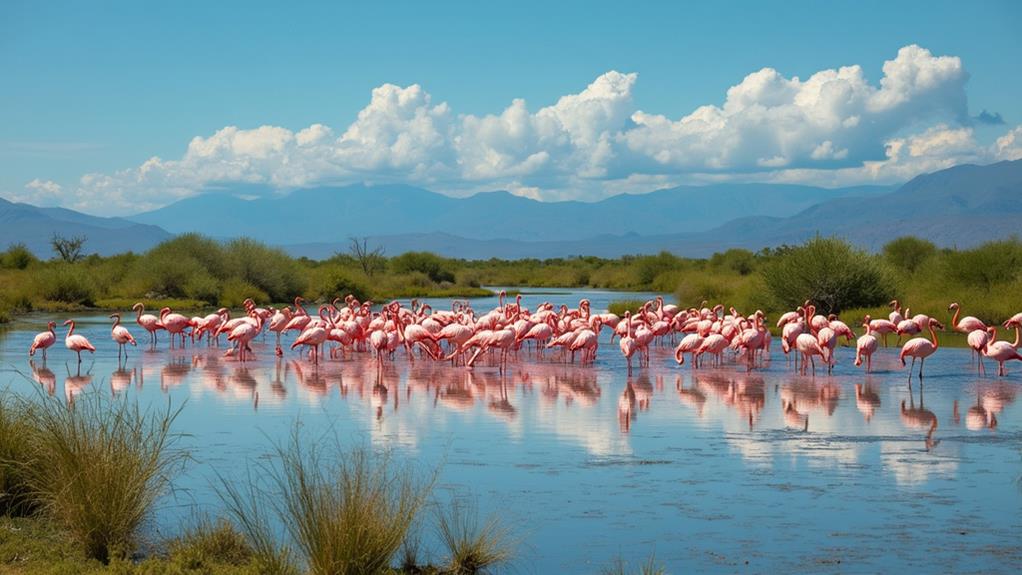
The South American Wetlands are another vital habitat for flamingos, offering diverse and lush environments for these charismatic birds. You'll find these lively creatures thriving in the expansive Pantanal wetlands, which stretch across Brazil, Bolivia, and Paraguay. This region is the world's largest tropical wetland, teeming with life and providing the shallow waters and plentiful food sources that flamingos need.
In the Amazon basin, flamingos inhabit the floodplains and swamps, taking advantage of the nutrient-rich waters. This area's annual flooding cycle creates a dynamic environment, supporting an abundance of aquatic plants and small invertebrates that make up the flamingos' diet. The Amazon basin's vast, interconnected waterways allow these birds to travel easily in search of food and nesting sites.
When exploring these wetlands, you'll notice how flamingos gather in large colonies, their pink plumage contrasting beautifully against the green backdrop. These social birds rely on the safety of numbers to protect against predators and to find mates. The Pantanal and Amazon basin are fundamental for preserving flamingo populations, offering the perfect blend of resources and safety. By visiting these wetlands, you're not just witnessing nature's splendor but also supporting conservation efforts for these stunning birds.
Middle Eastern Salt Flats
Exploring the Middle Eastern Salt Flats reveals a unique and challenging habitat for flamingos. When you venture into these arid landscapes, you'll notice vast expanses of salt crust formations glistening under the sun. These formations create a harsh environment, but flamingos have adapted remarkably well.
In these salt flats, water sources are often scarce and highly saline. Flamingos, however, thrive by feeding on brine shrimp and algae, which are abundant in the saline waters. These food sources contribute to their lively pink coloration, a stunning contrast against the stark white salt crusts.
You might wonder how flamingos endure such extreme conditions. Their migratory patterns play a vital role. During different times of the year, flamingos travel significant distances to find suitable breeding and feeding grounds. In the Middle Eastern Salt Flats, they often gather in large flocks, creating a mesmerizing sight against the barren landscape.
To witness these magnificent birds, visit places like Iran's Lake Urmia or Abu Dhabi's Al Wathba Wetland Reserve. Here, you can observe how flamingos have turned a seemingly inhospitable habitat into a thriving ecosystem. Their presence in these salt flats is a demonstration of nature's incredible adaptability.
Coastal Regions of India
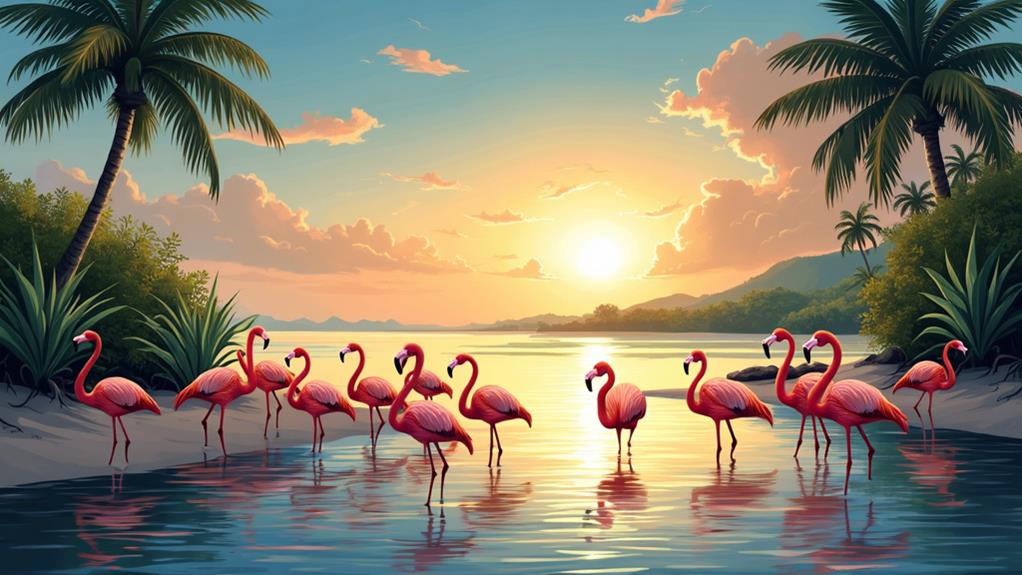
Having marveled at the flamingos' resilience in the Middle Eastern Salt Flats, let's now turn our attention to the coastal regions of India, where these stunning birds also find a home. You'll uncover that India's coastline is teeming with lively ecosystems, perfect for flamingos. They thrive especially in mangrove ecosystems and estuarine habitats, where the mix of saltwater and freshwater creates an ideal environment.
In India, the flamingos are particularly drawn to regions like the Rann of Kutch in Gujarat and the Bhitarkanika Mangroves in Odisha. These areas provide rich feeding grounds teeming with shrimp, algae, and small crustaceans, which are essential for their diet and the striking pink hue of their feathers. During the migratory season, you can witness thousands of flamingos flocking to these coastal regions, creating a spectacular sight.
Mangrove ecosystems play an important role in supporting flamingo populations. The dense roots and sheltered waters offer both protection and abundant food sources. Likewise, estuarine habitats, where rivers meet the sea, provide nutrient-rich waters that sustain large flamingo colonies. If you're planning a visit, these coastal regions of India offer a unique opportunity to observe flamingos in their natural, lively habitat.
European Lagoons
Ever wondered what makes European lagoons a haven for flamingos? These lively birds flock to European wetlands, particularly along the Mediterranean coasts, due to the rich, shallow waters perfect for feeding. The lagoons' ecological significance can't be overstated; they provide crucial breeding grounds and resting spots for migratory patterns.
You'll find many of these lagoons within protected reserves, ensuring the flamingos' habitats are preserved from urban encroachment. Conservation efforts across Europe have been critical in maintaining these areas, fostering a thriving environment for both resident and migratory flamingos. By safeguarding these habitats, we've seen a positive impact on flamingo populations.
The Mediterranean coasts are particularly attractive to flamingos during breeding seasons. Countries like Spain and France have urban habitats near these wetlands, which surprisingly coexist with flamingo populations. It's fascinating to see these birds adapt to areas close to human activity, highlighting their resilience and the importance of our conservation efforts.