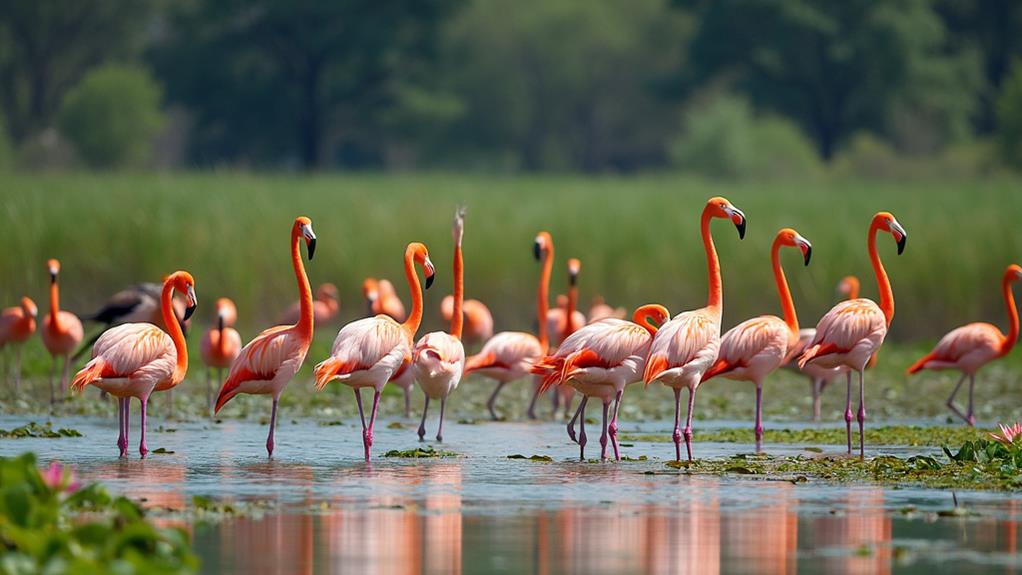
The Global Migration Patterns of Flamingos
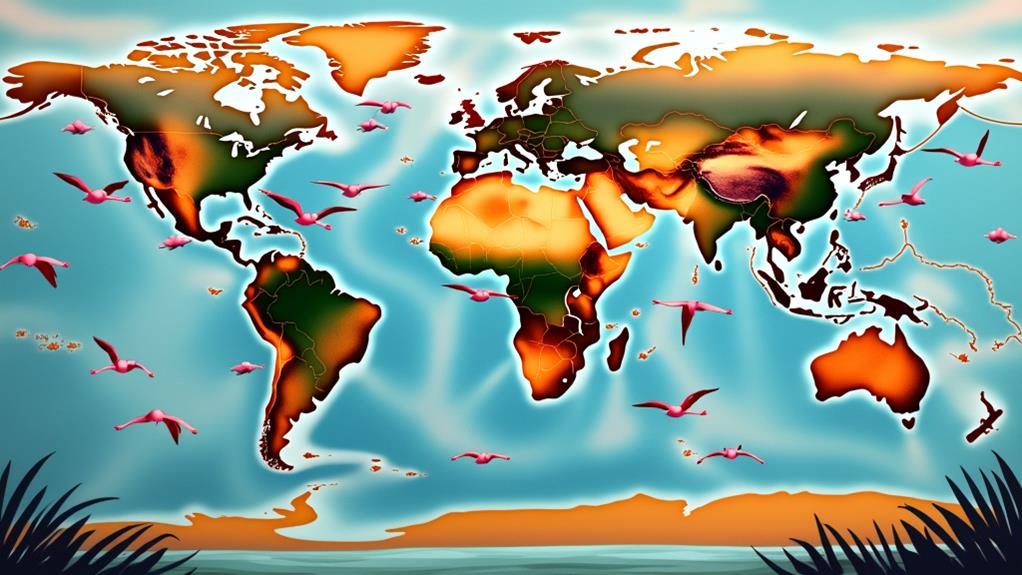
When you investigate the global migration patterns of flamingos, you'll see how these birds navigate based on climate, food availability, and breeding needs. They move in large flocks between diverse habitats like African salt flats, Mediterranean wetlands, and the Yucatán Peninsula. Climate change and habitat loss greatly influence their routes, driving them to find new, suitable environments. These migrations aren't random; they're carefully coordinated within the flock, ensuring survival and reproductive success. Curious about how they maintain such precise navigation and communal movement? Keep learning to uncover more about flamingos' remarkable migratory behavior.
Flamingo Species and Habitats
Flamingos, those iconic pink birds, are found across several species that inhabit diverse regions worldwide. You'll notice that flamingo behavior varies considerably depending on their habitats, which range from saline lakes to coastal lagoons. They're social creatures, often seen in large flocks, which aids in their breeding success. Their breeding grounds are typically isolated areas where they build mud nests to protect their eggs from flooding and predators.
Flamingos play important ecological roles; their feeding habits involve filtering water for algae and small invertebrates, which helps maintain the health of their ecosystems. However, habitat loss due to human activity poses a considerable threat to these birds. Wetlands and lakes, their primary habitats, are being drained or polluted, impacting their nesting sites and food sources.
Conservation efforts are necessary to protect these habitats and guarantee flamingos can continue their important ecological roles. Protecting their nesting sites and restoring degraded wetlands can help mitigate some of the habitat loss. By understanding the social structures and behaviors of flamingos, you can better appreciate the importance of ongoing conservation efforts to maintain their populations and the health of their ecosystems.
Key Migration Drivers
As seasons change, the need for flamingos to migrate becomes evident. You'll notice that climate change plays a significant role in their migratory behavior. Rising temperatures and shifting weather patterns can disrupt food availability, making it crucial for flamingos to seek new feeding grounds. Furthermore, habitat loss due to human impact further complicates their search for suitable areas to thrive.
Breeding strategies also drive migration. Flamingos often move to specific locations that provide ideal conditions for nesting and raising their young. These sites usually have the right mix of food resources and safety from predators. However, these crucial habitats are increasingly threatened, making conservation efforts more significant than ever.
Social structures within flamingo populations influence their migratory patterns too. Flamingos are highly social birds, and their movements are often coordinated within flocks. This collective behavior improves their survival chances during migration.
Lastly, human impact, such as pollution and habitat destruction, forces flamingos to relocate more frequently. Conservation efforts aim to mitigate these issues by protecting critical habitats and ensuring sustainable food sources. Understanding these key drivers helps you appreciate the complex challenges flamingos face and the significance of ongoing conservation initiatives.
African Migration Routes
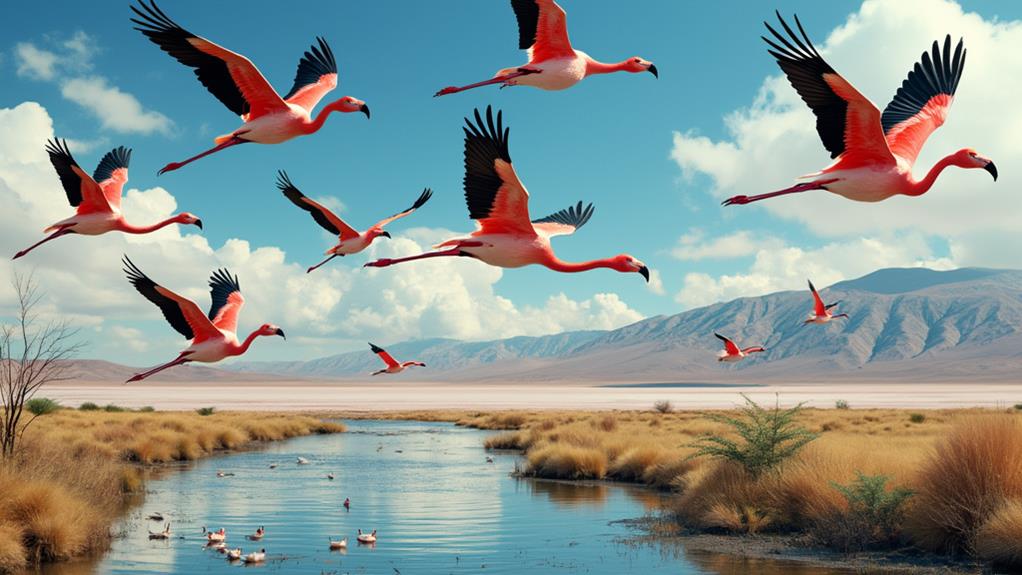
Throughout Africa, flamingo migration routes reveal a fascinating expedition shaped by the continent's varied landscapes. You'll find these elegant birds moving between different habitats, driven by their breeding grounds and feeding habits. Flamingos prefer shallow lakes and saline waters, where they can easily find food and suitable nesting sites.
Climate impacts play a significant role in their migratory patterns. Seasonal variations in rainfall and temperature influence the availability of food and water, causing migratory flocks to relocate. You'll notice that during the wet season, flamingos often move to areas with abundant food, while in the dry season, they seek out more stable environments.
To understand their migration better, consider these key points:
- Breeding grounds: Flamingos travel to specific sites ideal for nesting and raising their young.
- Feeding habits: Their diet primarily consists of algae and small invertebrates found in shallow waters.
- Social behavior: Flamingos are highly social and tend to migrate in large, coordinated flocks.
European Migration Patterns
Migrating across Europe, flamingos showcase an incredible adaptability to diverse environments. You'll find their European breeding typically occurs in Mediterranean wetlands, known for their rich biodiversity. These areas provide ideal nesting sites and feeding grounds, crucial for raising their young. The seasonal behavior of flamingos in Europe is influenced by a variety of environmental factors, including temperature and food availability.
Flamingos prefer habitats with shallow waters, where they can easily access their primary food sources such as algae, small crustaceans, and plankton. These habitat preferences dictate their migration timing, often aligning with the seasonal changes that affect their feeding grounds. When temperatures drop or food becomes scarce, flamingos migrate to more hospitable areas within Europe, showcasing their remarkable adaptability.
Environmental influences such as climate change and human activity can also impact their migration patterns. For instance, alterations in water levels and pollution in Mediterranean wetlands can force flamingos to seek new nesting sites. By understanding these behavioral and environmental factors, you can gain insight into the complex and dynamic nature of flamingo migration across Europe, contributing to their conservation and the protection of their habitats.
North American Movements
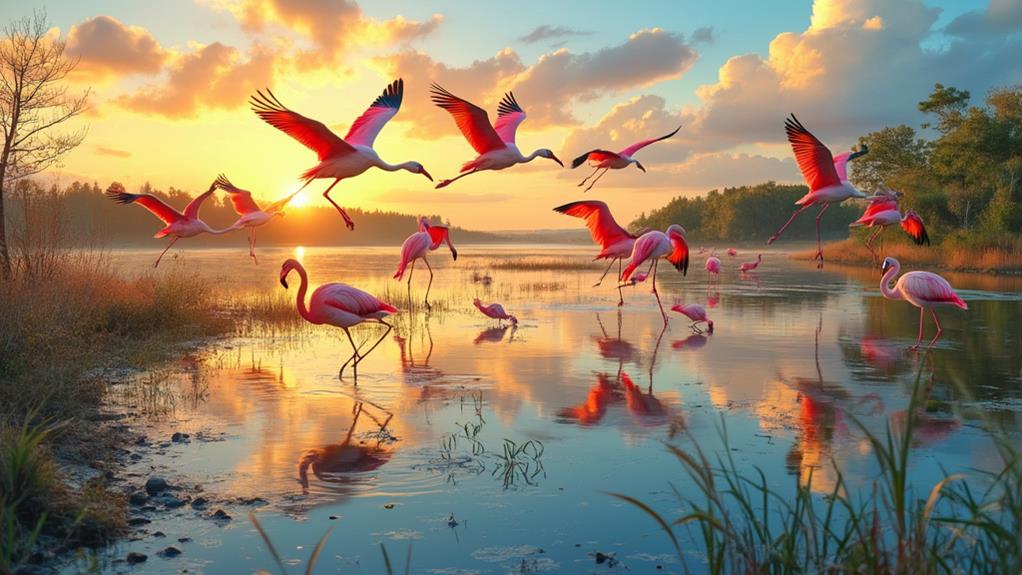
While European flamingos showcase their adaptability across Mediterranean wetlands, their North American counterparts exhibit likewise fascinating migration patterns. You'll find that these birds are particularly skilled at traversing the diverse landscapes of the continent, moving between breeding and feeding grounds with an astonishing precision.
Key factors driving these migrations include:
- Flamingo breeding: North American flamingos migrate to specific breeding sites, such as the Yucatán Peninsula, where conditions are ideal for nesting.
- Food availability: These birds are opportunistic feeders, moving to areas rich in algae and small invertebrates, which are essential for their diet.
- Seasonal changes: Flamingos adapt their migration routes based on seasonal weather patterns to guarantee they're always in hospitable environments.
When you observe North American flamingos, you'll notice that they move in large flocks, which helps them locate food more efficiently and provides safety in numbers. They often travel to shallow lakes and coastal lagoons, where food availability is high. Moreover, their migration patterns are influenced by the need to find safe and suitable sites for flamingo breeding, securing the survival of their young in nurturing environments. By understanding these migration patterns, you gain insight into the intricate balance of nature that flamingos maintain to thrive across North America.
South American Journeys
South American flamingos commence on remarkable voyages across the continent, showcasing their resilience and adaptability. You'll find these lively birds maneuvering through diverse habitats, from the salt flats of Bolivia to the wetlands of Argentina. Their migration is driven by the search for ideal feeding grounds and suitable nesting sites.
When it comes to flamingo feeding, these birds are quite resourceful. They primarily consume algae, crustaceans, and small invertebrates, using their specialized beaks to filter food from the water. As you observe them, you'll notice how they often move in large flocks, enhancing their efficiency in locating and exploiting food sources.
Nesting behavior among South American flamingos is similarly fascinating. They build their nests in colonies on mudflats or sandy islands, where safety in numbers helps protect their eggs and chicks from predators. The nests are simple mounds of mud, raised to keep the eggs dry. You'll see flamingos diligently tending to their nests, ensuring the next generation is well cared for.
Challenges and Threats
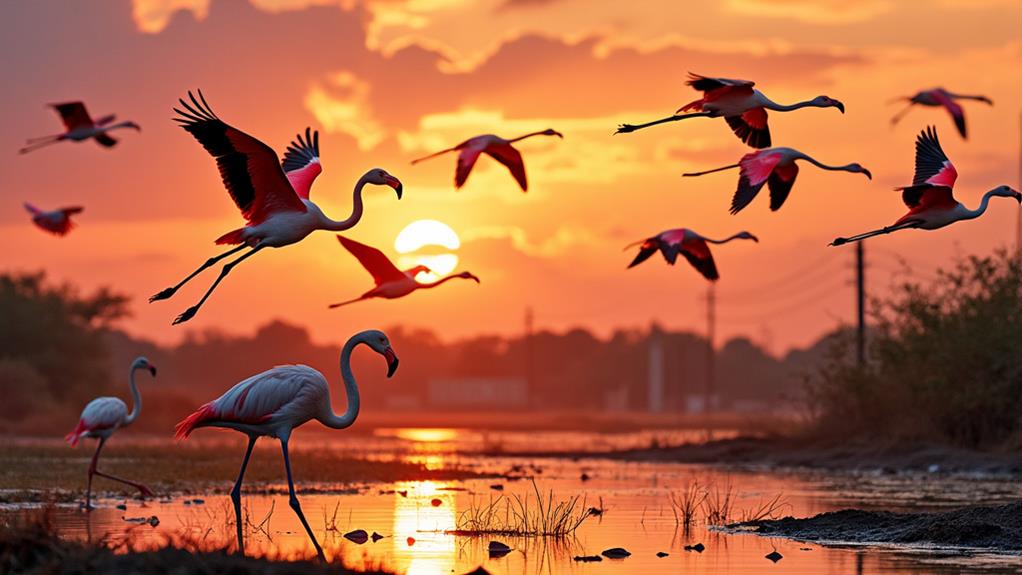
Flamingos frequently face numerous challenges and threats during their migrations. The voyage isn't just about crossing vast distances; it's also about battling environmental and human-induced obstacles. You'll find that these beautiful birds are constantly up against:
- Habitat loss due to urbanization and agricultural expansion.
- Climate change altering their migratory networks and nesting grounds.
- Human interference disrupting their natural behaviors and pathways.
Pollution effects also pose a significant threat, contaminating water sources and reducing food availability. As flamingos rely on specific aquatic environments, any degradation can lead to severe food scarcity, making it difficult for them to sustain themselves and their offspring.
Nesting grounds are especially vulnerable, as they require stable, undisturbed environments for successful breeding. Human interference, regardless of direct contact or habitat encroachment, can lead to abandoned nests and lower reproductive success.
Conservation efforts are essential to counteract these threats. By protecting wetlands and reducing pollution, you can help maintain the vital habitats flamingos need. Efforts to mitigate climate change and regulate human activities near significant migratory networks are important for their survival. Supporting these initiatives guarantees that flamingos continue to thrive despite the numerous challenges they face.
Adaptations for Migration
How do these strikingly pink birds manage such intimidating travels? Initially, their feather insulation plays a significant role in maintaining body heat during long flights. You'll find that flamingos rely heavily on their social behavior; flying in large flocks helps them reduce energy expenditure and navigate more efficiently.
Their navigation skills are extraordinary, allowing them to pinpoint breeding sites and feeding grounds across vast distances. Speaking of feeding strategies, flamingos possess specialized beaks to filter feed in different habitats, guaranteeing they get enough nourishment during migration.
Climate resilience is another key factor. These birds can endure significant temperature fluctuations, which is crucial when moving between different climates. Their breeding adaptations also guarantee that they reproduce successfully even after exhausting migrations. By selecting habitats rich in food and suitable nesting sites, they optimize the chances of raising healthy chicks.
Flock dynamics are fundamental; migrating as a group helps them fend off predators and stay on course. Habitat selection during migration is strategic, often involving wetlands that provide both food and safety. All these adaptations work in harmony, enabling flamingos to conquer the challenges of their migratory expeditions.