The Greater Flamingo vs. The Lesser Flamingo: How to Tell the Difference
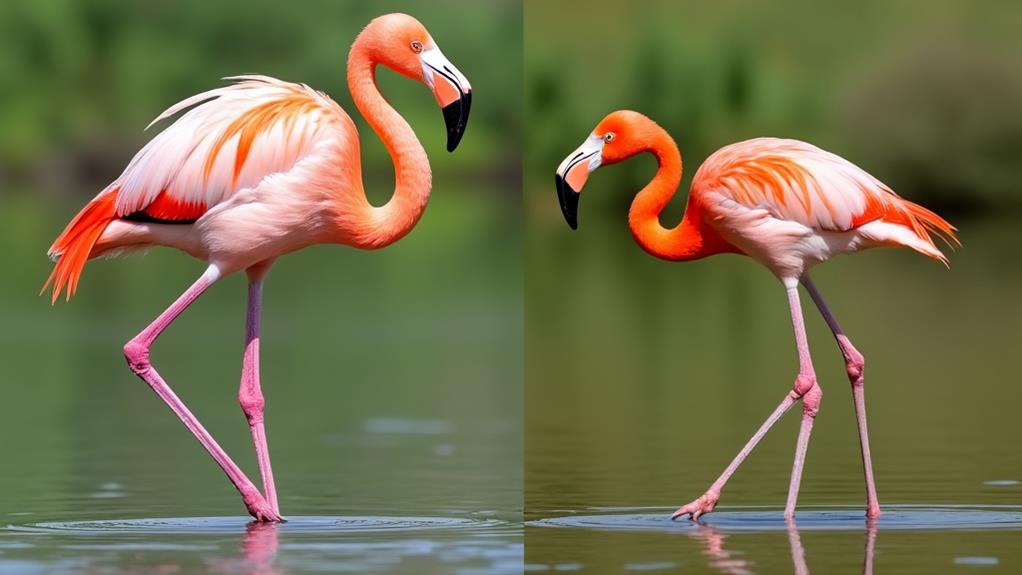
You can tell Greater Flamingos and Lesser Flamingos apart by looking at their size, color, and beak shape. Greater Flamingos are taller, reaching up to 4.7 feet, and have a lighter pink hue. Their beaks are longer and more curved. Lesser Flamingos are smaller, around 3 feet tall, with deeper pink to red feathers and shorter, less curved beaks. They also prefer highly alkaline lakes while Greater Flamingos like more varied water bodies. Greater Flamingos perform synchronized dances during courtship, unlike the less coordinated display of Lesser Flamingos. Keep going to uncover more fascinating details about these flamingos.
Size Differences
When comparing flamingos, size differences become immediately apparent. The Greater Flamingo stands out with its impressive height, reaching up to 4.7 feet. In contrast, the Lesser Flamingo is notably shorter, typically measuring around 3 feet. This height discrepancy is one of the most noticeable distinctions between the two species.
You'll also see a marked difference in their wing spans. The Greater Flamingo boasts a wingspan of about 5.5 to 6.2 feet, which is considerably larger than the Lesser Flamingo's wingspan of 3.3 to 3.9 feet. This difference in wing span affects their flight patterns and general agility, with the Greater Flamingo gliding more gracefully in the air.
When it comes to weight comparison, the Greater Flamingo is heftier, weighing between 4.6 to 8.8 pounds. The Lesser Flamingo, on the other hand, is much lighter, tipping the scales at just 2.6 to 4.4 pounds. These weight differences not only influence their physical appearance but also their feeding behaviors and habitat preferences.
Color Variations
While size differences between flamingos are quite striking, their color variations are likewise fascinating. When you're trying to tell a Greater Flamingo from a Lesser Flamingo, pay close attention to their feather patterns. Greater Flamingos generally exhibit a lighter pink hue with pale pink to white feathers. You might also notice subtle orange highlights on their wings. In contrast, Lesser Flamingos are often a vivid, deeper pink, sometimes approaching red, especially around their wings and tail feathers.
Developmental variations also play a vital role in their color. Younger flamingos of both species usually sport gray or white feathers until they mature and gain their characteristic pink coloration. As they grow older, their diet, rich in carotenoid pigments from algae and crustaceans, influences the vibrancy of their feathers.
Don't forget that environmental factors can also cause some color differences. For instance, flamingos in captivity might not display the same intensity of color as those in the wild due to differences in diet. By examining these feather patterns and considering developmental variations, you can more easily distinguish between Greater and Lesser Flamingos, making your bird-watching experience even more rewarding.
Beak Shape
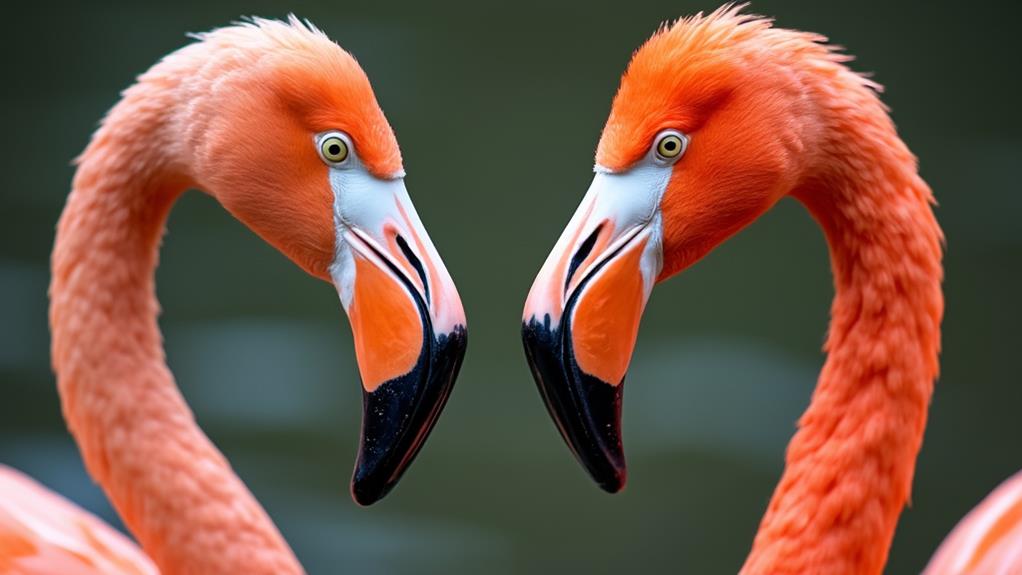
Beak shape is another key characteristic that sets Greater and Lesser Flamingos apart. When you observe their beaks, you'll notice distinct differences in both beak length and beak curvature. Greater Flamingos have longer beaks, which are slightly more curved, creating a prominent arch. This longer, more curved beak helps them filter-feed more effectively in deeper waters, where they often find their food.
On the other hand, Lesser Flamingos have shorter beaks with a less pronounced curvature. Their beaks are more adapted to feeding in shallower waters, where they sift through mud to find algae and small organisms. The shorter beak length of the Lesser Flamingo is ideal for picking up food from the water's surface and just below it, allowing them to thrive in different feeding environments compared to their Greater counterparts.
Understanding these differences in beak shape can help you quickly identify which species you're observing. So, next time you see a flamingo, take a closer look at its beak. Notice the beak length and beak curvature, and you'll be able to tell if you're looking at a Greater or Lesser Flamingo.
Habitat Preferences
Greater and Lesser Flamingos, though similar in many ways, prefer different habitats. If you're looking to distinguish between them, understanding their habitat preferences is key. Greater Flamingos typically favor large, shallow lakes or coastal lagoons with brackish or saline water. These habitats are ideal for their feeding habits as they sift through the mud for small organisms. During the breeding season, Greater Flamingos congregate in vast colonies on isolated islands or remote shorelines, ensuring safety for their young.
On the other hand, Lesser Flamingos are more specialized in their habitat choices. They prefer highly alkaline or saline lakes, often in more arid regions. These extreme environments support their unique feeding habits, as they primarily consume blue-green algae, which thrives in such conditions. When it's time to breed, Lesser Flamingos also gather in large colonies, but they choose specific breeding grounds that offer protective isolation and an abundance of food.
Behavioral Traits
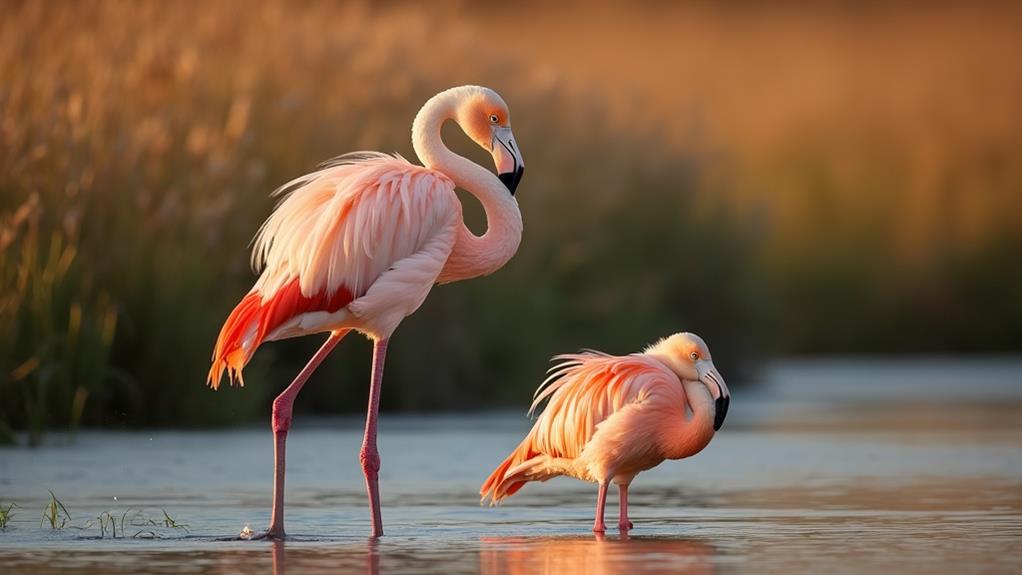
Flamingos often captivate observers with their intriguing behavioral traits. When comparing the Greater Flamingo to the Lesser Flamingo, you'll notice distinct differences in their courtship displays and feeding habits. Greater Flamingos engage in synchronized group dances during courtship, where they stretch their necks, flap their wings, and march rhythmically. These elaborate displays are essential for attracting mates. In contrast, Lesser Flamingos perform similar routines but with less synchronization and more individual flair, making their displays appear somewhat disorganized.
Feeding habits also set these two species apart. Greater Flamingos use a "filter-feeding" method, where they sweep their beaks side to side in shallow waters, filtering out small organisms like brine shrimp and algae. They often feed in deeper waters compared to their lesser counterparts. On the other hand, Lesser Flamingos specialize in feeding on blue-green algae, which they filter from the water using their specially adapted beaks. This diet gives their feathers a more lively pink hue.