The History of the Pink Flamingo as a Lawn Decoration
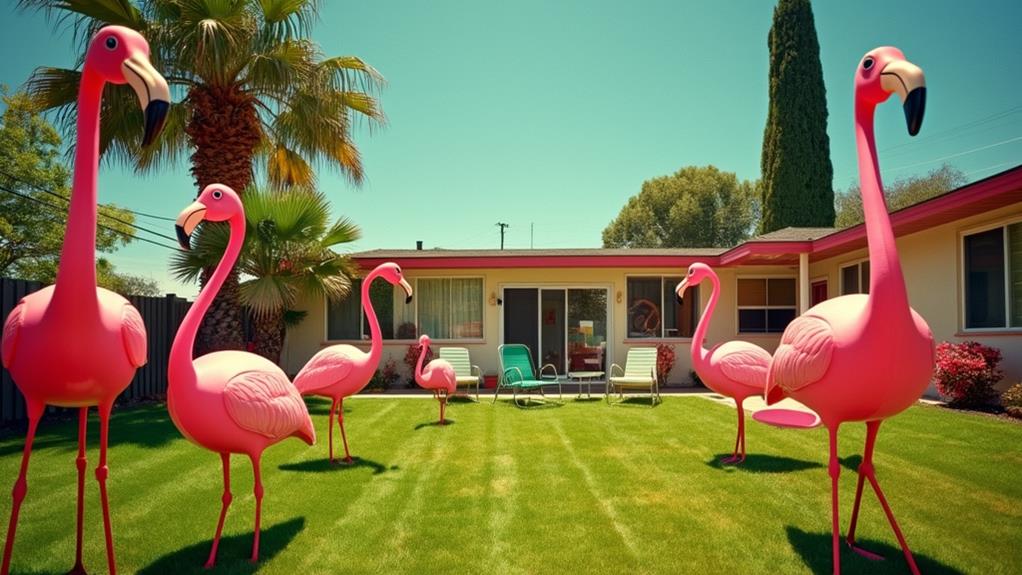
You might be surprised to learn that the iconic pink flamingo lawn decoration started in the 1950s as a symbol of individuality and playful rebellion. Designed by Don Featherstone in 1957, inspired by National Geographic images, these bold decorations quickly became a staple in suburban yards. They highlighted the carefree spirit and kitsch culture of mid-century America. Although their popularity dipped in the late 1970s due to changing tastes and environmental concerns, a nostalgic revival in the late 1990s brought them back, merging whimsy with retro charm. There's so much more to uncover about how these flamingos shaped cultural history.
Origins in the 1950s
Although the pink flamingo has become a cultural icon today, its origins date back to the 1950s. During this decade, 1950s aesthetics revolved around bold colors, unique designs, and a flair for the fanciful. You'd find these lively elements in everything from cars to home decor, and especially in suburban lawns. The post-war boom saw a massive expansion of suburban neighborhoods, where homeowners took pride in their manicured lawns and quirky decorations.
In this period of suburban kitsch, the pink flamingo emerged as a standout ornament. People loved how it added a splash of color and a touch of fun to their otherwise uniform yards. This decorative bird quickly became a symbol of individuality and playful rebellion against the mundane. It wasn't just a lawn ornament; it was an expression of personality and a nod to the carefree spirit of the times.
The Designer: Don Featherstone
Don Featherstone, a name that would become synonymous with the iconic pink flamingo, was the creative genius behind this quirky lawn ornament. Featherstone's inspiration came from his training as a sculptor and his keen observation of nature. Tasked with creating a new, eye-catching product for Union Products in 1957, he turned to National Geographic for images of flamingos, which were exotic and lively, perfect for grabbing attention.
Featherstone's design evolution started with careful sketches based on these photographs. He then transformed these sketches into three-dimensional models, ensuring they captured the bird's elegant yet fanciful essence. Featherstone's attention to detail was evident in the flamingo's gracefully curved neck and delicate legs, which gave the ornament its lifelike appearance. He even painted the prototypes himself, adding the signature pink hue that would become its trademark.
You can appreciate how Featherstone's dedication to craftsmanship and creativity paid off. His flamingos weren't just mass-produced plastic; they were a blend of art and fun. Featherstone's pink flamingo quickly stood out, not just as a decoration, but as a cultural icon. This unique creation set the stage for the pink flamingo's enduring legacy in American lawn decor.
Rise to Popularity
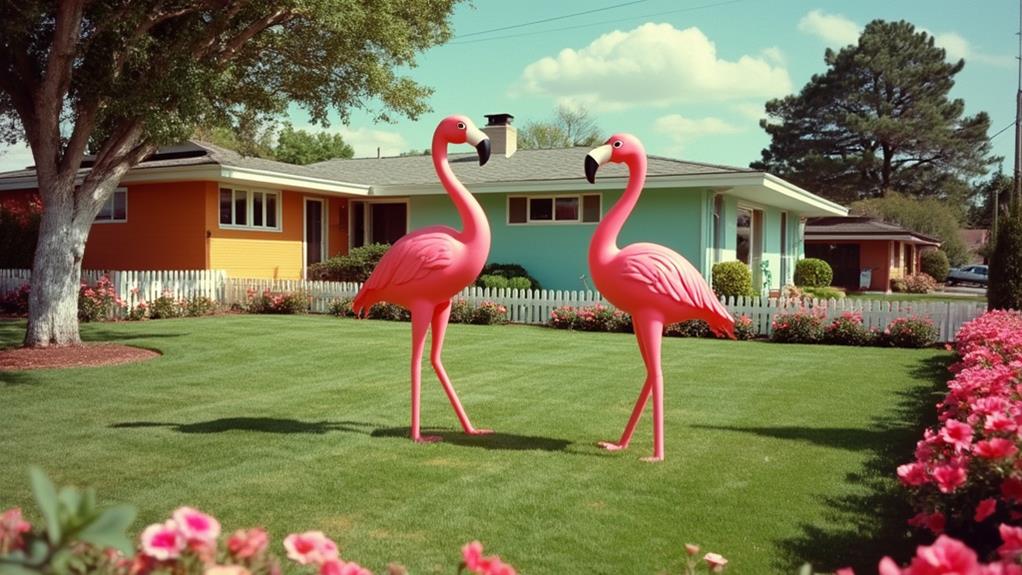
The pink flamingo's rise to popularity didn't happen overnight, but it was certainly swift. In the late 1950s, Don Featherstone designed the iconic lawn ornament, which quickly caught the eye of homeowners looking to improve their lawn aesthetics. You might think of it as just a quirky decoration, but it symbolized a broader trend in American culture.
As suburban neighborhoods expanded, people began seeking unique ways to personalize their outdoor spaces. The pink flamingo offered a splash of color and a touch of playfulness that resonated with many. It wasn't just about aesthetics; it became a statement piece, a nod to the growing kitsch culture of the time. This culture celebrated the playful and the unconventional, making the pink flamingo a perfect fit.
You'd find these flamingos popping up on more and more lawns, becoming a staple of mid-century suburban life. It wasn't just homeowners who adopted the trend; businesses and public spaces started using them to draw attention and add a bit of flair. The combination of affordability, lively color, and fanciful design guaranteed the pink flamingo's place in the hearts of many, marking its swift ascent to popularity.
Cultural Impact
Beyond its initial appeal as a quirky lawn ornament, the pink flamingo quickly cemented its place in American pop culture. It became more than just a decoration; it evolved into a symbol of suburban identity. If you remember the post-World War II boom, you'll recall how the suburbs flourished, and the pink flamingo became a staple of that transformation. It wasn't just about adding a splash of color; it signified a new, optimistic period filled with consumer choice and individuality.
As you plunge deeper, you'll see how the pink flamingo also epitomized kitsch culture. Kitsch is all about celebrating the gaudy and the extravagant, and what better icon than a neon pink bird? When you place a flamingo in your yard, you're not just decorating; you're making a statement. It's a playful rejection of traditional aesthetics, poking fun at the seriousness of high art.
Moreover, the pink flamingo's cultural impact extends into music, film, and fashion, creating a ripple effect that's hard to ignore. It has appeared in everything from John Waters' films to album covers, cementing its status as a pop culture icon. So, when you see a pink flamingo, know it's much more than just plastic—it's a piece of cultural history.
Decline and Resurgence
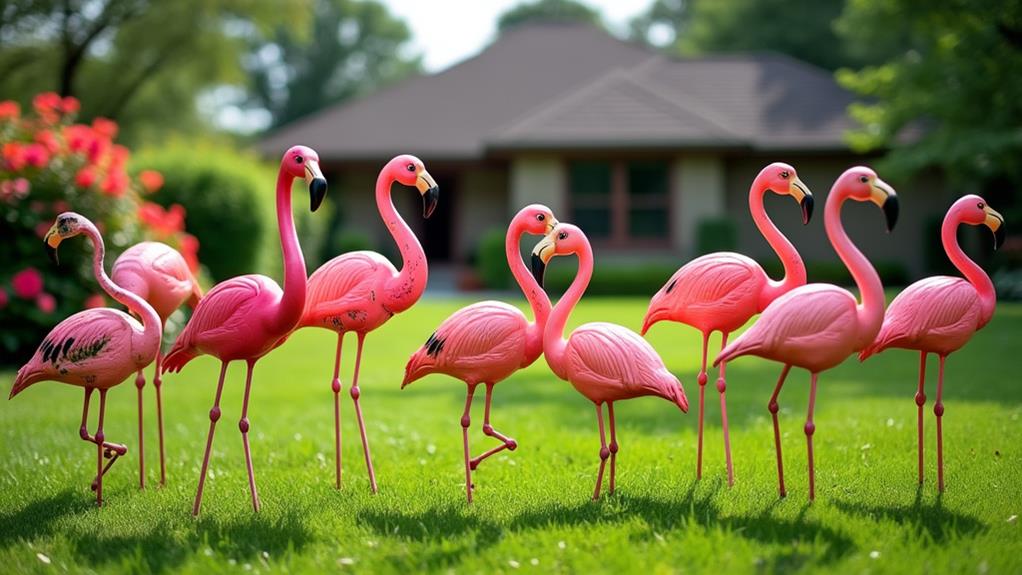
You might think the pink flamingo's charm would never fade, but like all trends, it did see a downturn. During the late 1970s and 1980s, several decline factors contributed to this. For one, changing tastes in lawn décor leaned towards more natural and understated elements. Homeowners preferred subtle garden gnomes or stone sculptures over bright, plastic flamingos. Furthermore, environmental movements gained momentum, and the use of plastic decorations fell out of favor. People became more conscious of environmental sustainability, pushing the pink flamingo to the backyards of history.
However, the pink flamingo saw a resurgence. In the late 1990s and early 2000s, a wave of nostalgia hit, leading to a renewed interest in retro and vintage items. This nostalgic trend was one of the key resurgence trends that brought the pink flamingo back into the cultural spotlight. Moreover, the rise of kitsch and ironic appreciation in fashion and home décor helped resurrect the flamingo. People began to adopt these flamboyant birds as a fun and cheeky statement piece. Today, the pink flamingo is celebrated once more, appreciated for its fanciful charm and iconic status.
Modern Day Symbolism
In the present culture, pink flamingos have evolved into symbols of whimsy and exuberance. When you place a pink flamingo on your lawn, you're not just adding a splash of color; you're making a statement. These quirky decorations often get used to showcase your playful side and a love for retro aesthetics. Their kitsch appeal is undeniable, evoking a sense of nostalgia and a light-hearted approach to life.
But it's not all fun and games. Modern pink flamingos can also convey an environmental statement. Many people use them to raise awareness about the real flamingos' habitats, which are increasingly endangered. By choosing these iconic lawn ornaments, you might be supporting a cause that's close to your heart.
In contemporary settings, pink flamingos have transcended their initial association with suburban lawns. You'll find them in urban gardens, art installations, and even at weddings. They represent a blend of carefree joy and meaningful expression. So, when you decide to include a pink flamingo in your decor, you're participating in a tradition that celebrates both kitsch appeal and environmental consciousness. Ultimately, it's about embracing the lively spirit they represent.