The Impact of Latin Music on Miami’s Pop Culture Scene
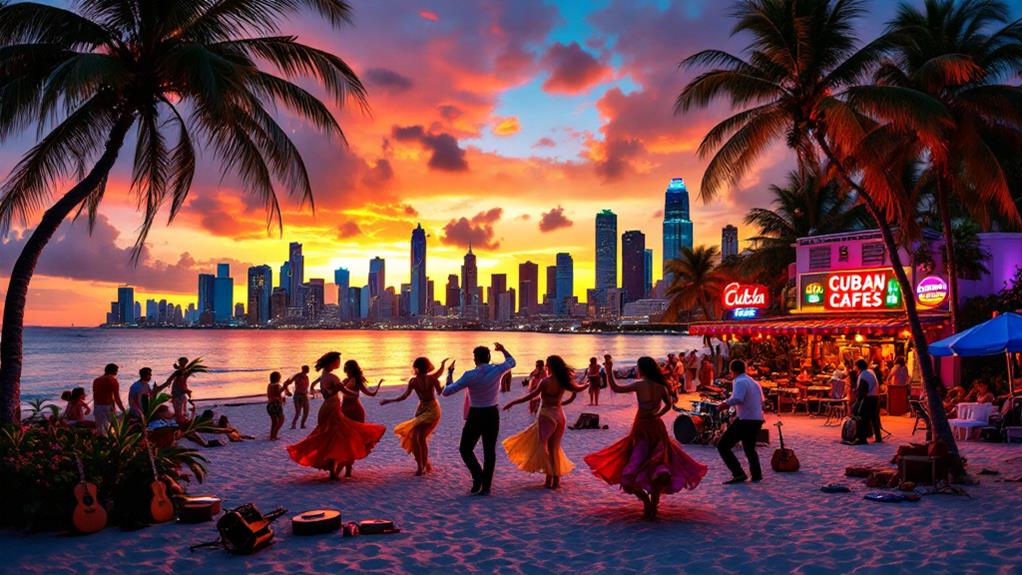
Latin music has deeply influenced Miami's pop culture scene, shifting the city into a melting pot of rhythms and sounds. You'll find Cuban, Caribbean, and Latin American influences everywhere, from salsa clubs to reggaeton-filled beaches. The city's unique "Miami Sound" blends traditional Latin rhythms with contemporary pop and hip-hop, creating a distinctive fusion that's shaped global music trends. Artists like Gloria Estefan and Pitbull have used Miami as a launchpad for international success, while the city's lively festivals and nightlife showcase Latin influences to a worldwide audience. Miami's status as a musical stronghold continues to evolve, with new innovations emerging from its diverse cultural geography.
Miami's Latin Music Roots
A melting pot of rhythms, Miami's Latin music scene has deep roots that stretch back decades. You'll find that the city's geographic location has played a pivotal role in shaping its unique sound. As Cuba's neighbor, Miami became a natural destination for Cuban immigrants after 1959 following Fidel Castro's rise to power, bringing with them the infectious beats of son cubano and salsa. The rich musical heritage of Caribbean music laid the foundation for Latin music scene in Miami.
But Miami's Latin music influence doesn't stop there. The city's musical landscape continued to evolve as Haitian immigrants introduced compas and other Caribbean styles. This diverse mix of Latin American culture laid the foundation for what would become the distinctive Miami Sound.
In the 1970s and 80s, you'd have witnessed the birth of this new genre, blending disco and funk with Caribbean rhythms. It's a testament to Miami's ability to fuse different musical elements into something entirely new. Gloria Estefan and Miami Sound Machine became the faces of this movement, catapulting the city to the forefront of Latin pop music. Their success cemented Miami's status as a hub for Latin music, influencing pop culture far beyond the city's borders.
Cuban Influence on Miami's Sound
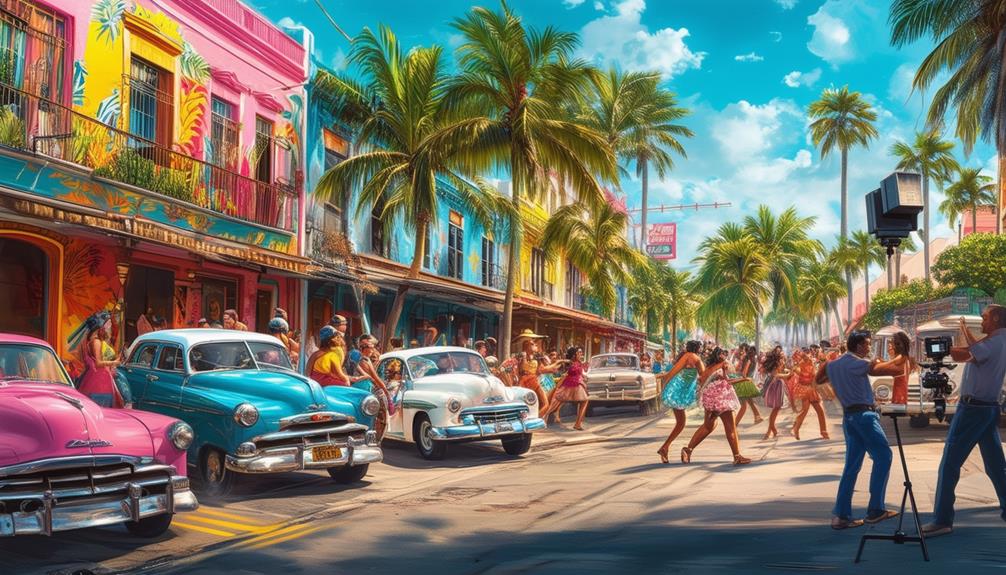
Three key elements define the Cuban influence on Miami's sound: son cubano, salsa, and the infectious energy of Afro-Cuban rhythms. When Cuban immigrants arrived in Miami during the 1950s and 1960s, they brought with them the rich musical traditions of their homeland. This influx dramatically shaped the city's musical landscape, infusing it with the lively sounds of son cubano and salsa. Iconic music videos like Will Smith's "Welcome to Miami" have captured the bustling spirit of the city.
As Miami's music scene evolved, these Cuban influences merged with disco and funk to create the distinctive Miami Sound of the 1970s and 1980s. Gloria Estefan and Miami Sound Machine played an essential role in popularizing this fusion, helping to cultivate a market for Latin music in the United States. Their success laid the groundwork for future Latinx artists to cross over into mainstream audiences.
Salsa music, with its Afro-Cuban rhythms, bass tumbaos, and guajiros, became a defining feature of Miami's nightlife. Venues like Mangos Tropical Cafe hosted nightly salsa performances, cementing the genre's place in the city's cultural fabric. While the distinct "Miami Sound" has declined in recent years, the city remains a hub for Latin music production and business, demonstration of the enduring impact of its Cuban musical roots.
Salsa's Rise in the City
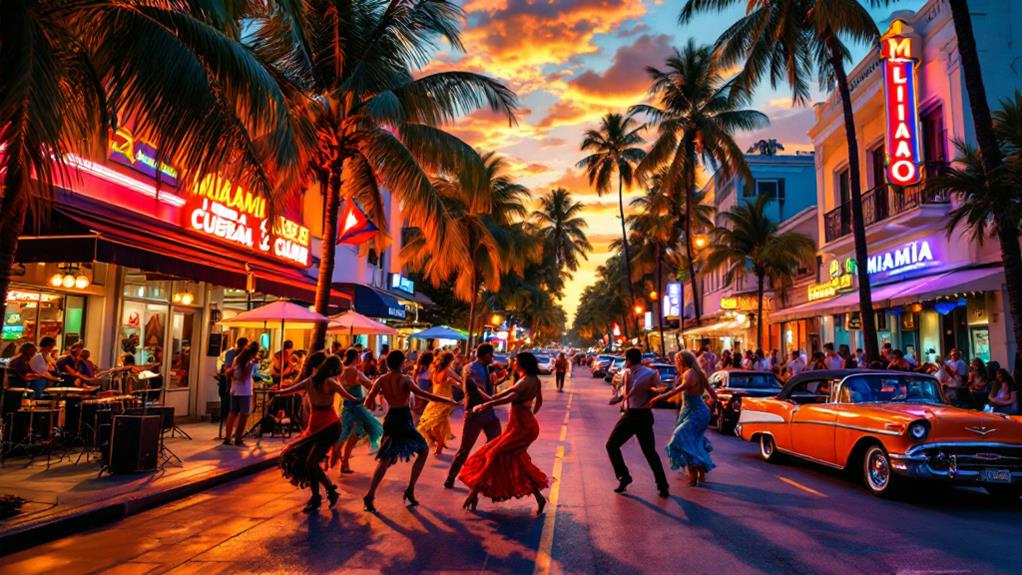
Building on the Cuban influences that shaped Miami's music scene, salsa emerged as a dominant force in the city's cultural milieu. As Cuban immigrants flocked to Miami in the 1950s and 1960s, they brought with them the infectious rhythms of son cubano, rumba, and bolero. These styles fused with other Latin and Caribbean music genres, giving birth to the vibrant salsa sound that would soon define Miami's nightlife.
You'll find that salsa's impact extends far beyond the dance floor. It's not just about the music; it's a lifestyle that offers physical and social benefits. As you immerse yourself in Miami's Latin music scene, you'll observe how salsa provides cardiovascular exercise, improves flexibility, and creates opportunities for social connection and self-expression.
While the iconic "Miami Sound" popularized by artists like Gloria Estefan may have faded, salsa continues to thrive in the city's diverse cultural landscape. Venues like Mangos Tropical Cafe have become legendary, offering nightly shows, lessons, and dancing until dawn. As you navigate Miami's salsa scene, you'll experience firsthand the enduring legacy of this dynamic genre.
Miami Sound Machine Era
Exploding onto the Miami music scene in the mid-1970s, Miami Sound Machine revolutionized the city's pop culture terrain. You'd be hard-pressed to find a group that better embodied the fusion of Latin and American pop music. Starting as the Miami Latin Boys in 1975, they rebranded with the addition of Gloria Fajardo, later known as Gloria Estefan.
Under Emilio Estefan's direction, the band crafted a unique sound blending pop, disco, and Latin elements. Their breakthrough came with 1985's "Primitive Love," which sold 3 million copies and gave us the infectious hit "Conga." This album propelled Miami Sound Machine into the mainstream, facilitating the widespread acceptance of Latin pop.
Reggaeton's Miami Takeover
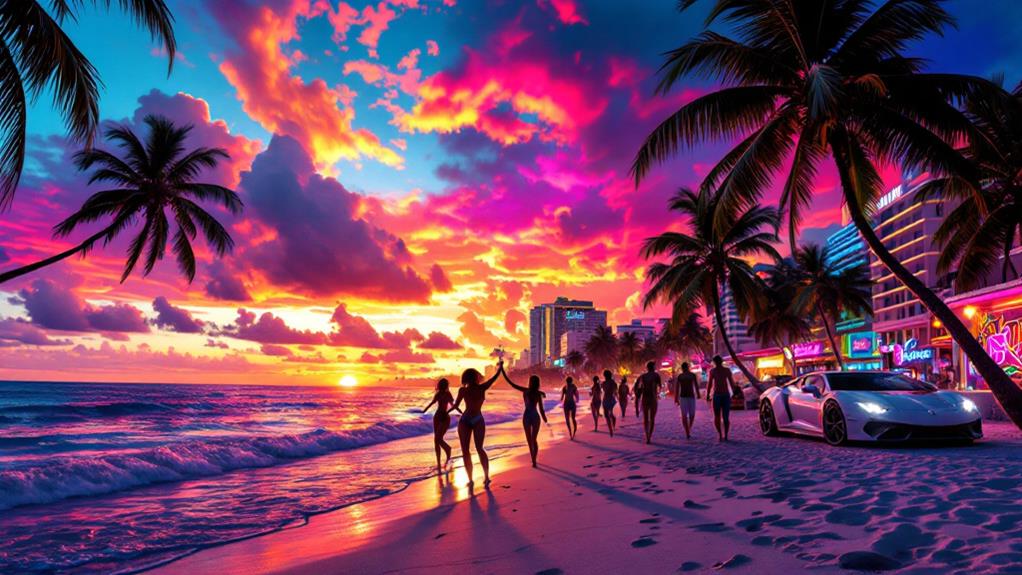
As the new millennium dawned, Miami's music scene underwent a seismic shift with the arrival of reggaeton. You couldn't escape its infectious blend of reggae, Latin hip-hop, and electronica, which quickly dominated the city's soundscape. This genre, born from Latin American and Caribbean influences, found a perfect home in Miami's multicultural environment.
Reggaeton's takeover of Miami's pop culture scene was evident in:
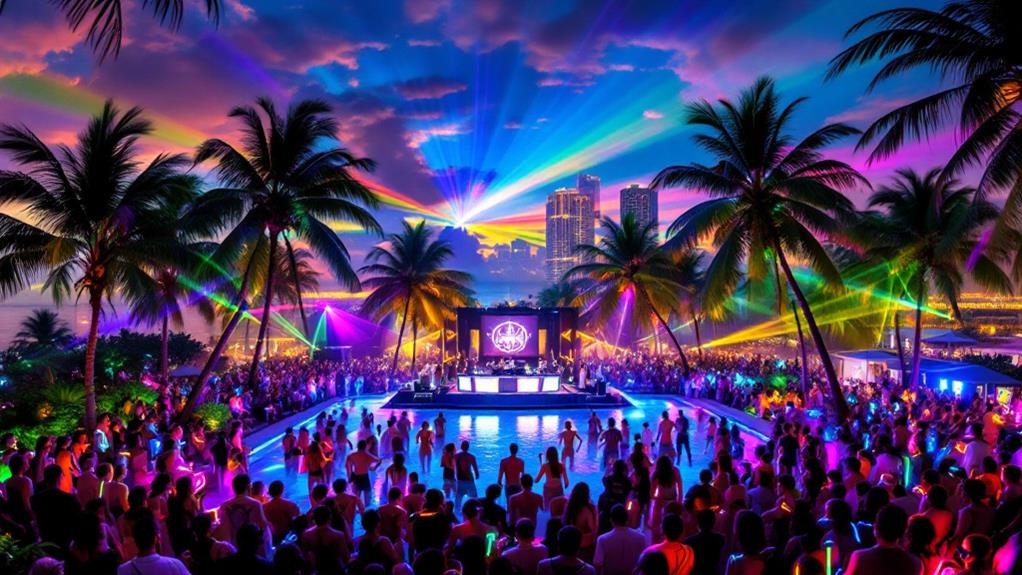
- Nightclubs: From South Beach to Little Havana, reggaeton's pulsating rhythms filled dance floors
- Radio: Local stations welcomed the genre, with hits like "Gasolina" and "I Know You Want Me" on heavy rotation
- Festivals: The Calle Ocho festival became a showcase for reggaeton artists
- Fusion: Reggaeton mixed with Miami's existing dance music traditions, creating a unique sound
Artists like Pitbull and Enrique Iglesias, following in the footsteps of Gloria Estefan and the Miami Sound Machine, became global ambassadors for this new Miami sound. The genre's popularity surpassed cultural barriers, attracting both Latin and non-Latin audiences. Reggaeton's impact on Miami's music scene was undeniable, solidifying the city's status as a Latin music powerhouse and influencing pop culture worldwide.
Latin Pop Fusion Today
Today's Miami music scene is a lively patchwork of Latin pop fusion. You'll find that traditional Latin rhythms have seamlessly blended with contemporary pop and hip-hop styles, creating a unique sound that's distinctly Miami. Artists like Enrique Iglesias, Pitbull, and Daddy Yankee have paved the way for this fusion, bringing Latin-infused pop music to the global stage.
As you traverse Miami's nightlife and music festivals, you'll notice how Latin genres like salsa, reggaeton, and tropical house have become mainstream staples. This fusion of music and dance styles reflects the city's diverse Latin American and Caribbean immigrant communities. Miami became a global hub for Latin music, driving innovation and cross-pollination of genres.
The rise of streaming platforms has further propelled Latin pop fusion's popularity, allowing artists to reach wider international audiences. Pop music today is increasingly influenced by Latin rhythms and styles, with Miami at the forefront of this trend. The city's reputation as a cultural melting pot has solidified its status as a center for Latin music production, attracting major record labels and artists to base their operations here.
Miami's Global Music Impact
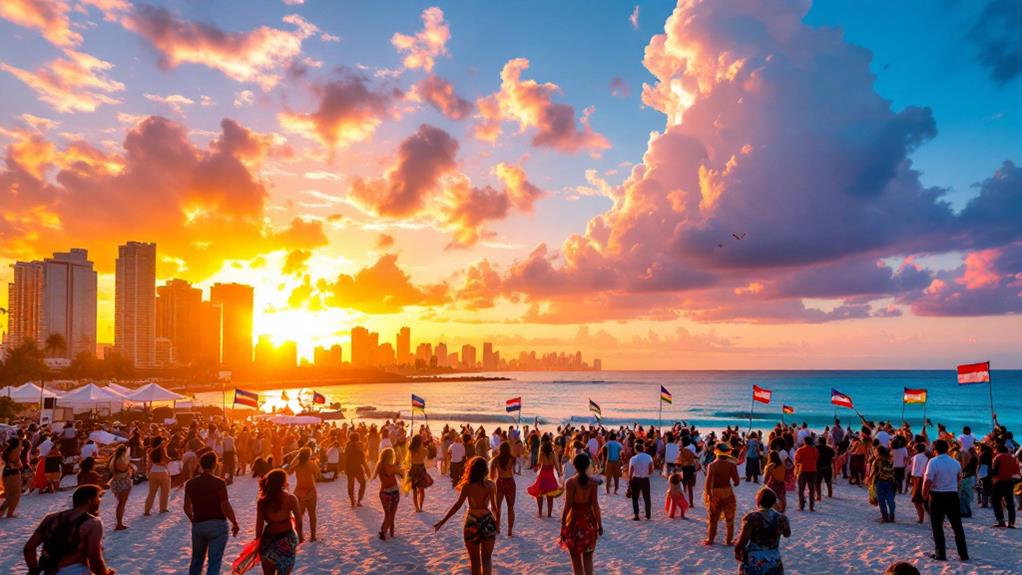
Miami's influence on the global music scene is undeniable. You'll find a variety of Latin sounds shaping pop culture worldwide, thanks to the city's unique position as a gateway for Latin artists. From legendary performers like Celia Cruz to modern superstars, Miami has nurtured talent that's reshaped the United States music landscape.
The city's impact on global music can be seen in four key areas:
- Genre innovation: Miami's "Miami Sound" and Latin-infused electronic dance music have influenced mainstream pop.
- Artist launchpad: Icons like Gloria Estefan and Enrique Iglesias have used Miami as a springboard to international success.
- Industry hub: Latin-owned music businesses and labels in Miami facilitate Latin artists' entry into the U.S. market.
- Cultural trendsetter: Miami's vibrant live music scene and festivals like Ultra Music Festival showcase Latin influences to a global audience.
As you immerse yourself in Miami's music scene, you'll uncover how the city's strategic location and diverse immigrant populations have created a melting pot of sounds. This cultural fusion continues to inspire and influence global pop trends, cementing Miami's status as a musical powerhouse on the international stage.