The Open Shelving Trend in Modern Kitchens
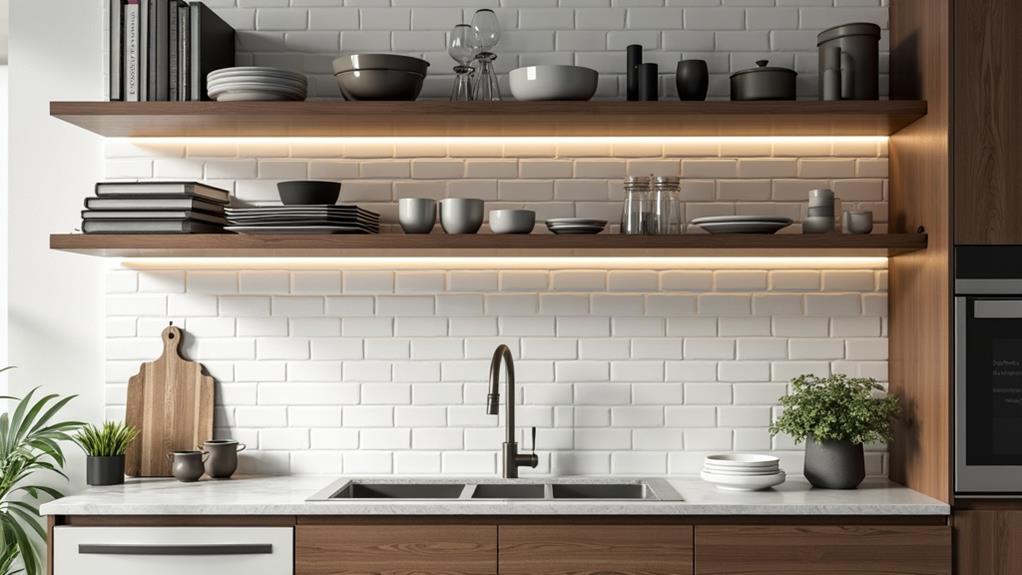
Open shelving is gaining popularity in modern kitchens for good reason. This design trend provides an airy ambiance, highlights your favorite dishware, and promotes a clutter-free environment. However, it's important to consider the commitment it requires. Regular maintenance and careful organization are essential to prevent a chaotic appearance. Additionally, finding the right balance with traditional cabinetry is key. Here, we explore the practicalities and insights for effectively incorporating open shelving into your kitchen.
Benefits of Open Shelving
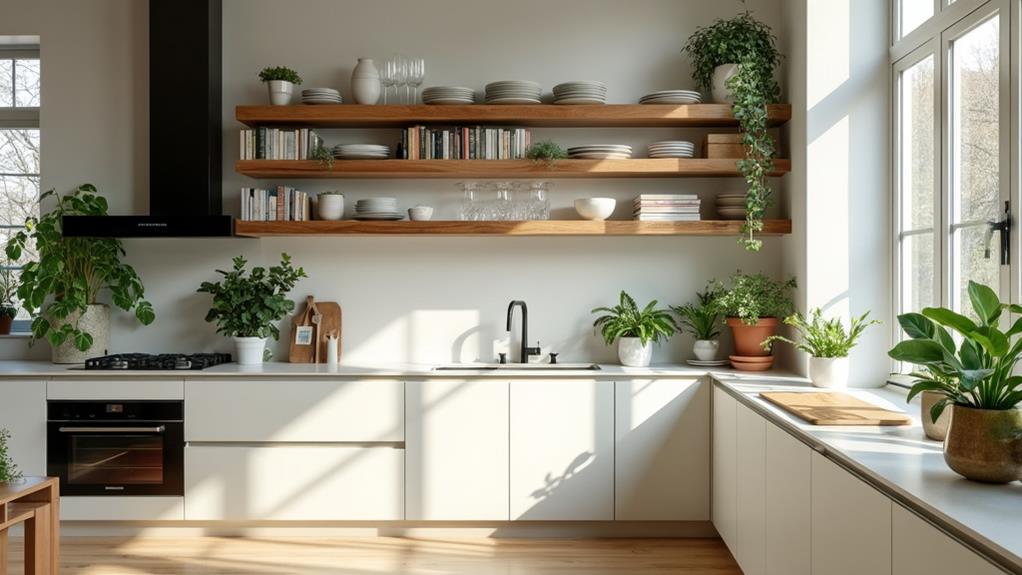
Open shelving in modern kitchens offers numerous benefits that can transform your cooking space. It creates an illusion of a larger, lighter area by allowing light to flow freely and reducing visual clutter from bulky cabinets, making your kitchen feel more open and inviting.
One significant advantage is the improved visibility and accessibility of your kitchen items. You can easily find and grab frequently used utensils or ingredients without the need to open cabinet doors, saving you time and effort. Additionally, open shelving simplifies the process of putting away clean dishes, as you can place items back on the shelves without the hassle of opening and closing doors.
Another benefit is the unique aesthetic appeal. Open shelving encourages personal styling, allowing you to showcase your dishware, collectibles, and decorative items. This adds character and personality to your kitchen, making it truly your own. You can get creative with your displays and update them seasonally or as your tastes change.
Lastly, open shelving promotes clutter reduction. With everything in plain sight, you're more likely to keep your kitchen tidy and organized, which further enhances the overall appearance and functionality of the space.
Drawbacks to Consider
Choosing open shelving requires a commitment to regular maintenance and cleaning, as dust and grease can accumulate quickly. The absence of doors to conceal less visually appealing items can result in a cluttered look, making your kitchen feel disorganized. Additionally, the limited storage space may necessitate additional solutions to keep everything in order.
Limited Storage Space
While open shelving adds a stylish touch to modern kitchens, it can significantly reduce storage space. Open shelves require meticulous organization and often can't hold larger kitchen items like appliances or bulk goods. This can result in overcrowded shelves, making it difficult to maintain a tidy appearance, particularly in smaller kitchens.
To address this, you may need to invest in additional storage solutions such as enclosed cabinets or a pantry to conceal items that aren't suitable for open display. This is especially crucial in kitchens with limited wall space, as finding room for all your kitchen essentials can be challenging and may lead to clutter.
Here's a quick comparison of storage options:
| Storage Type | Pros | Cons |
|---|---|---|
| Open Shelving | Stylish, easy access | Limited storage space, potential clutter |
| Closed Cabinets | Conceals clutter, more storage | Less trendy, harder to access |
| Pantry | Ample storage for bulk items | Requires extra space |
The design of open shelving may require sacrificing traditional storage options, complicating the organization and accessibility of frequently used items. For a functional kitchen, balance open shelving with other storage methods to ensure everything has its place.
Maintenance and Cleaning
Open shelving in modern kitchens can be visually appealing, yet it comes with the challenge of ongoing maintenance. While it provides a stylish way to display items, it necessitates regular cleaning due to dust and grease accumulation, particularly in cooking areas. This frequent need for dusting and cleaning is a significant drawback.
Every item on display, from dishware to glassware, is exposed to the environment, requiring more frequent cleaning compared to closed cabinetry. This process can be time-consuming, as it involves moving items to ensure thorough cleaning.
Effective organization can help reduce this burden. Keeping items well-organized and using clear containers for frequently used items can make cleaning more manageable. Additionally, installing a powerful range hood can help minimize grease buildup on open shelves. Despite these measures, regular upkeep is essential to maintain a pristine appearance.
Cluttered Appearance Risk
While regular cleaning can maintain the pristine look of open shelving, one significant drawback is the risk of a cluttered appearance. Open shelving makes everything visible, and if items aren't organized properly, it can lead to visual overwhelm. To avoid this, you must be diligent about keeping your shelves tidy and ensuring that your kitchen decor remains cohesive. Regular maintenance is vital to prevent dust accumulation, which can further contribute to a messy look in your cooking area.
One of the biggest challenges is dealing with mismatched or worn dishware. Unlike cabinets that hide these imperfections, open shelves put them on full display, potentially detracting from your kitchen's overall aesthetic. Consequently, you might need to invest in extra storage solutions to keep less desirable items out of sight.
Here's a quick comparison to help you weigh the pros and cons:
| Aspect | Open Shelving |
|---|---|
| Visibility | High, risks visual overwhelm if not organized |
| Maintenance | Requires regular cleaning to avoid dust and clutter |
| Aesthetic Consistency | Harder to maintain due to visible mismatched items |
Consider storing less attractive items in drawers or closed cabinets. This approach can keep your open shelving looking organized and visually appealing, enhancing your kitchen decor without overwhelming you.
Practical Tips for Installation
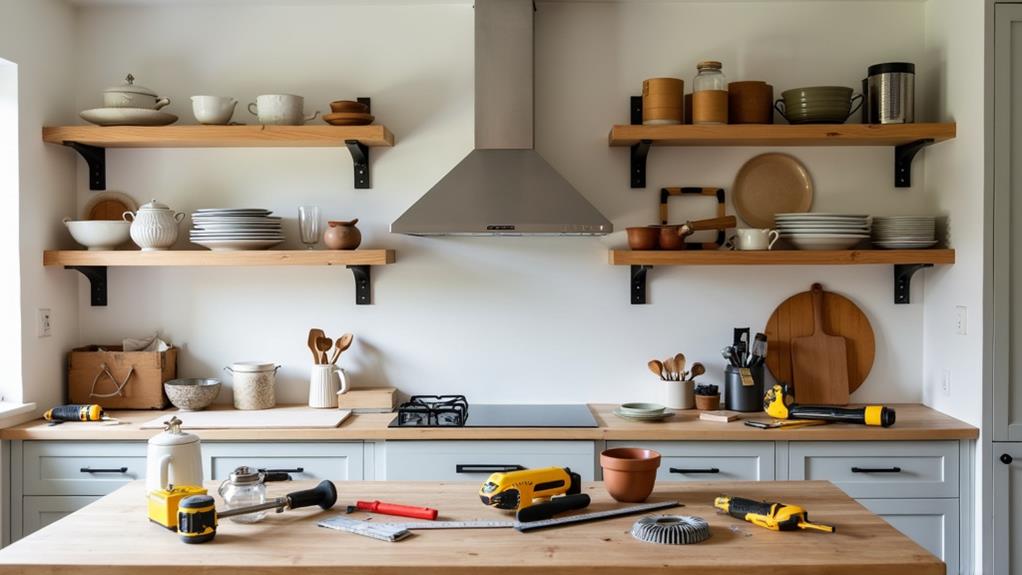
When installing open shelving in your kitchen, ensure you use sturdy anchors and brackets to prevent accidents. Choose materials that match your kitchen's style and are easy to maintain, whether it's raw wood for a rustic touch or stainless steel for a sleek look. Plan the placement carefully to ensure accessibility and stability, prioritizing safety at all times.
Choosing Shelf Materials
Selecting the right materials for open shelving in your modern kitchen is crucial for both durability and aesthetics. When choosing shelf materials, prioritize options that offer lasting support and visual appeal.
- Solid Wood: Known for its strength and rustic charm, solid wood is a popular choice. Applying a quality sealant can protect it from kitchen moisture, enhancing its durability.
- Stainless Steel: This material provides a sleek, modern look and is highly resistant to moisture, making it ideal for kitchen environments.
- Mixed Materials: Combining different materials, such as glass shelves with wooden brackets, can create a striking contrast while maintaining functionality and strength.
When planning your open shelving, consider how the materials will integrate with the overall kitchen design and the practical aspects of installation.
Installation Best Practices
After selecting the ideal materials for your open shelving, proper installation is crucial to ensure both functionality and aesthetic appeal. First, ensure adequate weight support by using sturdy anchors and brackets, particularly if you intend to store heavier items. This is essential for maintaining safety and durability.
Choose solid wood or metal shelves for their strength and visual appeal, which will enhance your kitchen's design. When planning shelf spacing, prioritize practicality. Position frequently used items at eye level for easy access, while reserving higher spots for decorative pieces to create an attractive display.
Carefully consider the installation height to ensure shelves remain functional and accessible without needing a step stool. This approach not only enhances convenience but also maintains the overall balance of your kitchen layout.
During installation, use a level to ensure the shelves are even. Proper leveling is fundamental for both functionality and a polished appearance.
Safety and Stability
Ensuring the safety and stability of your open shelving is crucial, especially in a dynamic kitchen environment. Start by considering weight support. Floating shelves should be anchored to wall studs or supported by heavy-duty wall anchors to prevent sagging or collapse under the weight of heavier items.
For material choices, opt for sturdy materials like hardwood or metal. These materials offer better durability and stability compared to lighter options like particle board, ensuring your shelves can withstand the demands of everyday kitchen use.
Installation height is another critical factor. Shelves should be easily accessible but out of reach for children to minimize the risk of items falling or being pulled down. This placement helps maintain a safe environment while still allowing convenience.
To ensure load distribution, place heavier items on lower shelves and lighter items on higher shelves. This maintains balance and prevents tipping, which is essential for both safety and aesthetics.
Here are some practical tips:
- Anchor shelves to wall studs or use heavy-duty anchors.
- Use sturdy materials like hardwood or metal.
- Distribute weight evenly, prioritizing heavier items on lower shelves.
Testing Open Shelving
Before committing to a full kitchen remodel, you can test the feasibility of open shelving by temporarily removing the doors from your upper cabinets. This approach allows you to conduct a practical trial period without significant investment. During this testing phase, closely observe how open shelving impacts your organization and the accessibility of everyday items.
Evaluate whether items are easier to access and if the new setup aligns with your cooking habits. Consider the practicality of this arrangement and gather feedback from family or friends to understand their perceptions. Their insights can be valuable in determining if open shelving suits your lifestyle.
Additionally, assess how open shelving matches your personal style. Does it enhance the aesthetic appeal of your kitchen, or does it create visual clutter? Finally, observe any changes in your cleaning and maintenance routine. Open shelving may require more frequent dusting, and you'll need to decide if that's sustainable for you. By thoroughly evaluating these factors, you'll be better equipped to make an informed decision about whether open shelving is the right choice for your kitchen.
Current Trends and Insights
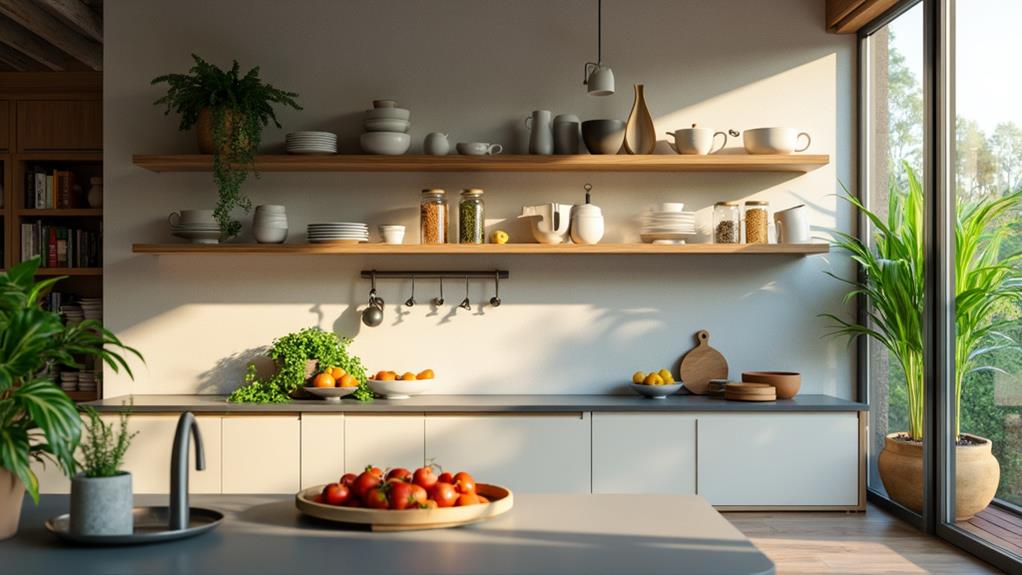
In 2023, open shelving remains a favorite among modern kitchen design enthusiasts, merging personalized aesthetics with practical benefits. Homeowners are increasingly integrating hidden storage solutions alongside open shelving to create unique and efficient spaces. This trend, endorsed by 53% of designers who prioritize maximizing cabinet space, ensures a tidier and more organized kitchen.
The combination of materials like wood and metal has also gained traction, adding visual interest while maintaining the functionality of open shelving. This blend not only enhances modern kitchen design but also allows homeowners to customize their kitchen according to personal preferences.
Open shelving offers the added advantage of easily updating the kitchen's look with seasonal decor, making it a dynamic and flexible storage option that keeps the kitchen fresh and inviting year-round. Additionally, the use of eco-friendly materials in open shelving designs supports sustainability, appealing to environmentally conscious homeowners.
Key points:
- Hidden storage solutions help maintain a clutter-free kitchen.
- Mixing materials like wood and metal adds aesthetic appeal.
- Seasonal decor changes are easy with open shelving.
Design Inspiration Examples
Drawing inspiration from modern kitchens can spark creativity and elevate your culinary space. If you love bright accents and lively contrasts, consider pairing yellow open shelving with closed cabinets. This not only adds a splash of color but also creates a stylish focal point.
In a trendy Connecticut kitchen, turquoise zellige tiles harmonize beautifully with baby blue lower cabinets. This combination showcases how mixing colors and textures can bring dynamic visual interest to your kitchen shelves.
For those with small kitchens, tall wood shelves can be a game-changer. They optimize vertical space, making it easy to keep everything organized and accessible. Consider using short white open shelves to display your favorite jadeite dishes and pink glassware. This setup serves as a decorative highlight while maintaining functionality.
Coastal inspirations are perfect if you're aiming for a light, airy vibe. In Palm Beach kitchens, open shelves often showcase curated items that reflect a relaxed, beachy aesthetic. Whether you're storing everyday necessities or displaying special pieces, open shelving can blend seamlessly into any design while enhancing both form and function.
Balancing Style and Functionality
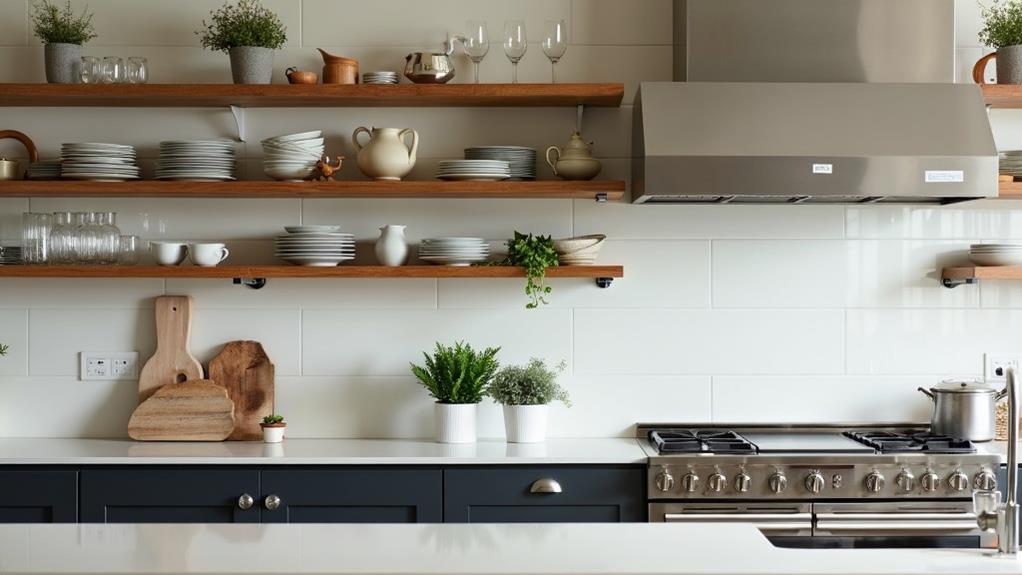
Striking the perfect balance between style and functionality in your kitchen can be achieved through the strategic use of open shelving. Open shelves not only elevate your kitchen's aesthetics but also enhance its practicality. By keeping everyday items visible and easily accessible, they offer the dual benefits of fostering an open, airy atmosphere and promoting organization.
To create a balanced storage solution, integrate open shelving with closed cabinetry. This combination allows you to display attractive items while concealing less appealing necessities. Strategic placement of open shelves maximizes vertical space and ensures that frequently used items are well-organized and accessible.
Mixing materials, such as pairing wooden shelves with metal brackets, can enhance your kitchen's aesthetic while maintaining functionality. This versatile approach complements various kitchen styles, adding a touch of sophistication.
Regular maintenance and organization are essential for keeping open shelves looking stylish and clutter-free. Without proper upkeep, shelves can quickly become dusty and disorganized. Here are a few tips to help you maintain balance:
- Rotate displayed items periodically to keep the look fresh.
- Use baskets or bins to group smaller items and reduce visual clutter.
- Clean shelves regularly to prevent dust build-up.