The Politics of Disco: How This Genre Pushed Social and Cultural Boundaries
Disco emerged from marginalized communities, offering safe spaces for LGBTQ+ individuals and people of color to express themselves freely. It challenged traditional gender roles and sexual norms through its pulsating rhythms and flamboyant aesthetics. On the dance floor, disco became a powerful agent of racial integration, reflecting its emphasis on unity and shared humanity. As it shifted from underground clubs to mainstream culture, disco faced backlash fueled by homophobia and racism. Despite this, the genre became a platform for political activism, advocating for inclusion and social justice. Disco's enduring legacy continues to shape contemporary music and cultural discourse, proving its impact extends far beyond the dance floor.
Disco's Origins in Marginalized Communities
Few music genres can trace their roots as directly to marginalized communities as disco. You'll find its origins in the underground dance clubs that sprung up after the 1969 Stonewall Uprising, a crucial moment in gay rights history. These discotheques became safe havens for LGBTQ individuals, primarily Black and Latino, who sought spaces for free cultural expression through dance.
In these clubs, DJs crafted a unique sound by blending various genres, including psychedelic, soul, and Latin American dance music. This eclectic mix kept dance floors energized and reflected the diverse musical preferences of the patrons. As disco evolved, it remained deeply connected to these marginalized communities, serving as a powerful form of self-expression and resistance against societal norms.
The early disco scene was a microcosm of the cultural and social dynamics of its time, showcasing the tastes and experiences of groups often pushed to society's fringes. It's through this lens that you can truly appreciate how disco's excursion from niche subculture to mainstream phenomenon was shaped by the participation and influence of Black, Latino, and LGBTQ communities.
Safe Spaces and Self-Expression
As disco emerged from the underground, it created a haven for those seeking refuge from societal prejudices. You'd find iconic venues like The Loft and Paradise Garage offering safe spaces where LGBTQ+ individuals and people of color could freely express themselves through dance and music. These clubs became cultural epicenters, challenging traditional social norms and nurturing a sense of community among marginalized groups. The expansion of geek culture into mainstream entertainment and the rise of social media platforms also provided new spaces for marginalized communities to connect and celebrate their diverse interests.
Disco DJs played a fundamental role in cultivating these inclusive environments. They carefully curated music that celebrated diversity and encouraged self-expression, pushing against the boundaries of conventional social and cultural expectations. The genre's emphasis on inclusivity and subversion of traditional gender and sexual norms made it a politically charged movement that threatened conservative forces.
In the wake of the 1969 Stonewall Riots, disco flourished as a powerful outlet for queer expression. It embodied a utopian vision of social equality, bringing together diverse communities and challenging dominant racial and sexual hierarchies. Through its music and culture, disco provided a platform for marginalized voices to be heard and celebrated, ultimately reshaping the social and cultural milieu of its time.
Challenging Gender and Sexuality Norms
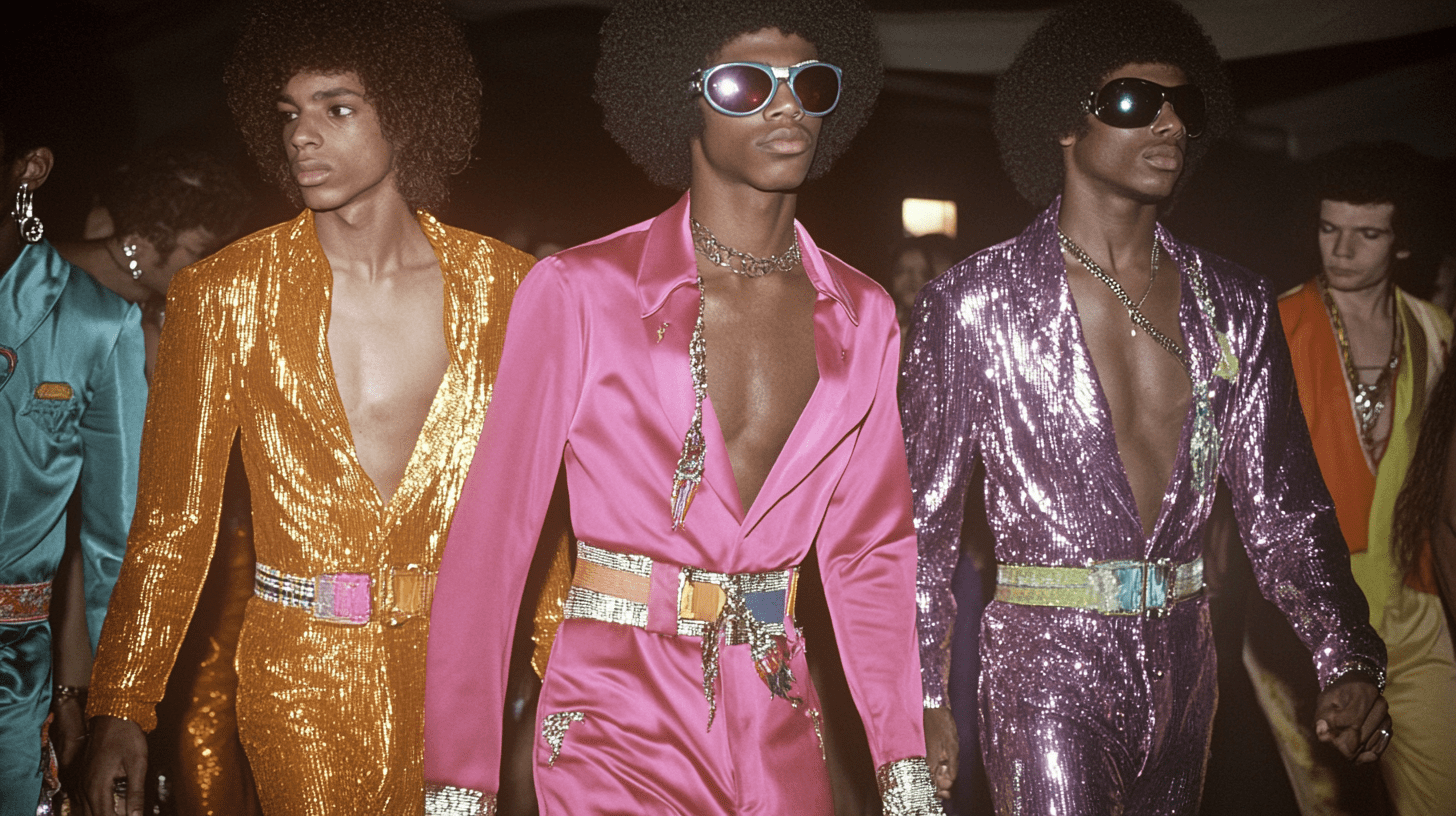
Disco's pulsating rhythms and flamboyant aesthetics became a powerful catalyst for challenging traditional gender and sexuality norms. As you immersed yourself in the disco scene, you'd witness a transformation of social boundaries. Women found newfound freedom to express their sexuality assertively through music and dance, breaking free from conventional gender roles. Celebrities like Grace Jones and Cher pushed fashion boundaries with their futuristic and androgynous looks, further challenging societal norms.
The genre's inclusive nature brought together strands of diverse sexual identities, blurring the lines between heteronormativity and homosexuality. You'd see gay culture gaining limited acceptance within mainstream society, as disco opened avenues for the demonstration of queer pleasure and style.
However, disco's relationship with feminism was complex. While it empowered women in some ways, it also represented an uncertain response to the broader demands of the feminist movement. Despite this ambiguity, disco held significant meaning for marginalized groups grappling with social change.
As you submerged yourself in disco culture, you'd find yourself part of a movement that challenged societal norms. The genre's wide spectrum of gender and sexual possibilities offered a platform for self-expression and identity formation, pushing the boundaries of what was deemed acceptable in mainstream culture.
Racial Integration on the Dancefloor
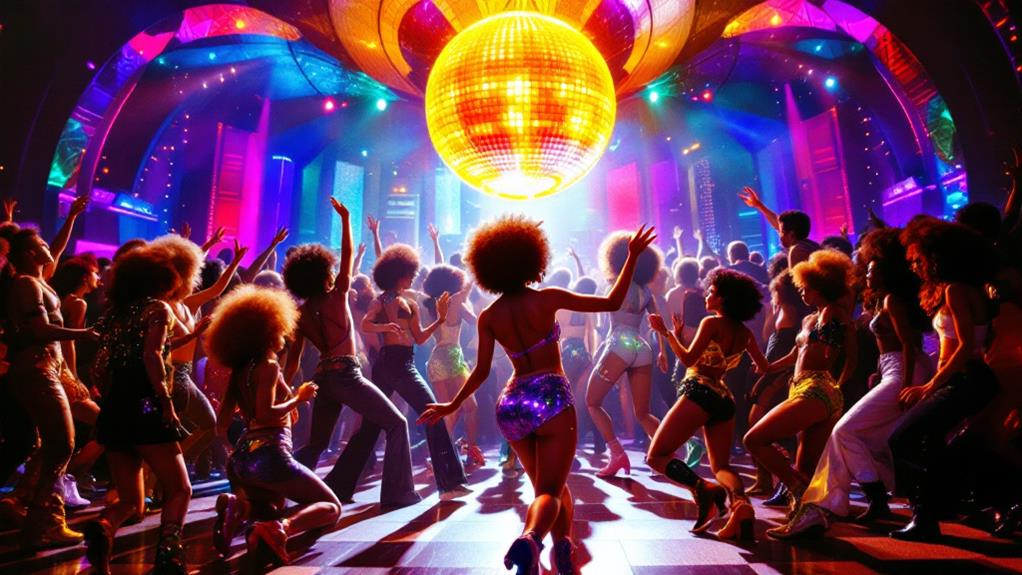
While disco challenged gender norms, it also reshaped racial fluidity in America. You'd find that disco clubs in the 1970s became powerful agents of racial integration, breaking down long-standing social barriers. These vibrant spaces brought together Black, Latino, and white patrons, defying segregated norms and fostering a culture of inclusivity.
As you stepped onto the dancefloor, you'd experience a diverse mix of genres, from soul and funk to Latin and psychedelic music. This musical melting pot reflected disco's emphasis on unity and shared humanity. The genre's focus on self-expression through dance allowed you to transcend traditional racial hierarchies, creating a sense of equality among patrons.
You couldn't ignore disco's connection to the civil rights movement. It served as both a reflection and extension of the ongoing pursuit of racial equality. As disco gained popularity, it forced mainstream society to confront issues of race and representation. You'd witness how this genre challenged white cultural dominance, carving out spaces for marginalized communities and pushing social boundaries in ways that extended far beyond the dancefloor.
Disco's Influence on Mainstream Culture
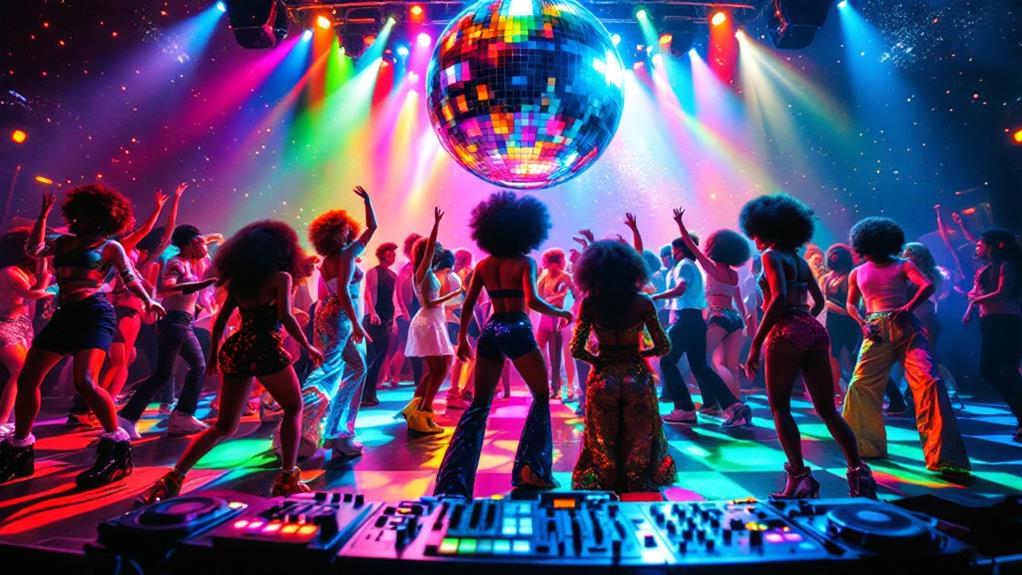
By the late 1970s, you couldn't escape disco's infectious rhythm and glittering influence. The genre had transformed from a niche subculture into a multibillion-dollar industry, dominating the mainstream music scene and infiltrating every aspect of popular culture. You'd find disco's pulsating beats on Top 40 radio, pushing rock music to the sidelines and sparking a fierce backlash from those who saw it as musically vapid and a threat to traditional genres.
The phenomenal success of "Saturday Night Fever" catapulted disco into the spotlight, but it also contributed to its eventual downfall. As the genre reached its peak, you'd see signs of oversaturation everywhere. Even the Village People's tongue-in-cheek persona signaled that disco was becoming a cultural punchline.
Despite its critics and eventual decline, you can't deny disco's lasting impact on contemporary music and dance culture. Its influence echoes through modern pop, electronic, and dance music. While the glittering ball may have stopped spinning, the genre's legacy continues to shape the way you move and groove today.
The Backlash Against Disco
As disco reached its zenith, a fierce backlash began to brew. You might've heard the slogan "Disco Sucks" or seen images of the infamous Disco Demolition Night at Comiskey Park in 1979. These weren't just innocent expressions of musical preference; they were symptoms of a deeper cultural conflict.
The anti-disco movement was fueled by a toxic mix of homophobia, racism, and fear of changing social norms. Critics attacked the genre as shallow and hedonistic, ignoring its roots in urban, particularly African American, communities. This backlash represented a broader struggle over gender, sexuality, and racial identity in American society.
You'll notice that the decline of disco coincided with the rise of conservative politics in the 1980s. This wasn't a coincidence. The pushback against disco was part of a larger effort to reassert traditional values and resist the cultural shifts of the 1970s. By understanding the politics behind the disco backlash, you'll gain awareness into the complex social dynamics of the era and the ongoing battles over cultural expression in America.
Political Activism Through Music
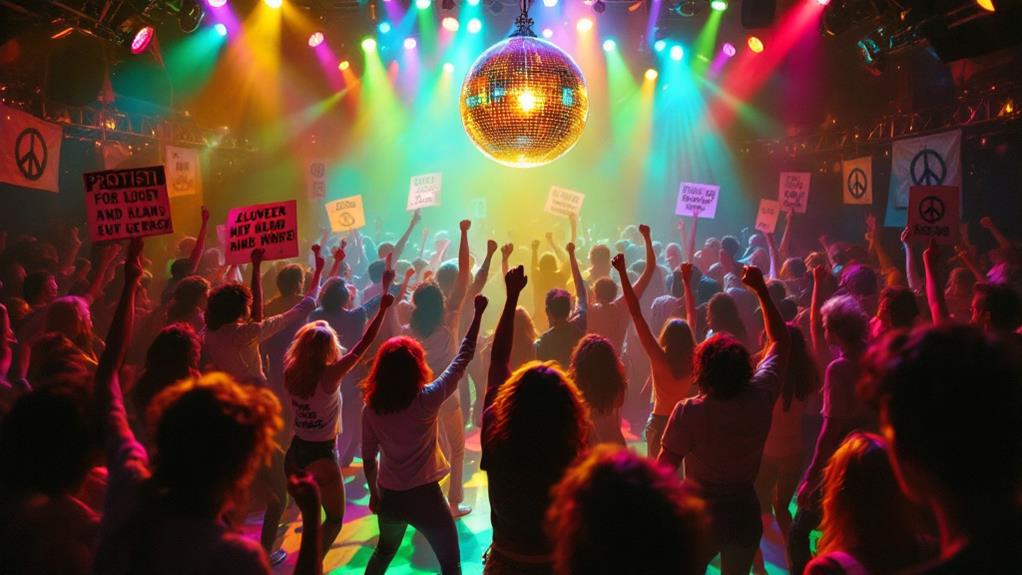
The backlash against disco didn't silence the genre's political voice; instead, it amplified it. You'd find that disco music became a powerful platform for political activism, with songs like Gloria Gaynor's "I Will Survive" transforming into anthems for the LGBTQ+ community during the AIDS crisis. Mainstream disco clubs evolved into centers of political organizing, where marginalized groups could freely express themselves and advocate for their rights.
Disco DJs played a crucial role in shaping the genre's political and social messaging. They used their platforms to promote inclusion, diversity, and social justice, challenging traditional gender norms and sexual mores of the 1970s. This subversive nature of disco made it a target for those who felt threatened by its progressive ideals, as evidenced by the infamous "Disco Demolition Night" at Comiskey Park in 1979.
Despite attempts to silence it, disco's celebration of diversity and inclusive social dynamics continued to push boundaries. The genre's political impact extended far beyond the dance floor, leaving an indelible mark on society and paving the way for future movements in music and activism.
Legacy of Disco's Social Impact
Disco's lively legacy continues to echo through modern culture, long after the last mirror ball stopped spinning. You'll find its influence in contemporary music, fashion, and social movements, showcasing the genre's enduring significance as a subversive force.
The impact of iconic groups like Village People and anthems like "Disco Inferno" extends far beyond the dance floor. These artists and songs challenged societal norms, providing a platform for marginalized communities to express themselves and envision a more equitable world. Disco clubs served as safe havens where diverse identities could be celebrated, pushing boundaries and forcing mainstream culture to confront issues of race, gender, and sexuality.
Despite facing backlash rooted in anti-LGBTQ+ and racist sentiments, disco's spirit of inclusivity and empowerment persists. Its legacy continues to inspire social movements and shape cultural discourse. By examining disco's history, you'll gain understanding into broader social and political changes that occurred during its heyday and beyond. The genre's ability to challenge conventions and unite diverse communities remains a powerful reminder of music's potential to drive social progress and cultural transformation.
Disco's Enduring Cultural Significance
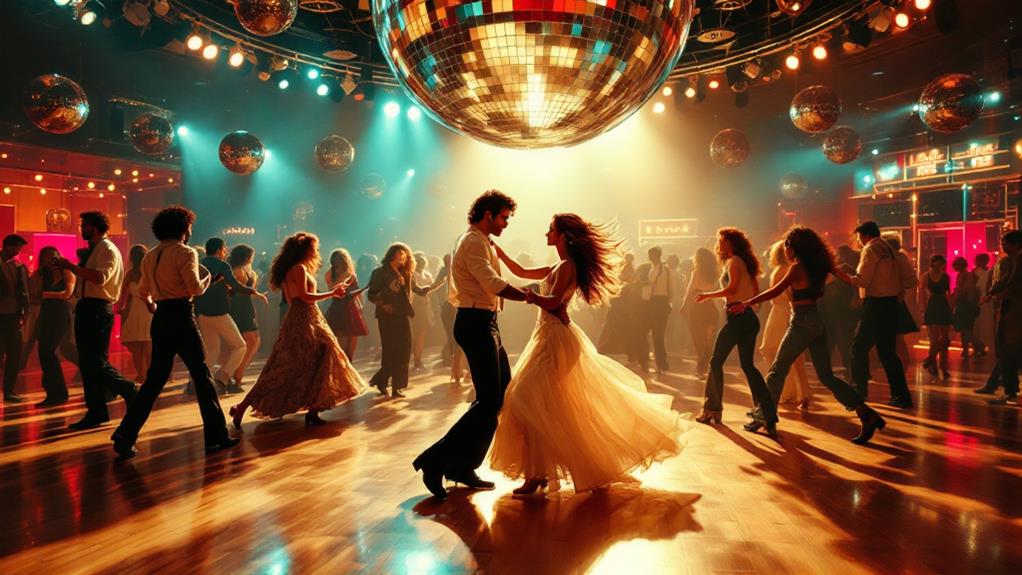
Decades after its heyday, disco's cultural significance continues to echo through modern society. You'll find its influence in contemporary music, dance, and the ongoing fight for social justice. While some may remember the genre's controversial moment during the "Disco Demolition Night" at Comiskey Park, home of the Chicago White Sox, this event only underscores disco's power to challenge societal norms.
Today, you'll see disco's enduring impact in LGBTQ+ communities and Celebration events worldwide. The genre's legacy of promoting freedom of expression and providing a safe haven for marginalized groups remains strong. Its role in shaping our understanding of gender, sexuality, and racial integration can't be overstated.
Beyond the dancefloor, disco served as a platform for political organizing and activism. It pushed for a more equitable and inclusive society, a vision that still reverberates today. The backlash it faced from conservative forces only highlights its subversive nature and its ability to challenge the status quo. As you investigate modern music and culture, you'll find disco's fingerprints everywhere, a testimony to its lasting cultural significance.