Were Flamingos Popular in the 80s?
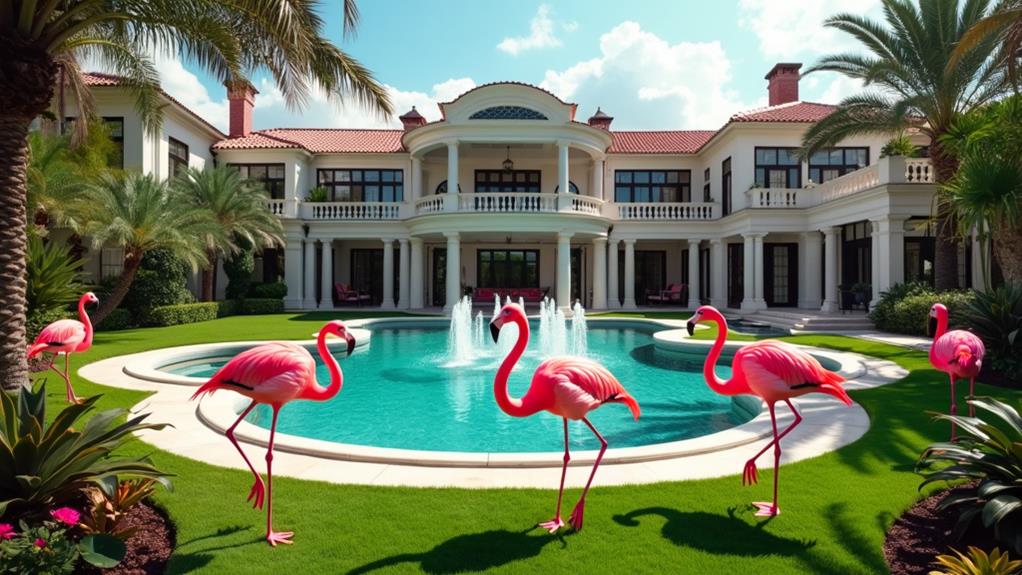
You might be surprised to learn that flamingos experienced a massive surge in popularity during the 1980s, but not in the way you'd expect. It wasn't real flamingos that captured people's hearts, but plastic lawn ornaments. These kitsch decorations flew off shelves, with retailers reporting double-digit sales gains. Canadian Tire saw a 70% jump in sales of their $5.99 flamingo pairs. The trend became so widespread that it replaced garden gnomes as the go-to lawn ornament in the US. This unexpected craze even inspired a National Geographic photo spread and left a lasting impact on pop culture. There's more to this quirky phenomenon than meets the eye.
The Flamingo Craze Resurges
Three key indicators point to a resurgence of flamingo popularity in the 1980s. First, retailers experienced double-digit sales gains for plastic flamingo lookalikes. Canadian Tire, for instance, reported a staggering 70% jump in sales of their $5.99 flamingo pairs. This surge in demand reflects a growing "love affair" with these kitschy lawn ornaments across Canada.
Second, Tucker Plastics, the sole Canadian manufacturer of plastic flamingos, sold over 100,000 sets to US and Canadian customers, boasting a 35% sales increase. This impressive figure demonstrates the widespread appeal of the flamingo trend beyond national borders.
Lastly, retailers' zeal to capitalize on the unexpected flamingo craze speaks volumes about its significance. The Canadian Tire senior buyer's observation that "people just don't admit to having them" hints at the guilty pleasure associated with these decorative items.
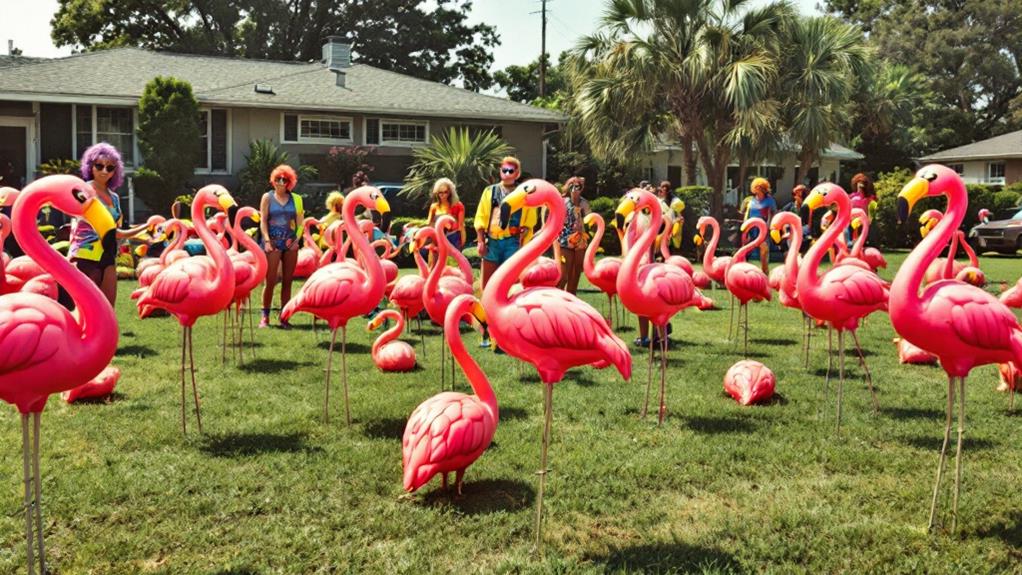
The 1980s flamingo trend wasn't just a fleeting fad; it was a cultural moment. You'd find these pink plastic flamingo lawn ornaments adorning yards across North America, symbolizing a unique blend of irony and nostalgia that captured the spirit of the decade.
Plastic Production and Market Saturation
Despite the soaring popularity of plastic flamingos, the industry began to grapple with market saturation concerns. Plastic flamingos replaced garden gnomes as the popular lawn ornament in the US, and Tucker Plastics, the sole Canadian manufacturer of these iconic plastic pink flamingos, faced a dilemma. Don Henderson, the company's owner, believed the market was becoming oversaturated, yet sales figures told a different story.
The plastic bird trend showed no signs of slowing down:
- Tucker Plastics sold over 100,000 sets of flamingos to US and Canadian customers.
- Canadian Tire reported a 70% jump in sales of $5.99 flamingo pairs.
- Retailers experienced double-digit sales gains driven by demand for these plastic lookalikes.
Despite these impressive numbers, Henderson remained cautious. He told The Journal that Tucker Plastics wasn't building additional flamingo capacity, suggesting limits to future production. This decision echoed concerns in the industry about long-term sustainability.
As consumers flocked to stores to come home with a piece of kitschy Americana, the future of plastic flamingo production hung in the balance. While Don Featherstone's original design for Union Products remained popular, manufacturers like Tucker Plastics in the Plastics Capital faced tough decisions about meeting demand without flooding the market.
Real Birds vs. Lawn Ornaments
Authentic flamingos stood tall above their plastic counterparts during the 1980s craze. While pink lawn flamingos were an immediate hit, the real birds were considered more desirable and prestigious. You'd find that the Journal predicted real flamingos would ultimately outshine their mass-produced lookalikes in popularity. The pink flamingo as a cultural icon dates back to the 1950s, making the contrast between real and fake flamingos even more pronounced during the 80s.
The plastic flamingo ornament, once a working-class accessory, adopted into an upper-class symbol of bad taste over time. You might've noticed some people refusing to admit they owned these lawn decorations, as they were often viewed as tacky by the elite. However, this didn't stop the surge in sales of plastic flamingos during this period.
Interestingly, the kitsch factor of lawn flamingos became part of their appeal. They were accepted as a trendy, albeit less authentic, decorative item. But if you wanted to make a real statement, a live flamingo was the way to go. The contrast between real birds and their plastic imitations highlighted the divide between authenticity and mass production, with the former gaining more respect and admiration in the long run.
Retailers' Unexpected Windfall
Retailers couldn't have predicted the windfall that plastic flamingos would bring in the mid-1980s. Unlike lawn jockeys and other post-World War II construction staples, this revered lawn ornament took the market by storm. Units in new subdivisions were popping up everywhere, as if flamingos were on their second assignment after their first hit in the early part of the decade.
You might wonder why these plastic birds were so popular. Here are three reasons:
- Affordability: Canadian Tire's $5.99 flamingo pairs were flying off shelves.
- Discretion: Buyers loved them but didn't admit to owning them.
- Versatility: A woman could pick up a pair for various occasions or decor needs.
Don Henderson of Tucker Plastics, Canada's sole flamingo producer, initially thought the market was saturated. However, he'd soon eat his words as sales soared by 35%, with over 100,000 sets sold to US and Canadian customers. Retailers were thrilled with the unexpected boom, reporting double-digit sales gains. It seemed that plastic flamingos had found their place in the hearts and lawns of North Americans, becoming an unlikely '80s icon.
Cultural Impact and Legacy
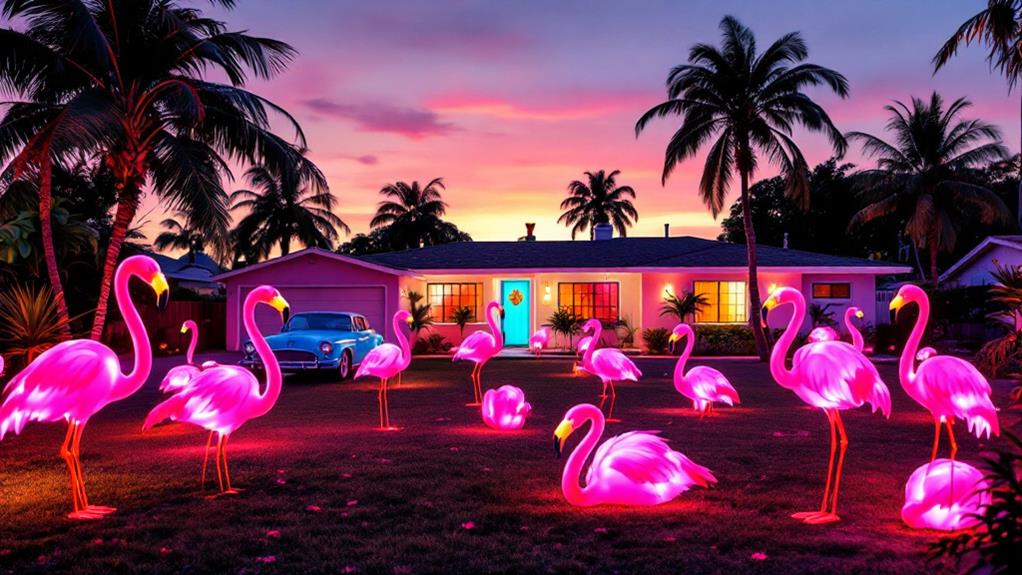
Beyond their role as quirky lawn ornaments, plastic pink flamingos left a lasting mark on 1980s pop culture. These kitschy birds became a symbol of camp culture, embraced by flamingo fans who sought to add a touch of the unnatural to their natural yards. The flamingo's popularity soared so high that it even inspired a National Geographic photo spread, showcasing the bird's impact on American aesthetics.
You might be surprised to learn that it took two weeks to model the original plastic flamingo, but its influence extended far beyond suburban lawns. The flamingo became a staple in gay bars and was featured in John Waters' movies, cementing its status as a cultural icon. Its enduring legacy is evident in its inclusion in the Smithsonian's collection and its official recognition as a symbol of Madison, Wisconsin.
The History of the Pink Flamingo reveals how this plastic bird accepted by the masses to become a beloved emblem of 1980s kitsch. Despite retailers' claims that people were reluctant to admit owning them, the flamingo's popularity speaks volumes about its cultural significance during this era.