What Are Gnomes in Swedish Folklore?
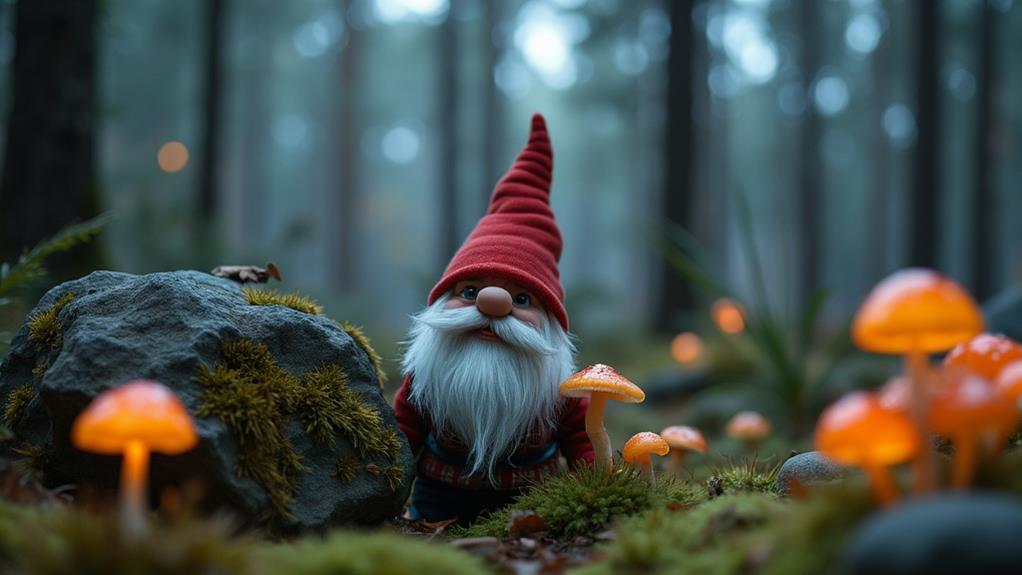
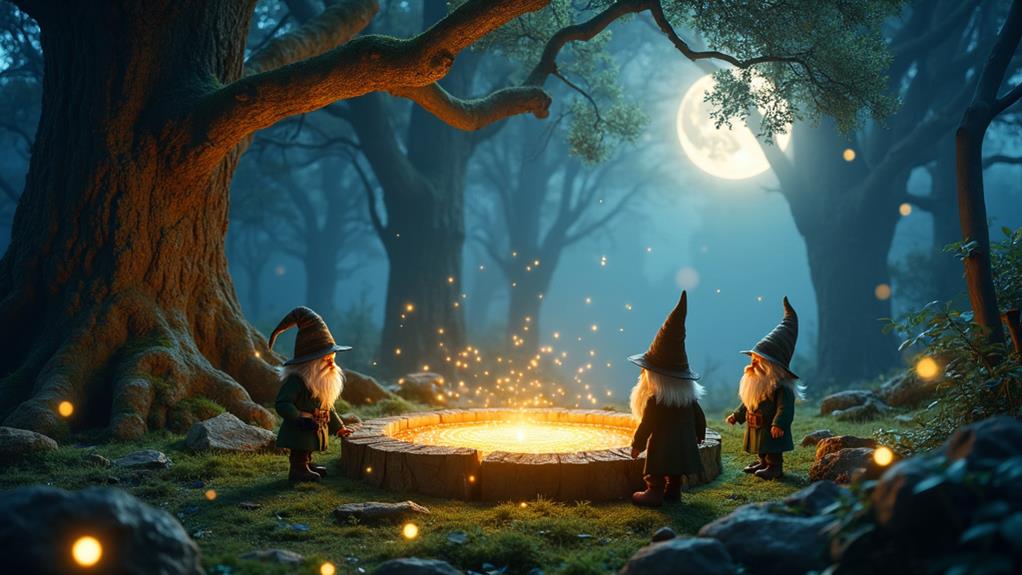
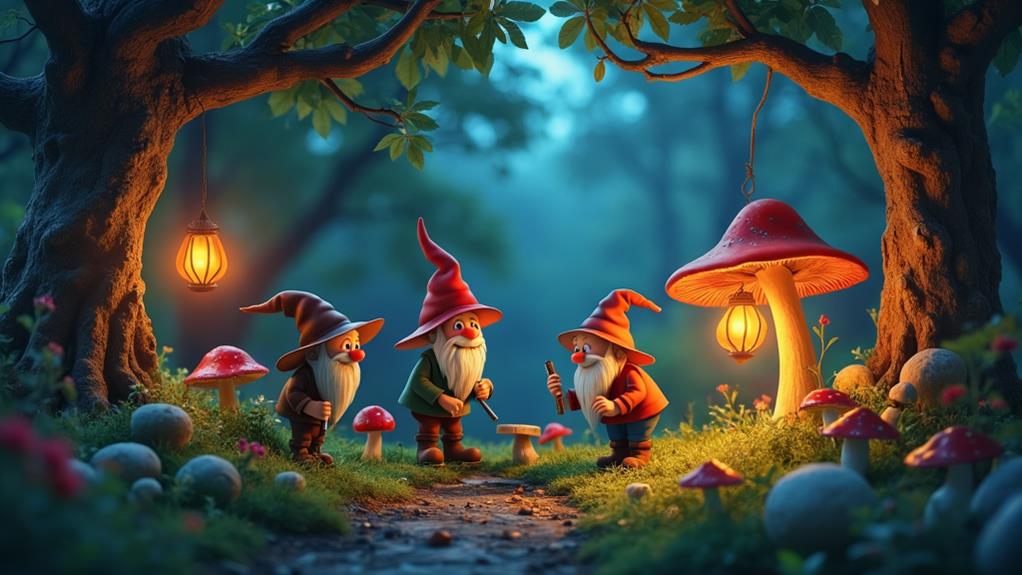
In Swedish folklore, gnomes are wise, ancient creatures that protect homes and land. You'd recognize them by their small stature, long white beards, and iconic red hats. They work at night, mending tools and caring for livestock, and expect a little porridge with butter in return. While they're generally helpful, they can get mischievous if neglected or disrespected. Their rich lore includes tales of guiding lost travelers and ensuring bountiful harvests. Today, they remain a beloved part of Swedish holiday traditions and decor. Want to uncover more about their fascinating tales and roles?
Origins and History
The origins and history of gnomes in Swedish folklore are both captivating and deeply rooted in the country's cultural tapestry. When you explore gnome mythology, you'll find that these mystical beings have been a part of Swedish stories for centuries. Initially, gnomes were considered guardians of the household and land, often depicted as wise and ancient creatures. They were believed to protect families from misfortune, and their presence was both respected and feared.
As folklore evolved, the role of gnomes shifted. In early tales, they were seen as stern protectors who demanded respect; failing to honor them could result in mischief or bad luck. Over time, though, gnomes started appearing in more fanciful and friendly narratives, reflecting a softer side of their mythos. This evolution highlights how Swedish culture and societal values have shaped the perception of these enigmatic beings.
You'll notice that gnome mythology still permeates Swedish culture today, influencing modern literature, art, and holiday traditions. By understanding their origins and historical significance, you gain a deeper appreciation for how these small, yet mighty, figures have maintained their place in Swedish folklore throughout the years.
Physical Appearance
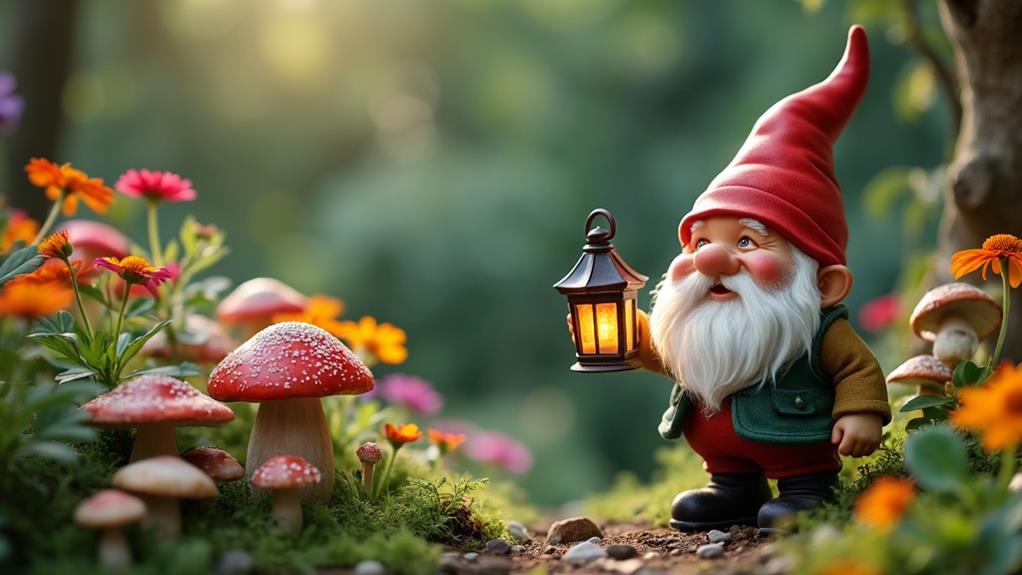
When you picture a Swedish gnome, imagine a small, stout figure with a long, flowing beard and a pointed hat. These gnome characteristics immediately bring to mind a charming, almost magical presence. Typically standing about a foot tall, Swedish gnomes are diminutive yet robust, often depicted with round faces and rosy cheeks that add to their endearing appearance.
Their long, white beards are a significant feature, symbolizing wisdom and maturity. A gnome's pointed hat, usually red, is another iconic element, making them easily recognizable. This hat can vary in height, but it's almost always present, adding to their fanciful charm.
When it comes to gnome colors, the red hat is just the beginning. Their clothing often includes earthy tones like brown, green, and gray, reflecting their close connection to nature and the forest. Boots, usually black or brown, complete their attire, making them ready for any task.
In Swedish folklore, these gnome characteristics aren't just for show; they play an essential role in identifying these mystical creatures and distinguishing them from other folkloric beings. Their unique physical appearance makes them an enduring symbol of Swedish culture.
Roles and Responsibilities
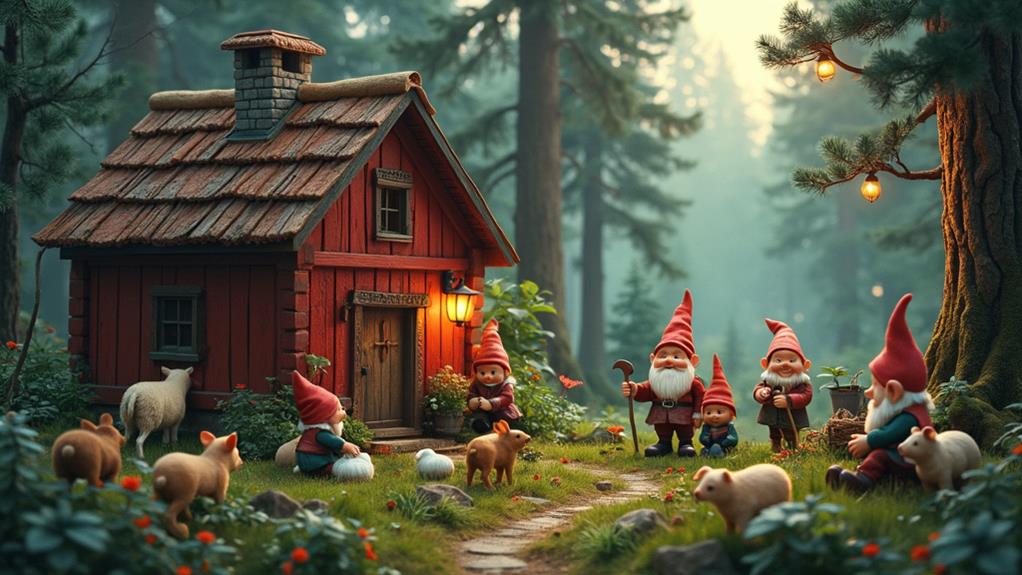
In Swedish folklore, gnomes are far more than just playful figures; they serve crucial roles and fulfill significant responsibilities within their communities. You might think of them as the silent yet diligent guardians of the household. These gnomes, known as "tomtar" or "nisse," act as guardian spirits, guaranteeing the well-being and prosperity of the homes they inhabit. Their duties span from protecting livestock to safeguarding the family from misfortune.
As household protectors, gnomes have a keen eye for detail. You'll often find them working tirelessly during the night, mending tools, straightening up the barn, and even assisting with chores that keep the household running smoothly. They expect a token of appreciation, usually in the form of a bowl of porridge with butter, left out for them. If neglected or disrespected, they might turn mischievous or even vengeful, causing minor chaos to remind you of their importance.
Stories and Legends
While gnomes play an integral role in maintaining households, their presence is also deeply rooted in enchanting stories and legends. You'll find that Swedish folklore is brimming with tales of gnome encounters, each illustrating different aspects of their mysterious and magical existence. These stories are rich in folklore variations, reflecting the gnome's diverse influence across distinct regions and times.
In the heart of these legends, you might stumble upon:
- Gnomes helping lost travelers find their way home through dense, enchanted forests.
- Mischievous gnomes playing tricks on unsuspecting villagers, only to teach them valuable lessons.
- Benevolent gnomes protecting farms from misfortune, ensuring a bountiful harvest year after year.
Each tale captivates with its unique spin, regardless of it being highlighting a gnome's benevolence or their trickster nature. These stories not only entertain but also serve as moral compasses, guiding behavior and community values. You'll notice that the folklore variations often depend on the region's cultural and environmental influences, making each gnome encounter a unique experience. Stories of gnomes have been passed down through generations, keeping their mystical presence alive in Swedish culture.
Modern-Day Influence
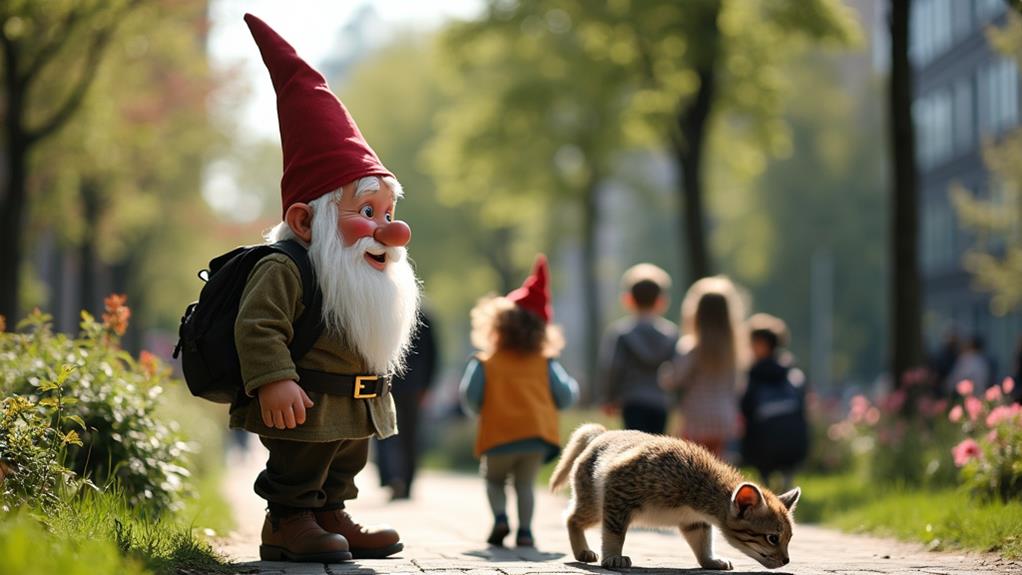
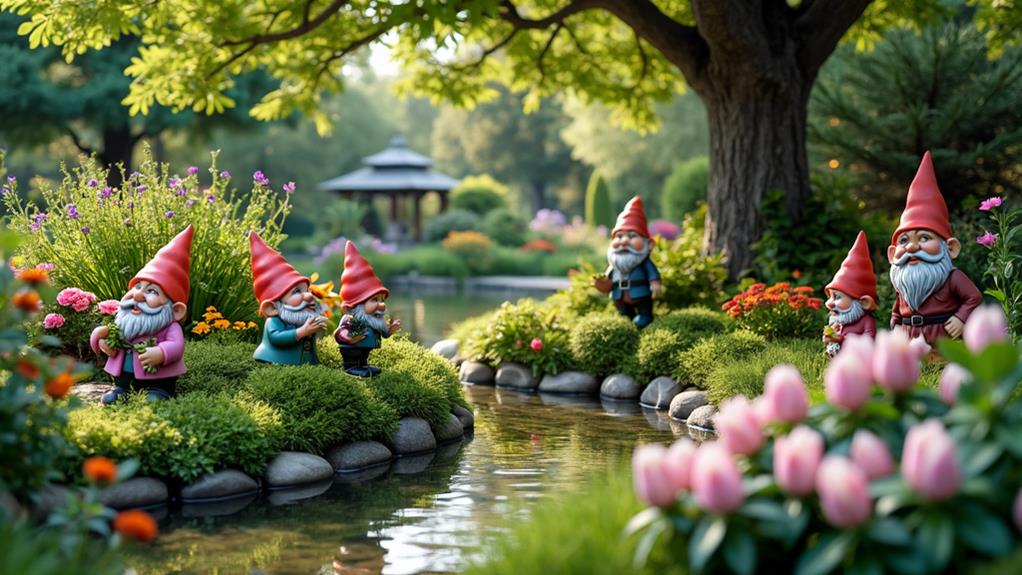
Gnomes aren't just relics of the past; they continue to weave their charm into contemporary Swedish culture. You'll find gnome symbolism deeply embedded in numerous aspects of life, from holiday decorations to garden art. These little creatures, often seen as protectors of homes and farms, bring a sense of nostalgia and whimsy to present-day settings.
In Sweden, gnome collectibles have become incredibly popular. From handcrafted figurines to elaborate gnome-themed decor, these items serve as both artistic expressions and nods to folklore. You'll often see them displayed prominently in homes, especially during Christmas when the "tomte" or "nisse" plays a central role in holiday traditions. These gnomes are believed to bring good luck and protect the household, a belief that has endured through generations.
Moreover, modern design has adopted gnome symbolism, incorporating it into fashion, art, and even literature. Swedish artists frequently draw inspiration from these mythological beings, creating works that resonate with both the young and old. So, next time you spot a gnome, keep in mind that you're witnessing a piece of folklore that's very much alive and thriving in contemporary culture.