What Are the Characteristics of a Garden Gnome?
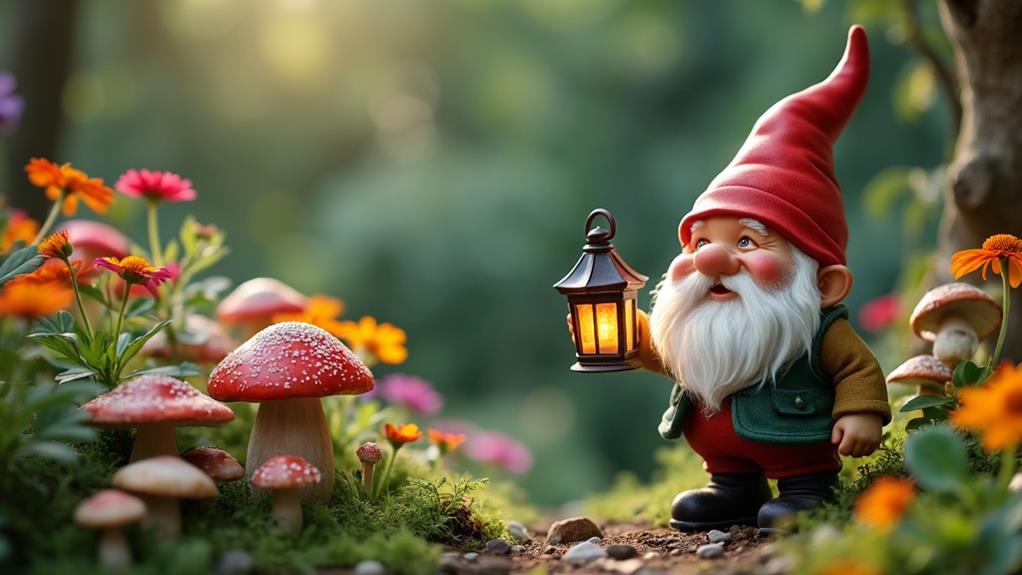
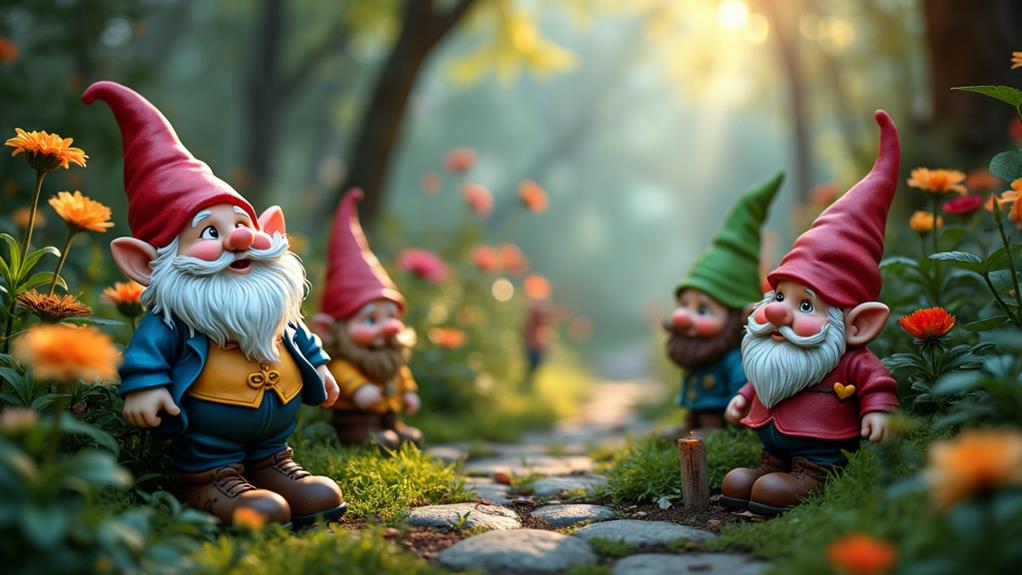
You'll recognize a garden gnome by its iconic pointed red hat, bushy white beard, and jovial expression. These charming figures wear tunics belted at the waist, sturdy boots, and often hold tools, symbolizing hard work and guardianship. Their expressive faces, with twinkling eyes and rosy cheeks, add a fanciful touch to any garden. Garden gnomes often bring good luck and protection, rooted in folklore linking them to hidden riches and earth guardianship. Made from materials like ceramic, resin, or concrete, their durability varies. Curious about the cultural significance and different designs? Keep going, and you'll uncover more.
Traditional Appearance
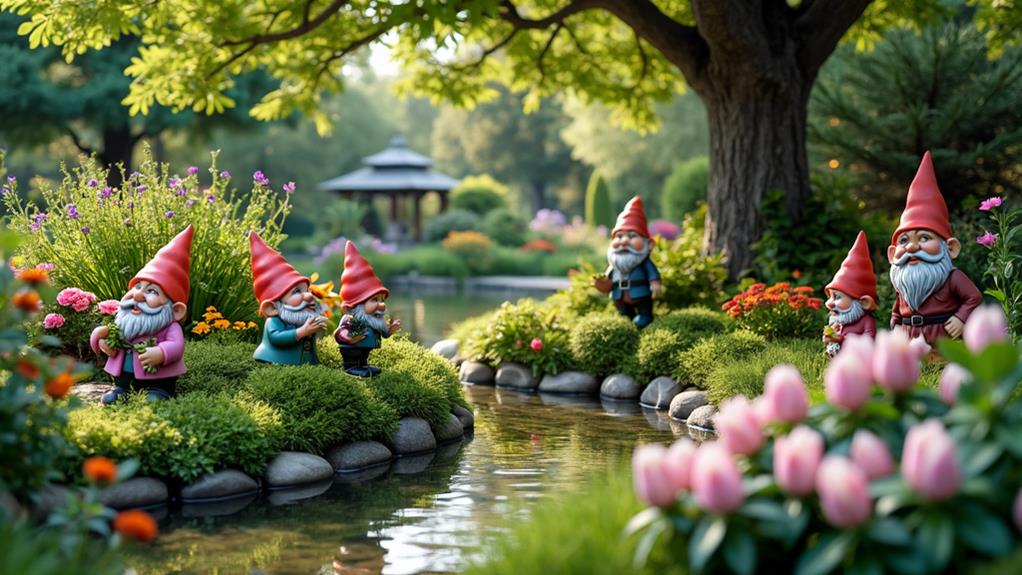
A garden gnome's traditional appearance is instantly recognizable, thanks to its distinctive features. Originating from 19th-century Germany, these charming figures were initially crafted as protective talismans for gardens. You can trace their historical origins to the folklore of gnomes, regarded as guardians of the earth and riches. The classic gnome typically has a long, white beard, a jovial expression, and a pointy red hat.
However, there's more to their look than just tradition. Different cultures have put their own spin on these beloved figures. For instance, in Scandinavian folklore, you'll notice that gnomes, or "nisse," often have a more rustic, farm-like appearance, reflecting their role as guardians of homesteads. Meanwhile, British garden gnomes might come with intricate detailing and variations in attire, showing the influence of local artistry.
These cultural variations enrich the gnome's image beyond its German roots, making each one a unique piece of garden art. By understanding these historical origins and cultural variations, you gain a deeper appreciation for the garden gnome's enduring charm and universal appeal. So, next time you spot a garden gnome, you'll recognize the rich history and diverse influences behind its traditional appearance.
Iconic Attire
While the traditional appearance of garden gnomes sets the stage, their iconic attire adds another layer of charm and character. You'll often find gnomes dressed in distinctive outfits that are both fanciful and steeped in gnome folklore. These costumes aren't just for show; they hold cultural significance, reflecting the gnome's role as a guardian of gardens and nature.
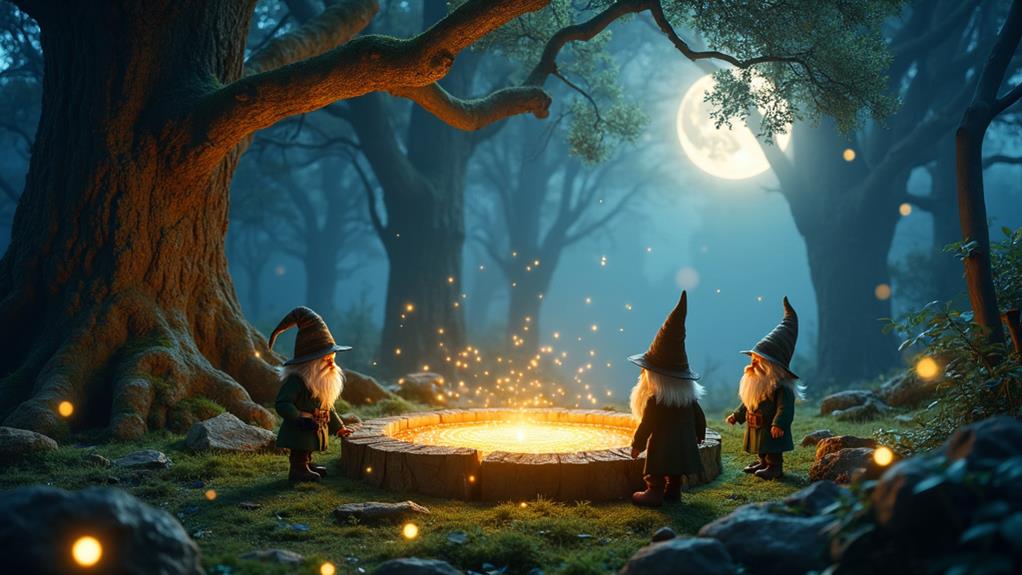
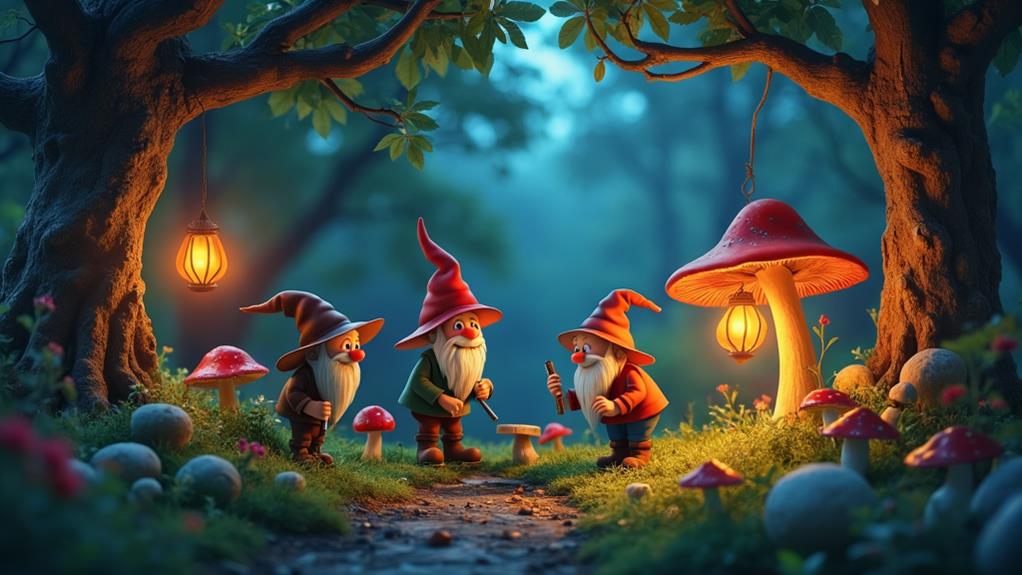
The classic gnome attire includes a pointed red or green hat, often seen as a symbol of wisdom and magic. This hat is a nod to ancient tales where gnomes were thought to possess mystical powers. You'll also notice they wear sturdy, earth-toned boots, making them ready for any terrain they might need to traverse in their protective duties. Their clothing, usually a tunic belted at the waist, is practical and robust, reminiscent of medieval peasant wear, emphasizing their hardworking nature.
Facial Features
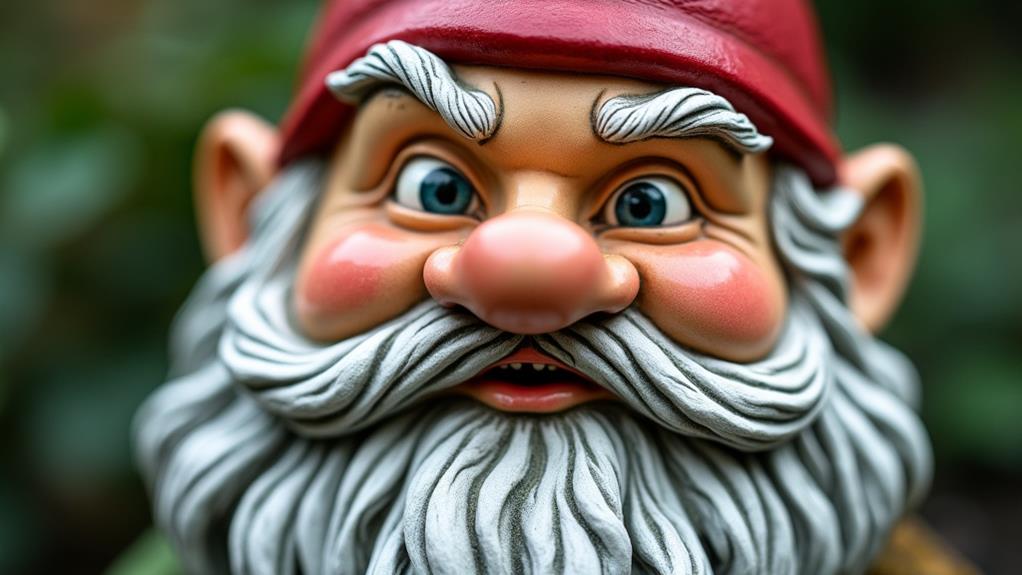
The gnome's face, often the most expressive part of its character, plays a crucial role in conveying its fanciful nature. When you look at a garden gnome, the initial thing you'll likely notice is its lively array of expressive emotions. Regardless of it's a wide grin, a mischievous smirk, or a serene smile, each gnome's face tells a story. These unique expressions are designed to bring life and personality to your garden, making the gnome more than just a decorative object.
You'll find that the eyes are often the focal point of a gnome's facial features. They can be twinkling with joy, narrowed in concentration, or wide open in surprise. The eyebrows add an extra layer of depth, arching dramatically to emphasize the gnome's current mood. The nose, usually prominent, adds a touch of whimsy, while the cheeks, often rosy, give a warm, welcoming appearance.
In addition, the gnome's beard is another key element. It's usually bushy and well-defined, adding to the overall expressive quality. Each facial feature works in harmony to create a unique expression that captures the essence of the garden gnome's playful spirit.
Symbolic Meanings
After appreciating the expressive facial features that bring garden gnomes to life, it's intriguing to investigate the symbolic meanings they carry. Garden gnomes aren't just decorative; they're steeped in cultural significance and folklore origins that add layers of meaning to their presence in your garden.
Historically, garden gnomes are believed to bring good luck and protection to the household. Their folklore origins trace back to ancient European myths where gnomes were considered earth dwellers who guarded valuables and minerals underground. By placing a gnome in your garden, you're inviting a guardian spirit to watch over your plants and home, ensuring prosperity and safety.
In many cultures, gnomes also symbolize hard work and diligence. Their common depiction with tools like shovels and wheelbarrows reinforces this idea, reminding you of the virtues of labor and care. This cultural significance makes them not just fanciful figures, but emblems of industriousness and vigilance.
Popular Materials
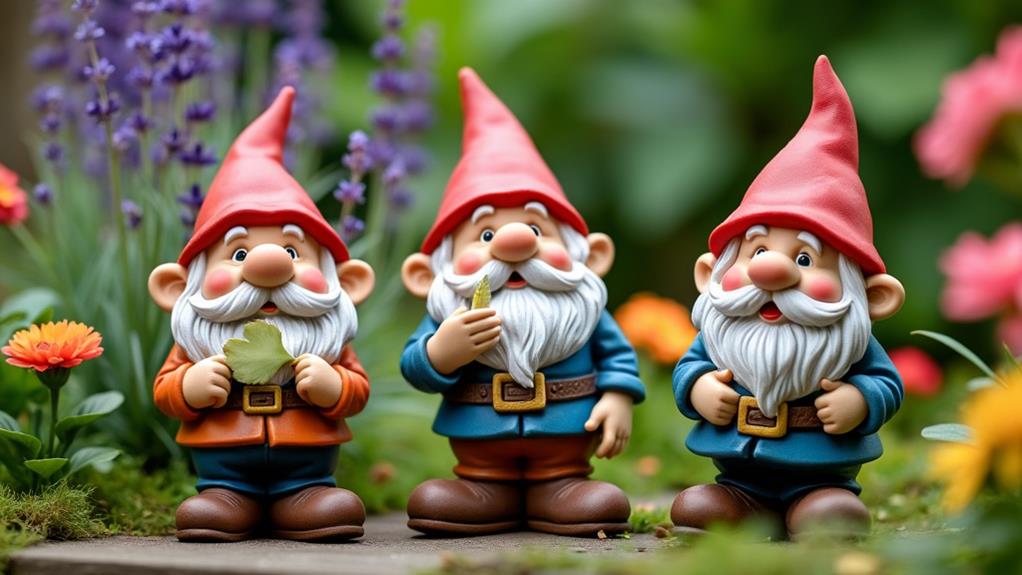
When choosing a garden gnome, you'll find that they're crafted from a range of popular materials, each bringing its own unique charm and durability. Understanding these materials helps you pick the perfect gnome for your garden's aesthetic and climate conditions.
One of the most common materials is ceramic. Ceramic types can range from simple terracotta to more elaborate glazed finishes. These gnomes often boast detailed features and lively colors, making them eye-catching enhancements to your garden. However, they can be fragile and may not withstand harsh weather conditions.
Another popular choice is resin. Known for its durability, resin can mimic the look of stone, wood, or metal while being lightweight and weather-resistant. This makes resin gnomes a practical choice if you're looking for something that can endure different climates without losing its charm.
Then there are concrete gnomes, which are incredibly sturdy and offer a rustic, timeless look. These can be quite heavy, so they're less likely to be knocked over by wind or animals.
Lastly, plastic gnomes are budget-friendly and come in an array of designs. They're lightweight and easy to move around but might not offer the same longevity as other materials.
- Ceramic: Detailed, lively, but fragile
- Resin: Durable, weather-resistant
- Concrete: Sturdy, rustic
- Plastic: Budget-friendly, lightweight