What Is a Female Gnome Called?
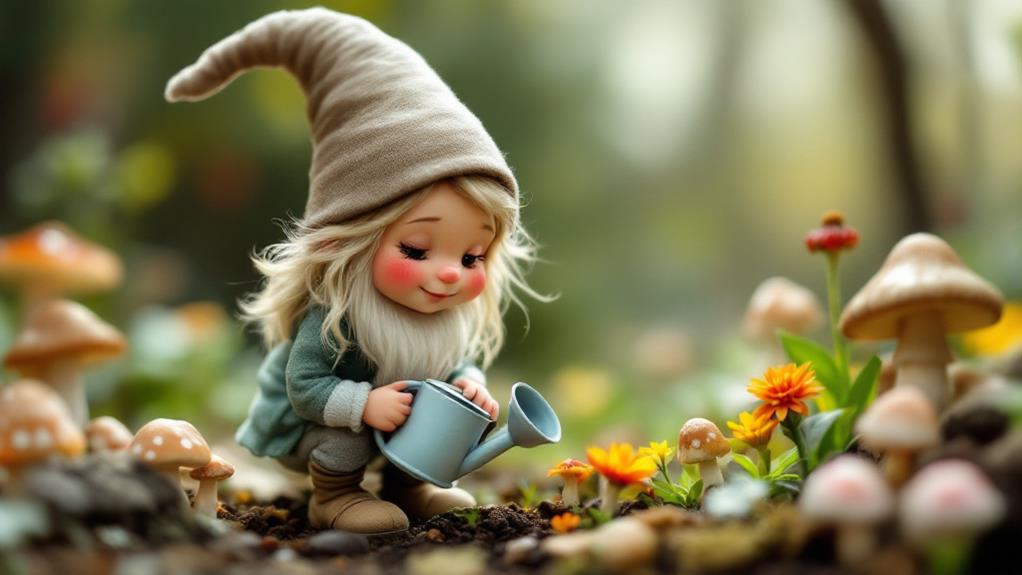
Female gnomes are commonly called "gnomettes," a term that combines "gnome" with a feminine suffix. This name emerged in the mid-20th century when female gnome figurines were first introduced. In German folklore, they're known as "gnominnen." You'll often find gnomettes with names like Daisy, Willow, or Rose, reflecting their connection to nature. They're typically portrayed without beards, sporting longer hair and colorful, floral attire. Gnomettes embody a blend of earthly wisdom and mystical abilities, serving as guardians of gardens and forests. While widely accepted now, the introduction of female gnomes initially sparked controversy among gnome enthusiasts. There's more to uncover about these enchanting creatures and their rich history.
Origins of Female Gnomes
Until the mid-20th century, gnomes were almost exclusively portrayed as male figures, often represented as elderly and wise. This traditional depiction changed in 1962 when the Heissner company in Germany introduced the first female gnome model, marking the beginning of a transformative period in gnome representation. Presence of female gnomes in medieval texts as earth-dwellers with connection to nature.
The concept of female gnomes gained further traction in the 1970s, thanks to Rein Poortvliet's illustrations. His artwork portrayed female gnomes as cheerful and nurturing characters, helping to solidify their place in gnome lore. However, the introduction of female gnomes wasn't without controversy. In the 1990s, "naughty" or sexualized female gnome designs emerged, sparking objections from some gnome enthusiasts who felt these representations strayed too far from the traditional gnome image.
The debate continued into the 2000s when Philipp Griebel's "Lady Roda" female gnomes achieved commercial success while simultaneously fueling discussions about the acceptability of female gnomes in general. As female gnomes gradually became more prevalent, they've prompted important conversations about gender representation and equality within the established gnome archetype.
Common Names for Gnomettes
While many know them simply as female gnomes, these charming garden figures are often called "gnomettes" in popular culture. This term is derived from the diminutive form of "gnome," emphasizing their petite stature and feminine qualities.
When it comes to naming female gnomes, you'll find a variety of options that reflect their connection to nature and their gentle demeanor. Deeply rooted in garden traditions spanning centuries and cultures, common names like Daisy, Willow, Rose, Luna, and Aurora are popular choices, evoking images of flowers, trees, and celestial bodies. These names capture the essence of gnomettes, highlighting their nurturing personalities and their strong ties to the natural world.
It's worth noting that the names for female gnomes can vary depending on cultural and regional folklore influence. For instance, in German folklore, you might hear them referred to as "gnominnen." This diversity in naming conventions adds depth to the rich fabric of gnome lore across different cultures.
When choosing a name for your female gnome, consider selecting one that resonates with her unique characteristics and the role she plays in your garden or home. By doing so, you'll create a more personalized and meaningful connection to these fanciful creatures.
Appearance and Characteristics
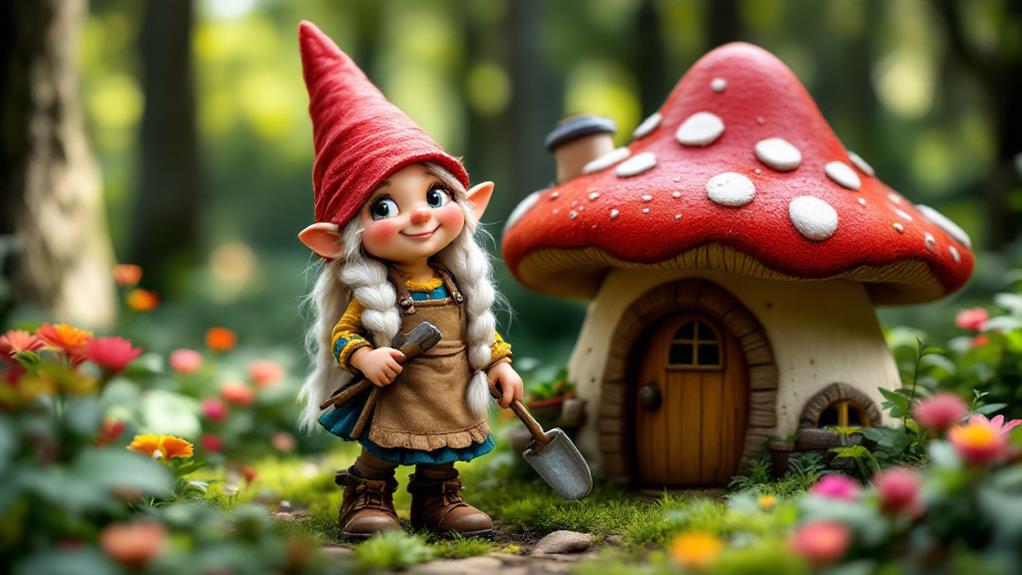
When you visualize a female gnome, you'll notice several distinctive features that set her apart from her male counterparts. Unlike male gnomes, female gnomes typically don't sport beards and have a more delicate appearance. You'll often see them with longer hair, which adds to their feminine charm.
Female gnomes are known for their colorful and floral attire, reflecting their strong connection to nature and the earth. Their clothing choices emphasize their nurturing and protective demeanor, qualities that are deeply ingrained in their character.
You'll find that female gnomes possess a special affinity for the natural world. They're often represented as having magical abilities, particularly in communicating with animals and crafting herbal remedies. This connection to nature is a fundamental aspect of their identity and role in gnome society.
In folklore and artistic portrayals, you'll observe that female gnomes embody a blend of earthly wisdom and mystical prowess. Their appearance and characteristics reflect their unique position as guardians of nature and keepers of ancient knowledge, making them an essential part of gnome lore and culture.
Cultural Variations in Naming
Across different cultures and regions, you'll find a variety of names for female gnomes. In German folklore, you'll encounter the term "gnominnen" specifically referring to female gnomes. This cultural variation highlights the diverse ways different societies have conceptualized these mythical creatures.
When it comes to individual names, you'll often see female gnomes given monikers that evoke nature, beauty, and gentleness. Names like Daisy, Willow, Rose, Luna, and Aurora are popular choices, reflecting the connection between gnomes and the natural world. You might imagine a female gnome submerging into a body of water and answering to one of these delicate names.
In some stories, you'll find female gnomes collectively referred to as "gnomettes." This term adds a touch of whimsy to the naming conventions. It is crucial to acknowledge that the names and terms used for female gnomes can vary significantly based on the specific cultural and regional folklore traditions. This diversity in naming reflects the rich embroidery of fantasy storytelling and the creative freedom authors and storytellers have when crafting their gnome-centric narratives.
Female Gnomes in Literature
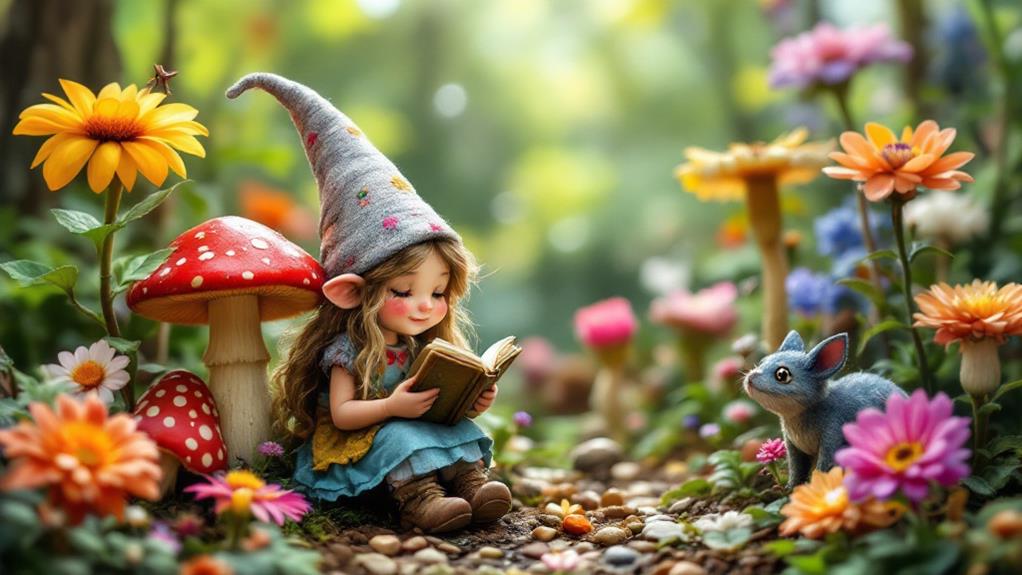
Numerous works of literature have featured female gnomes, often portraying them as nurturing and connected to nature. You'll find these characters in various fantasy stories, where they're frequently represented as gentle, earth-loving beings. Rein Poortvliet's book "Gnomes" is a prime example, showcasing cheerful female gnomes who embody these characteristics.
In literature, female gnomes are sometimes referred to as "gnominnen," a term borrowed from German folklore. You might also encounter the term "gnomettes" in some stories. These female garden gnome characters are typically distinguished from their male counterparts by their longer hair and more colorful, floral attire.
When naming female gnomes in fantasy literature, authors often choose feminine names that reflect nature and the earth. You'll come across names like Daisy, Willow, and Aurora, which emphasize the connection between female gnomes and the natural world. These names help reinforce the idea that female gnomes are closely tied to the earth and its cycles, often playing roles as caretakers of gardens, forests, and other natural spaces in the stories they inhabit.
Gnome Gender Controversy
While female gnomes have found their place in literature, their existence in the world of garden ornaments has sparked controversy. The International Association for the Protection of the Garden Gnome in Basel took a firm stance against the production of female gnomes by German manufacturer Griebel. They claimed that gnomes are a single-sex species and have been for thousands of years.
The association's objections to female gnomes include:
- Gnomes are traditionally male-only
- They possess ancient gene technology
- Producing female gnomes violates international conventions
- It disrupts the established gnome archetype
To enforce their beliefs, the association levied a €75 fine on Griebel for creating female gnomes. However, Griebel remained undeterred, citing requests from male gnomes for female counterparts. This debate highlights the tension between traditional views and efforts to promote gender representation in the world of garden gnomes.
You'll find that this controversy raises questions about the nature of gnomes and their representation in popular culture. It also challenges long-held beliefs about these mythical creatures and their place in gardens worldwide.