What Is Hawaiian Music Called? Exploring Traditional and Modern Styles
Hawaiian music encompasses a rich tapestry of styles, from ancient to modern. You'll find traditional forms like mele oli (unaccompanied chants) and mele hula (chants with dance), which have roots stretching back over a millennium. Western influences in the 19th century introduced new instruments and genres, leading to styles like hapa haole music. Today, you'll hear contemporary genres such as Jawaiian reggae, Hawaiian hip-hop, and island reggae. Notable artists range from King Kalakaua to Israel Kamakawiwo'ole. The ukulele and slack-key guitar remain iconic in Hawaiian music. Explore further to uncover the full array of this lively musical tradition.
Origins of Hawaiian Music
While Hawaiian music has evolved drastically over time, its roots stretch back more than a millennium. Ancient Hawaiians used mele (songs) and hula to preserve their language and culture, passing down Hawaiian history through oral tradition. These traditional forms of expression were deeply intertwined with Hawaiian culture, serving as a means to record and share knowledge, stories, and genealogies.
In its earliest forms, traditional Hawaiian music relied heavily on chants and percussion-based performances. The arrival of Western influences in the 19th century brought new instruments and musical styles to the islands. Missionaries introduced Christian hymns, which Hawaiian composers skillfully adapted by incorporating native melodies and language. This blending of indigenous and introduced elements gave birth to unique musical forms.
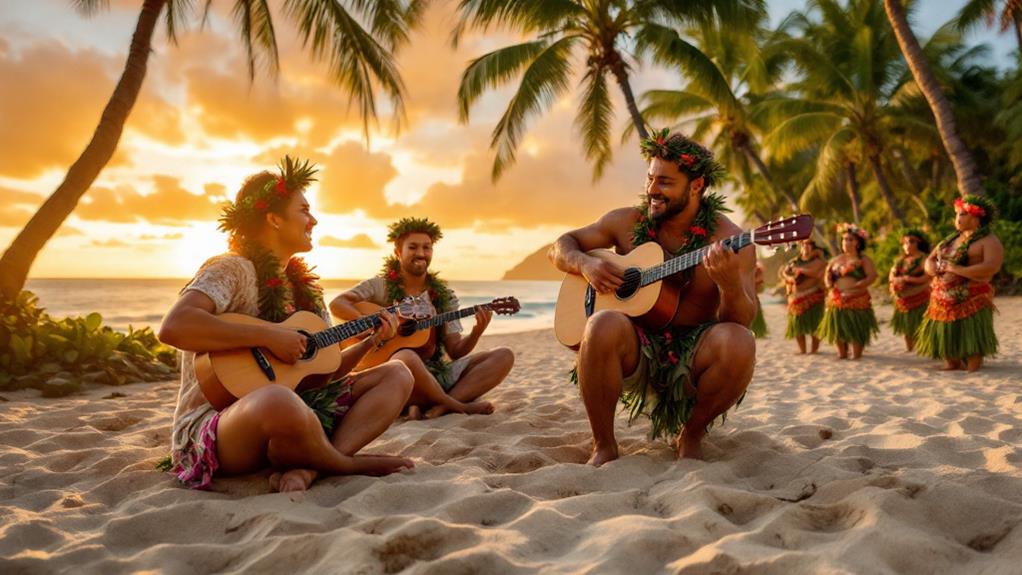
The introduction of the guitar and ukulele had a profound impact on Hawaiian music. These instruments became central to the development of distinct styles like slack key guitar. As Hawaiian music continued to evolve, it maintained its strong connection to the islands' rich cultural heritage while embracing new sounds and techniques, resulting in a diverse and rich musical tradition.
Traditional Hawaiian Musical Styles
Traditional Hawaiian musical styles encompass two primary forms: mele oli and mele hula. These styles were integral to Hawaiian culture, serving as a means to preserve and transmit important stories, histories, and mythologies through oral tradition.
Mele oli refers to unaccompanied chanting, while mele hula involves chanting accompanied by dance. Both styles are characterized by their simple structure and reverent vocal presentation. Traditional Hawaiian music often incorporated indigenous percussion instruments, such as the ipu (gourd drum) and pahu (coconut wood drum), to enhance the rhythmic elements of the performances.
The introduction of Western instruments in the 19th century led to the development of new musical styles. Here are three key aspects of this evolution:
- The guitar and ukulele were introduced, blending with traditional Hawaiian sounds
- Hapa haole music emerged, combining Hawaiian lyrics with Western melodies
- Traditional chants and percussion instruments continued to play a significant role
Despite these changes, traditional Hawaiian music maintained its distinctive qualities, including its haunting vocal presentation and use of indigenous percussion instruments. The combination of ancient chants and modern influences has created a rich and diverse musical tapestry that continues to fascinate audiences worldwide.
Western Influences on Hawaiian Music

The metamorphosis of Hawaiian music in the 19th century marked a crucial moment in the islands' cultural evolution. You'll find that Western influences played a significant role in shaping the sound and style of Hawaiian music as you know it today.
The introduction of Western musical instruments, like the guitar and ukulele, revolutionized traditional Hawaiian music. These instruments blended seamlessly with traditional Hawaiian instruments, creating a unique sound that captured the essence of the islands. The integration of Western harmonies and singing techniques, such as falsetto, transformed traditional Hawaiian chants and songs, adding new dimensions to the music.
The hapa haole genre emerged from this cultural fusion, combining Hawaiian lyrics with Western melodies. Missionary hymns, or himeni, were adapted and incorporated into Hawaiian musical traditions, intertwining religious and cultural elements. The influx of immigrants from diverse backgrounds, including Portuguese immigrants who introduced the slack-key guitar music, further diversified Hawaii's musical landscape.
This cultural exchange not only impacted the music itself but also influenced other aspects of Hawaiian culture, such as hula dancing. The result was a vibrant, evolving musical tradition that continues to enchant audiences worldwide.
Modern Hawaiian Music Genres
Modern Hawaiian music encompasses a diverse range of genres that have emerged from the rich cultural heritage of the islands. You'll find contemporary Hawaiian music blending traditional elements with new musical styles, creating a unique sound that's both familiar and fresh.
One prominent genre in modern Hawaiian music is Jawaiian reggae, which reflects the influence of Jamaican reggae while incorporating Hawaiian themes and instrumentation. Artists like Sean Naauao have created dynamic Jawaiian reggae songs that celebrate the essence of island life.
Three prominent genres in modern Hawaiian music include:
- Hawaiian Contemporary: This genre combines traditional Hawaiian instruments like the ukulele and steel guitar with modern sounds and production techniques.
- Island Reggae: Influenced by Jamaican reggae, this style incorporates Hawaiian themes and instrumentation into a laid-back, rhythmic sound.
- Hawaiian Hip-Hop: A fusion of hip-hop beats with Hawaiian melodies and lyrics, often featuring elements of traditional chanting.
As you investigate modern Hawaiian music, you'll notice the continued importance of falsetto singing and the ukulele, which remain integral to the islands' musical identity. Artists like the Makaha Sons have played a pivotal role in preserving traditional styles while embracing contemporary influences. Today's Hawaiian singers often draw inspiration from both their cultural roots and global music trends, creating a dynamic and evolving musical landscape across the Hawaiian Islands.
Notable Hawaiian Musicians and Composers
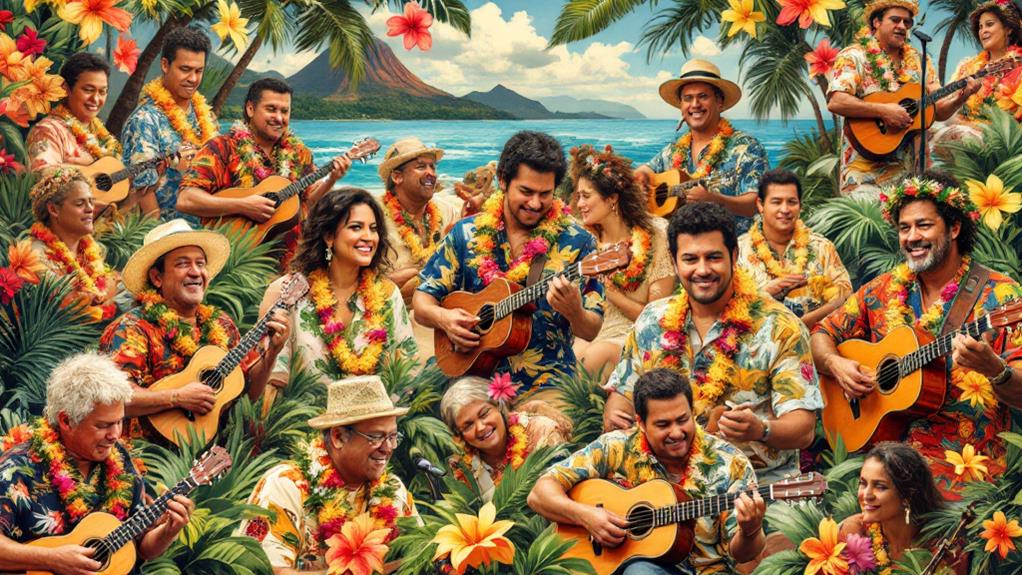
Hawaiian music's rich history is punctuated by influential musicians and composers who've shaped the islands' musical tapestry. You'll find that native Hawaiians, especially royalty, played a consequential role in creating traditional music and Hawaiian songs. King Kalakaua, known as the "Merrie Monarch," composed the state anthem "Hawai'i Ponoi" and the love song "Akahi Hoi." His sister, Queen Liliuokalani, was even more prolific, penning over 160 songs, including the beloved "Aloha Oe," which is often sung in the Hawaiian language.
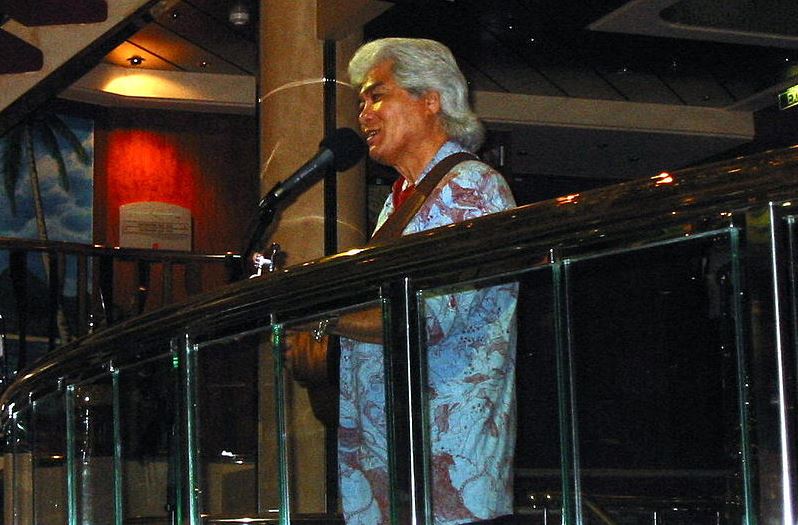
As you investigate Hawaiian music further, you'll encounter slack-key guitar pioneers like Gabby Pahinui, Ledward Kaapana, and Keola Beamer. These artists have substantially influenced the genre's development. In more recent times, Israel Kamakawiwo'ole has become the most famous Hawaiian singer, renowned for his medleys of "Over the Rainbow" and "What a Wonderful World." Contemporary Hawaiian musicians continue to innovate, with artists like Bruno Mars achieving global fame, Jake Shimabukuro revolutionizing ukulele playing, and Amy Hanaiali'i Gilliom preserving traditional styles. These musicians blend elements of hula, traditional music, and modern influences to create a unique sound that resonates worldwide.