What Is the Folklore Behind Gnomes?
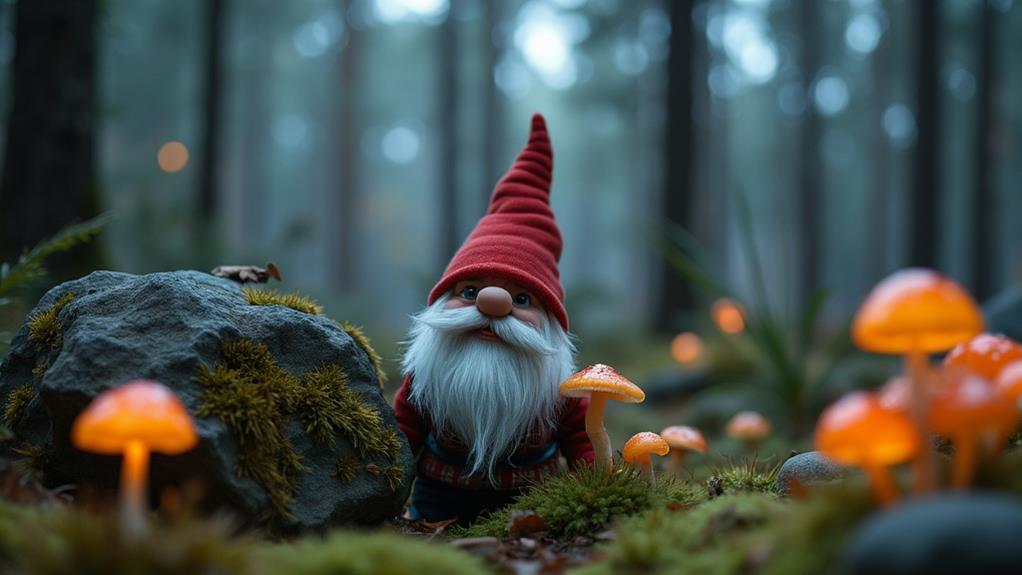
Gnomes are deeply rooted in European folklore, especially in Germanic and Scandinavian traditions. They're portrayed as wise, magical beings living underground, hidden from humans. You'll often hear they protect nature and guard buried riches, ensuring ecological balance. They're small and bearded, sometimes mischievous but always connected to the earth. Over time, gnomes have evolved, showing up as quirky characters in movies and literature, adding a bit of magic and humor. Their enduring charm lies in their roles as guardians of both nature and human homes. Want to uncover more about their storied past and symbolism? Keep exploring.
Origins in European Mythology
Gnomes, those fanciful and diminutive creatures, trace their roots back to European mythology. You'll find that gnome folklore is steeped in ancient stories passed down through generations. In these tales, gnomes are often depicted as wise, magical beings who live underground, hidden from human eyes.
As you explore the rich tapestry of gnome folklore, you'll uncover that these creatures initially appeared in the myths of Germanic and Scandinavian cultures. They were believed to be earth spirits, protectors of the natural world. These ancient stories paint gnomes as guardians of buried riches and keepers of ancient secrets, emphasizing their deep connection to the earth.
The idea of the gnome evolved over centuries, influenced by diverse cultural narratives. In some ancient stories, they were portrayed as mischievous yet benevolent beings who helped humans with their knowledge of the earth's hidden resources. In others, gnomes were seen as more elusive and mysterious, rarely interacting with people.
Guardians of Nature and Treasure
Within the intricate lore of gnomes, it's fascinating to uncover their roles as guardians of nature and wealth. In gnome mythology, these tiny beings are often depicted as nature spirits intimately connected to the earth. You'll find them safeguarding forests, gardens, and wild landscapes, ensuring that the natural world remains balanced and thriving. Their deep-rooted bond with the environment highlights their role as protectors of flora and fauna, often intervening to prevent ecological harm.
Beyond their duties as nature spirits, gnomes are also famed wealth protectors. Folklore tales frequently describe them as the secret keepers of hidden riches, such as gold, gems, and other valuable materials buried deep within the earth. If you ever stumble upon a hidden wealth trove, legends suggest it might be guarded by these diligent beings. They fiercely defend their hoards against those who seek to steal or misuse them, emphasizing their role in preserving not just the riches of the earth, but its intrinsic balance and harmony.
Germanic and Scandinavian Traditions
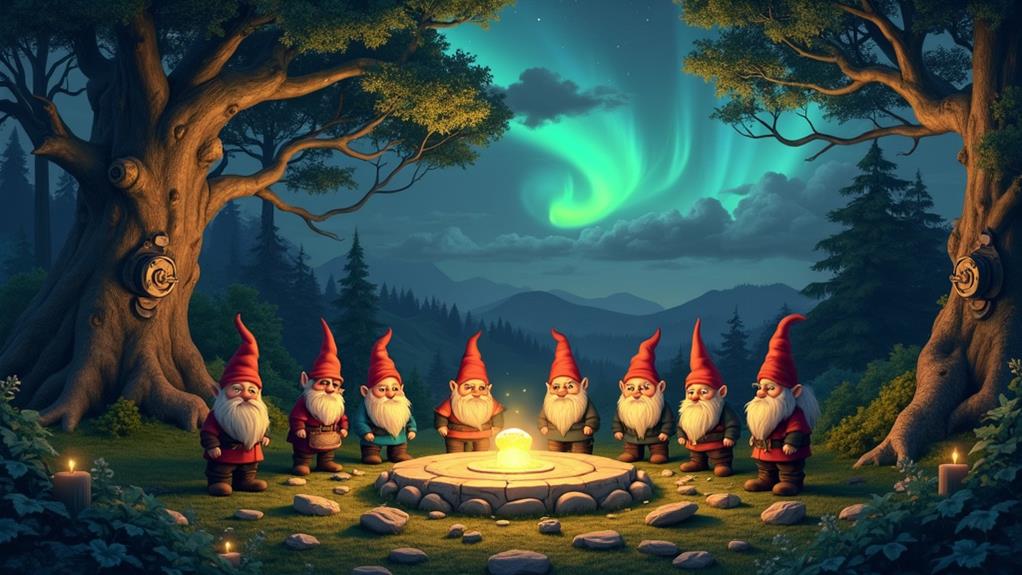
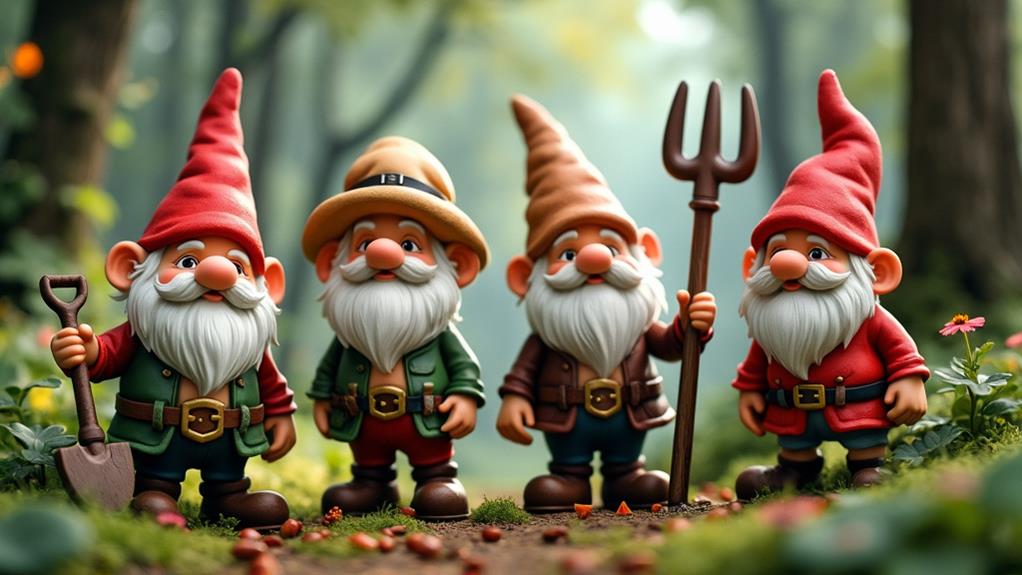
The rich tapestry of Germanic and Scandinavian traditions paints gnomes as integral figures in folklore, deeply woven into the cultural fabric of these regions. You'll find that these traditions describe gnomes as small, bearded beings, often donning pointed hats. They're known for their secretive and mischievous nature, while also being wise and protective of their surroundings. It's believed that gnomes live underground, guarding riches and ensuring the health of the land.
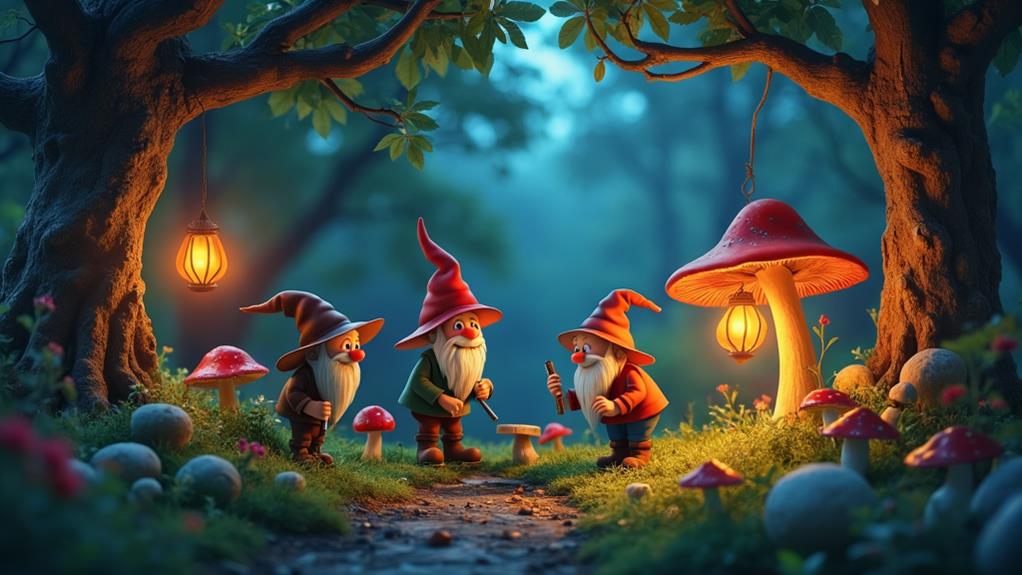
In these traditions, gnomes often serve as protectors of homes and gardens, which is why they've become popular garden decorations. Their presence is thought to bring good luck and prosperity, and they're frequently depicted in diverse poses, from standing watch with a lantern to engaging in playful activities. The gnome characteristics in these decorations, such as their distinctive hats and long beards, reflect their storied past and cultural significance.
Evolution in Modern Culture
Modern culture's fascination with gnomes has greatly transformed them from their traditional roots. Currently, you'll find gnome representation in a variety of popular media, from movies and TV shows to video games and literature. Unlike the solemn, protective spirits from old European folklore, modern gnomes often appear as quirky, fanciful characters, adding a splash of humor and magic to contemporary storytelling.
In popular media, gnomes have taken on new roles and characteristics. For instance, in the "Harry Potter" series, garden gnomes are depicted as pesky creatures that need to be de-gnomed from gardens. On the other hand, movies like "Gnomeo & Juliet" give them a romantic and adventurous twist, blending classic literature with modern animation. Video games also offer diverse gnome representation, from the intelligent engineers in "World of Warcraft" to the mischievous garden gnomes in "The Sims."
You can see how these current portrayals have broadened the cultural scope of gnomes. They're no longer just folklore figures; they've become beloved characters that entertain and resonate with audiences of all generations. This evolution highlights the versatility and enduring appeal of gnomes in the contemporary cultural landscape.
Symbolism and Cultural Impact
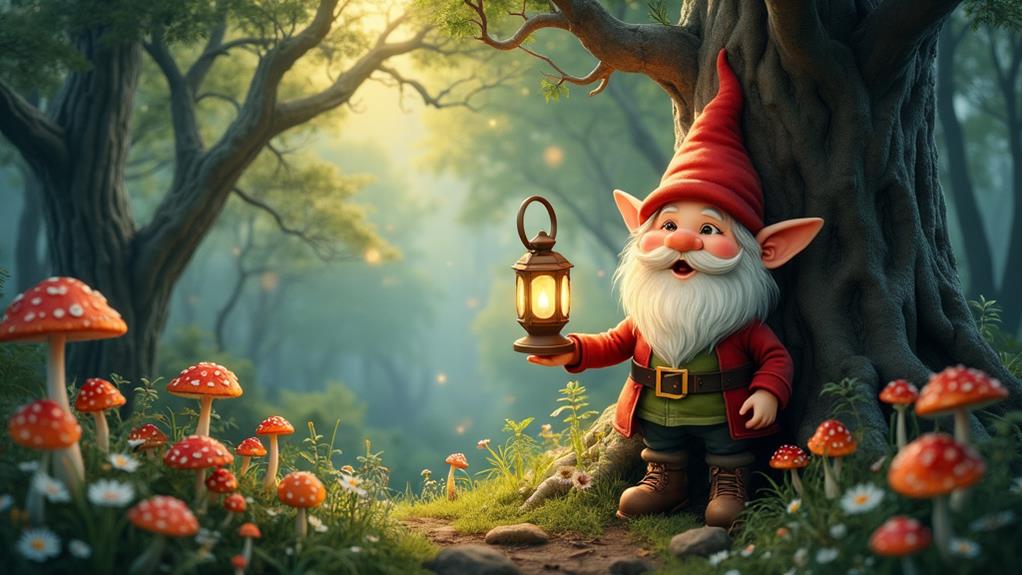
Gnomes have long been rich in symbolism, often representing elements of nature, protection, and wisdom. When you think about gnome symbolism, you're tapping into a deep well of cultural representations that span centuries. These tiny, mystical figures are more than just garden decorations; they're embodiments of complex ideas and emotions.
Consider what gnomes symbolize:
- Nature's Guardians: Gnomes are protectors of the earth, often depicted as caretakers of gardens and forests.
- Wisdom Keepers: Their ancient, wise appearance lends them an air of timeless knowledge.
- Home Protectors: Traditionally, gnomes are seen as protectors of the home and family, warding off evil spirits.
- Mischief and Playfulness: Despite their protective roles, gnomes often bring a sense of whimsy and playfulness.
- Cultural Heritage: Gnomes hold a special place in numerous cultures, symbolizing a connection to folklore and tradition.
Each of these elements makes gnomes powerful symbols in art, literature, and everyday life. They bridge the gap between the human world and the mystical, reminding you of the unseen forces that might just be looking out for you. So next time you see a gnome, think about the rich tapestry of meanings it carries.