What Is the Myth Behind Gnomes?
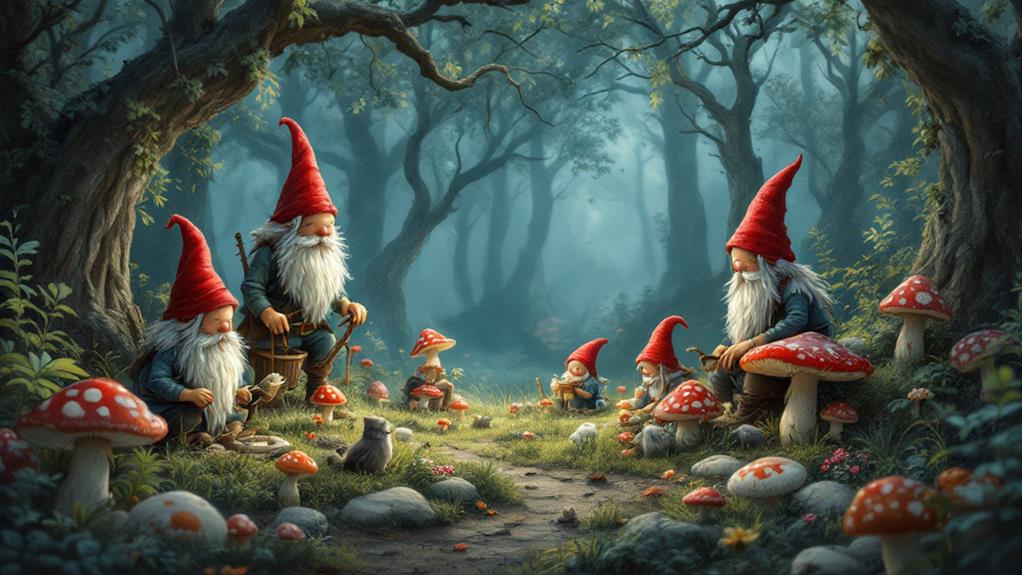
Gnomes are mythical creatures rooted in European folklore, believed to be small, magical beings living underground. They're often represented as bearded, dwarfish figures with extraordinary abilities. In various cultures, gnomes are seen as guardians of nature and treasures, possessing the power to move through earth and bring luck to households. They're said to have immense strength, longevity, and a comprehensive knowledge of the natural world. While modern garden gnomes are decorative, their origins lie in centuries-old legends of mischievous, wise beings protecting the environment. There's more to uncover about these fascinating creatures and their role in different cultures.
Origins of Gnome Mythology
While gnomes are often associated with garden ornaments today, their mythological origins stretch back centuries in European folklore. You'll find that gnomes have deep roots in medieval mythologies, where they were described as dwarfish, subterranean creatures. These earth elementals were believed to dwell beneath the surface, guarding precious minerals and gems.
In these ancient tales, gnomes weren't the cheerful garden decorations you might envision. Instead, they were often portrayed as physically deformed, hunchbacked beings with the extraordinary ability to move through solid earth. You'd be surprised to learn that gnomes were ruled by a king named Gob, who wielded a magic sword and controlled the hidden treasures within the earth.
These mythical creatures were complex figures in European folklore. You'd encounter stories of gnomes being both mischievous and potentially beneficial. They were thought to influence human moods, particularly the melancholic temperament. Households might experience good luck or misfortune depending on their interactions with these enigmatic beings. As you explore gnome mythology, you'll uncover a rich fabric of beliefs that shaped medieval European understanding of the natural world.
Gnomes in Different Cultures
In spite of their common association with garden ornaments, gnomes have diverse representations across various cultures. European folklore paints a rich canvas of gnome mythology, with each region adding its own unique twist to these mystical creatures.
In German folklore, you'll find gnomes known as "Erdmanleins" or "Heinzelmannchen," described as small underground dwellers guarding precious treasures. Scandinavian countries have their own version called "Nisse" or "Nissen," believed to bring good luck to households. Meanwhile, British folklore refers to them as "Nains," often portraying them as mischievous pranksters.
Different types of gnomes are said to have distinct characteristics:
- Forest gnomes: Rarely interact with humans
- Garden Gnomes: Known for telling melancholy tales
- House gnomes: Most knowledgeable about human behavior
You'll find that gnomes in folklore aren't limited to the cheerful Garden Gnome figurines you might be familiar with. Farm gnomes are described as conservative in manner and dress, while dune gnomes are slightly larger and wear drab clothing. This diversity in gnome lore reflects the rich cultural canvas of European folklore and its enduring influence on modern interpretations of these mythical beings.
Physical Attributes of Gnomes
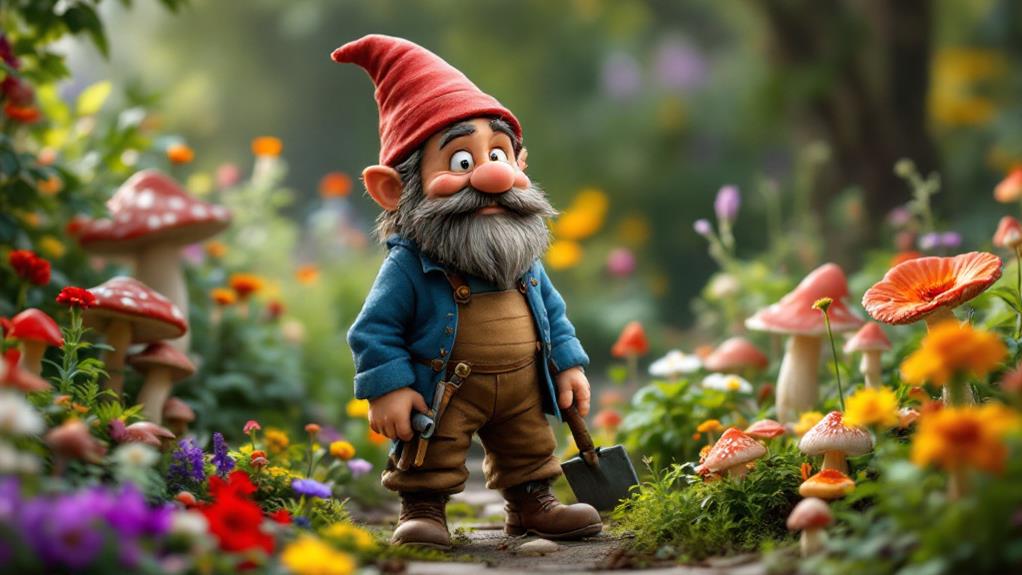
As we shift our focus to the physical attributes of gnomes, you'll find their appearance is as varied as their cultural representations. Traditionally, gnomes are described as dwarfish creatures with distinct physical features. You'll often hear them portrayed as having hunchbacks, giving them a somewhat deformed appearance. This unique physique contributes to their mystical and otherworldly nature.
Despite their small stature, gnomes possess extraordinary abilities. They're said to move through solid earth as effortlessly as fish swim through water, making them elusive and mysterious. This trait aligns with their reputation as guardians of underground treasures and mines.
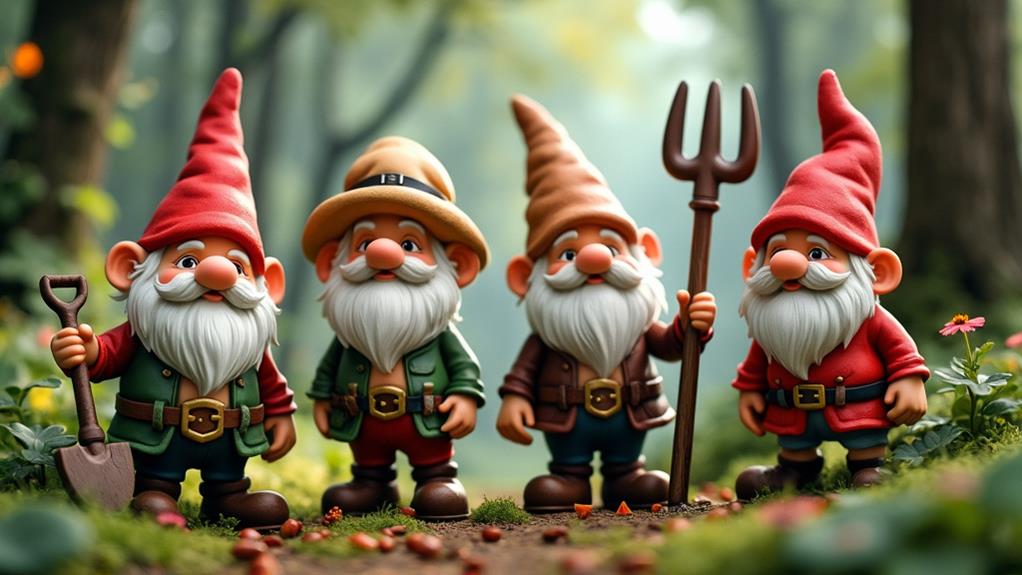
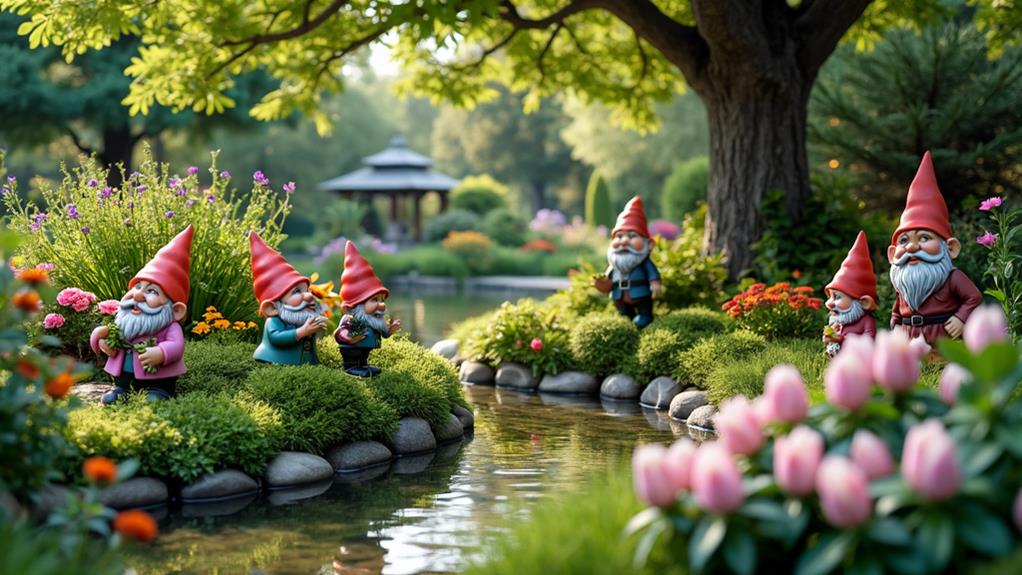
While folklore sometimes depicts gnomes as child-eating giants, you're more likely to encounter them as mischievous beings with quick tempers. In modern times, you've probably seen gnome garden ornaments, which have become popular decorative elements. These garden gnomes often reflect the traditional image of small, bearded figures with pointy hats. People place them in their gardens believing they bring good luck and protection. So, next time you spot a gnome garden statue, remember the rich mythology behind these intriguing creatures.
Magical Powers and Abilities
Throughout history, gnomes have been attributed with an array of magical powers and abilities that set them apart from ordinary creatures. These mythical beings, first described by the Swiss alchemist Paracelsus, are thought to possess extraordinary capabilities that make them both fascinating and formidable.
You'll be amazed to learn that gnomes are believed to possess magical powers that allow them to move through solid earth as effortlessly as fish swim through water. Their strength is said to be seven times that of a human, and their eyesight surpasses even that of a hawk. These abilities make them exceptional guardians of the earth's hidden treasures.
Gnomes' magical prowess extends beyond their physical attributes:
- They're skilled gem cutters and jewelers, able to unearth and craft precious stones with unparalleled skill.
- They have the power to eliminate evil and bring happiness and prosperity to households.
- Their longevity is remarkable, with legends suggesting they can live up to 400 years.
You might find it endearing that these magical beings greet each other with a traditional nose rub, a charming custom that adds to their mystique and allure.
Gnomes as Nature Guardians
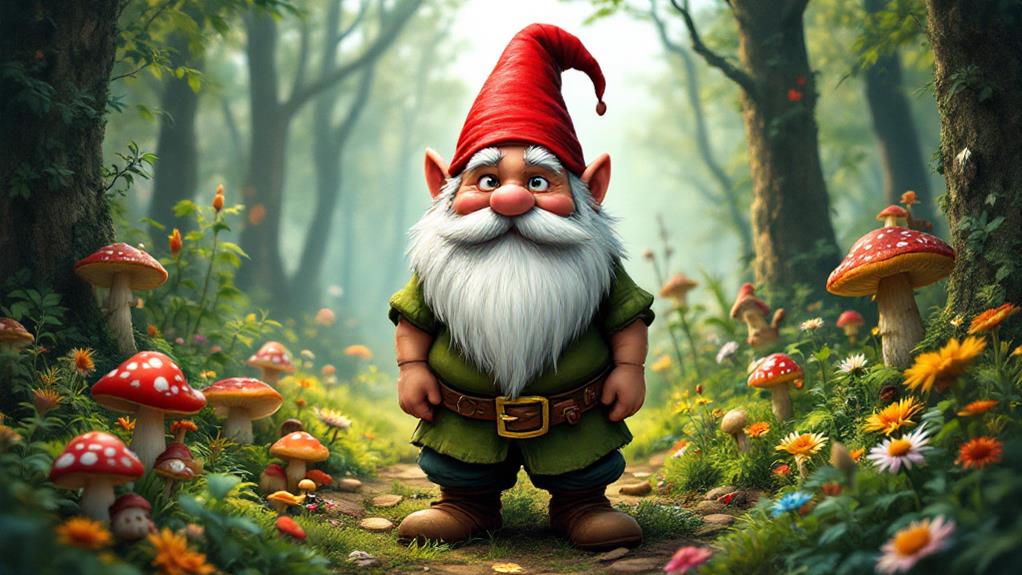
Beyond their magical abilities, gnomes play a critical role as guardians of nature. These diminutive beings are deeply connected to both the material and spiritual aspects of the environment, embodying the unseen forces that maintain the natural world's balance. Living underground, gnomes are believed to possess extensive knowledge of the earth's secrets, including the locations of hidden treasures and precious resources. Gnomes were believed to have magical powers to protect, punish, or reward people, reflecting their importance in European folklore.
You'll find that gnomes aren't just the decorative garden gnomes you might be familiar with. In folklore, they're portrayed as wise, ancient creatures with a weighty understanding of the natural world. They act as stewards of the environment, protecting it from exploitation and abuse. If you disrespect or misuse natural resources, legend has it that gnomes will punish you for your actions.
The symbolism of gnomes as nature guardians reflects the importance of environmental preservation in many cultural and spiritual traditions. Their role reminds us of our responsibility to manage resources wisely and respect the earth. By embodying the hidden knowledge and forces of nature, gnomes serve as a powerful reminder of the need for sustainable practices and environmental stewardship.
Garden Gnomes: Fact Vs Fiction
Separating fact from fiction when it comes to garden gnomes can be quite a challenge. While many associate these figurines with magical Forest Gnomes or House Gnomes, their origins are rooted in reality. Garden gnomes first appeared as Italian hunchbacks or dwarves in 17th century Europe, evolving into an art form and popular lawn decoration.
The facts about garden gnomes might surprise you:
- Mass production began in Germany in the 1870s, not in some enchanted forest.
- After World War II, German production declined, with China and Poland becoming major manufacturers.
- The "traveling gnome prank" only gained national attention in 2005, despite seeming like an age-old tradition.
Renaissance period saw shift in perception, influenced by alchemist Paracelsus, who described gnomes as elemental earth spirits guarding hidden treasures. Today's garden gnomes range from traditional figures to exclusive and funny designs, like Gottfried the Gigantic Garden Gnome Statue. While they may not possess magical powers, these whimsical sculptures continue to allure homeowners and pranksters alike. The enduring popularity of garden gnomes demonstrates how a simple decorative item can transform into a cultural phenomenon, blurring the lines between myth and reality in our gardens and imaginations.
Modern Interpretations of Gnome Lore

Modern interpretations of gnome lore have transfigured these mythical creatures into pop culture icons. You'll find these little men popping up in various forms of media, often portrayed as fanciful and mischievous guardians of nature and its hidden treasures. Their popularity has grown exponentially, with garden gnome statues becoming ubiquitous decorative items in homes and yards around the world.
The internet age has given rise to new gnome-related trends, such as the "traveling gnome" prank, where people "kidnap" garden gnomes and share photos of their escapades online. In fantasy literature and children's stories, gnomes are frequently illustrated as skilled craftspeople and engineers, capable of moving through earth with ease and possessing strength many times stronger than their small stature suggests.
Modern interpretations have also maintained the gnomes' complex role in folklore, associating them with both good luck and misfortune for households. This duality reflects their ambiguous nature in mythology. As gnome lore continues to evolve, these creatures remain a fascinating blend of traditional beliefs and contemporary imagination, enthralling people's interest and sparking creativity in various forms of media and art.