What Is the Significance of Garden Gnomes?
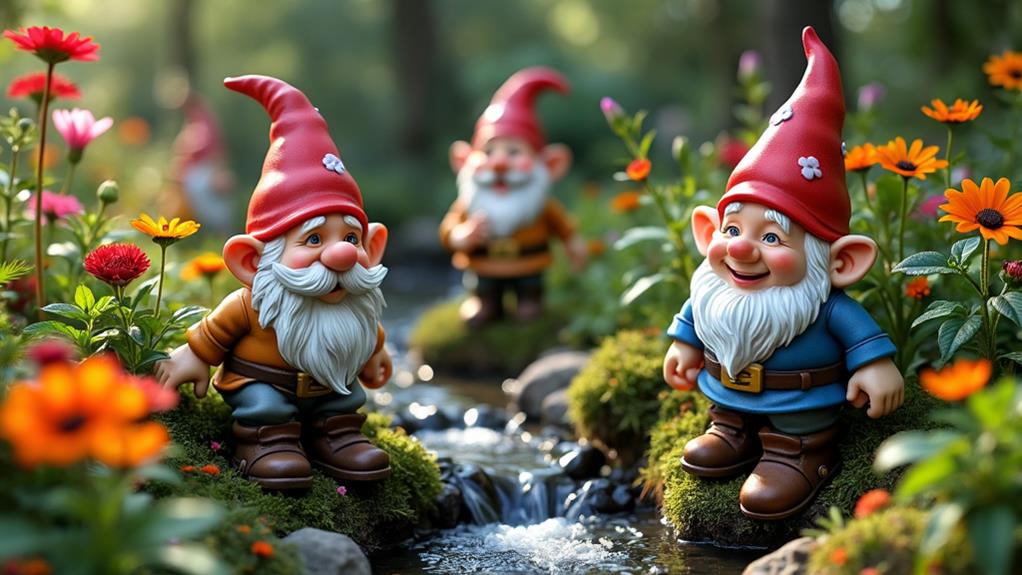
Garden gnomes hold significance as charming symbols of protection and luck in gardens. Originating from 19th-century German folklore, they were crafted to guard buried riches and ward off evil spirits. These gnomes evolved from serious clay figures to fanciful, colorful characters that bring personality to outdoor spaces. They represent hard work, resourcefulness, and are believed to invite prosperity and positive energy to your garden. Modern gnomes come in varied styles and materials, reflecting personal tastes and cultural heritage. Want to know more about how gnomes have become both a tradition and a creative expression? Keep going!
Origins and History
Tracing the origins and history of garden gnomes offers a captivating glimpse into their cultural significance. You might be surprised to learn that these charming figures have roots in German folklore. Initially, gnomes were mythical creatures believed to protect valuables buried in the earth. Over time, they shifted from folklore to become popular garden decorations.
In the 19th century, German artisans began crafting these figures, turning them into the garden gnomes we recognize today. Their careful attention to detail and skilled craftsmanship brought these mythical creatures to life. Each gnome was handcrafted, often from clay or terracotta, ensuring that no two were exactly alike.
As you explore further, you'll find that garden gnomes were not just fanciful enhancements but also reflections of the artisan's skill. The intricate designs and lively colors made them stand out, turning gardens into enchanted spaces. These gnomes soon spread across Europe, eventually making their way to gardens worldwide.
Understanding this history helps you appreciate the garden gnome's path from German folklore to a beloved garden decoration. Their enduring appeal lies in the blend of mythical lore and artisan craftsmanship, making them timeless garden companions.
Symbolism and Beliefs
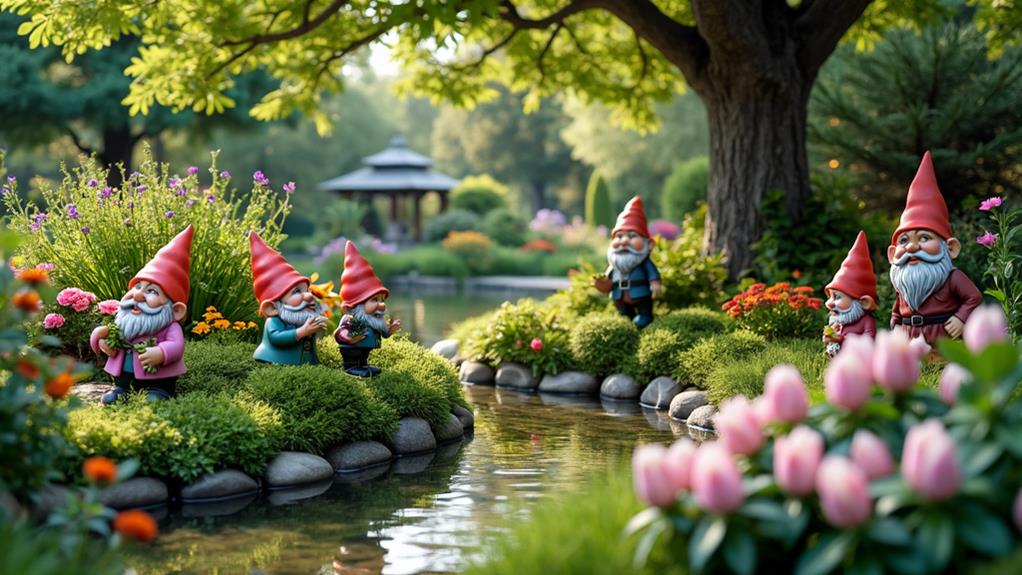
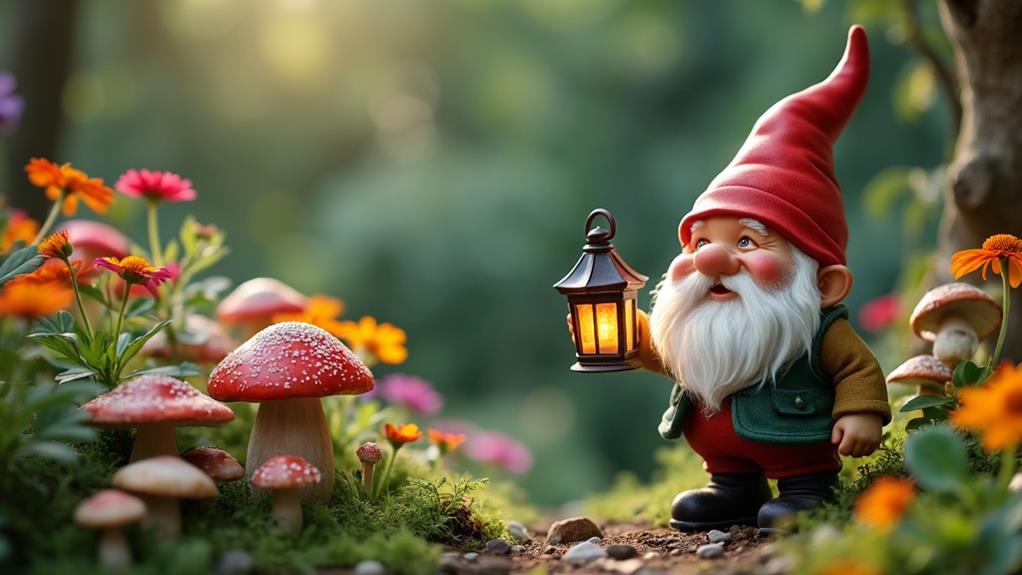
When delving into the symbolism and beliefs surrounding garden gnomes, you quickly realize they're more than just decorative figures. These small statues, often depicted with pointy hats and bushy beards, serve as protection symbols in your garden. They're believed to safeguard your space from evil spirits and unwanted intruders. By placing a gnome in your garden, you're inviting a guardian to watch over your plants and home.
Additionally, garden gnomes are considered luck charms. Many people believe that gnomes bring good fortune and prosperity. By situating them among your flowers and shrubs, you're not just adding whimsy but also a bit of magic that could improve your life. Some even think gnomes help plants grow better, acting as unseen caretakers.
In folklore, gnomes are often depicted as hardworking and resourceful beings. This image reinforces their role as protectors and bringers of luck. When you add a garden gnome to your outdoor space, you're participating in a tradition that spans centuries, embracing both their protective qualities and their ability to attract positive energy. So, the next time you see a garden gnome, remember its deeper significance.
Evolution Over Time
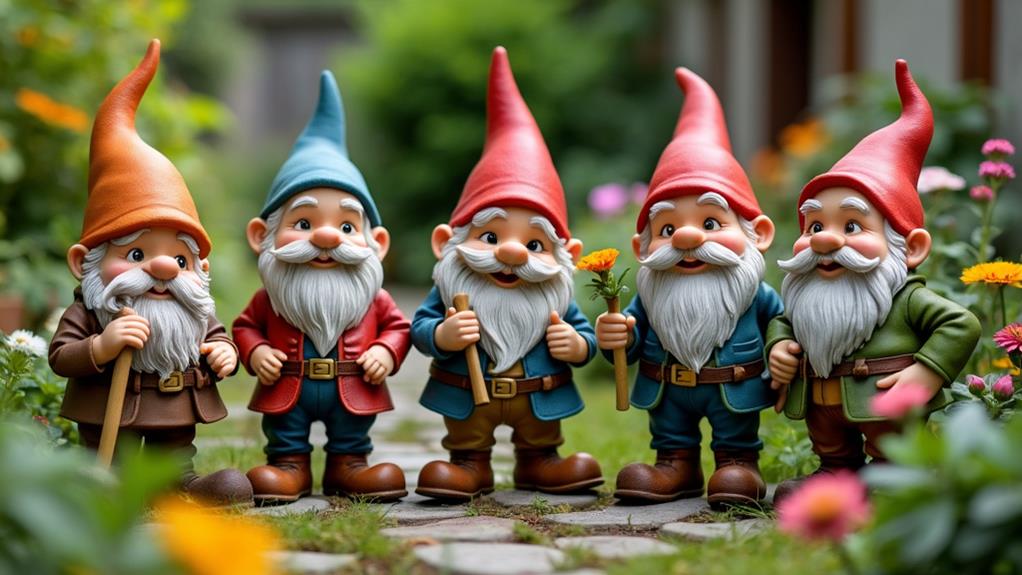
Garden gnomes haven't always looked like the fanciful figures we see today. Early gnomes, dating back to 19th-century Germany, were primarily crafted from terracotta and were often more lifelike and serious in appearance. These initial designs reflected a more somber and traditional aesthetic, aimed at resembling the mythical gnome figures steeped in folklore.
Over time, design variations emerged as artisans experimented with different material choices. By the mid-20th century, plaster and, eventually, plastic became popular, allowing for mass production and greater accessibility. This shift also paved the way for more playful and colorful designs, transforming garden gnomes into the cheerful, sometimes humorous, characters that are widely recognized today.
Modern gnomes come in countless styles, from classic looks to themed variations, such as holiday or sports-themed gnomes. The choice of materials has also expanded to include resin, which offers durability and intricate detailing. These changes reflect a broader trend toward personalization and creativity in garden decor.
You can spot gnomes with different postures, accessories, and even facial expressions, showcasing a rich evolution from their more uniform ancestors. This progression of transformation highlights the adaptability and enduring charm of garden gnomes through the years.
Cultural Impact
Far beyond their fanciful appearance, garden gnomes have woven themselves into the cultural fabric of many societies. When you see these charming figures, you're not just looking at mere decorations; you're witnessing cultural representations that have spanned generations. Each gnome often tells a story, reflecting local folklore, traditions, and even the artistic expressions of the communities they come from.
In many cultures, gnomes symbolize protection and good luck. You'll find them in different artistic expressions, regardless of whether in literature, films, or even music. They capture imaginations and become part of larger narratives that speak to communal values and beliefs. When you place a gnome in your garden, you're participating in a form of cultural storytelling that connects you to a broader historical and societal context.
Moreover, gnomes often serve as a canvas for artists, allowing for creative interpretations that can differ widely from one region to another. This makes them not only cultural artifacts but also dynamic elements of artistic expression. By appreciating garden gnomes, you're recognizing their role in cultural continuity and the rich tapestry of human creativity.
Modern Interpretations

Although garden gnomes have deep cultural roots, their modern interpretations have taken on new dimensions. You'll find that today's garden gnomes are much more than just protectors of the garden. They've evolved to match contemporary trends, showcasing fanciful designs that provide a touch of personality and humor to your outdoor space.
In the past, gnomes were primarily seen as symbols of good luck and guardianship. Nowadays, you'll notice that they come in a variety of styles and themes. From gnomes dressed as your favorite superheroes to those engaged in cheeky activities, the options are endless. These modern twists make gnomes a fun and unique enhancement to any garden, reflecting your personal taste and sense of humor.
Contemporary trends also lean towards eco-friendly materials and sustainability. So, you might find garden gnomes crafted from recycled materials or designed to be environmentally friendly. This shift not only makes them more appealing but also aligns with the growing awareness of environmental responsibility.