What Is the Superstition About Garden Gnomes?
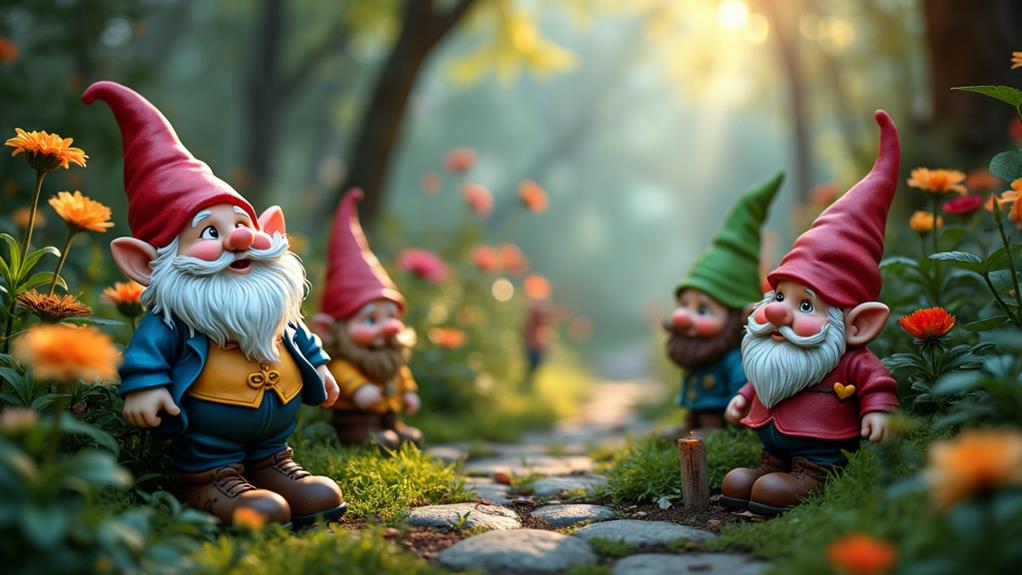
You might be curious about garden gnomes and their superstition. These charming figures, originating in 19th century Germany, are believed to bring good luck and protect gardens. Rooted in European folklore, gnomes symbolize wisdom, fertility, and prosperity. Placing a gnome in your garden is thought to ward off evil spirits and guarantee thriving plants by acting as guardians. They're also seen as custodians of buried riches and valuable protectors. So, adding one to your garden might not only enhance aesthetics but bring a touch of ancient tradition and luck. There's more to uncover about their fascinating history and significance.
Origins of Garden Gnomes
Garden gnomes, those fanciful little figures found in many yards, have a fascinating origin that dates back to the 19th century in Germany. Initially, these charming statues were believed to bring good luck and protection to gardens. You might find it intriguing that gnome history began with the creation of small, handmade terra-cotta figures. These early gnomes were crafted by skilled artisans who took pride in their detailed work.
As gnomes gained popularity, they became a staple in garden traditions. People believed that these little guardians would watch over their plants, ensuring their growth and prosperity. You can trace their widespread appeal to the 1840s when they started appearing in English gardens, thanks to Sir Charles Isham. He imported them from Germany, sparking a trend that continues today.
Over time, garden gnomes evolved in design and material, but their core purpose remained the same. They're symbols of good fortune and protection, deeply rooted in garden traditions. When you place a gnome in your garden, you're not just adding decoration; you're participating in a rich history that spans centuries and cultures.
European Folklore Influence
How did garden gnomes become such beloved fixtures in our yards? You can trace their charm back to European folklore, where gnome mythology and gnome legends have deep roots. These small, human-like creatures were thought to inhabit the earth and protect hidden riches, making them symbols of good luck and guardianship.
In gnome mythology, these beings were often depicted as wise and secretive, living underground or in secluded forests. You'd find stories of gnomes offering protection and assistance to those who respected nature. This portrayal made them endearing figures, embodying a mysterious yet friendly presence.
Gnome legends vary across different European cultures. In Germany, for instance, gnomes were considered hardworking miners and caretakers of the earth. In Scandinavian folklore, they were known as "nisse" or "tomte," and were believed to bring good fortune to households, especially during the winter months. These tales have been passed down through generations, solidifying the gnome's place in popular imagination.
Symbolism and Meanings
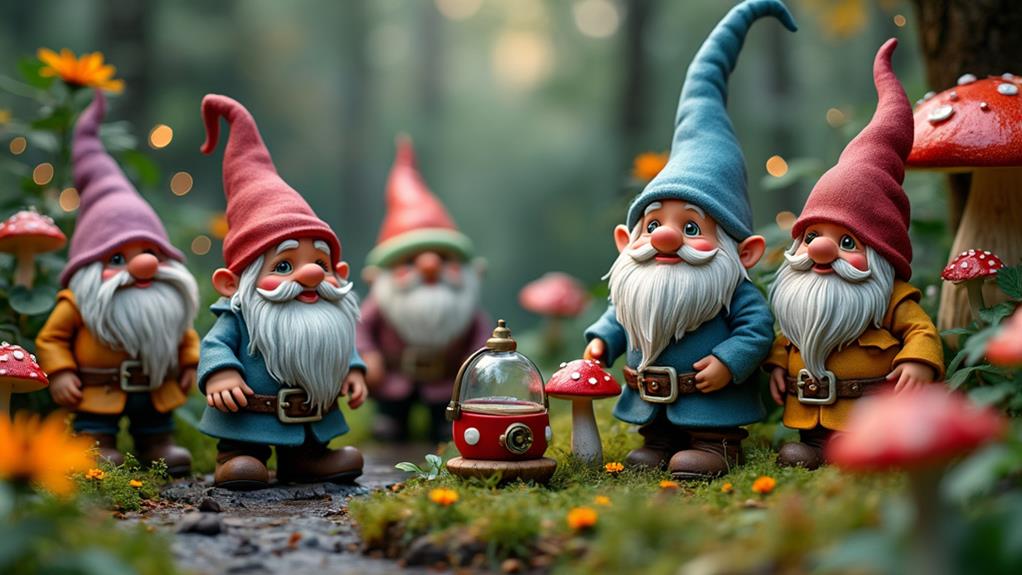
Embracing their fanciful nature, garden gnomes carry rich symbolism and varied meanings that have evolved over time. As you place these playful figures in your garden, you're not just adding to the garden aesthetics but also tapping into deep-rooted gnome symbolism. These tiny guardians have long been associated with good fortune, prosperity, and earth's fertility.
- Good Fortune: Many believe that garden gnomes bring luck and happiness to your household. They're seen as talismans that ward off misfortune.
- Prosperity: Traditionally, gnomes were thought to protect buried riches and valuables, symbolizing wealth and abundance.
- Earth's Fertility: Gnomes are also connected to the earth and its natural bounty. By placing them in your garden, you're inviting the flourishing of plants and flowers.
Understanding these symbols can add a deeper layer of appreciation for your garden decor. Instead of seeing gnomes merely as cute ornaments, recognize them as bearers of these enduring beliefs. Regardless of how you view them as protectors or symbols of prosperity, their presence amplifies the mystical charm of your garden, blending folklore with garden aesthetics seamlessly.
Protective Powers Belief
While often overlooked, the belief in the protective powers of garden gnomes runs deep in folklore and tradition. You might be surprised to know that these charming little figures are more than just cute decorations. They're considered powerful guardians, watching over your garden and home. This gnome guardianship stems from ancient folklore protection, where gnomes were thought to be magical beings with the ability to ward off evil spirits and misfortune.
In many cultures, people believed that placing a gnome in your garden would guarantee it thrived, shielding it from pests and bad weather. These small, bearded protectors were seen as vigilant custodians, tirelessly working to maintain the balance and harmony of the natural world around them. When you place a garden gnome on your property, you're not just adding a fanciful touch; you're invoking centuries-old traditions that speak to a deep-seated belief in their protective powers.
Good Luck Charms
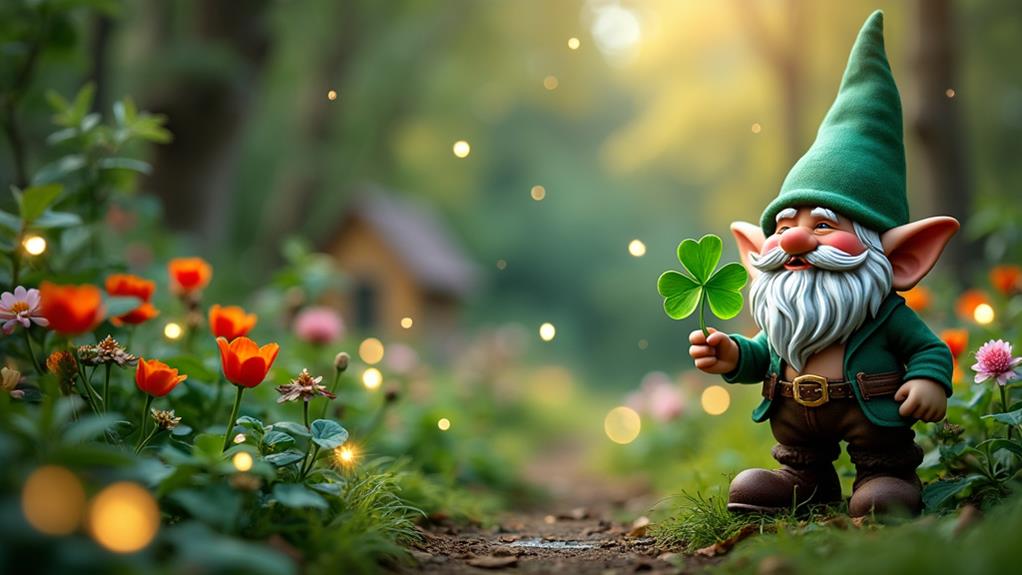
Many people believe that garden gnomes bring good luck to their homes and gardens. This belief isn't just fanciful; it has roots in gnome history and garden aesthetics. When you place a gnome in your garden, you're inviting a symbol of fortune and prosperity into your life.
- Ancient Origins: Gnomes have been depicted in folklore as earth-dwelling creatures with the power to protect and bring good luck.
- Personal Touch: Adding gnomes to your garden improves its aesthetics, creating a charming and welcoming atmosphere.
- Symbol of Prosperity: Gnomes are often associated with wealth and well-being, making them popular good luck charms.
Incorporating gnomes into your garden isn't just about decor; it's about embracing a tradition that spans centuries. By understanding gnome history, you can appreciate the deeper meanings behind these adorable figures. They're not just cute; they're believed to have a magical influence that works in your favor. So, next time you're thinking about improving your garden aesthetics, consider adding a gnome or two. You might just find that they bring a little extra luck into your life.
Gnomes in Modern Culture
How have garden gnomes evolved from folklore to modern-day icons? You might be surprised to learn that these fanciful figures have come a long way. Originally, gnomes were believed to be protectors of the earth, deeply rooted in European folklore. Today, their presence extends far beyond gardens, infiltrating multiple aspects of pop culture and modern life.
Gnome aesthetics have become incredibly diverse. You'll find gnomes sporting everything from traditional pointed hats and beards to quirky outfits and accessories that reflect contemporary trends. This evolution highlights their versatility and ability to adapt to cultural shifts. In movies, TV shows, and even commercials, gnomes are often portrayed as charming or mischievous characters, adding a layer of humor and playfulness to their cultural representations.
Moreover, gnomes have become symbols in various social and artistic movements. People use them in creative projects, memes, and even as mascots for events. Their widespread appeal lies in their ability to be both timeless and adaptable. So, the next time you spot a garden gnome, remember: it's not just a decorative piece. It's a cultural icon that's continually evolving with the times.
Popularity in Gardening
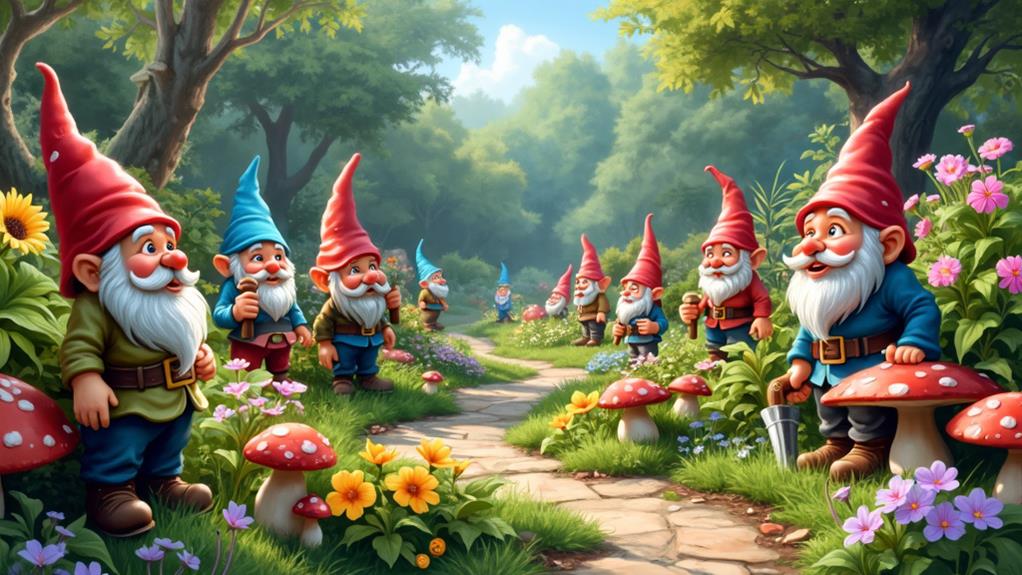
The popularity of garden gnomes in gardening has surged, transforming these fanciful figures into beloved staples of outdoor decor. You've likely noticed how these charming little statues have become a crucial part of many gardens, bringing a playful touch to diverse landscaping designs.
Garden gnomes aren't just about decoration; they've become a significant part of gardening trends. Many people believe that gnomes bring good luck and protect their gardens from pests and other misfortunes. Their delightful presence can make your garden feel more inviting and add a sense of personality to your outdoor space.
Consider these reasons why garden gnomes have captured the hearts of gardeners:
- Versatile Gnome Aesthetics: Regardless of whether you prefer a classic gnome with a red hat and beard or a modern, sleek design, there's a gnome to match every garden style.
- Conversation Starters: Gnomes often become the focal point of garden tours, sparking conversations and delighting visitors.
- Easy to Incorporate: Gnomes fit seamlessly into diverse garden settings, whether positioned among the flowers or standing guard at the garden gate.
Regional Superstitions
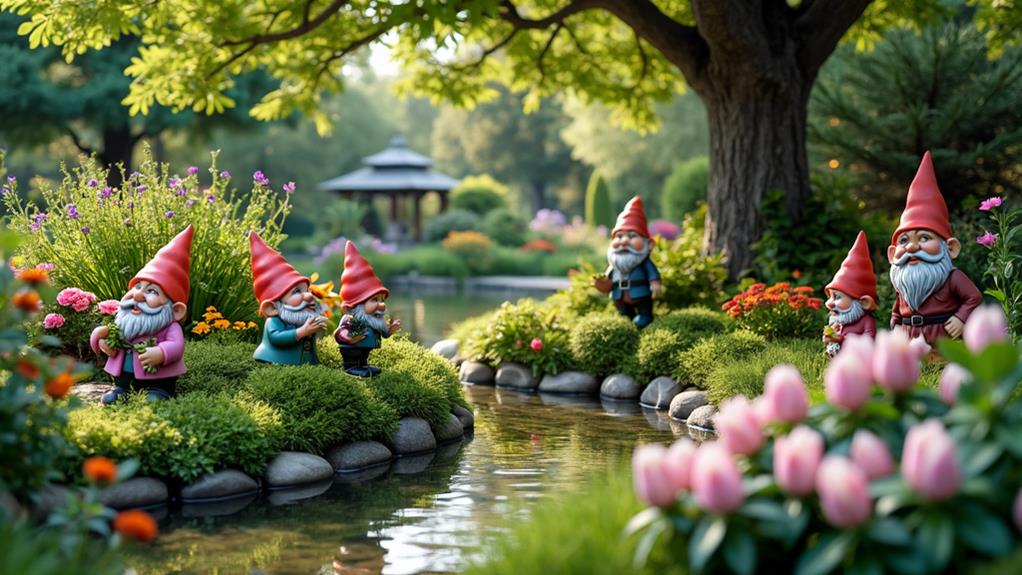
Belief in garden gnomes varies widely across different cultures, adding layers of intrigue and charm to these miniature statues. In Germany, where gnomes originated, local beliefs hold that these creatures protect gardens by warding off evil spirits and bringing good luck. You'll find gnome variations with red hats and long beards, signifying wisdom and kindness.
Travel to Ireland, and the folklore shifts. Here, gnomes are often confused with leprechauns, known for their mischievous nature. The local beliefs suggest placing gnomes near water sources to attract good fortune and ward off bad luck. You might encounter gnome variations with green attire, blending seamlessly with the lush Irish landscape.
In Scandinavian countries, gnomes, or "nisse," are believed to be household spirits. The local beliefs here are that these gnomes protect the home and garden, especially during the winter months. They're often depicted with woolen clothes and pointed hats, symbolizing their role as guardians.
Each cultural twist gives you a unique perspective on how these tiny guardians are revered globally. Regardless of protection, luck, or mischief, local beliefs and gnome variations add a rich tapestry of folklore to your garden's narrative.
Gnomes in Literature
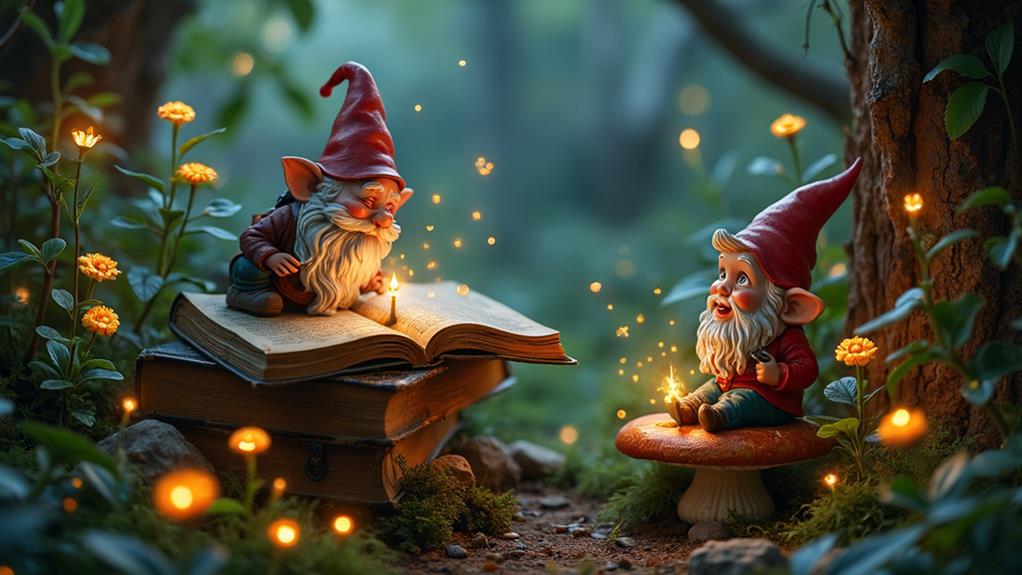
Investigate the domain of literature, and you'll find garden gnomes frequently popping up as fanciful characters or symbolic figures. These tiny beings often embody the essence of folklore, bringing a touch of magic to the pages they inhabit. Gnomes in literature can serve different roles, from wise guardians to mischievous tricksters, enriching the stories with layers of intrigue.
One notable aspect of gnome characteristics in literature is their varied personalities. Some gnomes are depicted as wise, old beings with deep knowledge of nature, while others are playful and love to engage in harmless pranks. Their small stature and unique attire, typically including pointy hats and colorful clothes, make them instantly recognizable.
Gnome adventures are another enchanting element. These tales often revolve around their secret lives, hidden from human eyes but lively with activity. You'll find them:
- Embarking on epic quests to protect their enchanted domains.
- Solving riddles and puzzles that stump even the sharpest minds.
- Interacting with other mythical creatures, enhancing the story's magical landscape.
Engaging in these stories, you can see why gnomes hold a special place in the literary world, offering both charm and mystery.
Collecting Gnome Statues
Moving from the enchanting stories of gnomes in literature, you'll find a tangible way to bring that magic into your own space by collecting gnome statues. Each gnome statue you choose can reflect your personal style, regardless of whether you're drawn to classic designs or fanciful creations. Gnome aesthetics vary widely, from traditional gnomes with pointy hats and long beards to modern interpretations with quirky personalities and lively colors.
When starting your collection, consider the gnome materials. Classic gnomes are often crafted from terracotta or clay, giving them a rustic, earthy feel. Resin and plastic gnomes provide more durability and are perfect for outdoor displays, resisting weather elements like rain and sun. For a touch of sophistication, you might opt for gnomes made of metal or stone, which can serve as elegant garden centerpieces.
Don't forget the joy of finding unique pieces. Thrift stores, garden centers, and online marketplaces can be goldmines for expanding your collection. Every new statue adds a layer of charm and enchantment to your garden or home, making it a delightful reflection of your love for these magical creatures.