What Kind of Music Is Played at a Luau? the Soundtrack to Hawaii’s Celebrations
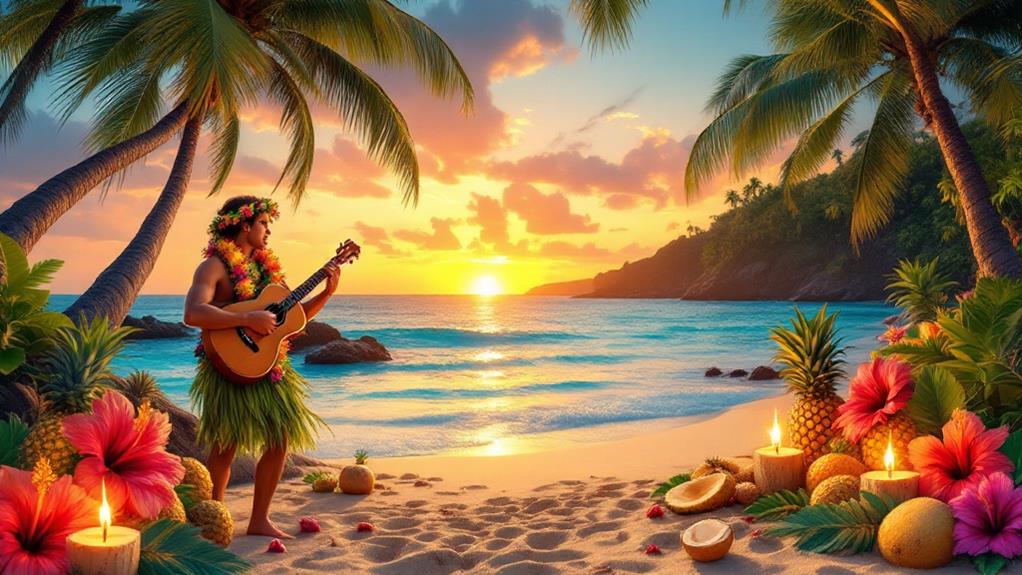
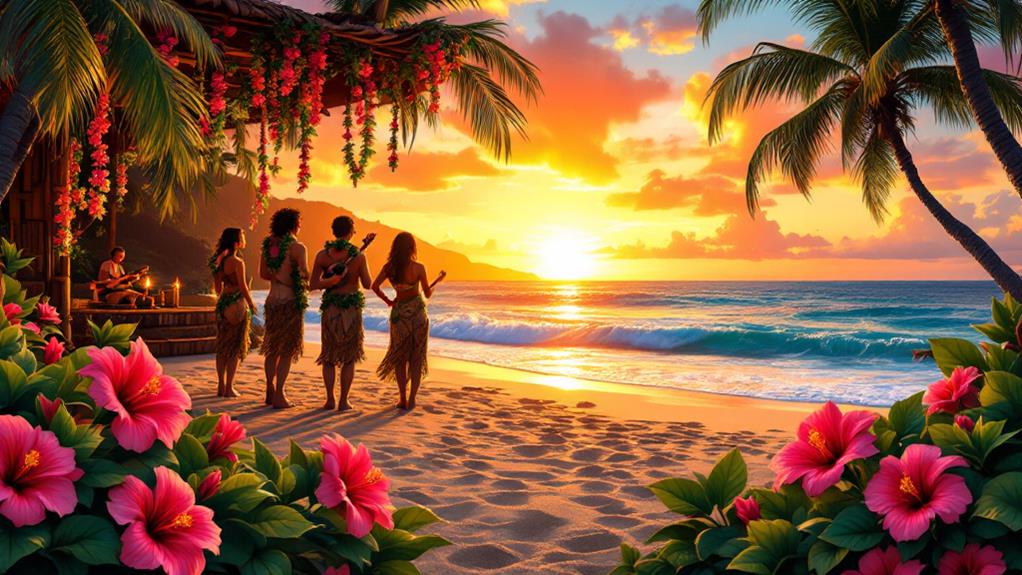
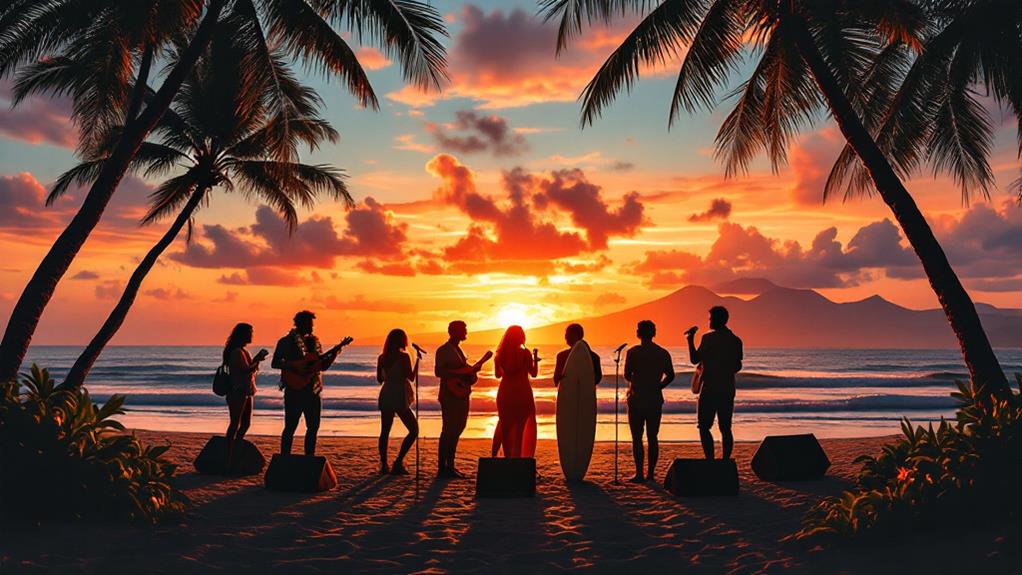
At a luau, you'll hear a vibrant mix of traditional and modern Hawaiian music. Ancient chants and hula rhythms blend with contemporary island pop and reggae. The soundtrack features iconic instruments like the ukulele, pahu drum, and slack-key guitar. You'll enjoy classic artists like Don Ho alongside emerging talents like Makana. Gentle ukulele strums, rhythmic pahu beats, and melodic slack-key guitar create a warm, inviting atmosphere. Songs often tell stories of Hawaiian culture, legends, and natural beauty. From traditional hula accompaniments to Disney-inspired tunes, luau music captures the essence of Hawaii's rich musical heritage. Plunge deeper to uncover the full spectrum of this engrossing musical tradition.
Traditional Hawaiian Instruments
When you attend a luau, you'll likely encounter a variety of traditional Hawaiian instruments that create the unique soundscape of the islands. One of the most prominent instruments you'll hear is the pahu, a deep-voiced drum with a shark-skin drumhead. This staple of Hawaiian music provides the rhythmic foundation for many traditional songs and dances.
Another percussion instrument you might see is the ipu, a gourd-like drum that's played by hitting a horizontal surface or the palm of the hand. It adds a distinctive hollow sound to the music, complementing the pahu's deeper tones. The small, four-stringed ukulele is another iconic Hawaiian instrument, representing the relaxed, island lifestyle and music.
You'll also notice the uliulia, a rattle made from a gourd filled with beads or seeds. This instrument is often used in hula dances, adding a gentle shaking sound to the performance. Other percussion instruments you might encounter include the puili, a bamboo rattle struck upon the shoulders or other puili by hula dancers, and the ili ili, smooth stones used as castanets. These instruments work together to create the rich, layered rhythms that are characteristic of traditional Hawaiian music, immersing you in the islands' lively culture.
Ancient Chants and Hula Music
The heartbeat of Hawaiian music goes beyond its instruments, reaching deep into the islands' spiritual and cultural roots. Ancient chants, known as mele, and hula music form the foundation of traditional Hawaiian musical expression. These sacred art forms have been used for centuries to preserve history, honor the land, and celebrate the islands' natural beauty.
When you attend a luau, you'll likely hear echoes of these ancient traditions in the music. Hula, a revered dance form, is often accompanied by chants and rhythmic instruments like pahu drums and ipu gourds. These performances aren't just entertainment; they're a window into Hawaii's rich cultural heritage.
As you listen, imagine:
- Barefoot dancers swaying to the rhythm of pahu drums
- Melodic chants telling stories of ancient Hawaiian gods
- Hands gracefully mimicking the movement of waves and wind
- Colorful lei and traditional costumes adorning the performers
The influence of ancient chants and hula music extends beyond traditional performances. You'll find their rhythms, vocal styles, and spiritual essence woven into contemporary Hawaiian music, creating a unique sound that continues to evolve while honoring its roots.
Modern Hawaiian Music Genres
Modern Hawaiian music's developing soundscape blends traditional roots with contemporary influences, creating a diverse fabric of genres you'll likely encounter at a luau. As you sway to the rhythms, you'll experience the unique fusion of styles that define Hawaii's musical landscape.
At the heart of this evolution is the slack-key guitar, a finger-picking technique that's become central to many Hawaiian songs. You'll hear its distinctive sound weaving through various genres, from traditional folk to more modern interpretations. Queen Liliuokalani's exceptional musical talents have also left an indelible mark on Hawaiian music, with her renowned compositions like "Aloha Oe" being cherished across the islands.
Hawaiian reggae might catch your ear with its laidback island vibe, combining local themes with reggae's signature rhythms. It's a far cry from the Beach Boys' surf rock, but equally mesmerizing. Island pop offers a more mainstream sound, fusing contemporary production with Hawaiian melodies and cultural references. This genre often appeals to a wider audience while still maintaining its island roots.
For those seeking a more traditional experience, Hawaiian folk music preserves ancient vocal styles and instrumentation while incorporating modern songwriting techniques. This blend of old and new guarantees that the spirit of Hawaii's musical heritage, including the timeless allure of artists like Israel Kamakawiwo'ole, lives on in today's celebrations.
Popular Luau Songs
Ever wondered what songs truly capture the essence of a luau? From classic Hawaiian melodies to contemporary island tunes, the soundtrack of these vivid celebrations is as diverse as it is enchanting.
You'll likely hear favorite Hawaiian artists like Don Ho, The Brothers Cazimero, and Makaha Sons, whose timeless songs have become luau staples. These artists blend traditional ukulele and slack-key guitar with soulful vocals, creating a sound that's quintessentially Hawaiian.
Modern luaus also embrace emerging talent. Artists like Makana, Hapa, and Sean Na'auao are bringing fresh perspectives to Hawaiian music, infusing it with new styles and energy. You might even catch a Disney tune like "Hawaiian Roller Coaster Ride" from Lilo & Stitch, adding a touch of whimsy to the festivities.
To portray a typical luau playlist, imagine:
- The gentle strum of a ukulele
- The rhythmic beat of pahu drums
- The melodic flow of slack-key guitar
- The warm harmonies of Hawaiian vocals
These elements combine to create an unforgettable musical experience that'll transport you to the heart of the islands.
The Role of Ukulele
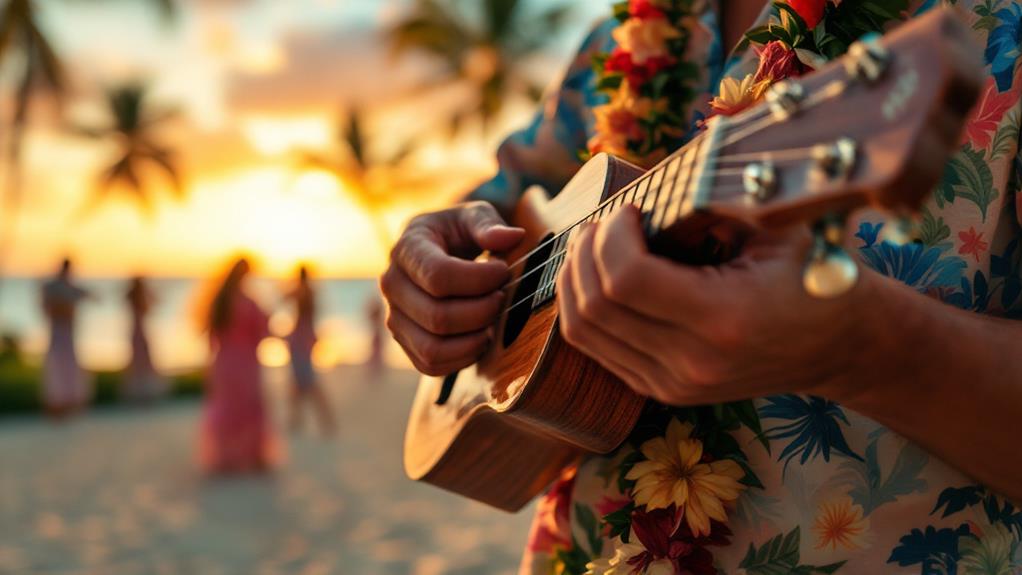
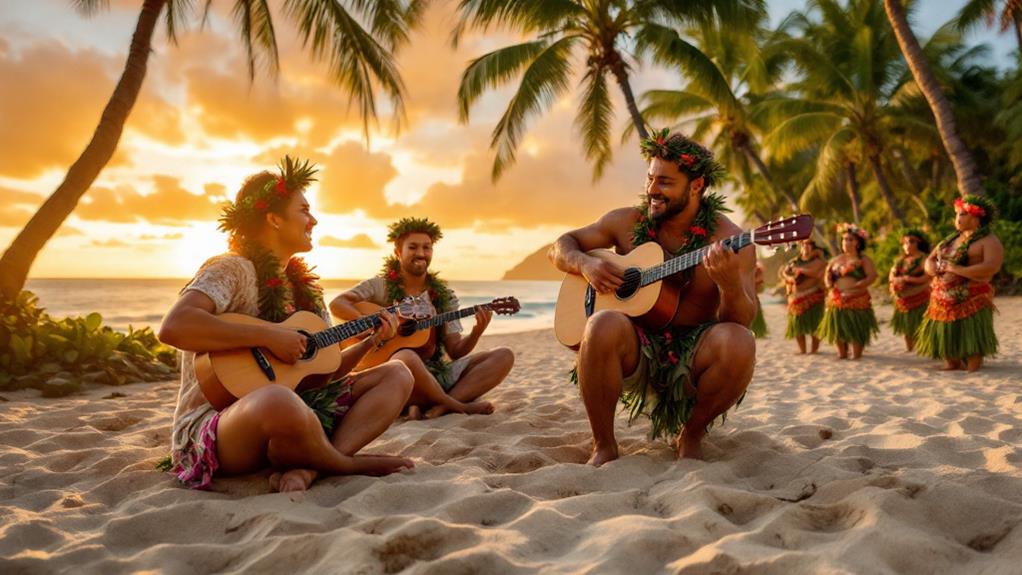
Strumming its way into the heart of luau music, the ukulele plays an indispensable role in creating the festive atmosphere you've come to expect from these Hawaiian celebrations. As you attend a luau, you'll quickly notice how this iconic instrument contributes to the laid-back, tropical ambiance with its distinct, gentle sound and characteristic strumming patterns.
The ukulele's versatility shines through in both traditional and modern luau music. You'll be amazed by skilled players who can effortlessly switch between intricate finger-picking melodies and rhythmic strumming, capturing the essence of Hawaiian music. The ukulele's portability allows performers to move freely, encouraging spontaneous musical moments that add to the authentic luau experience.
Beyond its musical contributions, the ukulele holds significant cultural importance in Hawaii. It's become inseparable from the musical traditions associated with luaus and other Hawaiian festivities. As you listen to the ukulele's sweet tones, you're not just hearing an instrument but experiencing a symbol of Hawaiian culture. This small yet powerful instrument continues to be the soundtrack of Hawaii's celebrations, inviting you to immerse yourself in the islands' rich musical heritage.
Slack Key Guitar Melodies
From the gentle shores of Hawaii comes another essential sound of the luau: slack key guitar melodies. Known as ki ho'alu, this distinctive fingerstyle technique is a cornerstone of traditional Hawaiian music. As you listen to the soothing tones, you'll be transported to a world of tranquil beauty and rich cultural heritage.
Slack key guitar is characterized by:
- Open tunings that create a unique harmonic resonance
- Intricate fingerpicking patterns that mimic the ebb and flow of ocean waves
- Rhythmic patterns influenced by ancient Hawaiian chanting
- Melodic phrasings that tell stories of island life and legends
The intimate finger movements of skilled artists like Gabby Pahinui and Keola Beamer bring these melodies to life. Their musical storytelling techniques weave tales of Hawaii's past and present, creating a nostalgic atmosphere that's perfect for luau celebrations.
As you experience the evocative tonal qualities of slack key guitar, you'll understand why it's an integral part of the Hawaiian cultural odyssey. The resonant, soothing sounds blend seamlessly with other traditional instruments, creating the perfect soundtrack for your luau expedition.
Percussion in Luau Music
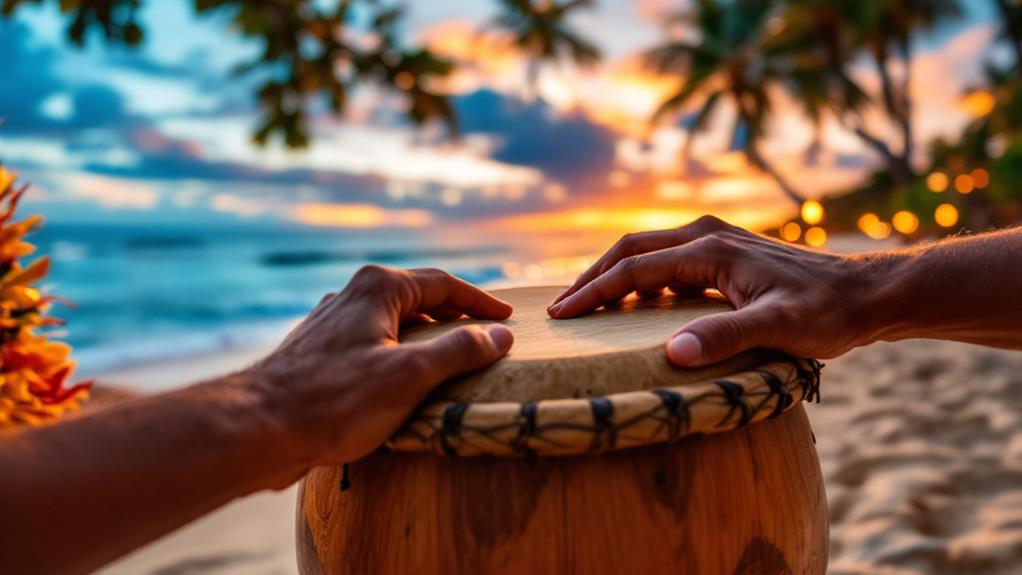
While slack key guitar melodies paint a soothing backdrop, the rhythmic heartbeat of luau music comes from its diverse percussion instruments. At the heart of these rhythm sections, you'll find the pahu drum, renowned for its deep bass tones and distinctive shark-skin drumhead. This traditional drum sets the foundation for various drumming styles that define luau music.
Complementing the pahu, you'll encounter the ipu, a gourd-like drum that adds a unique texture to the percussion ensemble. Performers strike it against a horizontal surface or their palm, creating a resonant sound that enhances the overall rhythm.
For percussive embellishments, luau musicians employ a range of smaller instruments. The uliuli, a gourd-filled rattle, accompanies hula dancers with its shaking sound. Puili, bamboo rattles struck upon shoulders or each other, provide rhythmic accents to the music. Finally, ili ili, smooth stones used as castanets, offer crisp percussive accents during dance performances.
These diverse percussion instruments work together to create the lively, infectious rhythms that are synonymous with luau celebrations, inviting you to move and dance along.
Contemporary Hawaiian Artists
Contemporary Hawaiian artists have breathed new life into the islands' musical traditions, blending timeless melodies with modern influences. This stylistic evolution has resulted in a unique and soulful sound that captures the essence of Hawaii's rich cultural heritage.
When attending a luau, you'll likely hear the music of artists like Israel Kamakawiwo'ole, Na Leo Pilimehana, and Keali'i Reichel. These performers seamlessly integrate traditional Hawaiian elements with contemporary styles, creating an enthralling soundtrack for your island experience.
Hapa's sophisticated harmonies and lyrical storytelling transport you to the heart of Hawaiian culture, while Willie K's virtuosic slack key guitar playing fuses Hawaiian, blues, and jazz influences. Na Leo Pilimehana's rich harmonies breathe new life into classic Hawaiian standards, and Keali'i Reichel's dedication to cultural preservation shines through in his chanting and musical performances.
At a luau, you might experience:
- Soulful ukulele strumming
- Hypnotic percussion rhythms
- Soaring vocal harmonies
- Mesmerizing hula performances
These contemporary artists have become an integral part of Hawaii's musical milieu, ensuring that the islands' rich musical traditions continue to thrive and evolve for generations to come.
Blending Tradition With Innovation
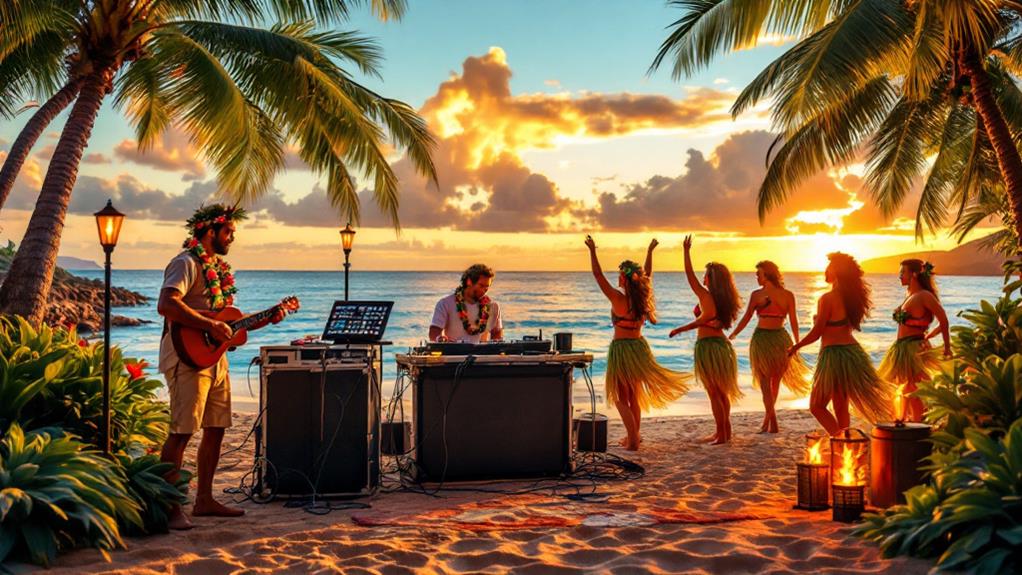
The energetic sounds of modern luaus seamlessly blend tradition with novelty. You'll hear a captivating cultural fusion that bridges Hawaii's rich musical heritage with contemporary artistic expression. While traditional instruments like the pahu drum and ipu gourd drum maintain their ceremonial significance, they're now joined by modern counterparts such as the ukulele and slack key guitar.
This musical evolution reflects Hawaii's ability to adapt while honoring its roots. You'll experience how classic Hawaiian artists like Don Ho and The Brothers Cazimero have paved the way for contemporary performers like Israel Kamakawiwo'ole and Na Leo Pilimehana. These artists bring fresh perspectives to luau music, infusing it with their unique styles and interpretations.
The blending of old and new extends beyond instrumentation and performers. You might even hear Disney-inspired Hawaiian songs, like "Hawaiian Roller Coaster Ride" from Lilo and Stitch, woven into the luau playlist. This innovative approach to luau music guarantees that the soundtrack to Hawaii's celebrations remains lively, relevant, and deeply connected to both its past and present.