What Were the Coolest Fashion Styles of the 70s?
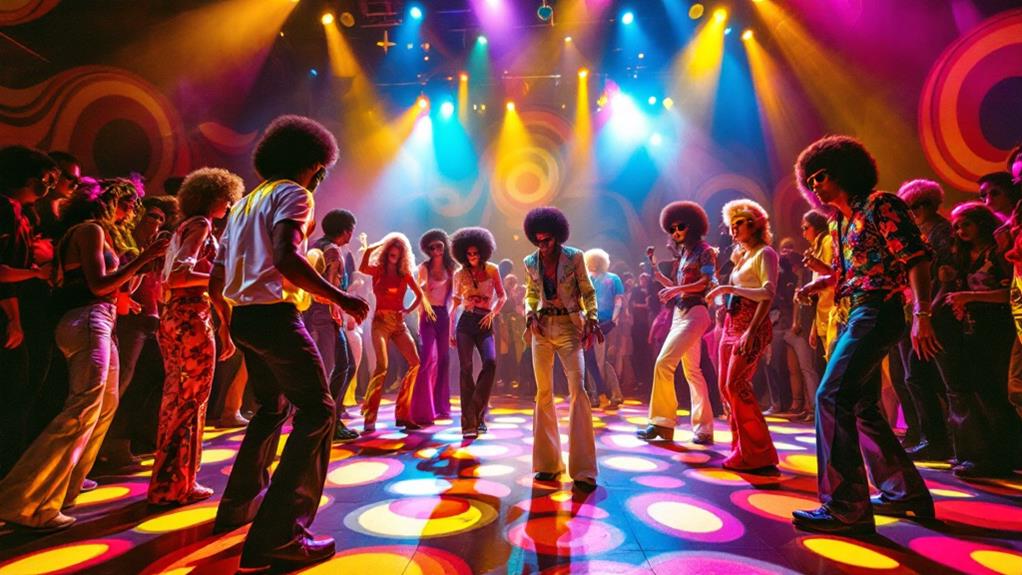
The coolest '70s fashion styles were all about self-expression and breaking boundaries. You'd see bell-bottoms and flared jeans paired with platform shoes, creating iconic silhouettes. Tie-dye patterns and bohemian-inspired looks brought a free-spirited vibe to wardrobes. Wrap dresses offered versatility and flattering fits for all body types. Punk and glam rock introduced edgy leather and studs, while disco fever sparked sequins and glamour. Jumpsuits and playsuits became fashion sensations, and accessories like mood rings and puka shells added playful touches. These trends didn't just define an era; they continue to influence modern fashion in surprising ways.
Bell-Bottoms and Flared Jeans
Swinging into the 70s, bell-bottoms and flared jeans dominated the fashion scene. These iconic pants, characterized by their wide-leg silhouette from the knee down, became a staple of casual and enter-into looks. You'd find bell-bottoms in various fabrics, reflecting the decade's diverse style preferences.
For a night out at the dance hall, you might've donned a pair of eye-catching bell-bottoms made from shiny sequins or satin. These glitzy pants paired perfectly with platform shoes and flashy tops, creating a dazzling ensemble for the dance floor. On the casual side, denim and polyester bell-bottoms offered comfort and style for everyday wear.
Flared jeans, a close cousin to bell-bottoms, were equally popular. They embodied the relaxed vibe of 70s fashion while maintaining a touch of flair. Farrah Fawcett's iconic skateboarding look, featuring flared jeans and a simple tank top, helped cement the trend's popularity and showcased its versatility.
Whether you were hitting the dance or running errands, bell-bottoms and flared jeans were the go-to choice for fashion-conscious individuals in the 70s. These pants weren't just clothing; they were a statement of style and freedom.
Tie-Dye Everything
A kaleidoscope of color swept through 70s fashion with the tie-dye craze. Born from the hippie movement, this vibrant technique quickly became a symbol of self-expression and free-spirited style. You couldn't escape the psychedelic swirls that adorned everything from t-shirts to dresses, turning everyday outfits into wearable art.
Tie-dye's influence reached far beyond counterculture gatherings: It was a hallmark of the disco era's gender-bending trends, with icons like David Bowie and Grace Jones donning the boldly patterned fabric. It graced high fashion runways, with designers like Halston and Christian Dior incorporating the technique into their collections. Janis Joplin's iconic tie-dye dress at Woodstock became a lasting image of the era's bohemian sensibilities. The DIY nature of tie-dye allowed everyone to become their own fashion designer.
As the decade progressed, tie-dye solidified its place as a staple in 70s wardrobes. Its popularity didn't fade with the decade's end, either. You'll find tie-dye's influence resurfacing in the 90s grunge movement and even in today's streetwear. This enduring appeal proves that tie-dye isn't just a trend—it's a timeless form of creative expression that continues to mesmerize fashion enthusiasts across generations.
Platform Shoes and Clogs
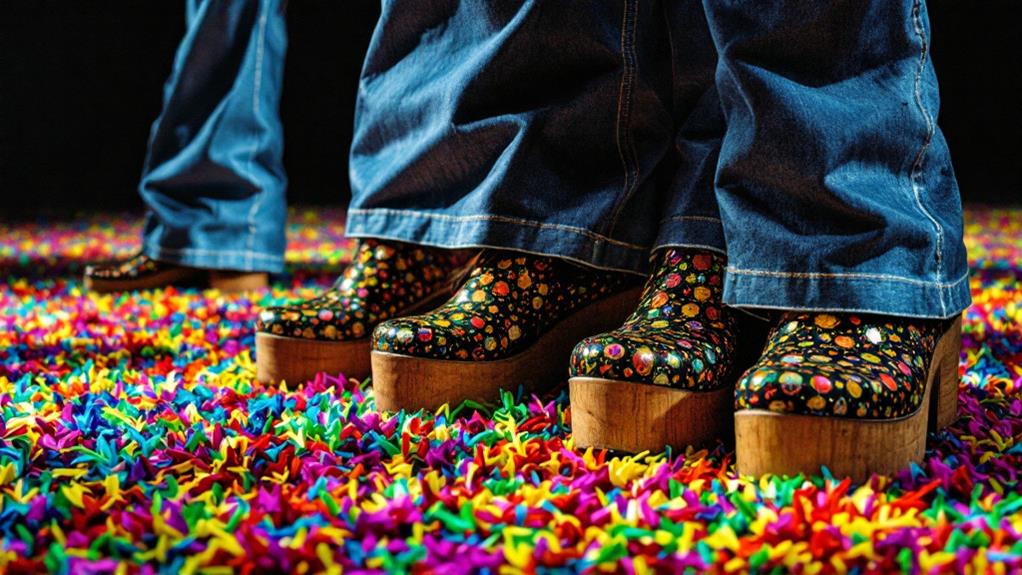
Two iconic footwear trends dominated the 1970s fashion scene: platform shoes and clogs. These chunky, heightened soles offered you added inches and a bold, eye-catching style that defined the decade. Platform heels became the go-to choice for those looking to make a statement, pairing perfectly with flared jeans and maxi dresses alike.
Wooden clogs, with their thick, sculpted soles and often featuring leather uppers and metal nailhead trims, rose to prominence alongside platforms. These comfortable yet stylish shoes complemented the era's bohemian aesthetic, making them ideal for wearing with flowing peasant blouses and long, floral skirts.
Both platforms and clogs embodied the free-spirited fashion of the 70s, allowing you to express your individuality while adding a touch of drama to your outfit. Celebrities like Stevie Nicks helped cement these shoes' status as iconic fashion statements, inspiring countless fans to adopt the trend.
Whether you were hitting the dance floor or strolling through a music festival, platforms and clogs offered the perfect blend of style and comfort, making them essential elements of 1970s fashion that continue to influence footwear trends today.
Wrap Dresses
During the 1970s, wrap dresses emerged as a revolutionary fashion statement, redefining women's style and empowerment. Diane von Furstenberg's iconic wrap dress, introduced in 1974, stood out from the oversized maxi dresses and flowing caftans of the era. Its versatile silhouette offered a figure-hugging alternative to the androgynous pantsuits that had gained popularity in the 1960s.
The wrap dress quickly became a favorite among fashion-forward trendsetters and socialites like Nan Kempner and Bianca Jagger. Its appeal stemmed from several key factors:
- It accentuated the waist, creating a flattering look for various body types
- The design allowed for easy movement, catering to the growing emphasis on personal fitness
- It embodied the increasing confidence and strength of women in the 1970s
You'd find that the wrap dress offered a perfect balance between style and comfort, making it ideal for both work and social settings. Its versatility and ease of wear aligned with the decade's shift towards more casual, relaxed dressing. As you adopted this fashion trend, you'd uncover how the wrap dress could effortlessly transition from day to night, making it a true wardrobe staple.
Punk and Glam Rock
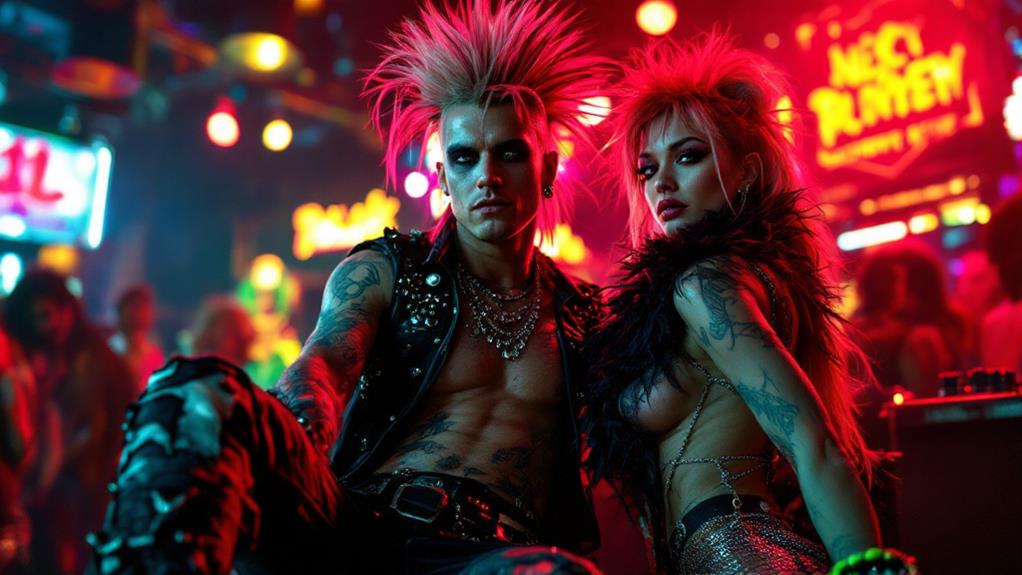
Punk and glam rock burst onto the fashion scene in the 1970s, shaking up traditional style norms with their rebellious attitudes. You'd see leather jackets adorned with safety pins, studs, and hand-painted designs, paired with ripped jeans and graphic tees. The punk fashion movement drew inspiration from the British punk scene and The Rocky Horror Show musical, emphasizing personal expression and DIY aesthetics.
Icons like Johnny Rotten, Debbie Harry, and Joan Jett brought punk style to the mainstream, influencing countless fans to adopt this edgy look. You could express yourself by customizing your outfit with buttons, pins, and patches, making each ensemble uniquely yours. The classic black motorcycle jacket became a staple, often worn with bell-bottom jeans and studded belts.
Punk fashion wasn't just about clothing; it was a statement of individuality and defiance against societal norms. As punk bands gained popularity, their style spread rapidly, encouraging fans to break free from conventional fashion rules. The movement's impact was significant, leaving a lasting impression on fashion and pop culture that continues to influence designers and trendsetters today.
Bohemian Chic
While punk fashion rebelled against society, bohemian chic adopted a free-spirited, eclectic aesthetic that celebrated individuality and comfort. You'd see flowing maxi dresses, floppy hats, crochet details, and bold prints dominating this laid-back style. Designers like Halston and Ossie Clark blended hippie and ethnic influences into their high-fashion collections, creating a glamorous yet casual look.
The bohemian chic trend welcomed:
- Tie-dye, patchwork, and handcrafted elements
- Layered, flowing attire with fringed shawls
- Chunky wooden clogs and other earthy accessories
Models and musicians like Stevie Nicks popularized this relaxed vibe, inspiring countless fashion enthusiasts. You'd find wrap dresses by designers like Zandra Rhodes alongside more androgynous silhouettes, offering a stark contrast to the structured fashions of previous decades. The 70s bohemian look was all about expressing yourself through your clothes, with a DIY attitude that encouraged personal creativity. Whether you were rocking a crochet top or a bold print maxi dress, this style allowed you to welcome your inner free spirit while staying on-trend.
Disco Fever Fashion
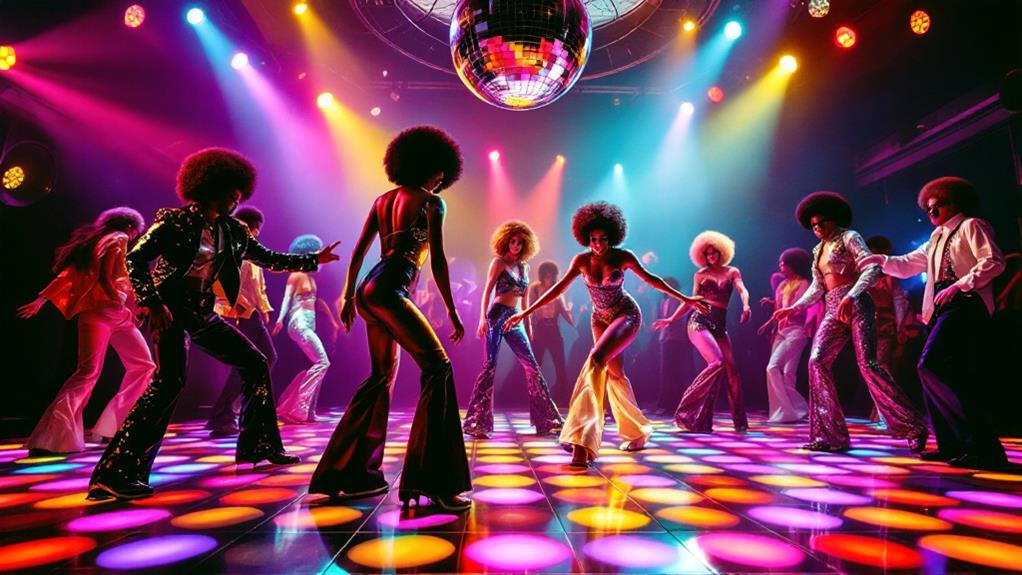
Sequins, glitter, and glamour defined the disco fever fashion of the 70s. As you hit the dance floor, you'd be surrounded by a sea of shimmering outfits inspired by the iconic disco ball. Designers like Halston, von Furstenberg, and Yves Saint Laurent adopted this flashy aesthetic, creating figure-hugging silhouettes that became synonymous with the era.
You'd see revelers sporting satin slips, leisure suits, and sequined evening dresses in bright colors that caught the light as they moved. The fabrics of choice were luxurious and eye-catching: satin, sequins, and velvet dominated the scene. Halter necks and Lycra added to the body-conscious look, while feathers provided an extra touch of extravagance.
The influence of designers like Vivienne Westwood and Malcolm McLaren pushed the boundaries of disco fashion even further. You'd find yourself immersing in bold, vivid hues and shimmering textures that perfectly captured the spirit of Saturday Night Fever. The disco era's fashion was all about standing out and expressing yourself through daring, glamorous outfits that made you feel like a star on the dance floor.
Jumpsuits and Playsuits
How did the humble jumpsuit become a fashion sensation in the 70s? The answer lies in its perfect blend of comfort and style. Designers like Halston and Diane von Fürstenberg welcomed this utilitarian garment into the fashion world, elevating it to a must-have fashion item. They created sleek, figure-flattering silhouettes in luxurious fabrics like satin, transitioning the jumpsuit from workwear to high fashion.
Jumpsuits and their playful cousin, playsuits, offered you:
- A comfortable alternative to dresses and separates
- Versatility for day-to-night adaptations
- A bold, statement-making look
The disco era embraced jumpsuits with open arms. You'd find revelers sporting metallic fabrics, bold patterns, and dramatic bell-bottoms on the dance floor. These eye-catching designs became a staple of 70s nightlife, allowing you to showcase your style while staying comfortable all night long.
Playsuits, combining shorts and a top in one piece, appealed to those seeking a more casual, youthful look. Their versatility made them perfect for various occasions, from beach outings to casual gatherings. Whether you preferred jumpsuits or playsuits, these 70s fashion icons offered a unique blend of style and practicality.
Accessories That Defined an Era
The 1970s witnessed an explosion of accessories that captured the decade's free-spirited essence. You couldn't step out without adorning yourself with puka shells or love beads, which perfectly complemented your crop top or button-down shirt. These bohemian pieces were indispensable to achieving that laid-back 70s look.
Mood rings became all the rage, changing color with your body temperature and reflecting your emotions. They were the perfect accessory to pair with your hot pants or shearling coat. Large, floppy collars on tight-fitting shirts exposed more chest, often adorned with eye-catching medallion necklaces.
While Diane von Furstenberg revolutionized dress fashion, accessories played a pivotal role in defining the era's style. Hot pants, those daring short shorts, pushed boundaries and symbolized the decade's sexual liberation. They looked great with stretch denim and fur coats, creating a bold statement.
Chevron patterns emerged as a prominent trend, appearing on everything from button-down shirts to accessories. This geometric design added a touch of visual interest to your outfit, whether you were sporting a jumpsuit or a classic 70s ensemble.