What Were the Coolest Fashion Styles of the 80s?
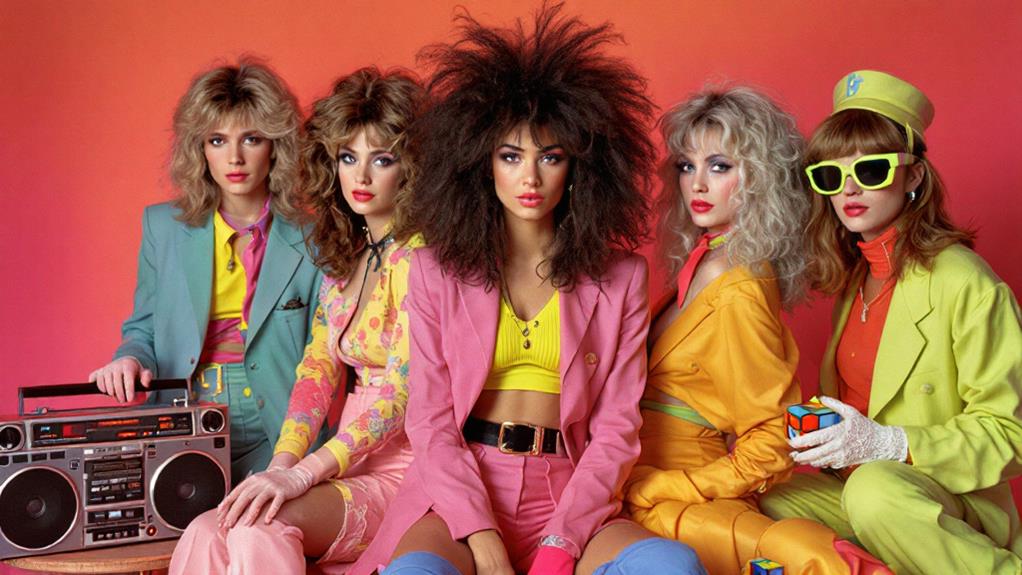
The 80s were all about bold, eye-catching fashion. You'd see power suits with massive shoulder pads, neon colors paired with wild prints, and acid-washed or ripped denim everywhere. Madonna's iconic lace-and-leather looks inspired countless copycats, while athletic wear became acceptable everyday attire. Preppy styles and designer labels signaled wealth and status. Everything was oversized, from blazers to accessories. Glamorous jewelry and hair accessories completed many outfits. For the ultimate in cool, you couldn't beat the androgynous, over-the-top styles of hair metal and glam rock bands. There's so much more to uncover about these totally rad fashion trends.
Power Suits and Shoulder Pads
As the 1980s dawned, power suits with dramatically padded shoulders burst onto the fashion scene, reshaping professional attire. You'd find these iconic ensembles dominating boardrooms and high-powered offices, as women embraced a new form of "armor" to assert their authority in the workplace.
Power suits weren't just about looking sharp; they made a statement. Designers like Claude Montana, Emanuel Ungaro, and Yves Saint Laurent pioneered this high fashion trend, differentiating it from traditional men's suits through bold colors, intricate beadwork, and unique fabrications. The exaggerated silhouettes conveyed a sense of dominance, with structured, angular cuts making the wearer appear more imposing.
As you slipped on a power suit, you'd feel the transformation. The padded shoulders and customized fit created an air of confidence, perfect for climbing the corporate ladder. These suits weren't just clothing; they were a symbol of the changing times, reflecting women's growing prominence in professional settings. Power dressing became more than a fashion trend—it was a cultural shift, allowing you to command attention and respect in any room you entered.
Neon Colors and Bold Prints
From head to toe, the 1980s exploded with neon colors and bold prints that defined the decade's fashion. You couldn't escape the vivid shades of pink, green, and yellow that dominated clothing, accessories, and even hair. These bright colors were often paired with bold prints, creating a visual feast that epitomized the era's maximalist aesthetic.
The 1960s Love for Bold, Primary Colors in Home Decor influenced the 1980s fashion, as primary colors like red, yellow, and blue became central to many 80s designs. You'd find yourself surrounded by oversized floral prints and geometric patterns that adorned everything from dresses to wallpaper. The Memphis design movement further amplified this trend, adopting abstract, color-blocked designs with stark contrasts. You could easily spot someone sporting layered clothing in clashing prints and patterns, a signature 80s look that pushed the boundaries of conventional style.
The combination of neon colors and bold prints wasn't just about standing out; it was about making a statement. You'd see eye-catching, exaggerated styles that screamed confidence and individuality. Whether you were rocking a neon windbreaker with geometric patterns or a floral dress in clashing colors, the 80s encouraged you to showcase the loud, the bold, and the unapologetically vibrant.
Acid-Washed Denim and Ripped Jeans
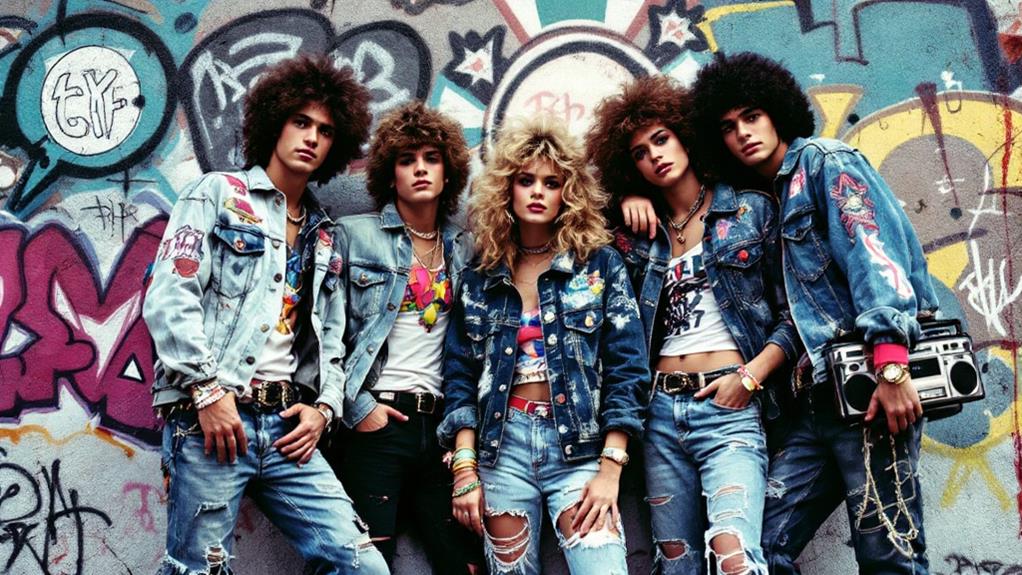
The denim revolution of the 80s brought acid-washed and ripped jeans to the forefront of fashion. You couldn't walk down the street without seeing someone sporting these trendy looks. Acid-washed denim, with its faded and distressed appearance, made a bold statement. It wasn't just limited to jeans; denim jackets got the acid treatment too, creating a cohesive style that defined the decade. Disco fashion introduced flashy, body-conscious clothing to the masses, facilitating these bold denim trends.
Ripped jeans took the distressed look even further. Whether you made them yourself or bought pre-distressed pairs, these jeans were the epitome of cool. The ripped knee look was particularly popular, adding an edgy element to any outfit. Stone-washed jeans offered a more subtle alternative, providing a worn-in appearance without the extreme fading of acid wash.
These denim styles weren't confined to any particular group. They crossed gender lines and fashion subcultures, becoming a universal trend. The beauty of acid-washed and ripped jeans was their versatility. You could pair them with neon colors for a bold look or dress them up for a night out. They represented rebellion and individuality, allowing you to express yourself through your denim choices.
Madonna-Inspired Lace and Leather
Madonna's influence on 80s fashion was nothing short of revolutionary. Her iconic style blended edgy and feminine elements, creating a look that defined the decade. You couldn't walk down the street without seeing her signature lace gloves, cone bras, and lingerie-inspired outfits.
The Material Girl's provocative ensembles often paired leather jackets with miniskirts and fishnet stockings, epitomizing the daring spirit of 80s fashion. She expertly mixed contrasting textures, combining lace with leather to create a unique and rebellious aesthetic. This juxtaposition of soft and hard materials became a hallmark of the era's style.
Madonna's bold accessories also left an indelible permanent mark on 80s fashion. Crucifixes, rosaries, and metallic jewelry adorned her outfits, adding an androgynous edge to her look. These statement pieces quickly became must-have items for fashion-forward individuals.
Her effortless blend of high and low style, such as pairing a tulle skirt with a simple tank top, captured the essence of 80s fashion. Madonna's influence encouraged you to experiment with your wardrobe, mixing unexpected elements to create a personal and memorable style.
Athletic Wear as Everyday Fashion
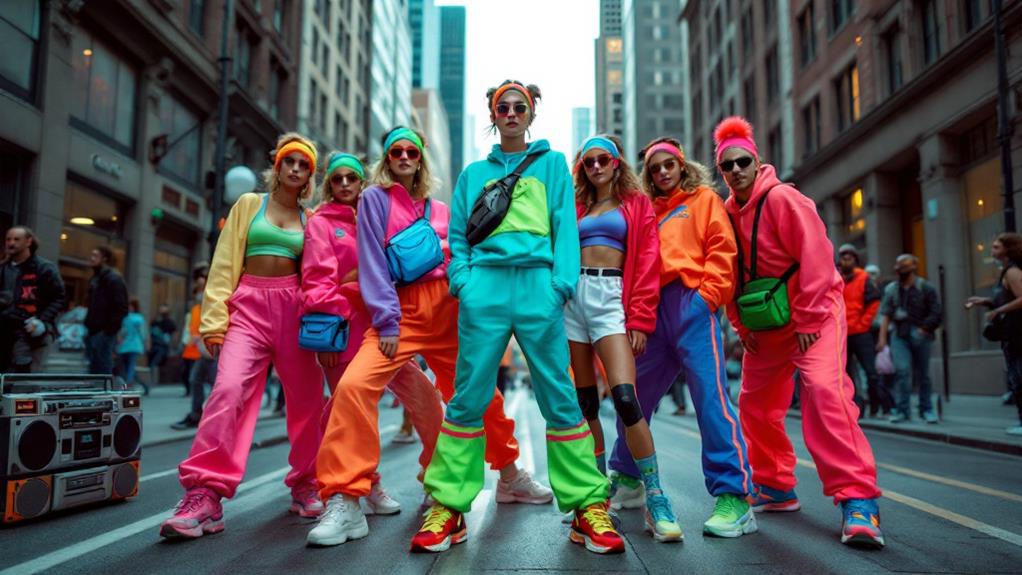
Sweatbands, leotards, and neon-colored sneakers stepped out of the gym and onto the streets in the 1980s, as athletic wear became a staple of everyday fashion. You couldn't escape the Fitness Craze that swept the nation, influencing not just exercise routines but also wardrobes. Jane Fonda's workout videos popularized the look of leg warmers, scrunched socks, and high-cut leotards, which quickly migrated from exercise studios to everyday wear.
Spandex and Lycra-infused clothing revolutionized comfort and style, with leggings, bodysuits, and crop tops becoming widely accepted as casual attire. You'd see people sporting off-the-shoulder sweatshirts paired with bike shorts, blurring the line between athletic and street wear. Designer brands like Adidas, Nike, and Reebok capitalized on this trend, turning their sneakers and tracksuits into coveted fashion statements.
The rise of MTV further cemented the acceptability of wearing lively, body-conscious athletic attire outside the gym. Bomber jackets, oversized sweatshirts, and neon activewear became go-to looks for the fashion-forward. This sporty, youthful energy defined 80s style, embracing comfort and bold self-expression in everyday outfits.
Punk and New Wave Influences
While athletic wear dominated the mainstream, a rebellious undercurrent was reshaping fashion from the fringes. Punk fashion emerged as a bold statement against conformity, with its ripped clothing, studs, and chains. You'd see DIY customization everywhere, as punks took ownership of their style.
Alongside punk, New Wave style brought a romantic flair to the scene. Frilled shirts, flamboyant silhouettes, and elaborate hairstyles became hallmarks of this movement. Designers like Vivienne Westwood and Malcolm McLaren led the charge, blending historical references into their provocative "Pirate" collection.
The New Romantics took this theatrical approach even further. John Galliano's "Les Incroyables" collection, inspired by France's revolutionary era, set the stage for his future in haute couture. Other influential designers like Rifat Ozbek, Martin Kidman, and milliner Stephen Jones adopted a gender-fluid aesthetic that pushed boundaries.
You'd find these styles not just on the streets but in music videos and clubs. The fusion of punk's raw energy and New Wave's romantic sensibilities created a unique fashion tapestry that defined the 80s counterculture.
Preppy Looks and Designer Labels
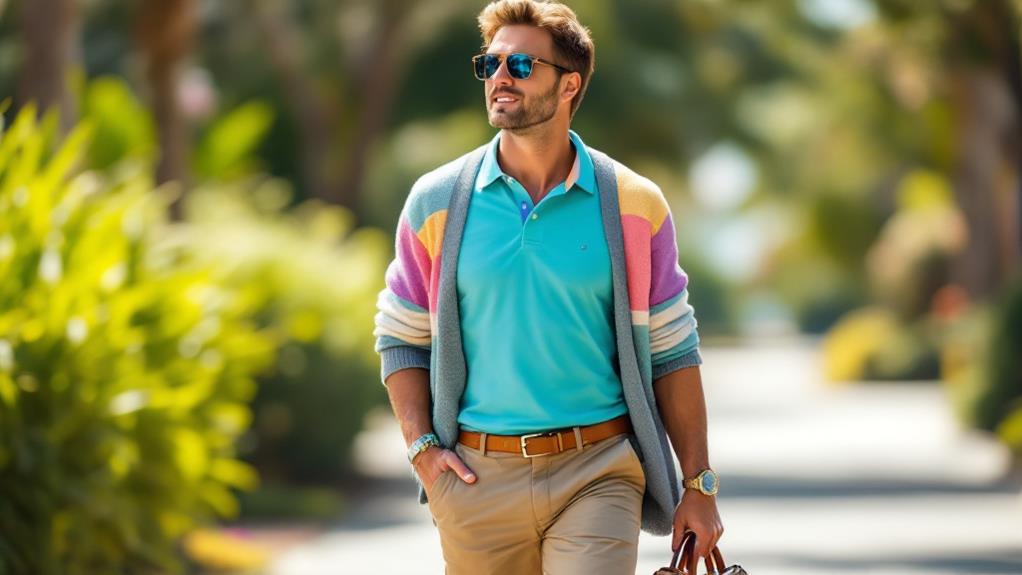
In stark contrast to the edgy punk aesthetic, preppy fashion took center stage in mainstream 80s style. You couldn't walk down the street without seeing someone sporting the classic preppy look, characterized by polo shirts, khakis, and button-down shirts. Brands like Ralph Lauren, Lacoste, Izod, and Brooks Brothers became the hallmarks of this clean-cut, all-American style.
If you wanted to signal wealth and social status, you'd wear these designer labels prominently. The preppy look wasn't just about casual wear; it extended to the professional world too. The rise of the "yuppie" brought power dressing to the forefront, with sharp suits and pussy-bow blouses becoming symbols of ambition and success.
For a more casual yet still upscale vibe, you might opt for collegiate-inspired styles. Varsity jackets, cable-knit sweaters, and pleated skirts were all the rage among young, upwardly mobile professionals. And if you really wanted to embody the country club aesthetic with tennis whites, Burberry trench coats, and of course, more polo shirts.
Oversized Everything
The 80s fashion scene took off with a "bigger is better" mentality, ushering in the era of oversized everything. You'd find shoulder pads and wide lapels dominating the power-dressing silhouette, with oversized blazers becoming a staple in both men's and women's wardrobes. Designers like Gianni Versace and Rei Kawakubo of Comme des Gar??ons pushed the boundaries of proportion, creating exaggerated shapes that defined the decade.
In casual wear, you'd sport baggy sweaters, jumbo-sized sweatshirts, and oversized tees for a relaxed yet stylish look. The trend extended to bottoms too, with loose-fitting, billowing pants like parachute and harem styles making a bold statement. To complete your 80s ensemble, you'd pile on oversized accessories ??? think chunky jewelry, statement earrings, and large hair accessories. These eye-catching pieces complemented the bold, over-the-top aesthetic of the era.
The oversized clothing trend wasn't limited to a specific gender; both men and women adopted these exaggerated proportions as a fashion statement. It was a time when bigger truly meant better, and your wardrobe reflected that maxim in every way possible.
Glamorous Accessories and Jewelry
Accessory-obsessed 80s fashion lovers cherished a "more is more" philosophy when it came to jewelry and adornments. You couldn't step out without your oversized hoop earrings, stacks of bangle bracelets, and chunky necklaces adorned with eye-catching pendants or charms. These statement pieces were often crafted from plastic, metal, or even neon-colored materials, perfectly capturing the decade's bold aesthetic.
To truly adopt the 80s look, you'd want to consider these key elements:
- Arm party: Stack those bangle bracelets high up your arms, mixing metals and adding colorful plastic or beaded designs for extra flair.
- Hair game: Don't forget the ultimate Hair Accessory - the scrunchie! Available in countless colors and patterns, it was the perfect way to add a youthful touch to any outfit.
- Personalization: Express yourself with pins, brooches, and patches on your clothing, showcasing your interests and affiliations.
Gold chains and prominent pendants completed the look, ensuring you stood out in true 80s fashion. Whether you were rocking plastic accessories or going all out with metallic bling, the goal was clear: make a statement and let your personality shine through your jewelry choices.
Hair Metal and Glam Rock
From out of the glitzy clubs and onto the mainstream stage, hair metal and glam rock exploded in the 1980s, bringing with it a fashion revolution. Bands like Motley Crue, Bon Jovi, and Poison adopted an exaggerated, androgynous style that became the hallmark of glam metal and glam rock. You'd see big hair, heavy makeup, and spandex outfits adorned with studs and chains everywhere.
If you wanted to rock this look, you'd start with teased, permed, and dyed hair. Pair that with leather pants or ripped jeans, and top it off with a sleeveless denim vest or jacket. Guitarists often sported high-heeled boots and tight spandex pants, while frontmen went all out with brightly colored outfits and dramatic face makeup.
This theatrical fashion wasn't just for everyday wear – it was an integral part of the performance. Concert-goers were treated to over-the-top pyrotechnics and visuals, with the band's fashion mirroring the high-energy nature of their music. The fusion of hard rock, pop sensibilities, and bold fashion choices made hair metal and glam rock looks some of the most recognizable and influential styles of the decade.