What Were the Coolest Toys of the 60s?
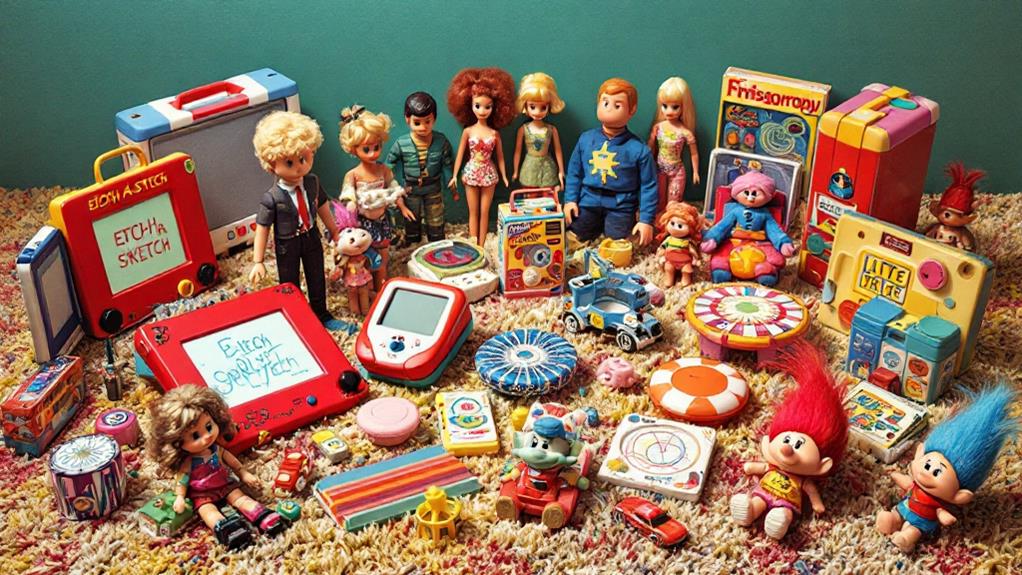
The coolest toys of the 60s altered playtime forever. You'd find Barbie dolls inspiring fashion dreams, while G.I. Joe action figures led military adventures. Hot Wheels zoomed onto the scene with miniature cars, and Chatty Cathy amazed kids with her talking abilities. The Easy-Bake Oven let you bake tiny treats, while Play-Doh liberated creativity. Lite-Brite illuminated artistic masterpieces, and the Slinky mesmerized with its stair-descending magic. Mr. Potato Head brought silly fun to customizable faces. These iconic toys didn't just entertain; they shaped childhoods and sparked imaginations in ways that continue to echo today.
Barbie: The Iconic Fashion Doll
Certainly, Barbie stands as one of the most iconic toys of the 1960s. Launched in 1959, these popular dolls quickly captured the hearts of young girls across America. You could choose between blonde or brunette Barbie dolls, each sporting a stylish black and white striped swimsuit. At just $3, these dolls were an affordable way to investigate fashion and career possibilities.
Barbie's popularity skyrocketed, paving a path for an entire line of accessories. You could dress your doll in various outfits, slip on tiny shoes, and even give her a car to cruise around in. The ultimate Barbie accessory was her dream house, allowing you to create an entire world for your doll.
The impact of Barbie dolls on the toy industry can't be overstated. With over a billion sold since their release, they've become one of the most successful toy lines ever. Their popularity in the 60s inspired other iconic toys, like the Suzy Homemaker line. Today, some vintage Barbie dolls can fetch up to $50, a reflection of their enduring appeal and collectibility.
G.I. Joe's Military Adventures
G.I. Joe's popularity soared, demonstrating the growing appeal of action figures and military-themed toys. The line's success led to several expansions, including:
- The introduction of an Action Nurse figure
- A series of comic books and animated shows
- A collection of vehicles and playsets
- The eventual release of Hollywood films
The iconic DeLorean car from the Back to the Future franchise also captured the imagination of toy collectors, converting from a unique vehicle into a time-travel legend. G.I. Joe's influence extended far beyond the 1960s, as the first G.I. Joe movie hit theaters in 2009, more than four decades after the toy's initial release. This enduring legacy proves that G.I. Joe wasn't just a cool toy of the 60s—it was a cultural phenomenon that shaped generations of play.
Hot Wheels: Miniature Car Revolution
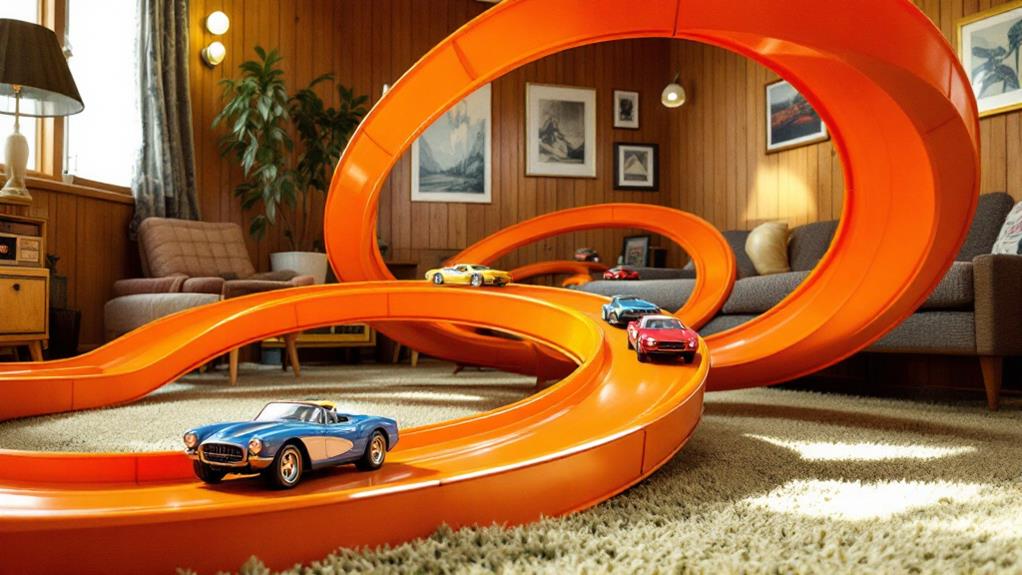
While G.I. Joe was conquering the battlefield, another toy was about to revolutionize playtime on a much smaller scale. Enter Hot Wheels, the miniature car phenomenon that would zoom into the hearts of children and adults alike. The Café Press Motherboard Heart White T-Shirt and other computer-themed apparel also captured the imagination of tech geeks during this era.
Introduced by Mattel in 1968, Hot Wheels burst onto the scene with 16 initial models that were unlike anything seen before. These weren't your typical toy cars; they were fantasy-inspired, stylized versions that captured the imagination. The dark blue Custom Camaro, the first Hot Wheels car, set the tone for what would become an incredibly popular brand.
What made Hot Wheels stand out was their focus on fantastical designs, setting them apart from the more realistic Matchbox cars. This approach, combined with licensing deals that allowed for scale models of popular vehicles, created a perfect storm of appeal. Children loved the flashy designs and fast-rolling wheels, while adults appreciated the attention to detail.
The popularity of Hot Wheels was immediate and explosive. In just four years, over 500 million cars were sold, cementing their place as one of the coolest toys of the 60s and beyond.
Chatty Cathy's Talking Breakthrough
A pioneering toy arrived in 1960, forever altering the domain of playtime. Mattel's Chatty Cathy doll revolutionized the industry as the first mass-produced talking doll. With a simple pull of a string, she'd utter 11 pre-recorded phrases, enthralling children's imaginations and quickly becoming one of the most popular toys of the decade.
You might wonder why Chatty Cathy was such a hit. Here's why:
- She brought dolls to life with her ability to speak
- Her $15.77 price tag made her accessible to many families
- She came in various hair colors and ethnicities, appealing to a wide audience
- The brand expanded to include other chatty variations, like Chatty Baby
As a child in the 60s, you'd have been thrilled to own a Chatty Cathy doll. Her innovative technology set the stage for future talking toys and showcased the growing sophistication of playthings. The doll's popularity even led to the creation of additional versions, including an African American Chatty Cathy in 1962-1963. Chatty Cathy's success paved the way for more interactive and engaging toys, cementing her place in the pantheon of coolest 60s toys.
Easy-Bake Oven's Culinary Magic
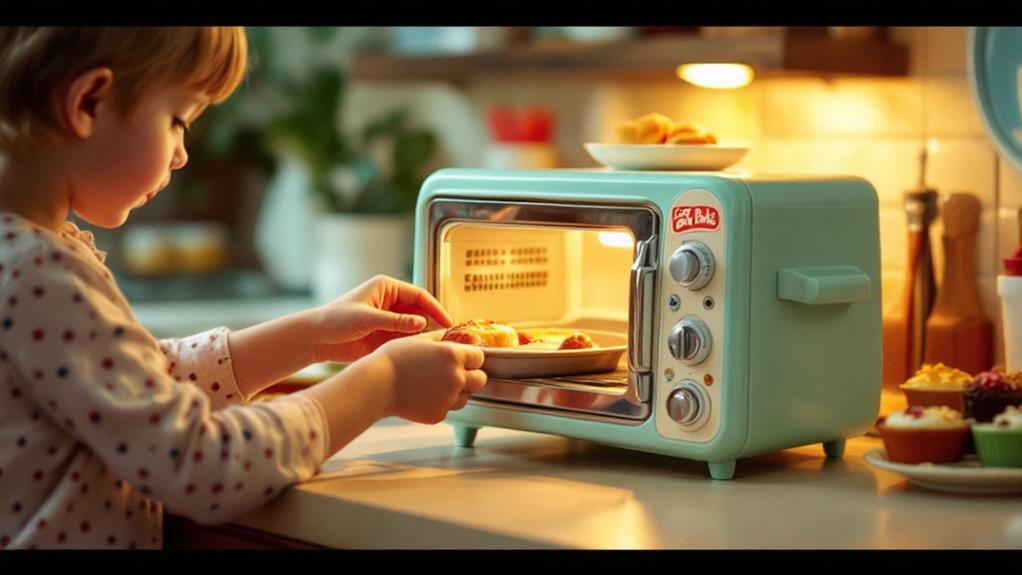
Kitchen enthusiasts rejoiced in 1963 when Kenner Products introduced the Easy-Bake Oven. This revolutionary toy allowed children to bake real miniature cakes and treats using an incandescent light bulb as the heat source. It quickly became a sensation, selling over 500,000 units in its first year alone.
You'd be amazed at how this compact kitchen set captured the imagination of young bakers. By 1967, Hasbro had sold an astounding 16 million Easy-Bake Ovens, cementing its status as one of the decade's most iconic toys. The oven's appeal lay in its ability to mimic real-life household appliances, tapping into the societal focus on women's roles as homemakers.
With its included cake mixes and simple design, the Easy-Bake Oven encouraged children to engage in culinary arts independently. It nurtured creativity and a sense of accomplishment as kids produced their own miniature treats. The toy's success demonstrated that children, especially girls, were keen to explore cooking and baking in a safe, fun environment. The Easy-Bake Oven's culinary magic continues to inspire young chefs to this day.
Etch A Sketch's Artistic Appeal
From culinary creations to artistic innovations, the 1960s brought us another timeless favorite: the Etch A Sketch. This mechanical drawing toy, released in 1960, captivated children with its ability to create intricate designs and light-up expert pieces. Invented by French electrician André Cassagnes, the Etch A Sketch quickly became a household name, earning its place in the National Toy Hall of Fame in 1998.
The Etch A Sketch's unique knob-controlled system encouraged open-ended play and artistic expression, making it a favorite among kids. Its simplicity and tactile nature allowed users to unleash their creativity in ways never before possible. Here's why the Etch A Sketch became an iconic 60s toy:
- Endless possibilities for creating designs
- No mess or cleanup required
- Portable and easy to use
- Encouraged problem-solving and spatial awareness
With over a million units sold worldwide, the Etch A Sketch's enduring popularity is a validation of its appeal as a creative outlet. Whether you're sketching a simple house or attempting a complex landscape, this drawing toy continues to inspire artistic expression in children and adults alike.
Play-Doh's Colorful Creative Possibilities
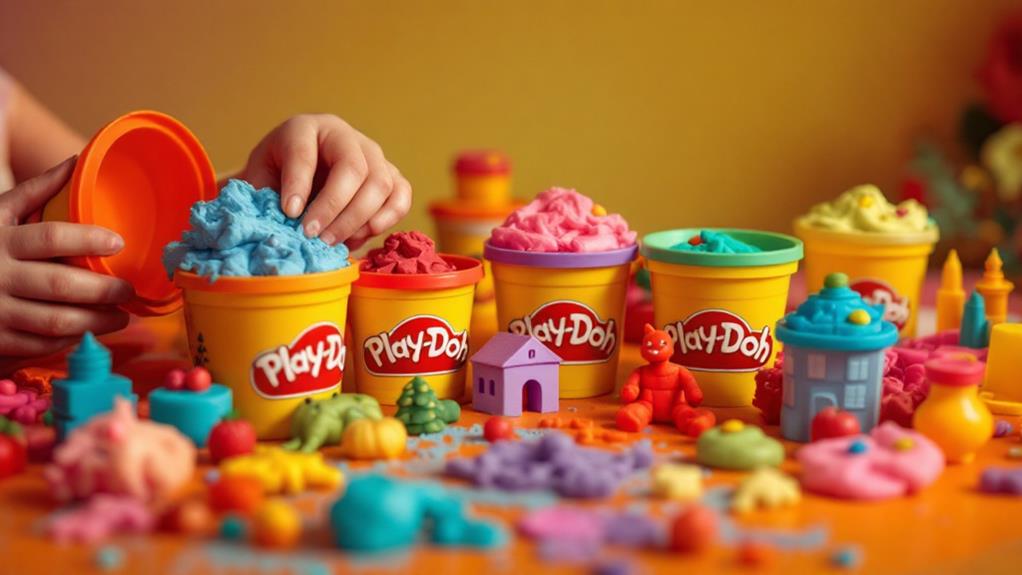
Imagination soared to new heights with the introduction of Play-Doh in the 1950s. This colorful, moldable dough quickly became a favorite among children, allowing them to sculpt and create to their heart's content. You might be surprised to learn that Play-Doh started as a cleaning product in the 1930s before finding its true calling as a creative medium for kids.
By 1958, Play-Doh's popularity had skyrocketed, with sales reaching nearly $3 million. Its versatility and ability to spark creativity made it a beloved toy for generations. You could shape it into anything you imagined, from miniature animals to pretend food. Some kids even used small round pans to create Play-Doh "cakes," mimicking the packets of cake mix their parents used in the kitchen.
Play-Doh's success wasn't just a passing fad. Its continued popularity demonstrated its timeless appeal as an innovative creative medium. Whether you were sculpting, molding, or simply squishing the dough between your fingers, Play-Doh offered endless possibilities for fun and imagination, cementing its place as one of the coolest toys of the 60s.
Lite-Brite's Illuminating Masterpieces
Light and imagination collided in 1967 with the introduction of Lite-Brite, a revolutionary toy that converted playtime into a dazzling artistic experience. This light box toy allowed you to create illuminated masterpieces by inserting colored plastic pegs into a backlit board. Lite-Brite quickly became a sensation, selling over 50 million units and maintaining its popularity for more than five decades.
The toy's appeal was immediately evident, as it was featured in the 1967 Zellers holiday catalog, showcasing its potential as a creative Christmas gift. Lite-Brite's success demonstrated the growing demand for toys that encouraged self-expression and imagination, contributing to the diversification of the 1960s toy market.
Here's why Lite-Brite captured the hearts of children and adults alike:
- It offered a unique blend of art and technology
- You could create countless designs with endless color combinations
- The illuminated results were instantly gratifying
- It nurtured creativity and fine motor skills development
Lite-Brite's enduring popularity exemplifies how certain toys from the 1960s managed to enthrall children's imaginations and remain relevant for generations, solidifying its place among the coolest toys of the decade.
Slinky's Mesmerizing Stair Descents

You might've seen a Slinky in action, descending stairs with an almost hypnotic grace. This iconic spiral spring toy, invented in 1945 by naval engineer Richard James, seemed to defy gravity as it tumbled down flights of stairs in a mesmerizing display. The Slinky's ability to "walk" down steps or appear to levitate captivated the imagination of children and adults alike, contributing to its enduring popularity.
When introduced to the public in 1945, the Slinky became an unexpected hit. By 1959, over 100 million Slinkys had been sold, cementing its status as one of the most popular toys of the 1950s and 1960s. The simple yet alluring mechanics of the Slinky made it a staple in households across America throughout the 1960s and beyond.
As you watched the Slinky descend stairs, you couldn't help but be entranced by its fluid motion. The toy's seemingly magical ability to transfer its energy from one coil to the next created a continuous, graceful movement that kept you spellbound. The Slinky's mesmerizing stair descents became a defining feature of this beloved toy, ensuring its place in the pantheon of coolest toys of the 60s.
Mr. Potato Head's Silly Spud
Among the most beloved toys of the 1960s, Mr. Potato Head stood out as a quirky and imaginative plaything. First released in stores in 1952, this spud-tacular creation quickly became a household name. You might remember spending hours creating silly faces on your very own potato, mixing and matching various features to your heart's content.
What made Mr. Potato Head so special? Here are four reasons why this toy captured the hearts of children everywhere:
- Customization: You could design countless facial expressions
- Creativity: It encouraged imaginative play and storytelling
- Simplicity: Easy to use for all ages
- Versatility: Could be played with alone or in groups
Unlike other toys of the era, such as the Suzy Homemaker Doll, Mr. Potato Head allowed for boundless creativity. It was the first toy advertised on television, laying the groundwork for future marketing strategies. By the 1960s, over 100 million Mr. Potato Head toys had been sold, cementing its status as an iconic plaything. The enduring popularity of this silly spud proved that sometimes, the simplest concepts make for the most entertaining toys.