What Were the Coolest Toys of the 70s?
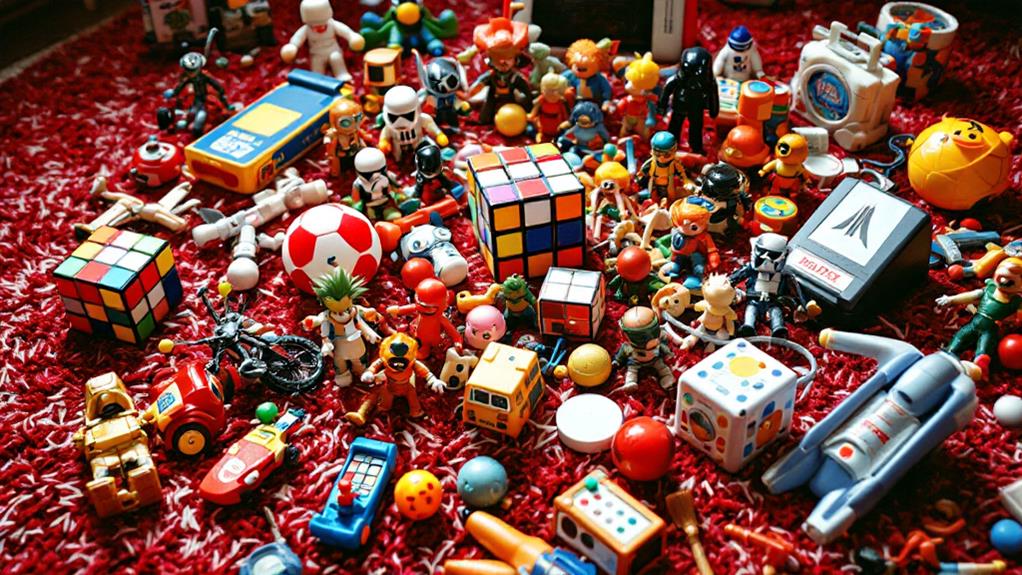
The coolest toys of the 70s were a mix of innovation and classic fun. You'd find Atari consoles bringing arcade action home, while Nerf balls made indoor play safe and exciting. Lego and other construction sets challenged your creativity, and action figures like G.I. Joe sparked imaginative expeditions. Creative tools like Spirograph and Play-Doh let you express yourself artistically. Outdoor play thrived with Big Wheels and roller skates, while dollhouses and playsets offered miniature worlds to investigate. Die-cast cars, electronic games like Simon, and the iconic Evel Knievet stunt cycle rounded out an era of unforgettable playthings. Explore deeper to relive the magic of 70s toy nostalgia.
Iconic Electronic Gaming Consoles
One iconic gaming console stands out from the 1970s: the Atari 2600. Released in 1977, this groundbreaking system brought arcade-style gaming into your living room for the first time. For $199 (over $1,000 in today's money), you could experience the thrill of playing classic games like Pong, Asteroids, and Centipede without leaving your home. The Atari 2600 was a pioneer in the home video game industry, laying the foundation for the gaming industry and sparking imagination by offering arcade-quality games in a home console.
The Atari 2600 wasn't just a console; it was a revolution in home gaming. It came with everything you needed to start playing right away: two joysticks, a pair of paddles, and the two-player game Combat. This package deal meant you could plunge into the action immediately, sharing the fun with friends and family.
Atari's pioneering efforts helped launch the home video game industry, forever changing how we entertain ourselves. Even today, vintage gaming enthusiasts seek out Atari 2600 consoles and games, testament to their enduring appeal and historical significance. The system's ability to bring arcade favorites into your home made it a must-have toy of the 70s, cementing its place in pop culture history.
Foam-Based Ball Sensations
Among the coolest toys of the 70s, foam-based balls revolutionized indoor play. The Nerf ball, introduced in 1969, quickly became a sensation throughout the decade. You'd find children tossing these soft foam balls in living rooms across America, much to their parents' delight. Unlike traditional toys, Nerf balls allowed kids to play energetically indoors without risking injury or damaging household items. The Fuze Cyclone Water Blaster offered a similar, versatile application, with its ability to be used in various outdoor and indoor settings. The genius of the Nerf ball lay in its unique foam construction. You could throw it as hard as you wanted, and it wouldn't hurt if it hit someone or break anything it struck. This innovative design made it an instant hit with both kids and adults. As the 70s progressed, Nerf expanded its lineup to include various sports-themed versions, giving children more options for indoor play.
The impact of these foam-based balls on toy culture was significant. They offered a safe, practical solution for year-round play, regardless of weather conditions. Even today, Nerf balls continue to be popular, carrying on their legacy as one of the most beloved toys of the 1970s.
Timeless Construction Block Sets
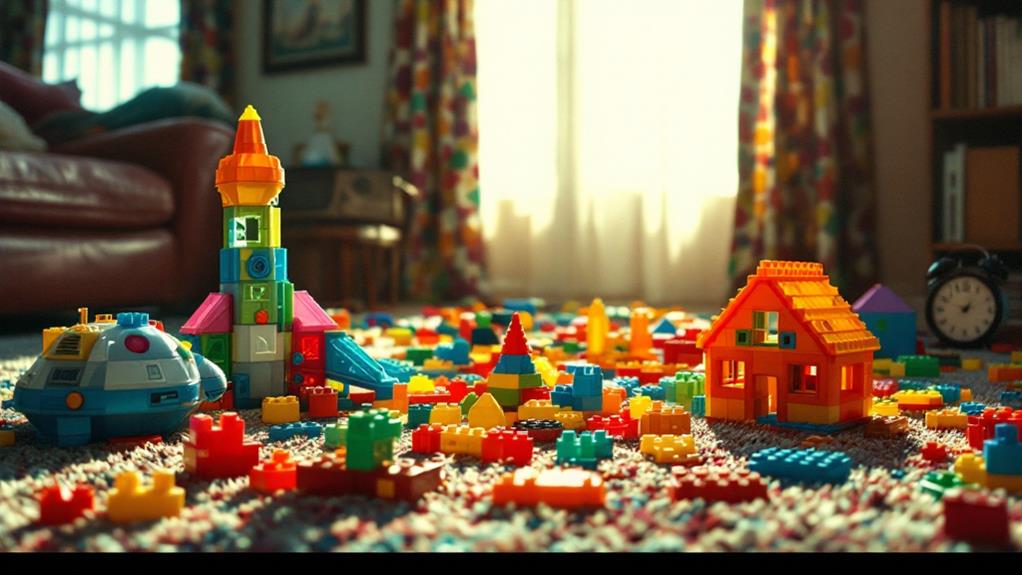
While foam-based balls revolutionized indoor play, construction block sets captured children's imaginations in a different way. The 1970s saw a surge in popularity for these timeless toys, offering kids endless possibilities for creative expression and skill development.
Lego sets became a household name, allowing you to follow instructions or build your own unique structures. These colorful plastic bricks provided hours of entertainment and sparked architectural dreams. For the budding engineers, Meccano construction sets offered complex mechanical designs that challenged and inspired young minds.
You could also step back in time with Lincoln Logs, constructing miniature log cabins just like the pioneers. If you were more mechanically inclined, Erector Sets let you build working model machines and vehicles using metal girders and connectors.
For younger children, classic wooden block sets like ABC blocks remained a simple yet effective way to develop fine motor skills and encourage imaginative play. These timeless construction toys not only entertained but also cultivated creativity, problem-solving abilities, and spatial awareness. Whether you preferred plastic, metal, or wood, the 1970s offered a building set to suit every child's interests and capabilities.
Action Figures and Dolls
Imagination soared with the explosion of action figures and dolls in the 1970s. You could embark on military journeys with G.I. Joe, recreate daring motorcycle stunts with Evel Knievel, or explore a galaxy far, far away with Star Wars action figures. These toys weren't just playthings; they were gateways to endless possibilities.
For the fashion-forward, Barbie continued her reign as the ultimate style icon. With new outfits and accessories released each year, you could keep up with the latest trends. Meanwhile, Baby Alive dolls brought a touch of realism to playtime, allowing you to feed and care for your very own lifelike baby.
The impact of these toys extended beyond mere play:
- They sparked creativity and storytelling
- They encouraged role-playing and social interaction
- They nurtured collecting and trading among kids
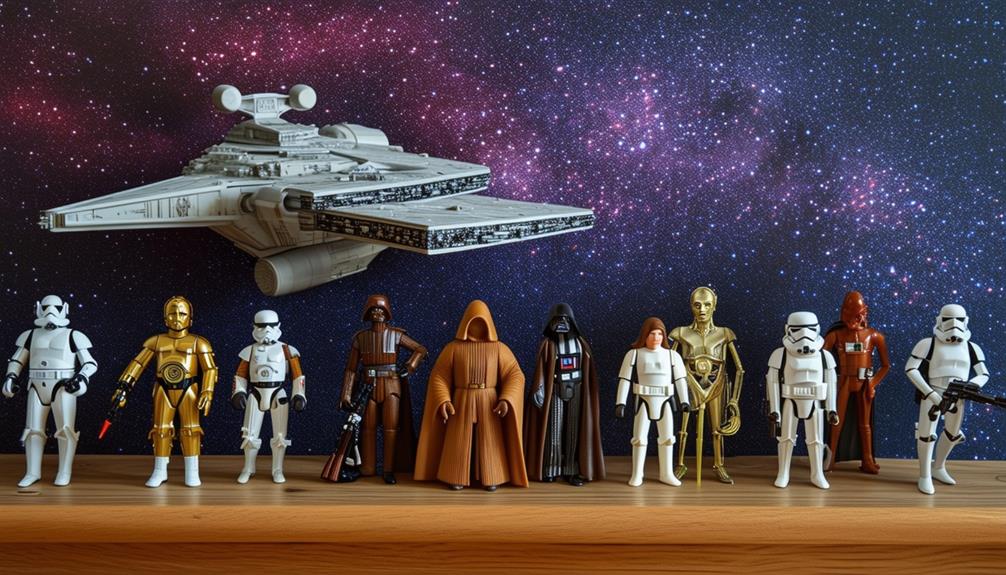
Star Wars action figures, in particular, revolutionized the toy industry. Following the movie's release in 1977, they became a cultural phenomenon, igniting a collecting craze that would last for decades. Whether you were reenacting scenes from the film or creating your own intergalactic adventures, these figures transported you to a world of limitless imagination.
Creative Drawing and Design Tools
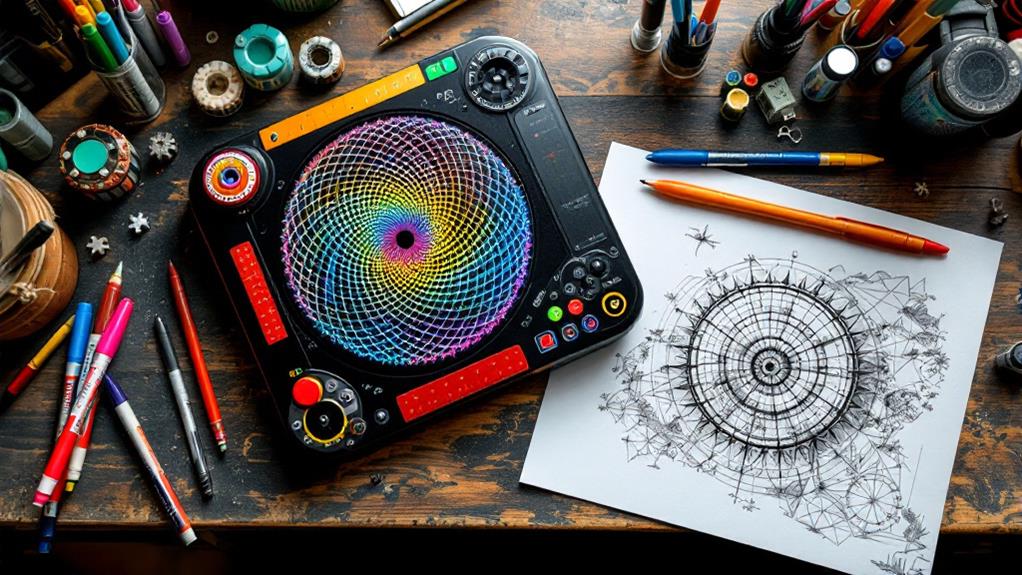
The 1970s ushered in a golden age of creative drawing and design tools for kids. These vintage toys transported you back to a simpler time when imagination reigned supreme. The Spirograph, a mesmerizing device, allowed you to create intricate geometric patterns by manipulating gears and wheels. You'd spend hours perfecting your designs, marveling at the complex shapes that emerged from simple movements.
Colorforms Shrinky Dinks offered a unique twist on art creation. You'd design your own charms and decorations on colored plastic sheets, then watch in awe as they shrank and hardened in the oven. Play-Doh, the ever-popular modeling compound, provided endless possibilities for sculpting and molding. With over 2 billion cans sold since 1955, it's no wonder this versatile toy captured the hearts of children everywhere.
For budding engineers, Lego building blocks and Meccano construction sets were the ultimate creative outlets. Lego allowed you to bring your wildest building dreams to life, while Meccano, though pricier, enabled you to construct complex mechanical models. These toys not only entertained but also nurtured problem-solving skills and spatial awareness.
Outdoor Play Equipment
Zipping down the sidewalk or soaring through the air, 1970s kids cherished outdoor play equipment with unbridled enthusiasm. The Big Wheel, a tricycle-like sensation, allowed you to race and perform daring stunts on homemade ramps. Roller skates were at their peak, offering both fun and exercise as you glided through the neighborhood.
For those seeking a bouncy [ADVENTURE], the pogo stick experienced a surge in popularity. Its unique design challenged both children and adults to [TRANSFORM] the art of continuous hopping. Nerf balls, with their soft foam construction, provided a safe way to throw and catch without fear of breaking windows or causing injuries.
Elaborate backyard setups became common, featuring:
- Swing sets for soaring high
- See-saws for balancing acts
- Slides for quick descents
These playground fixtures [TRANSFORMED] backyards into personal amusement parks. Whether you were bouncing on a pogo stick, racing on your Big Wheel, or swinging to new heights, outdoor play equipment of the 70s offered endless possibilities for [ADVENTURE] and physical activity. It was a time when neighborhood streets and backyards buzzed with the excited laughter of children enjoying these iconic toys.
Imaginative Playsets and Houses
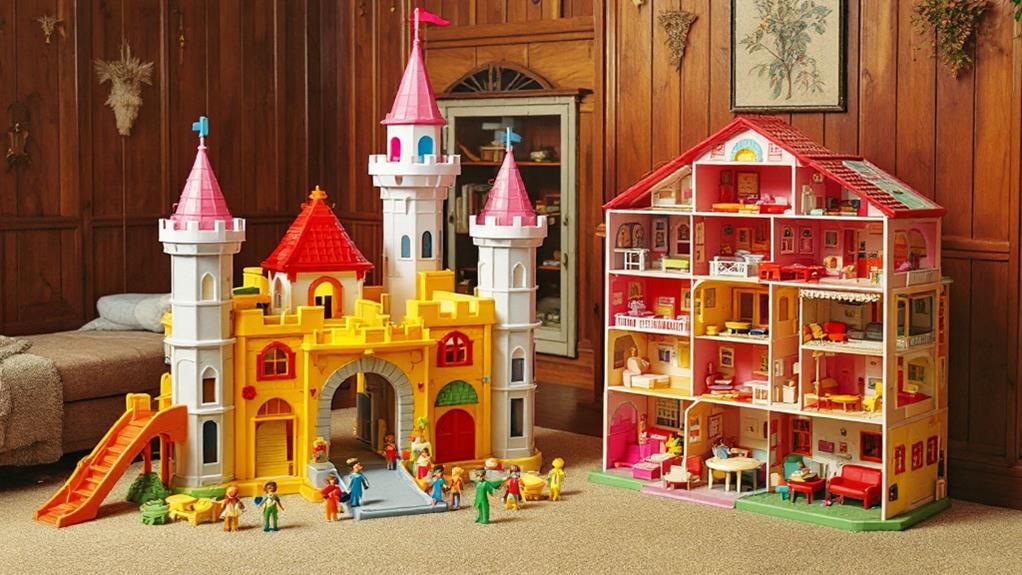
Often, the most cherished toys of the 1970s were those that sparked imagination and allowed for creative play. Among the coolest toys of the era were elaborate dollhouses, complete with intricate details and miniature furnishings. These playsets transported you to a world of make-believe, where you could arrange and rearrange rooms to your heart's content.
Barbie dolls and their accompanying playsets were another staple of 1970s childhood toys. You could dress up the iconic fashion doll and create endless stories and journeys. For boys, G.I. Joe action figures offered similar opportunities, letting you stage thrilling military missions and combat scenarios.
Indoor play wasn't left out, either. Nerf balls and Tonka trucks allowed you to engage in active play without fear of breaking household items. These toys encouraged creativity while keeping parents' minds at ease.
The Spirograph, a drawing toy that produced intricate geometric patterns, enthralled young artists. With a few simple moves, you could create complex designs that looked like they belonged in an art gallery. These imaginative playsets and toys defined the 1970s, providing hours of entertainment and nurturing creativity.
Vehicle and Transportation Toys
While imaginative playsets transported kids to fantastical worlds, vehicle toys of the 1970s brought the thrill of motion and expedition right into their hands. The decade saw an explosion of wheeled wonders that captured children's hearts and imaginations.
You couldn't walk into a playground without seeing a kid zooming around on a Big Wheel tricycle. Released in 1969, these low-riding plastic trikes became the ultimate ride-on toy throughout the '70s. For those who preferred miniature expeditions, Hot Wheels and Matchbox cars offered endless possibilities. You could collect hundreds of die-cast models, each with its own unique design and appeal.
Tonka Trucks ruled the sandbox scene. These sturdy metal vehicles could withstand even the toughest play sessions, making them a staple in every toy box. For the daredevils among you, Evel Knievel action figures and stunt cycle toys let you recreate death-defying jumps in your living room.
- Big Wheel tricycles for outdoor cruising
- Die-cast cars for pocket-sized racing
- Tonka Trucks for rugged play
While pet rocks may have been all the rage, it was these vehicle toys that truly kept '70s kids moving and grooving.
Interactive Electronic Games
As the 1970s progressed, electronic games began to capture kids' imaginations in ways that traditional toys couldn't match. While cuddly toys still had their place, interactive electronic games were quickly becoming the new favorites among children of all ages.
One of the decade's most iconic electronic toys was Simon, introduced in 1978. With its distinctive voice and memory-testing gameplay, Simon challenged kids to follow increasingly complex patterns of lights and sounds. For younger children, the Atari 400 home computer, launched in 1979, offered a tactile keyboard designed specifically for small hands, making it an accessible entry point into the world of computing.
Electronic football became a hit, allowing kids to carry a miniature gridiron in their pockets. But nothing reconfigured playtime quite like the Atari home gaming system. Suddenly, you could play video games right in your living room, reimagining home entertainment forever.
These electronic marvels represented significant advancements in toy technology, offering experiences that were previously unimaginable. From handheld devices to home computers, the 1970s laid the groundwork for the digital play revolution that would continue to evolve in the decades to come.