Where Did Pink Flamingo Lawn Ornaments Originate?
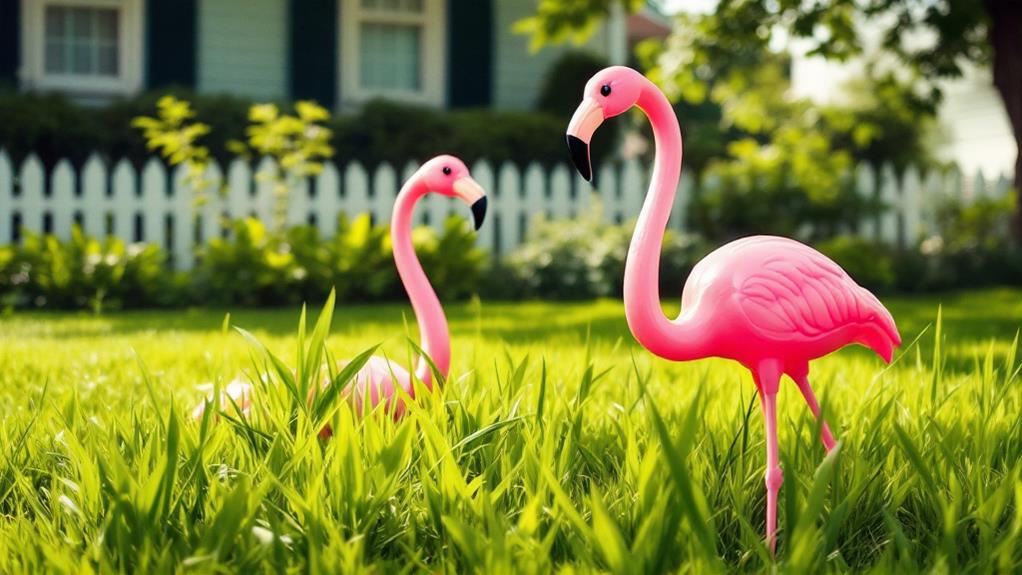
Pink flamingo lawn ornaments originated in 1957 when artist Don Featherstone created them for Union Products, a Massachusetts-based plastics company. Inspired by a National Geographic photo, Featherstone designed these vibrant brilliant pink birds using injection-mold technology for mass production. Initially priced at $2.76 per pair, they quickly became popular in working-class subdivisions, symbolizing a blend of kitsch and Americana. Over the decades, these plastic flamingos have evolved from suburban charm to pop culture icon, sparking debates about taste and class. Their expedition path from tacky lawn decor to celebrated folk art is a fascinating tale of American culture and aesthetics.
The Birth of an Icon
In 1957, the iconic pink flamingo lawn ornament burst onto the American suburban scene. You might be surprised to learn that this kitschy symbol of Americana was the brainchild of artist Don Featherstone. Working for Union Products, a plastics company in Leominster, Massachusetts, Featherstone set out to create a unique lawn decoration. The 1950s aesthetic emphasized bold colors, unique designs, and fanciful elements, which surely inspired Featherstone's creation.
Unable to study live flamingos, he turned to National Geographic for inspiration, using a photo as his model. Featherstone's design was brought to life through injection-mold technology, a process that allowed for mass production of these plastic birds. Initially priced at $2.76 per pair, the pink flamingo lawn ornament quickly caught on in working-class subdivisions across the country.
The flamingos' popularity soared, transitioning them from simple lawn decorations into a recognizable American icon. Their widespread adoption reflected the changing tastes and aesthetic preferences of post-war suburban America. The plastic pink flamingo became more than just a garden ornament; it evolved into a symbol of mid-century kitsch culture, simultaneously loved and mocked for its flamboyant artificiality. Featherstone's creation had unknowingly tapped into the American psyche, cementing its place in popular culture.
Don Featherstone's Plastic Creation
Don Featherstone's plastic flamingo emerged out of necessity and ingenuity. In 1957, while working for Union Products in Leominster, Massachusetts, Featherstone was tasked with creating a new lawn ornament. Without access to live flamingos, he turned to a National Geographic photo for inspiration, carefully crafting his design based on the image.
The result was a pair of vibrant pink flamingos, mass-produced using injection-mold technology. These plastic lawn ornaments quickly captured the hearts of suburban homeowners, particularly in working-class neighborhoods. At just $2.76 per pair, they were an affordable way to add a touch of whimsy to any yard.
Featherstone's creation became an instant hit, symbolizing a unique blend of kitsch and Americana. The flamingos' popularity endured for decades, with Featherstone's original design and molds eventually being sold to other manufacturers to continue production. Today, you can still find these iconic plastic flamingos adorning lawns across the country, a lasting legacy and the timeless appeal of his quirky creation.
Union Products and Mass Production
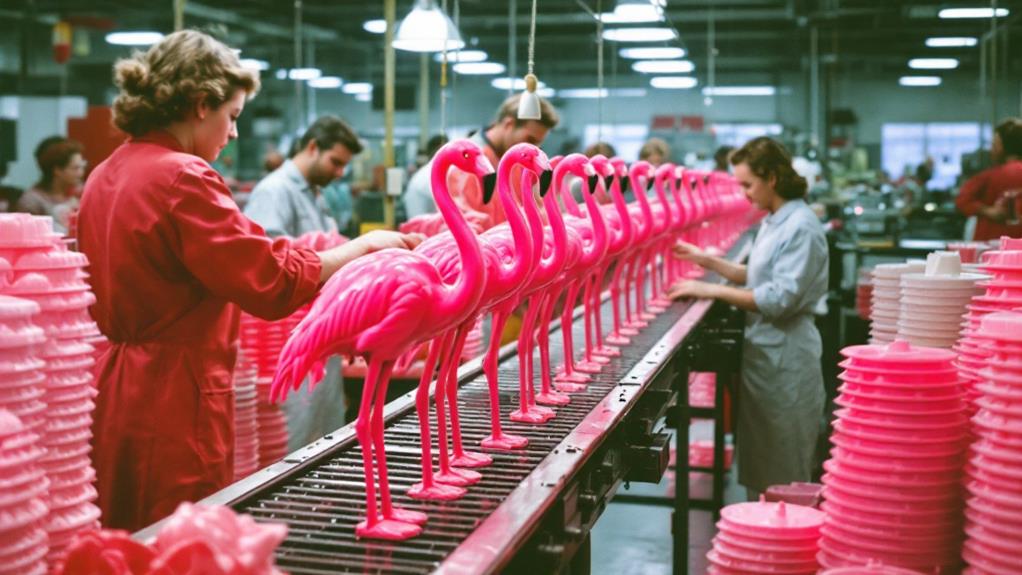
While Don Featherstone's design was revolutionary, it was Union Products that brought the pink flamingo to the masses. The Leominster, Massachusetts-based plastics company began mass-producing the iconic lawn ornament in 1987, complete with Featherstone's signature on the underside. This widespread availability helped cement the Plastic Pink Flamingo's status as a cultural icon.
Union Products continued manufacturing the flamingos until 2001, but their production ceased entirely in 2006. However, the story of the pink flamingo didn't end there. HMC International LLC purchased the copyright and plastic molds, guaranteeing the beloved lawn ornament would live on. They subcontracted production to Cado Manufacturing, also based in Leominster.
Eventually, Cado Manufacturing acquired the copyrights and the entire Union Products line, allowing them to continue producing the original plastic flamingos. This change in ownership and production ensured that you can still find these kitschy decorations adorning lawns across America. The enduring popularity of the pink flamingo is a chronicle to both Featherstone's fanciful design and Union Products' role in making it accessible to homeowners everywhere.
From Suburbs to Pop Culture
Metamorphosis defined the pink flamingo's expedition from suburban curiosity to pop culture symbol. You might've seen these plastic pink flamingos adorning lawns in post-WWII suburbs, where homeowners used them to distinguish their properties. Initially viewed as tacky by the 1960s counterculture, these lawn ornaments soon caught the eye of pop artists like Andy Warhol and Claes Oldenburg. Emerged in the 1950s as a quirky symbol of suburban charm, the flamingos provided a sense of whimsy and escape during a time of conformity.
The kitsch appeal of the plastic bird reached new heights when John Waters directed his cult film "Pink Flamingos" in 1972. This cinematic nod cemented the flamingo's status as an icon of bad taste and rebellion. By the 1980s, you'd find these Plastic Flamingos transcending their working-class roots, becoming an upper-class inside joke. They appeared at charity galas and upscale events, symbolizing both irony and nostalgia.
The pink flamingo's trek reflects its unique ability to cross social boundaries and represent various meanings. Whether you see it as a symbol of rebellion, kitsch, or Americana, there's no denying its significance in 20th-century American culture. The lawn ornament's enduring legacy proves its adaptability and cultural resonance.
Symbol of Kitsch and Class
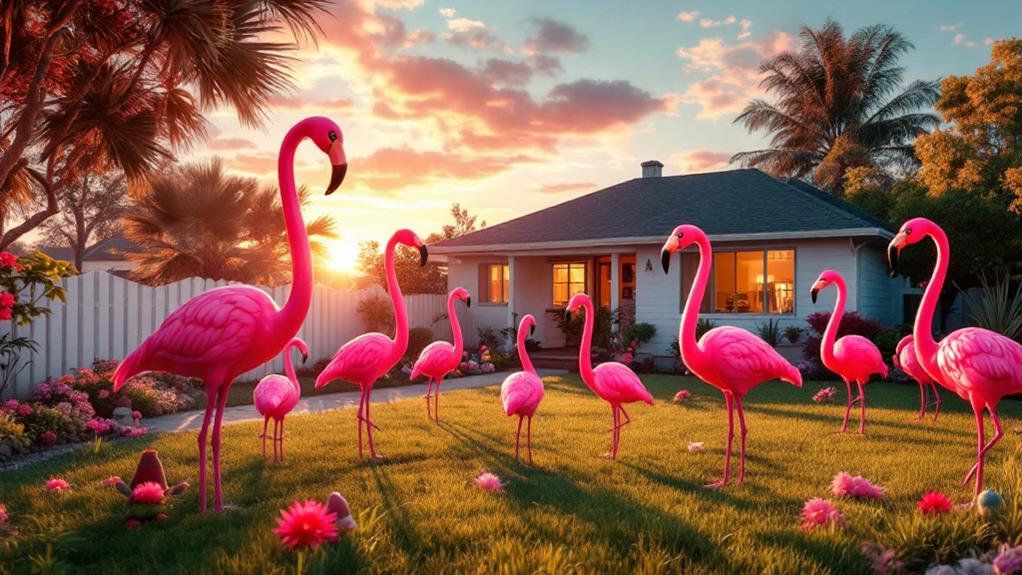
Embracing kitsch and challenging class distinctions, the plastic pink flamingo became an iconic symbol in American culture. After World War II, these pink plastic lawn ornaments emerged as a symbol of working-class aesthetics, standing in stark contrast to the middle class's preference for natural, well-manicured lawns.
You'll find that the flamingos' bright color and synthetic material were seen as an affront to middle-class sensibilities. Cultural critics like Jennifer Price have noted how these lawn flamingos crossed boundaries of taste and propriety. John Waters' 1972 film "Pink Flamingos" further cemented their status as a symbol that defied conventional norms.
As attitudes towards kitsch evolved, so did the flamingo's social standing. By the 1980s, what was once a working-class accessory had shifted into an upper-class inside joke. Despite being derided as the epitome of tackiness, these pink plastic birds have endured as a recognizable emblem of mid-century American material culture and class dynamics. They continue to spark conversations about taste, class, and the ever-changing scenery of American suburbia.
Flamingo's Journey Through Decades
The plastic pink flamingo's path through the years is a declaration of its lasting cultural importance. You might be surprised to learn that it took Don Featherstone two weeks to model this iconic lawn ornament in 1957. Initially popular in working-class neighborhoods, these plastics for the lawn faced criticism in the 1960s as symbols of conformity.
But the flamingo's story didn't end there. In the 1970s, it was brought into the third dimension of cultural significance, reborn as a symbol of rebellion and "bad taste." You'd find these pink icons adorning gay bars and transvestite accessories, challenging societal norms.
The 1980s saw a shift in perception, with the flamingo recognized as an essential contribution to American folk art in 1987. This led to the formation of preservation clubs, cementing its place in popular culture. The flamingo's voyage continued into the 21st century, with Madison, Wisconsin even naming it their official city bird in 2009. It's as if the governor of Massachusetts had declared it a state treasure!
Cultural Impact and Controversies
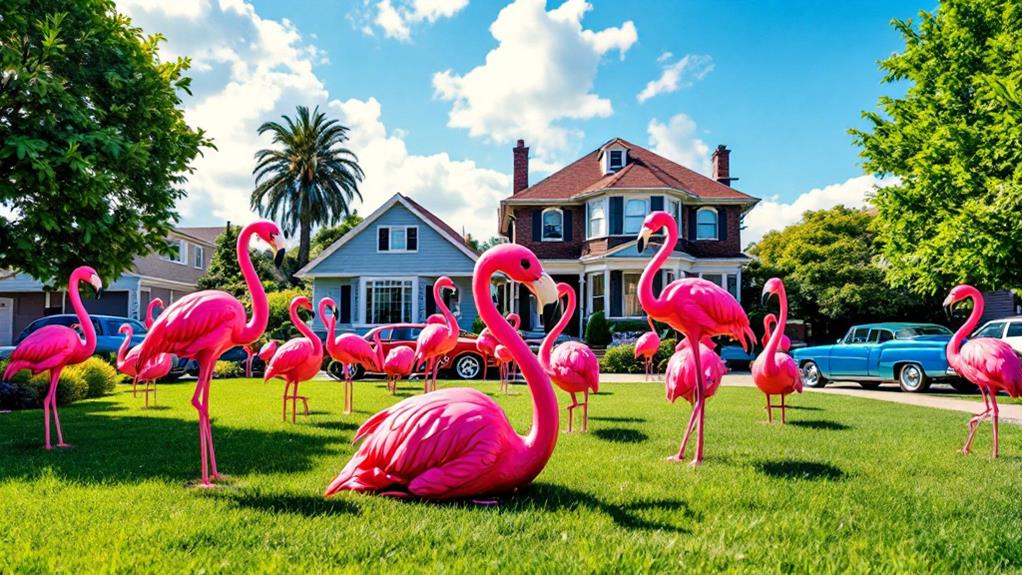
Since its inception, the plastic pink flamingo has been a lightning rod for cultural debate. You'd be hard-pressed to find another lawn ornament that's sparked as much controversy and discussion. John Waters's 1972 film "Pink Flamingos" played a significant role in cementing the flamingo's status as an icon of bad taste. The Waters movie, which took about two weeks to film, featured a character competing for the title of "filthiest person alive" and helped propel the hot pink bird into the spotlight of cultural rebellion.
Homeowners associations and middle-class suburbanites often viewed the flamingo as an affront to proper lawn aesthetics and conformity. This tension between conformity and self-expression became a hallmark of the flamingo's cultural impact. As perceptions shifted, the bird adopted from a working-class accessory to an upper-class inside joke by the 1980s, reflecting changing attitudes about taste and class.
Despite periods of backlash, the plastic flamingo has endured as a symbol of Americana. Some cities have even welcomed it as an official icon, proving that this kitschy lawn ornament has firmly planted its legs in our cultural arena.
Legacy of the Pink Flamingo
Over the decades, the pink flamingo lawn ornament has left an enduring, permanent, lasting mark on American culture. From its humble beginnings as a plastic lawn decoration designed in 1957, the flamingo became an iconic symbol of kitsch and pop art. Sold in pairs, these vibrant birds quickly spread across suburban landscapes, capturing the imagination of artists and homeowners alike.
The history of the plastic flamingo is a tale of transformation. What began as a working-class accessory evolved into an upper-class inside joke, while simultaneously being accepted by pop culture and criticized by critics. Filmmaker John Waters cemented its status as an icon of bad taste, yet years later, the flamingo's popularity persisted.
Despite facing bans from some homeowners associations, the pink flamingo's legacy continues to grow. In a surprising turn of events, Madison, Wisconsin even declared it their official bird in 2009. Today, these plastic birds remain a recognizable and beloved part of American lawn decor, transcending their original purpose to become a cultural touchstone that sparks nostalgia, debate, and admiration.