Why Are Gnomes so Popular in Germany?
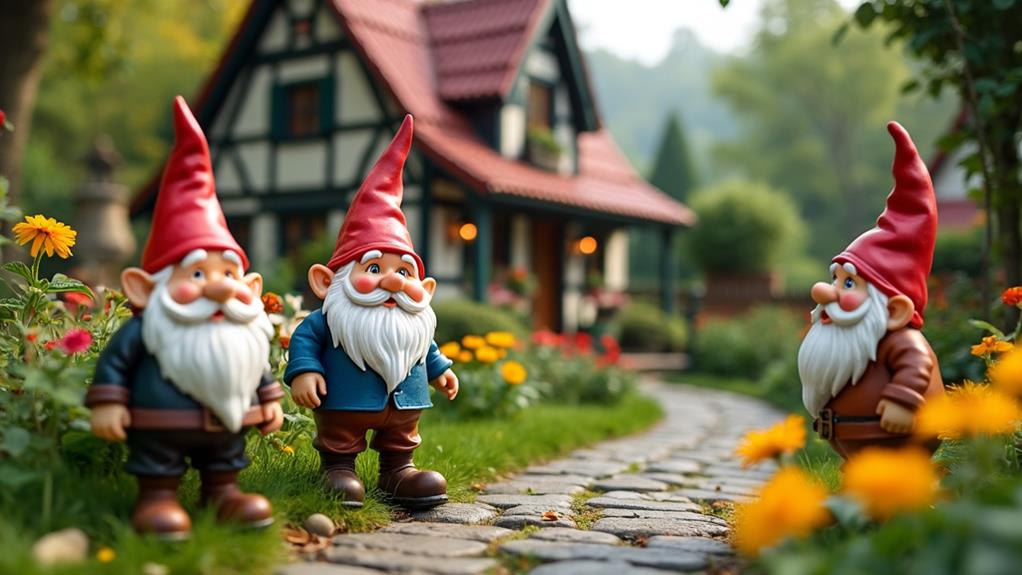
Gnomes are incredibly popular in Germany because they're deeply embedded in the country's folklore and culture. You'll find their origins in tales from the Renaissance, where they were guardians of hidden valuables and nature. Gnomes symbolize wisdom, protection, and good luck, often seen as protectors of the earth's wealth. German literature, like Goethe's "Faust" and Brothers Grimm fairy tales, has kept them alive in cultural consciousness. The modern acceptance of gnomes in festivals, markets, and social media highlights their charm. If you're interested in their evolving role, you won't want to miss what's next.
Origins in German Folklore
In the rich tapestry of German folklore, gnomes have long held a significant place, enchanting imaginations with their mystical origins. You might be fascinated to learn that gnome mythology dates back to the Renaissance, when these small, earth-dwelling creatures initially appeared in the works of alchemists. These early depictions painted gnomes as guardians of hidden riches and secret knowledge, living deep within the earth.
As you investigate further, you'll see that folklore variations across Germany have added their own unique twists to the gnome mythology. In some regions, gnomes are depicted as wise, benevolent beings who help humans by tending to their gardens or protecting their homes. In others, they might be seen as mischievous tricksters, playing pranks on unsuspecting villagers.
The stories and characteristics of gnomes differ from one German region to another, but one thing remains constant: their deep connection to the earth and nature. These variations in folklore have helped keep the legend of gnomes alive and thriving through the centuries, making them an enduring symbol of German cultural heritage. So, when you think of gnomes, remember their rich and varied origins in German folklore.
Symbolism and Meaning
Gnomes in German folklore aren't just charming characters; they carry profound symbolism and meaning. When you see garden gnomes, you're not just looking at cute decorations. These figures represent wisdom, protection, and the guardianship of hidden riches. Gnome symbolism often portrays these small creatures as protectors of the earth's wealth, including minerals and precious metals. They are believed to possess ancient knowledge and magical abilities, blending the mystical with the mundane.
Garden gnomes, placed in your yard, are thought to bring good luck and safeguard your home and garden. This tradition stems from the belief that gnomes ward off evil spirits and guarantee a bountiful harvest. Their presence in gardens signifies a connection to nature and a respect for the unseen forces that help things grow.
Gnomes in German Literature
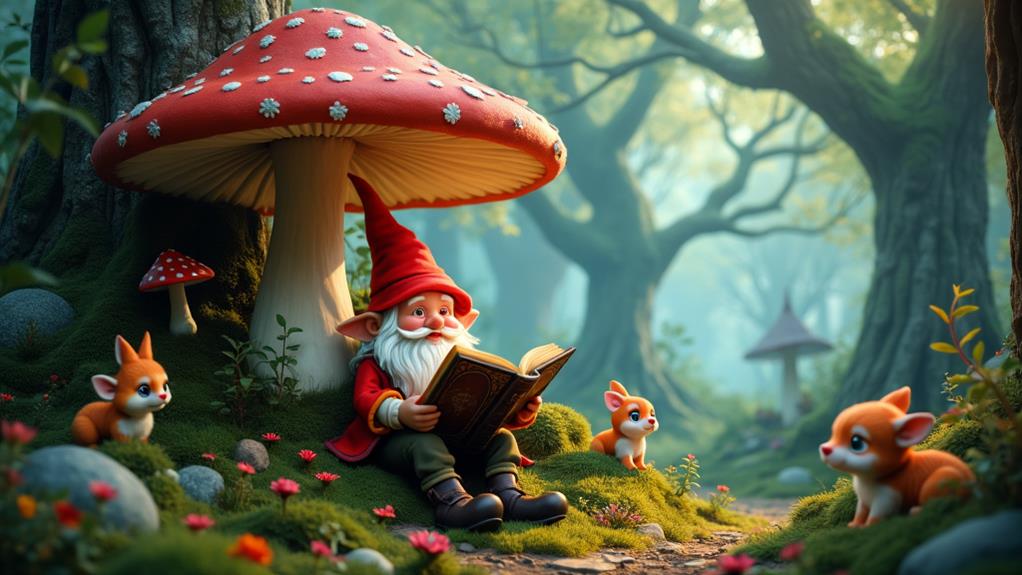
German literature teems with fascinating depictions of gnomes, bringing these mystical beings to life in vivid detail. You'll find gnomes portrayed as wise, ancient protectors of the earth, often embodying the spirit of nature and hidden wisdom. Through careful gnome characterization, authors reveal their complex personalities, from mischievous tricksters to benevolent guardians.
In classic works like Goethe's "Faust", gnomes symbolize deeper themes of knowledge and mystery, serving as guides to the protagonist on his arduous expedition. Their presence often represents the unseen forces at play in the world, bridging the gap between the natural and supernatural domains. This literary symbolism imbues gnomes with a sense of timelessness, making them enduring figures in German narratives.
Moreover, in the fairy tales collected by the Brothers Grimm, gnomes are frequent characters. They're depicted as clever and resourceful, often aiding heroes or teaching valuable lessons to the unwary. These stories use gnomes to convey moral lessons and cultural values subtly woven into the narrative fabric. By exploring German literature, you'll uncover how these diminutive figures enrich the storytelling tradition, offering profound insights through their fanciful and enigmatic nature.
Cultural Traditions and Festivals
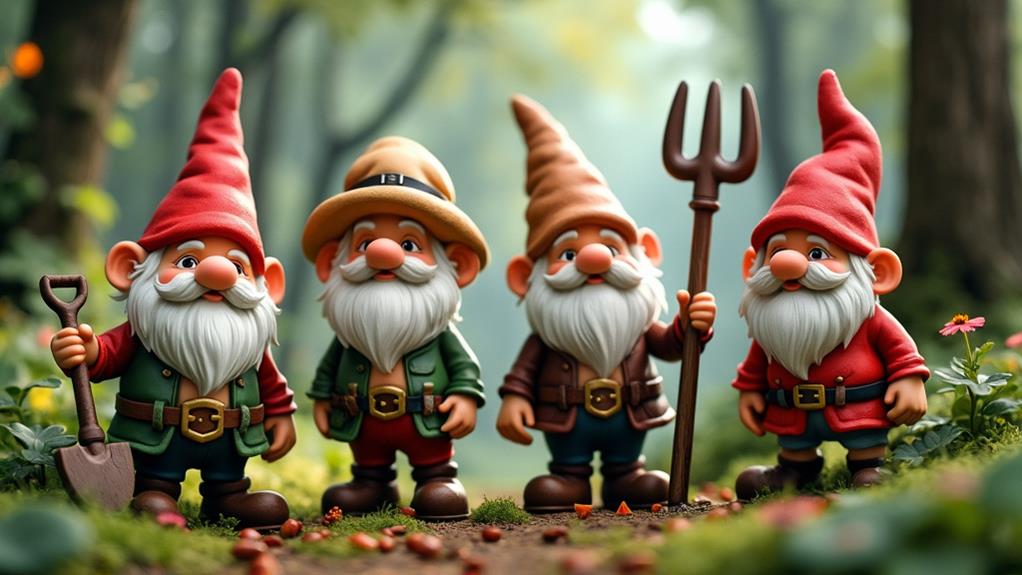
While exploring Germany's rich cultural landscape, you'll quickly uncover that gnomes are more than just literary figures; they're integral to diverse traditions and festivals. During festive seasons, especially around Christmas, gnomes emerge everywhere as festive decorations. These tiny, bearded figures, often seen wearing red hats, adorn homes, gardens, and public spaces, adding a touch of magic to the holiday cheer.
One of the most delightful traditions you'll encounter is the gnome parade. In several towns and villages, locals organize these parades to celebrate their gnomish heritage. Participants dress up as gnomes, complete with pointy hats and colorful costumes, and march through the streets. These parades often include floats featuring large, intricately designed gnome figures, accompanied by music and dancing. It's a sight that brings the community together and infuses the air with joy and camaraderie.
Furthermore, gnome-themed markets and fairs are common, where you can purchase handcrafted gnome figurines and other festive decorations. These events often feature storytelling sessions, where folklore and legends about these mythical creatures are shared, keeping the cultural heritage alive for future generations.
Modern Popularity and Trends
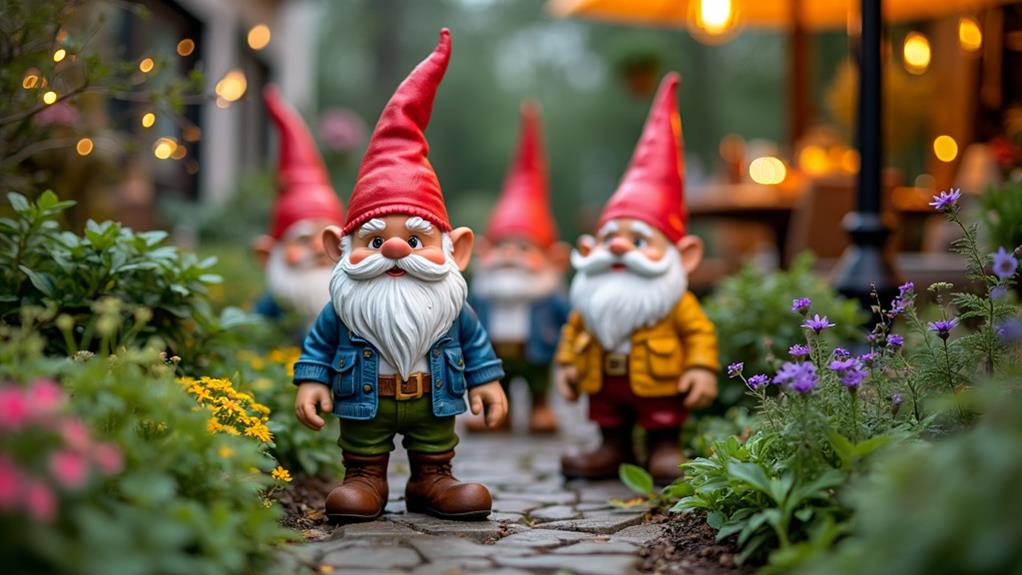
As you move from the traditional festivals and parades, you'll notice how gnomes have seamlessly integrated into modern-day German life, reflecting their enduring charm and adaptability. You'll find gnome merchandise in nearly every gift shop, from intricately designed figurines to quirky keychains, mugs, and even clothing. These items aren't just for tourists; locals cherish them too, often incorporating them into their home decor.
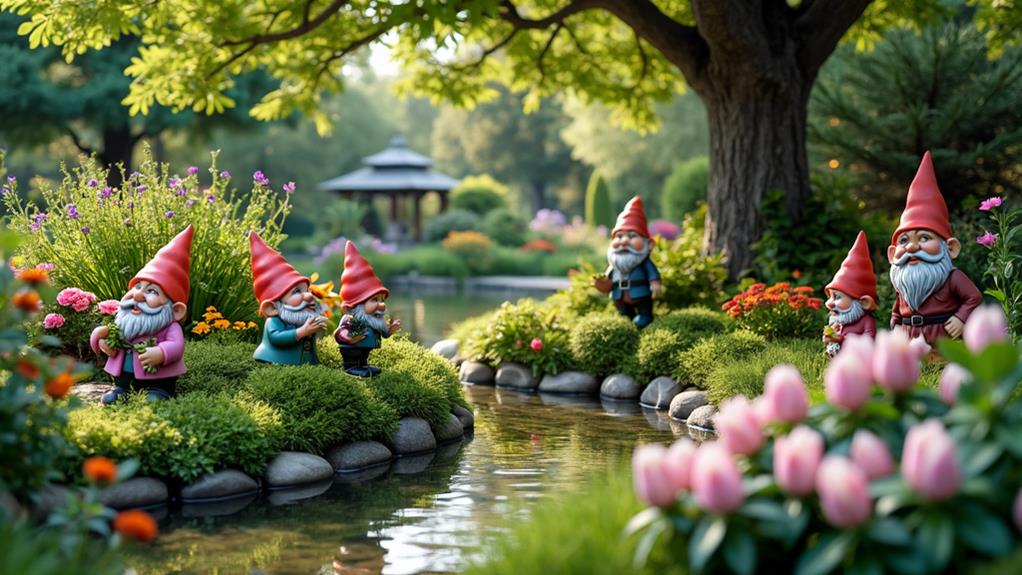
In gardens across Germany, gnome decorations are a staple. They add a playful touch to both urban and rural landscapes. Regardless of it's a single gnome peeking from behind a flowerpot or a whole family of gnomes creating a mini-village, these figures are a beloved feature. Modern designs have expanded beyond the classic bearded figure, introducing gnomes in multiple professions and playful poses, appealing to all generations.
Social media has also played a big role in the gnome trend. You'll see countless photos and posts celebrating these tiny guardians, from elaborate garden setups to themed parties. This online presence has only fueled their popularity, making gnomes a timeless symbol of German culture and creativity.