Why Do Gnomes Wear Pointy Hats?

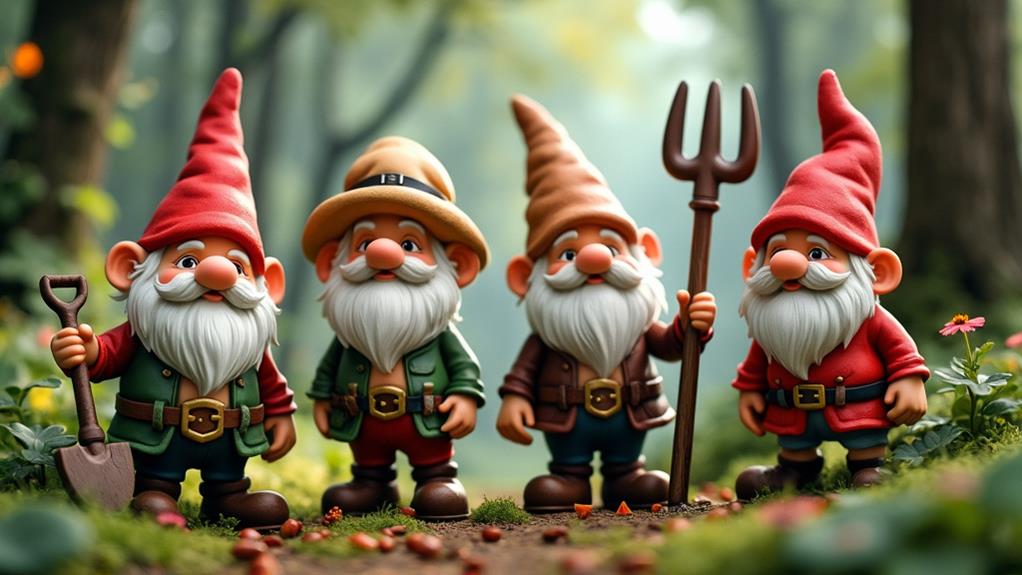
Gnomes wear pointy hats as a symbol of their cultural identity and social status. These iconic caps have a rich history, transitioning from marks of servitude to emblems of conceit and wisdom. The hat's height often indicates a gnome's standing in society, with taller hats signifying higher status. Practically, these hats help gnomes navigate underground tunnels and focus their magical abilities. Made from durable plant fibers, gnome hats are intricately crafted with protective runes and symbols. The tradition of pointed headwear is deeply ingrained in gnome culture, reflecting their magical heritage and connection to the earth. There's more to uncover about these fascinating creatures and their distinctive headgear.
Historical Origins of Gnome Hats
Delving into the historical origins of gnome hats reveals a fascinating expedition from subjugation to esteem. The iconic red pointed hats worn by gnomes have a rich history spanning thousands of years. Initially, these pointy red hats were symbols of subservience, forced upon gnomes by wizards who used them for manual labor. Gnomes were associated with the earth and underground domains, believed to be protectors of buried treasures according to Celtic folklore.
However, the tides turned in 465 A.D. during the vegetable patch riots led by the legendary Grumblebump Licklequip VII. This seminal event transformed the meaning of the hats, elevating them from a mark of oppression to a symbol of confidence for gnomes everywhere. The red pointed caps became an integral part of gnome culture, serving both practical and symbolic purposes.
You'll find that these hats aren't just for show. They've played a vital role in gnome society for centuries, with variations based on gender. While adult male gnomes sport the traditional red pointed caps, females opt for greenish hats to blend in with the underbrush. This distinction highlights the adaptability and ingenuity of gnomes in incorporating their history and connection to nature into everyday life.
Symbolism and Cultural Significance
The pointy hat atop a gnome's head is far more than a quirky fashion statement. It's deeply rooted in gnome culture and history, carrying significant symbolism and social implications. After the vegetable patch riots of 465 A.D., these iconic red hats transformed from symbols of subservience to emblems of arrogance and protection.
In gnome society, pointed hats serve as indicators of status, wisdom, and cultural identity. Garden gnomes originated from 19th-century Germany and the pointed hat is a key element of their traditional appearance. Here's what you need to know about their significance:
- Taller hats signify higher social status
- Hat height reflects aspiration to upper classes
- The elongated shape is associated with advanced matter manipulation
- Hatless gnomes are seen as nonconformists
- Upper echelons wear tall hats to showcase elevated wisdom
The cultural significance of these hats extends beyond mere fashion. They're intrinsically linked to gnomes' unique ability to manipulate solid matter, a skill attributed to their distinctively shaped heads. This connection between physical appearance and intellectual capacity has solidified the pointed hat's role as a symbol of gnome wisdom and social standing. As you observe gnomes in their natural habitat, you'll notice how hat height correlates with social classes, offering perception into their complex societal structure.
Practical Uses for Pointy Hats

Beyond their symbolic importance, gnome hats serve practical purposes essential to their daily lives. You'll find that these pointed hats help gnomes navigate their underground tunnels with ease. The unique shape allows them to move through dense earth, utilizing their elongated, sensitive skulls to sense their surroundings.
The taller the hat, the higher the social standing and wisdom attributed to the wearer. You'll notice that common gnomes sport shorter hats, while those without any are often seen as nonconformists or loners. It's not just about appearances, though. Gnomes believe their hats provide crucial protection for their distinctively shaped heads.
You might be surprised to learn that the iconic red hats have a complex history. Once symbols of subservience, they've been reclaimed with self-assurance by the gnome population. Today, these pointed caps serve as both functional tools and cultural identifiers.
Evolution of Gnome Hat Designs
Ever wondered how gnome hats have changed over time? The evolution of gnome hat designs is a fascinating odyssey through history and culture. What started as symbols of subservience for wizard's laborers became points of self-importance after the 465 A.D. vegetable patch riots. Over time, pointy red hats became a defining characteristic for male gnomes, while females adopted greenish-tinted hats for camouflage.
The height of a gnome's hat reflects their social status, with taller hats signifying higher aspirations. Garden Gnomes you see today are a result of centuries of hat evolution. Here's a quick rundown of gnome hat facts:
- Gnomes wear hats to protect their sensitive skull structures
- Hatless gnomes are considered nonconformists
- Medieval Jewish Pointed hats influenced gnome hat designs
- Gnomes are born with only short hats, which grow as they age
- By the time they reach adulthood, a gnome's hat and beard will have reached full length
As hats became a symbol of gnome identity, their designs adapted to serve both practical and cultural purposes. Today, pointy hats continue to be an essential part of gnome attire, reflecting their unique underground lifestyle and rich history.
Gnome Hat Materials and Construction

Gnome hat design isn't just about appearance; it's about materials and construction too. You'll find that gnomes have evolved their pointy red hats over many thousands of years, perfecting both form and function. These iconic caps became more than just fashion statements; they're intricate tools crafted with precision and purpose.
The specialized plant fiber used in gnome hats is highly durable and damage-resistant, guaranteeing longevity in harsh environments. You might be surprised to learn that the pointed shape isn't merely decorative; it's designed to channel energy and focus the wearer's magical abilities. Iterations of the Medieval pointy cap worn by Christian women influenced early designs, but gnomes have since adapted them for their unique needs.
Born as outcasts, gnomes were often shunned and grew to rely on their hats for protection. The intricate runes and symbols woven into the fabric provide safeguards against natural dangers. Using ancient techniques passed down through generations, gnomes carefully craft each hat to ensure a precise fit and ideal function. Legend has it that Grumblebump Licklequip VII led a revolution in hat-making, introducing color-coding to signify social status and community roles.
Social Hierarchy and Hat Styles
The towering heights of gnome hats aren't just for show - they're a complex social signaling system. In gnome society, hat height and ornamentation directly correlate with social status and wisdom. Higher-ranking gnomes sport taller, more ornate hats, while those lower in the hierarchy wear shorter, plainer hats. This custom originated from the gnomes' elongated skull shapes and unique brain structure, which initially linked hat height to extended wisdom.
Over time, hat styles have evolved to reflect broader shifts in gnome social and political structures. Here's a quick breakdown of gnome hat culture:
- Tall, ornate hats: High social status and wisdom
- Short, plain hats: Lower-ranking or goofing off workers
- No hat: Non-conformist gnomes rejecting the social hierarchy
- Hatless gnomes in dark bogs: Viewed as social outcasts
- Hat evolution: From symbols of subservience to self-esteem
You'll find that gnome hat styles aren't just fashion statements - they're deeply ingrained in their society. Non-conformist gnomes might choose to go hatless, while those on the fringes of society, like loners in dark bogs, are seen as rejecting gnome culture's emphasis on hat-wearing altogether.
Mythological Connections to Pointed Headwear
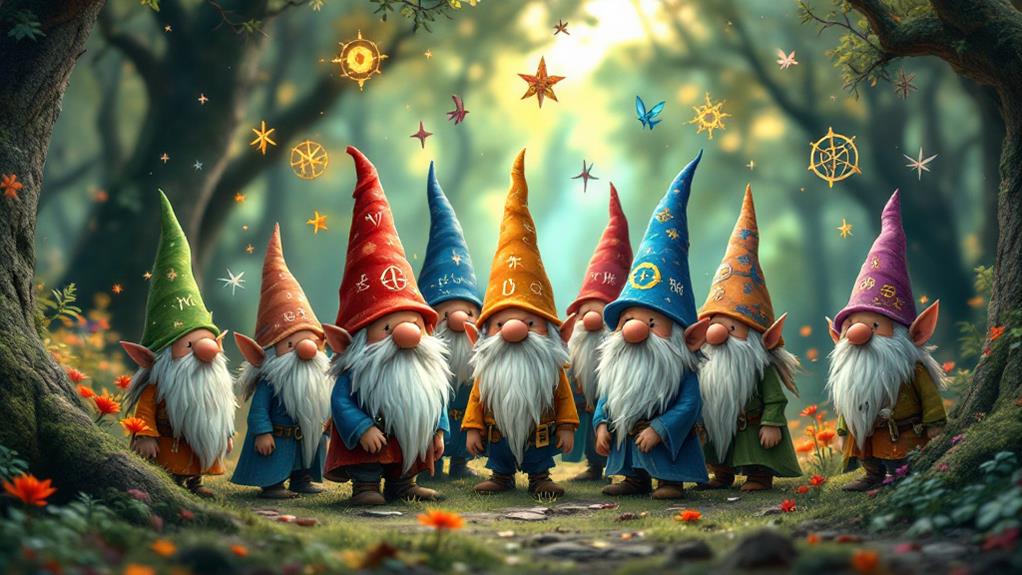
Countless mythological connections intertwine with the tradition of pointy hats worn by gnomes. You'll find that these hats became associated with magic and mischief in European folklore centuries ago. The origins of this connection can be traced back to ancient civilizations like Assyria and Persia, where priestly and regal headwear spread the tradition across Europe.
In medieval times, pointed hats became symbols of non-Christian identity and criminality. Figures like sorcerers and moneylenders wore them, further cementing their association with outsider status. Even the pointed hats of dwarfs in German folklore may have been influenced by the conical hats required of medieval European Jews.
The mythical nature of gnomes and their connection to Garden spaces lives on in modern times. While you won't find even fossilized gnome bones, their presence is felt in folklore. It's said that a gnome makes no sound when it moves, so if you encounter one, simply leave it alone. These magical creatures were once believed to perform manual labor in strip mines during the days when wizards used their powers freely.