Why Do People Decorate With Pink Flamingos?
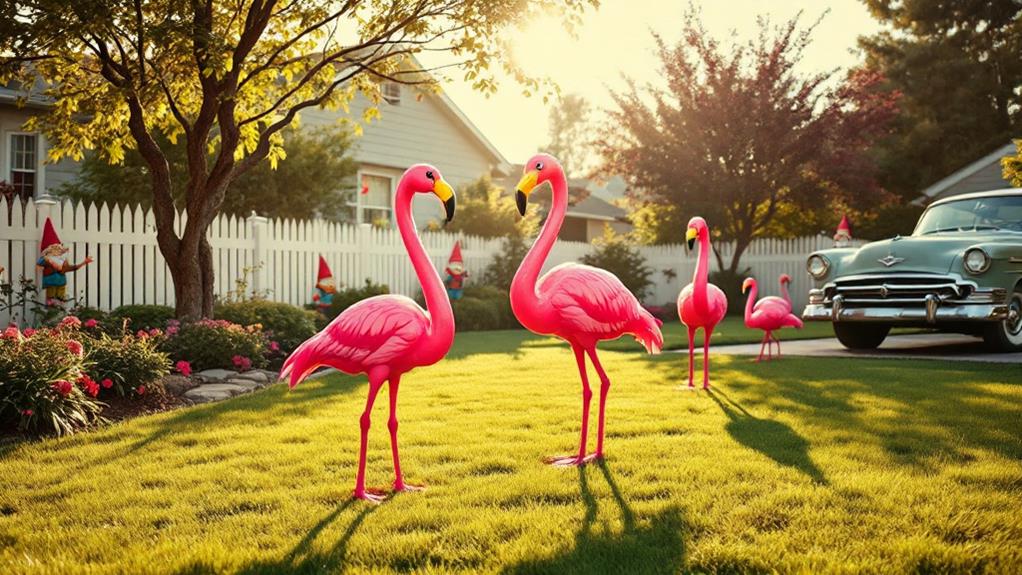
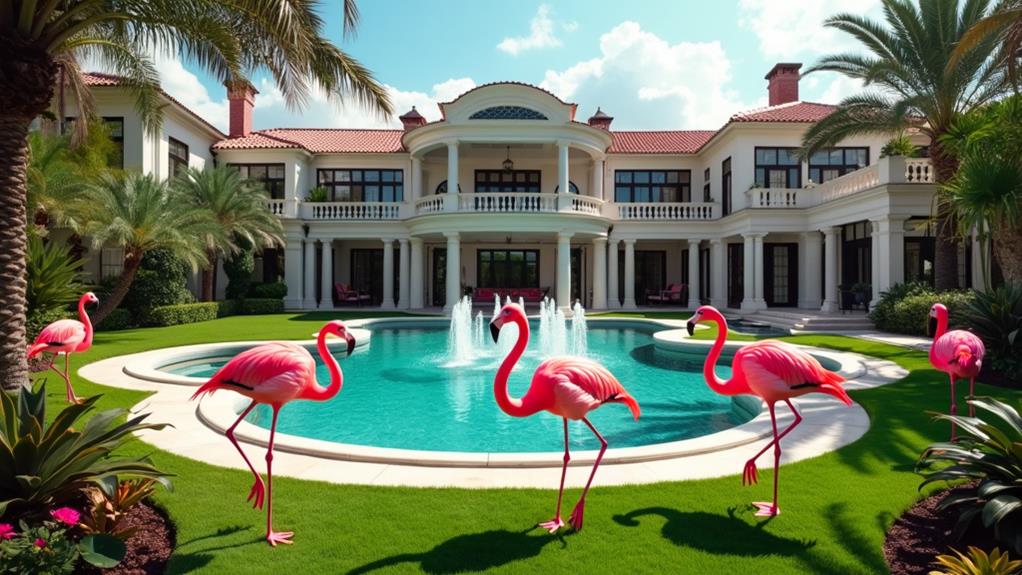
People decorate with pink flamingos for various reasons. You'll find these iconic lawn ornaments used to add whimsy and personality to yards, evoking nostalgia for mid-20th century suburban living. They're often welcomed, accepted, or taken on as kitsch symbols, representing a tongue-in-cheek appreciation for "tacky" aesthetics. For some, pink flamingos serve as ironic social commentary on class and taste, while others simply enjoy their lighthearted tropical flair. These plastic birds have evolved from post-WWII symbols of conformity to modern icons of individuality and rebellion against established norms. Their enduring appeal lies in their ability to spark conversations and continually reinvent themselves in unexpected ways.
Origins of the Pink Flamingo
The iconic pink flamingo lawn ornament has a surprisingly recent history. You might assume these plastic pink flamingos have been around for ages, but they were actually created in 1957. Don Featherstone, an artist working for Union Products in Leominster, Massachusetts, designed this now-famous piece of tropical elegance.
Interestingly, Featherstone didn't have any live flamingos to use as models in Massachusetts. Instead, he turned to a National Geographic photo for inspiration. This creative solution led to the birth of the plastic flamingos we are familiar with today.
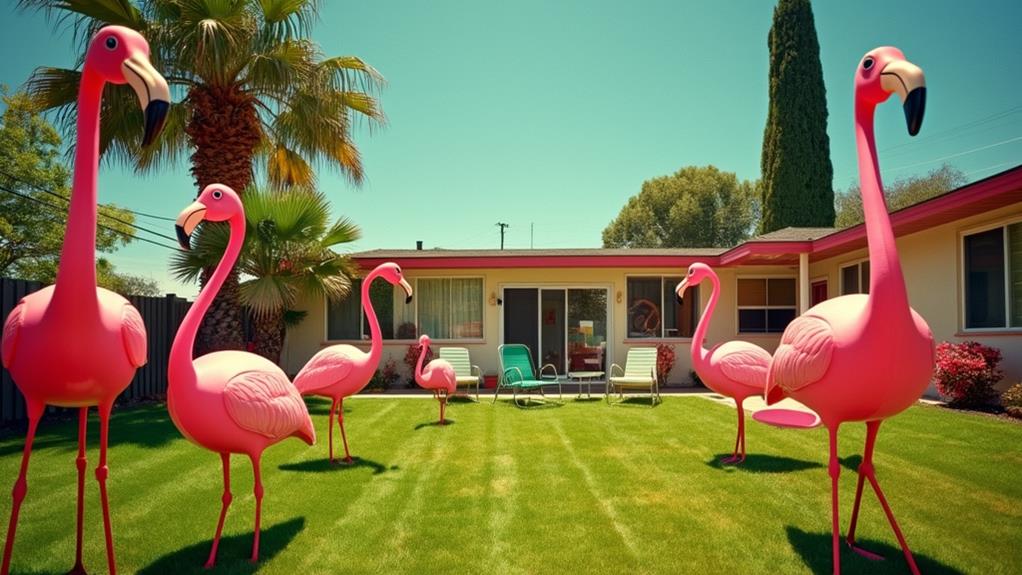
These lawn decorations quickly gained popularity in post-World War II America. Suburban homeowners welcomed the Flamingo as a way to add personality to their yards and distinguish their homes from their neighbors'. It became a symbol of working-class aspiration, allowing people to bring a touch of exotic flair to their everyday lives.
However, the flamingo's reputation would soon change. By the 1960s, these once-popular decorations were seen as symbols of "tackiness" by the counterculture. The plastic flamingo shifted from a sought-after accessory to an inside joke, accepted by some as a deliberate statement of bad taste.
Cultural Symbolism and Significance
Over the decades, pink flamingos have become much more than just lawn ornaments. These plastic pink birds have evolved into powerful cultural symbols, representing a complex interplay of class, taste, and irony in American society.
You'll find that flamingos are often associated with kitsch aesthetics, embodying a tongue-in-cheek appreciation for what some consider "tacky" or working-class decorations. They've shifted from symbols of post-WWII suburban conformity to icons of upper-class irony, used to mock perceived classist aesthetics.
Many people adopt flamingos as a way to express their individuality and celebrate the campy, humorous side of American pop culture. You'll see their influence in pop art, films, and TV shows that investigate themes of bad taste and social class.
While some view these plastic lawn ornaments as symbols of classism and mockery of the less fortunate, others find them to be nostalgic and lighthearted representations of a bygone era in American suburban life. Whether you love them or hate them, pink flamingos continue to spark conversations about taste, class, and the ever-changing tapestry of American cultural symbolism.
Aesthetic Appeal and Nostalgia
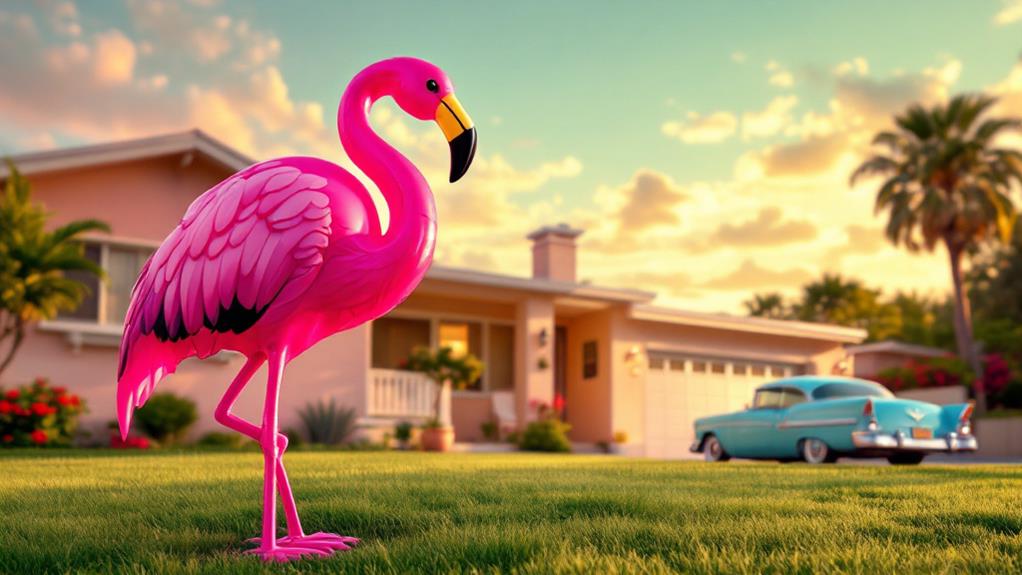
Throughout the years, pink flamingos have enchanted homeowners with their unique blend of whimsy and tropical charm. These iconic lawn ornaments burst onto the scene in the 1950s and '60s, offering suburban dwellers a chance to add a touch of "tropical elegance" to their yards. Plastic flamingos initially ridiculed as kitsch in the 1960s, but their enduring appeal is undeniable. When you stroll through a store and come home with a flamingo, you're not just buying a plastic lawn decoration—you're embracing a piece of Americana.
The appeal of these pink plastic birds lies in their ability to transport you back to a simpler time. They evoke memories of carefree suburban living and the aesthetic trends of mid-20th century America. By placing a flamingo at the store checkout, you're choosing to change your humdrum house into a lively paradise.
Despite being labeled "tacky" by some, pink flamingos continue to mesmerize homeowners. Their enduring popularity stems from their power to express individuality and add a lighthearted element to landscaping. When you decorate with flamingos, you're not just following a trend—you're celebrating nostalgia, embracing whimsy, and adding a splash of tropical sophistication to your everyday surroundings.
Social Commentary and Class
Many people view the pink flamingo as more than just a quirky lawn ornament; it's a powerful symbol loaded with social commentary and class implications. Originally associated with working-class aesthetics and poor taste, the plastic flamingo has become a cultural icon that challenges perceptions of class and social distinctions.
You might be surprised to learn how the flamingo has evolved over time:
- From post-WWII suburban accessory to pop art representation
- Appropriated by upper-class individuals as an ironic inside joke
- Used as a tool for both mocking and celebrating class differences
John Waters' 1972 film "Pink Flamingos" further cemented the flamingo's reputation for challenging societal norms. People just thought it was a tacky decoration, but it became a symbol of rebellion against established taste. You could pick up a flamingo and bring home a piece of this cultural commentary. A woman could pick up elegance under her arm to change her social standing, or at least appear to. The enduring popularity of these plastic birds shows how cultural symbols can take on new meanings and transcend their original depiction, becoming a unique form of social expression.
Modern Trends and Adaptations
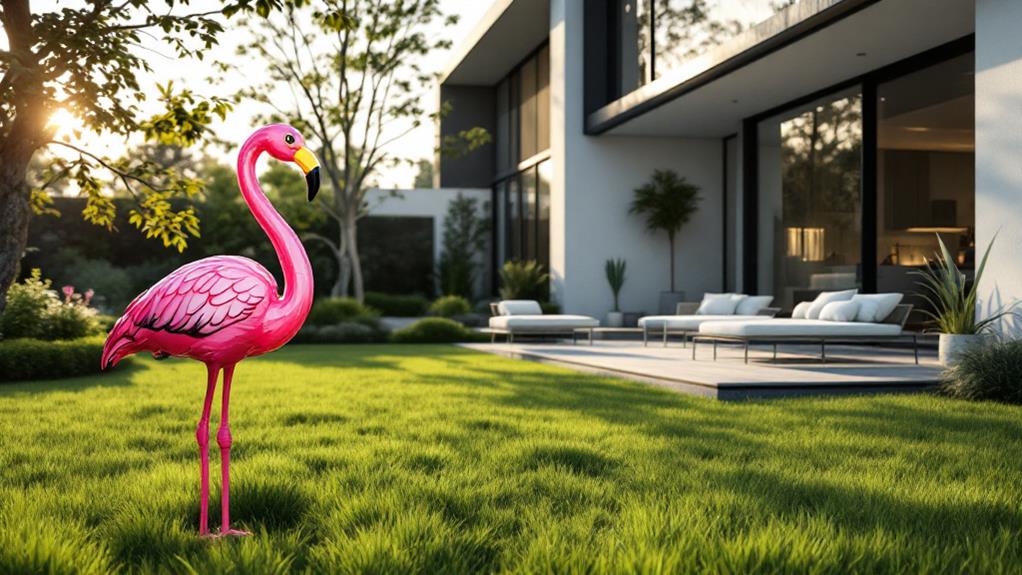
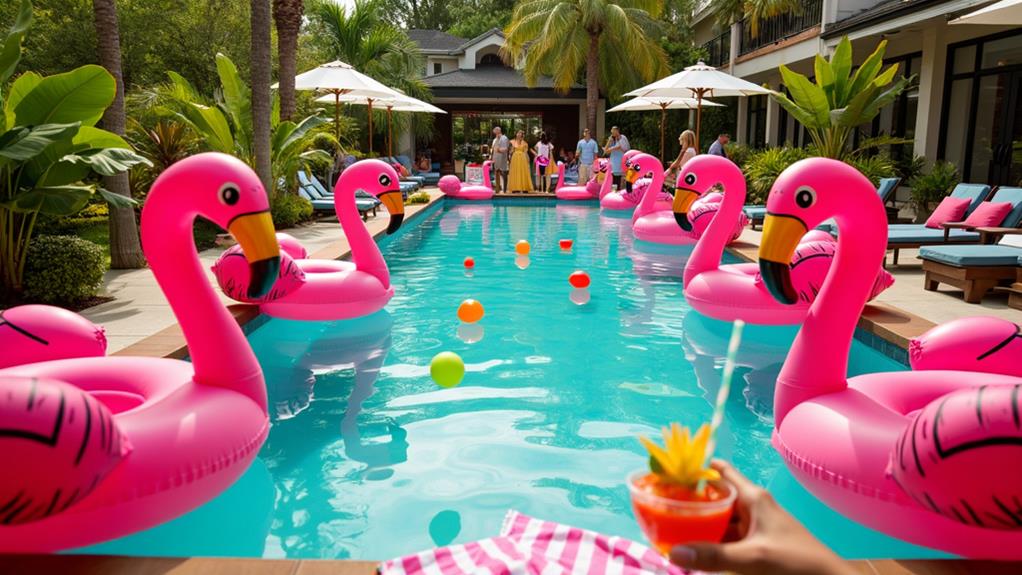
The pink flamingo has evolved from its origins as a symbol of suburban identity and post-WWII optimism into a versatile decoration with modern adaptations. You'll find that these iconic plastic ornaments have retained their appeal, albeit in new and exciting forms. While Union Products' original design may have faded, newer flamingo imports have stepped in to fill the void, offering fresh takes on the classic lawn ornament.
Today, you might spot flamingos adorning RV campsites, where they invoke a sense of nostalgia and playfulness. The bird became more than just a decoration; it's now a symbol of carefree living and expedition. Some people even use flamingos as memorials for deceased friends, giving these plastic birds a deeply personal significance.
National Geographic might dedicate two weeks to studying the migration patterns of real flamingos, but you'll find that these plastic versions have migrated from lawns to various unexpected places. While some might argue that flamingos would never naturally inhabit these spaces, the enduring appeal of these kitschy decorations proves that sometimes, entertainment value trumps realism. The pink flamingo's modern adaptations show that it's here to stay, continually reinventing itself for new generations.