
10 Geeky Movies Every Nerd Should Watch at Least Once

If you consider yourself a nerd, there are certain movies you simply can't miss. These films have not only defined their genres but also influenced countless other works. Think of the groundbreaking special effects in "Star Wars: Episode IV - A New Hope" or the philosophical depth of "Blade Runner." Each title on this list offers something distinctive, from the mind-bending concepts in "The Matrix" to the nostalgic adventure of "The NeverEnding Story." Ready to explore why these movies are essential for any true geek? Let's dive into what makes each of these films a crucial part of your cinematic repertoire.
Star Wars: Episode IV - A New Hope

"Star Wars: Episode IV - A New Hope" is an essential watch for any science fiction enthusiast. Released in 1977, this pivotal film directed by George Lucas initiated the legendary Star Wars saga. With an impressive IMDb rating of 8.6 and a Metascore of 90, its acclaim is well-documented.
The narrative centers on Luke Skywalker, who teams up with Princess Leia, Han Solo, and other allies to combat the tyrannical Galactic Empire and its formidable Death Star. The film's innovative special effects and sound design revolutionized cinematic storytelling and set new industry standards.
"A New Hope" is celebrated for its unforgettable characters, including the iconic Darth Vader and the sage Obi-Wan Kenobi. The movie delves into themes of good versus evil, friendship, and heroism within a richly constructed universe. Its impact extends well beyond the film, laying the groundwork for an expansive Star Wars universe that continues to engage audiences.
For science fiction fans, this cornerstone of geek culture is a must-see. Dive in and experience the magic that started it all.
Blade Runner
If you're fascinated by dystopian futures and the exploration of human identity, "Blade Runner" is essential viewing. Directed by Ridley Scott in 1982, this seminal film features a cyberpunk aesthetic and thought-provoking themes that have profoundly influenced sci-fi cinema. Harrison Ford's journey through a neon-lit, rain-soaked future will captivate you and provoke deep reflections on the essence of humanity and identity.
Dystopian Future Vision
Blade Runner, directed by Ridley Scott and released in 1982, immerses you in a dystopian future where bioengineered beings known as replicants coexist with humans. This vision of a future Los Angeles is both enchanting and haunting. The city's skyline is dominated by towering skyscrapers, bathed in perpetual rain and neon lights, creating an iconic visual feast in the cyberpunk genre.
The film's groundbreaking visual effects and neo-noir aesthetic set it apart, immersing you in a world that's both grim and fascinating. Los Angeles in Blade Runner is a city choked by pollution, where the line between man and machine blurs, making you question the essence of existence. Vangelis' haunting score perfectly complements this atmosphere, blending electronic music with orchestral elements to enhance the film's emotional depth.
Despite initial mixed reviews, Blade Runner has since gained critical acclaim and now holds an IMDb rating of 8.1. It offers a thought-provoking cinematic experience, exploring themes such as the ethics of artificial intelligence and the moral implications of creating life. This dystopian future vision is essential viewing for anyone interested in the intersections of technology, society, and morality.
Identity and Humanity
Exploring the theme of identity and humanity, Blade Runner delves into the existential struggles of replicants—artificial beings created to serve humans. The film provokes deep questions about what it means to be human as it follows characters like Roy Batty, a replicant desperate to extend his life and understand his existence.
The narrative masterfully poses philosophical questions about identity, particularly through the Voight-Kampff test, a tool designed to measure empathy. This test raises significant ethical questions about the nature of consciousness and emotional depth in artificial beings. How do you define humanity when artificial life forms exhibit emotions and desires similar to humans?
Ridley Scott's direction immerses you in a dystopian future where the line between human and machine blurs, forcing you to confront the complexities of self-awareness and purpose. Blade Runner's influence continues to resonate, especially with its sequel, Blade Runner 2049, which probes even further into the intricate relationships between humans and replicants.
Cyberpunk Aesthetic Influence
As you ponder the intricate questions of identity and humanity posed by Blade Runner, your attention inevitably shifts to the film's striking cyberpunk aesthetic. The movie doesn't just tell a story; it visually immerses you in a gritty, dystopian future where society grapples with the rapid advancement of technology. Ridley Scott's direction and production design masterfully blend noir influences with sci-fi elements, creating a world that feels both retro and futuristic.
The cyberpunk aesthetic of Blade Runner is defined by several key features:
- Neon Lights and Rain-soaked Streets: These elements create a somber, reflective atmosphere, emphasizing urban decay and technological prominence.
- Towering Skyscrapers: Reflecting societal hierarchy and the overwhelming presence of corporations.
- Low-key Lighting: Enhancing the noir feel, casting long shadows and emphasizing moral ambiguities.
- Synth-heavy Score by Vangelis: Deepening the sense of isolation and existential dread.
The Matrix
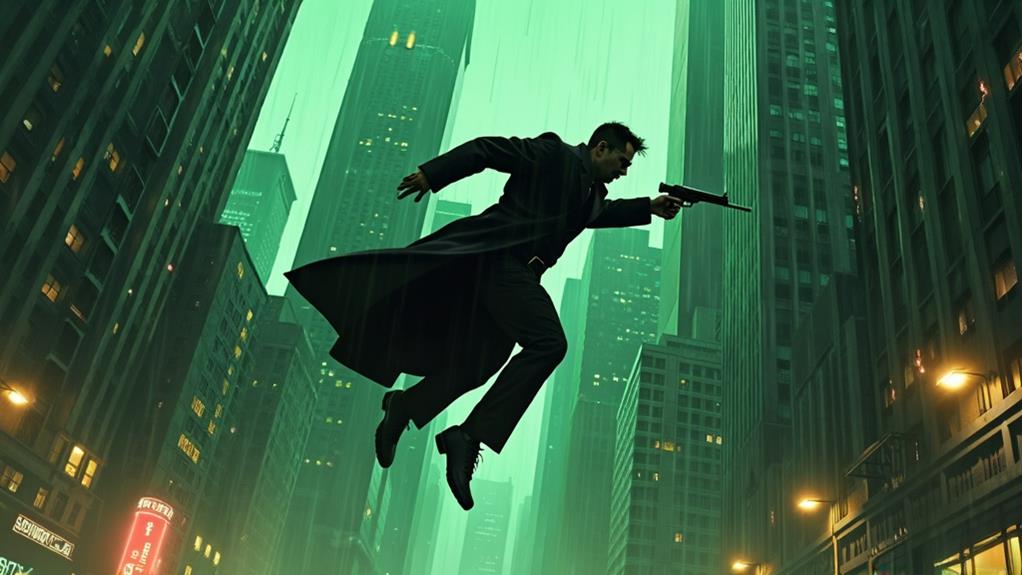
Within the vast landscape of science fiction cinema, The Matrix stands out as a must-watch. Released in 1999 and directed by Lana and Lilly Wachowski, this iconic film has a runtime of 2 hours and 16 minutes and boasts an impressive IMDb rating of 8.7. The plot centers on a hacker named Neo, who discovers that his reality is a simulated world controlled by machines. This revelation propels him into a rebellion against these oppressive forces.
The Matrix is renowned for its groundbreaking special effects, especially the revolutionary "bullet time" technique, which has left a lasting impact on the action and sci-fi genres. The film explores profound themes such as the nature of reality, free will, and human consciousness, sparking extensive philosophical debates among viewers and scholars alike.
Winning several awards, including four Academy Awards, The Matrix has become a cultural phenomenon. It has inspired countless parodies, references, and discussions in popular media. If you're a fan of thought-provoking narratives and creative visual effects, The Matrix is an essential addition to your watchlist.
Planet of the Apes
A cornerstone of sci-fi cinema, Planet of the Apes is a must-watch for any sci-fi enthusiast. Released in 1968, this classic runs for 1 hour and 52 minutes and is rated G, making it accessible for all audiences. It's renowned for its groundbreaking makeup effects by John Chambers, which brought intelligent ape characters to life and set a high standard for future sci-fi films.
Here's why you can't miss this iconic film:
- Innovative Makeup Effects: John Chambers' revolutionary work earned him a special Oscar and has inspired generations of filmmakers.
- Compelling Themes: The film explores civilization, evolution, and the consequences of humanity's actions, offering thought-provoking commentary on societal issues.
- Critical Acclaim: With an IMDb rating of 8.0 and a Metascore of 79, the movie has been praised for its storytelling, acting, and visual effects.
- Franchise Legacy: Its success led to multiple sequels, remakes, and a reboot series, cementing its place in pop culture history.
In essence, Planet of the Apes is not just a movie; it's a monumental piece of sci-fi history that every enthusiast should experience at least once.
Star Trek II: The Wrath of Khan
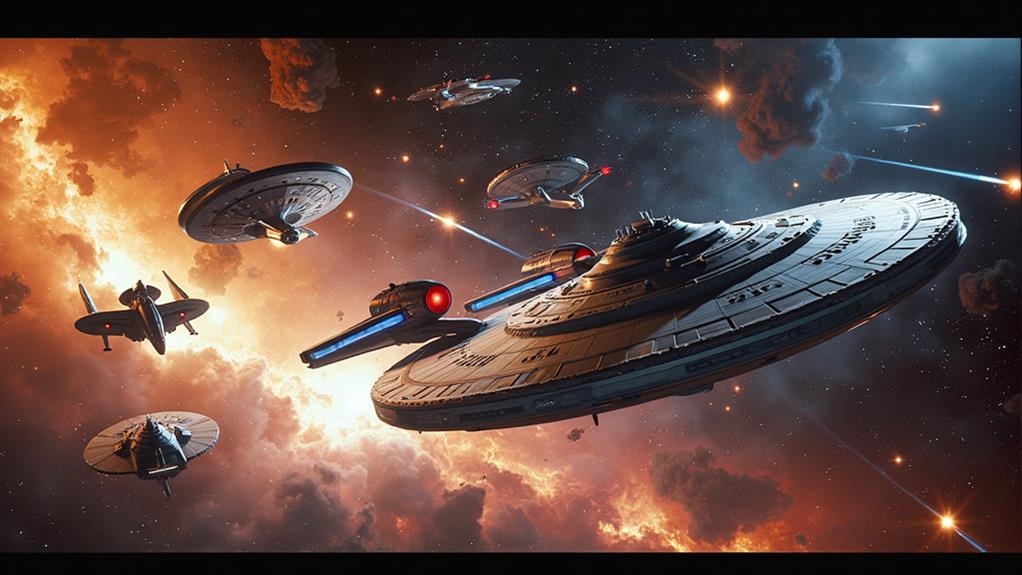
Following the impactful legacy of Planet of the Apes, let's turn our attention to another sci-fi masterpiece: Star Trek II: The Wrath of Khan. Released in 1982, this film runs for 1 hour and 53 minutes and carries a PG rating. It is a seminal entry in the Star Trek universe, featuring Admiral Kirk's intense confrontation with his old nemesis, Khan Noonien Singh, who seeks revenge after being marooned on a desolate planet.
The film explores themes such as sacrifice, friendship, and the consequences of revenge, adding layers of emotional depth to its storyline and making it resonate deeply with audiences. Its positive reception is reflected in its IMDb rating of 7.7 and a Metascore of 68.
Here are some key aspects:
| Aspect | Details | Impact |
|---|---|---|
| Release Year | 1982 | Set a high bar for sci-fi |
| Key Themes | Sacrifice, friendship, revenge | Adds emotional depth |
| Ratings | IMDb: 7.7, Metascore: 68 | Reflects positive reception |
Often regarded as one of the best films in the Star Trek franchise, The Wrath of Khan has left a lasting impact on science fiction cinema, influencing subsequent films and series in meaningful ways.
Raiders of the Lost Ark
Next up is *Raiders of the Lost Ark*, where you'll follow the iconic adventurer Indiana Jones on his quest for the Ark of the Covenant. Racing against Nazi antagonists, the film's thrilling action sequences and groundbreaking special effects will keep you on the edge of your seat. It's a must-watch for anyone who loves a blend of history, adventure, and heroism.
Iconic Adventure Hero
One film that every nerd should have on their watchlist is Raiders of the Lost Ark. This 1981 classic introduces the iconic adventure hero, Indiana Jones, played by Harrison Ford. Directed by Steven Spielberg and featuring a story by George Lucas and Philip Kaufman, this film sets the gold standard for the adventure genre.
Indiana Jones isn't just any archaeologist; he's a whip-wielding, fedora-wearing hero who faces danger head-on. His character combines intellect, bravery, and a touch of roguish charm, making him a timeless figure in cinema. Here's why you shouldn't miss it:
- Cultural Impact: Indiana Jones has become a cultural icon, influencing countless films and TV shows.
- Critical Acclaim: The film received 10 Academy Award nominations and won 5, including Best Visual Effects and Best Film Editing.
- Memorable Score: John Williams' "Raiders March" is one of the most recognizable film themes, perfectly capturing the spirit of adventure.
- Commercial Success: Grossing over $389 million worldwide, it remains one of the highest-grossing films of its time.
Historical Artifact Quest
In Raiders of the Lost Ark, the quest for the historical artifact—the Ark of the Covenant—immerses viewers in a whirlwind of action, danger, and intrigue. As Indiana Jones, portrayed by Harrison Ford, you're not just on any expedition; you're on a mission to locate the biblical Ark before it falls into the hands of adversaries.
Directed by Steven Spielberg, this 1981 classic is renowned for its thrilling action sequences and clever puzzles, hallmark elements of adventure cinema. With a runtime of 1 hour and 55 minutes, the film is a masterclass in storytelling and direction. Boasting an IMDb rating of 8.4 and a Metascore of 86, the film received critical acclaim for its compelling narrative and groundbreaking special effects.
John Williams' iconic "Raiders March" score adds to the excitement, making every twist and turn in Indiana Jones' journey even more memorable. Raiders of the Lost Ark revitalized the adventure genre, influencing countless films and establishing Indiana Jones as a cultural icon. This movie is not just a film; it's a monumental experience in the world of historical artifact quests.
Nazi Antagonists
In Raiders of the Lost Ark, the Nazi antagonists serve as formidable foes against Indiana Jones, driven by a fanatical obsession with the Ark of the Covenant's supernatural power. Their ruthless pursuit of the Ark sets the stage for intense conflicts and thrilling action sequences.
The film's portrayal of the Nazis is chilling. They are depicted as willing to commit any atrocity to obtain the Ark, showcasing their disregard for human life and sacred artifacts. The opening scene in Peru establishes their brutal methods and unrelenting ambition.
To understand why the Nazi antagonists are so compelling, consider these points:
- Historical Context: The film anchors its villains in the real-world context of the Nazis' occult interests during World War II, adding a layer of authenticity.
- Belloq's Rivalry: The character of Belloq, played by Paul Freeman, epitomizes the archetypal villain whose greed and ambition make him a perfect foil for Indiana Jones.
- Dramatic Downfall: The climactic scene where the Nazis open the Ark highlights their hubris and ultimate downfall, emphasizing the consequences of their sacrilege.
- Symbolic Conflict: The battle between Indiana Jones and the Nazis represents a larger struggle between good and evil, making the narrative universally resonant.
In essence, the Nazi antagonists in Raiders of the Lost Ark create an unforgettable and thrilling experience.
The NeverEnding Story
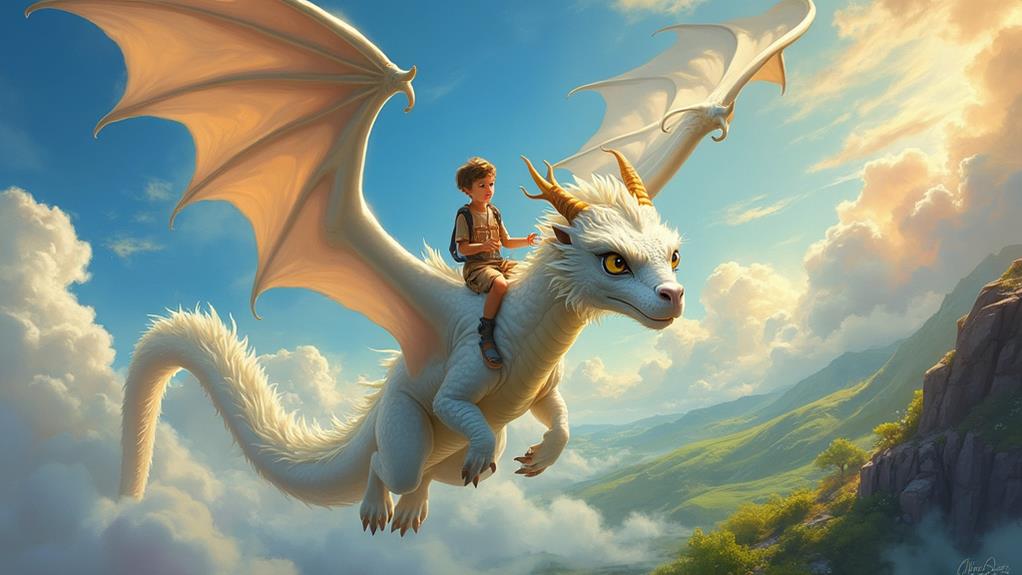
The NeverEnding Story, often celebrated for its enchanting narrative and imaginative visuals, is a must-watch for fantasy enthusiasts. Released in 1984 and directed by Wolfgang Petersen, this film immerses viewers in a universe where imagination knows no bounds. Based on Michael Ende's novel, it follows young Bastian, who discovers a magical book that transports him to the fantastical land of Fantasia. There, he embarks on a quest to save the realm from the destructive force known as The Nothing.
You'll meet unforgettable characters like Atreyu, the brave warrior, and Falkor, the luck dragon, who make the journey even more magical. The film's runtime of 1 hour and 42 minutes flies by, thanks to its captivating story and imaginative visuals. Rated PG, it appeals to audiences of all ages with themes of courage, friendship, and the limitless power of imagination.
Achieving cult classic status, The NeverEnding Story has inspired numerous adaptations and remains a staple in popular culture. Its iconic theme song, performed by Limahl, continues to evoke nostalgia. If you haven't seen it yet, add this gem to your watchlist immediately.
Ghostbusters
For a perfect blend of supernatural thrills and humor, Ghostbusters is an unmissable gem in the comedy genre. Released in 1984 and directed by Ivan Reitman, this film has left an indelible mark on pop culture. Its unique combination of supernatural elements and comedy has made it a beloved classic.
You'll be captivated by iconic performances from Bill Murray, Dan Aykroyd, and Sigourney Weaver. Murray's character, Peter Venkman, stands out with his deadpan delivery and charm, making him particularly memorable. The film's groundbreaking use of special effects, blending practical effects with cutting-edge visual techniques, set a new standard in the genre. It's not just the visuals that hooked audiences; Ray Parker Jr.'s catchy theme song became a chart-topping hit and a pop culture phenomenon.
Here's why Ghostbusters should be on your must-watch list:
- Iconic Cast: Bill Murray, Dan Aykroyd, and Sigourney Weaver deliver unforgettable performances.
- Groundbreaking Special Effects: Cutting-edge visual techniques that influenced future films.
- Cultural Impact: A theme song that became a pop culture staple.
- Enduring Franchise: Sequels, an animated series, and a reboot show its lasting popularity.
Don't miss out on this cornerstone of geek cinema!
Alien
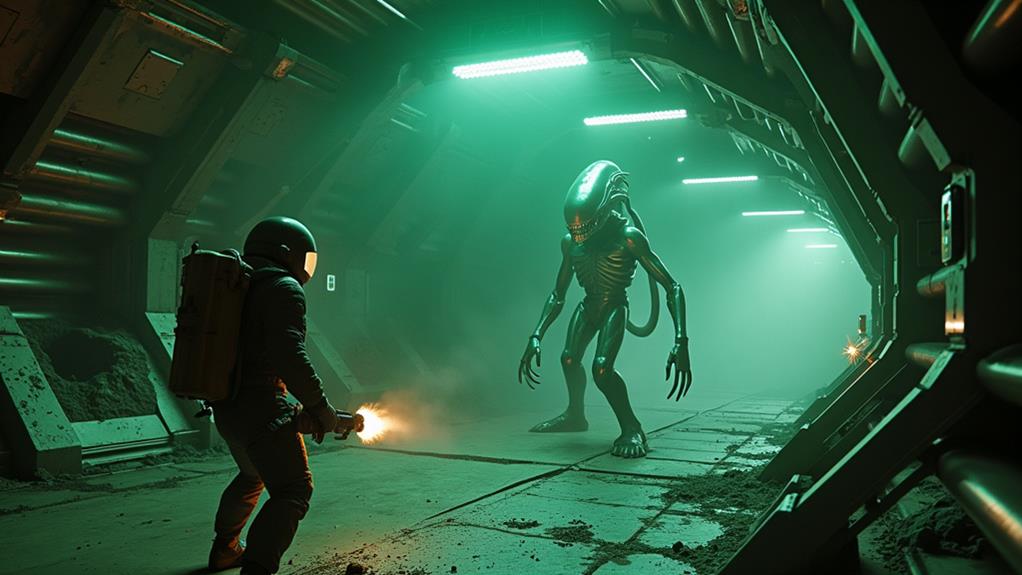
Next on your must-watch list is *Alien*, a film that redefined sci-fi horror with its groundbreaking visual effects and intense atmosphere. Sigourney Weaver's performance as Ellen Ripley, one of cinema's strongest female protagonists, will captivate you. *Alien* isn't just a movie; it's a masterpiece that set new standards for the genre.
Iconic Sci-Fi Horror
When discussing iconic sci-fi horror films, Alien (1979) is an essential watch. Directed by Ridley Scott, this film is a landmark in the genre, blending intense atmosphere with groundbreaking visual effects. The story follows the crew of the Nostromo spacecraft as they encounter a deadly extraterrestrial lifeform, setting the stage for a gripping and terrifying experience.
Alien has several key elements that make it crucial viewing:
- Strong Female Lead: Sigourney Weaver's portrayal of Ellen Ripley broke new ground, presenting a strong, resourceful female protagonist who has since become an iconic character in cinema history.
- Critical Acclaim: With an IMDb rating of 8.5 and a Metascore of 89, the film's impact on both horror and sci-fi genres is undeniable.
- Claustrophobic Setting: The confined spaceship setting elevates the tension, making every corner a potential death trap.
- Practical Effects: The creative use of practical effects contributed to the film's realistic and terrifying atmosphere.
With a runtime of 1 hour and 57 minutes, Alien masterfully combines elements of horror and sci-fi, making it a timeless classic you shouldn't miss.
Groundbreaking Visual Effects
Alien's groundbreaking visual effects revolutionized the sci-fi horror genre, setting a new standard for future films. Ridley Scott's masterful use of practical effects and innovative set designs creates a realistic and immersive atmosphere that pulls viewers into the film's tension and horror. The Xenomorph, designed by H.R. Giger, is a perfect blend of biological and mechanical elements, resulting in a uniquely terrifying creature.
Lighting and shadow play crucial roles in Alien, enhancing its claustrophobic and foreboding ambiance. These elements make every dark corner and narrow corridor feel menacing. Complementing the visual effects, the atmospheric sound design immerses you further, heightening the suspense.
The film's visual achievements were recognized with an Academy Award for Best Visual Effects, cementing its status as a cinematic landmark. Alien's innovative visual effects continue to influence modern sci-fi and horror films, demonstrating that practical effects and visionary design can create timeless, spine-chilling experiences.
Strong Female Protagonist
Ellen Ripley's resilience redefined the notion of a strong female protagonist in sci-fi cinema. Played by Sigourney Weaver in the 1979 classic Alien, Ripley shattered traditional gender stereotypes that once plagued female characters in the genre. As the skilled warrant officer aboard the spaceship Nostromo, Ripley showcased intelligence, resourcefulness, and leadership while confronting a terrifying alien menace.
Here's why Ripley is essential viewing:
- Pioneering Role: Ripley set the standard for future strong female protagonists in sci-fi.
- Empowerment Symbol: Her strategic battle against the alien made her a symbol of female empowerment in film.
- Critical Acclaim: Weaver's performance earned an Academy Award nomination for Best Actress, a rare achievement for sci-fi roles.
- Iconic Franchise: Ripley's character continued to evolve and inspire in subsequent films like Aliens (1986).
Ripley's resilience and determination made her an iconic character, cementing her legacy in cinematic history. If you're a fan of strong female protagonists and gripping sci-fi, Alien is a must-see film.
Tron
Released in 1982, Tron is a landmark film in the sci-fi genre, pushing the boundaries of early computer-generated imagery (CGI). The story follows Kevin Flynn, a computer hacker and programmer played by Jeff Bridges, who is transported into a virtual realm. Inside this neon-lit landscape, Flynn must navigate and battle rogue programs, ultimately facing off against the malevolent Master Control Program, portrayed by David Warner.
The film is notable for its groundbreaking blend of live-action and animation, setting a new standard for visual effects. Its striking aesthetic, characterized by glowing neon colors and intricate designs, captures the essence of a virtual universe. This pioneering use of CGI and practical effects greatly influenced the visual style of future films, making Tron a touchstone in cinematic history.
Although it received mixed reviews upon its release, Tron has since amassed a dedicated cult following. Its impact is undeniable, leading to sequels and adaptations, including the 2010 release of Tron: Legacy. For fans of sci-fi or trailblazing visual effects, Tron remains a must-watch film that continues to inspire and captivate.