10 Milestones in the Evolution of Disco Club Interiors
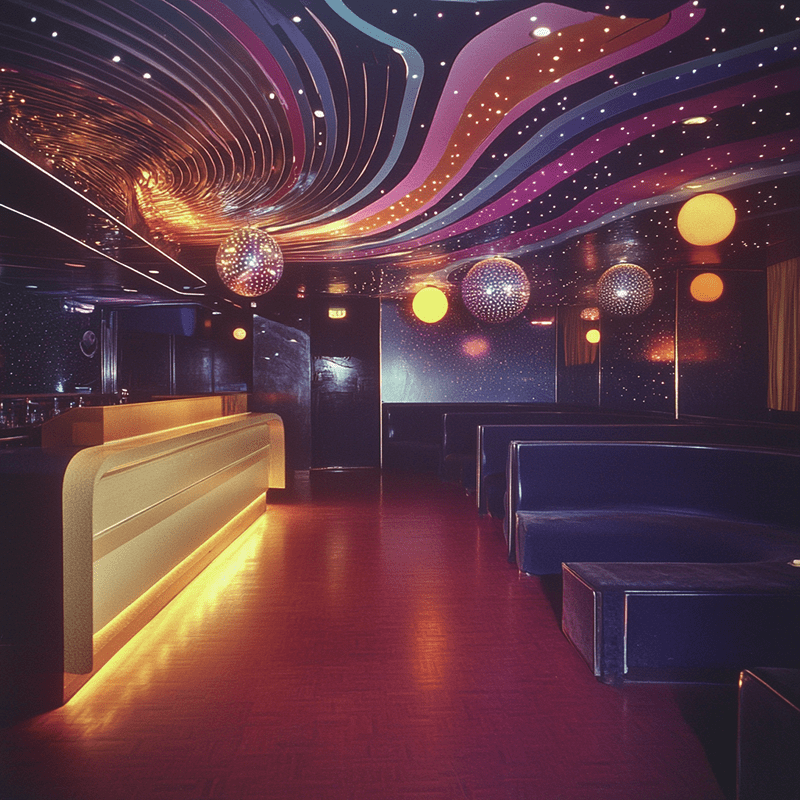
When you think of disco club interiors, vibrant lights and pulsating dance floors likely come to mind. But how did these iconic elements originate? From the initial discotheques in 1940s Paris to the introduction of psychedelic lighting in the 1960s, each milestone has shaped the dance experience. Have you ever wondered how the mirror ball became a staple, or what role laser shows played in transforming club atmospheres? These innovations didn't happen overnight. Let's explore the pivotal moments that turned ordinary dance halls into immersive, unforgettable spaces.
Birth of the Discotheque
The term 'discotheque' first appeared in 1940s Paris, describing a new type of nightclub where patrons danced to recorded music. This innovation marked the beginning of the discotheque, paving the way for what would become a global phenomenon.
By the 1960s, disco clubs began to thrive in Europe and North America, serving as vibrant social hubs for music enthusiasts and dancers. These early disco clubs were more than just venues for music; they were immersive environments. Innovative lighting techniques were employed to set the mood and enhance the dance experience.
Picture entering a space where lights moved in sync with the beats, creating a mesmerizing, kaleidoscopic atmosphere. This use of lighting was crucial in making the environment engaging and memorable.
Architectural creativity was also a hallmark of these pioneering disco clubs. Venues such as Le Drug in Montreal and Bamba Issa in Italy became iconic for their unique designs. Every detail, from layout to decor, was meticulously crafted to provide a comprehensive sensory experience. These spaces were designed to draw you into a world where music, light, and architecture seamlessly converged to create an unforgettable night out.
Psychedelic Lighting Era
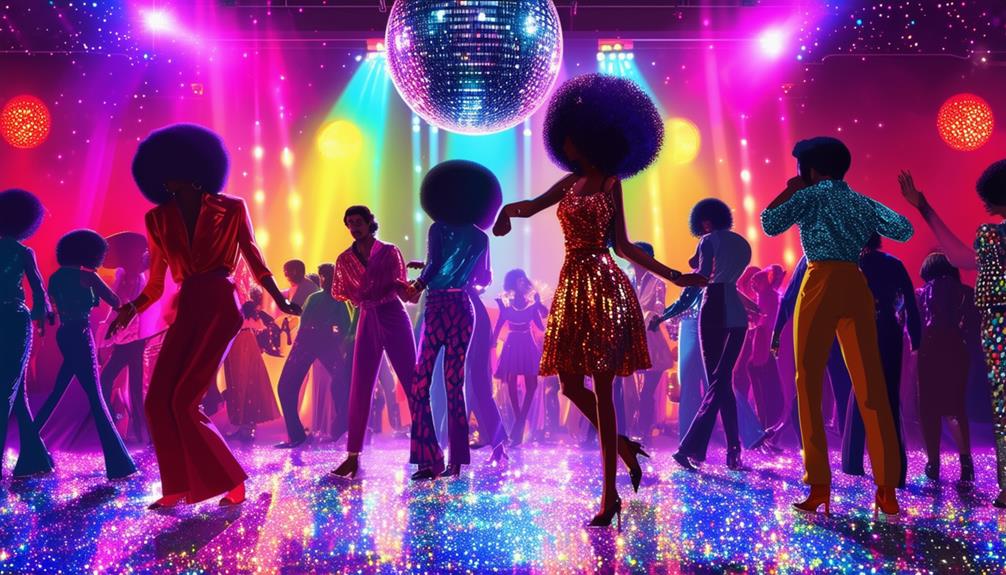
In the late 1960s and early 1970s, disco clubs embraced vibrant light shows that transformed dance floors into dynamic visual experiences. Laser light shows and synchronized projections created immersive environments that pulsed with the music. Iconic venues like Studio 54 used these elements to craft mesmerizing atmospheres that captivated patrons.
Colorful Light Spectacles
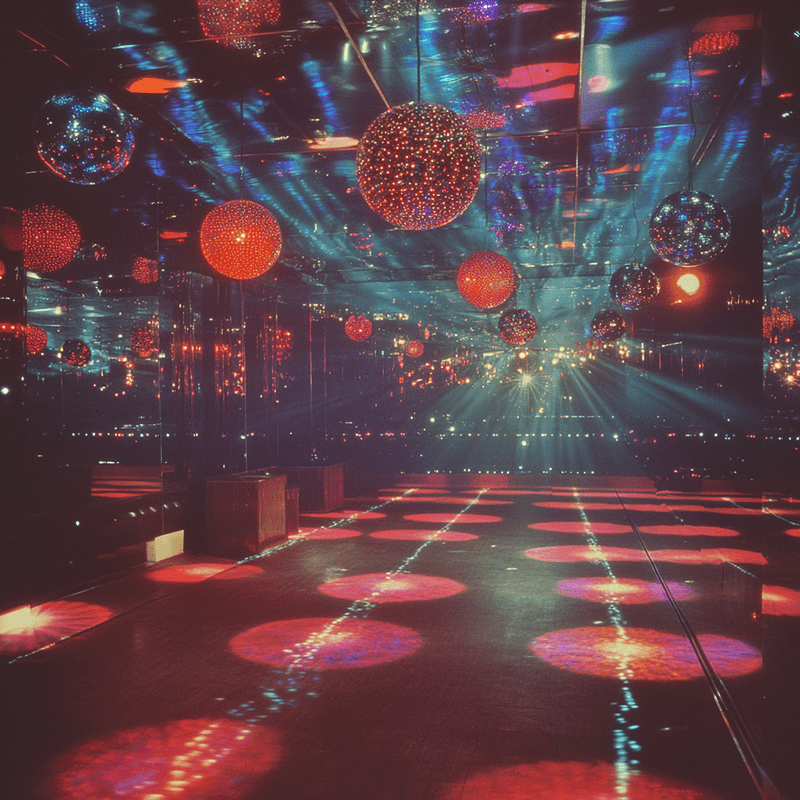
In the 1960s and 70s, psychedelic lighting revolutionized disco clubs by transforming their interiors into mesmerizing visual spectacles. This era introduced immersive experiences where strobe lights, mirror balls, and neon lighting combined to create an otherworldly atmosphere.
The visual impact was undeniable, turning ordinary dance floors into pulsating hubs of energy and creativity. Disco clubs became synonymous with psychedelic lighting that danced in sync with the infectious beats of disco music. These colorful light displays encouraged free expression and uninhibited dancing, making each night unforgettable.
Lighting designers like Marc Brickman and Patrick Woodroffe were pioneers, pushing the boundaries of what was possible and elevating the artistry of disco club interiors. Icons like Studio 54 and Paradise Garage set the standard for club aesthetics and influenced future generations. Psychedelic lighting not only enriched the ambiance but also became a defining characteristic of disco culture, forever changing the nightlife experience.
Dynamic Dance Floors
Dynamic dance floors revolutionized the disco experience, elevating it with interactive LED panels that responded to music beats. As you stepped onto these floors, the energy of the vibrant atmosphere became palpable. The LED panels created mesmerizing visual displays synchronized perfectly with the music, making every beat come alive under your feet.
These dance floors transformed traditional club spaces into interactive playgrounds. Lights and patterns shifted with the rhythm, immersing you in a sensory-rich environment that was impossible to resist. It wasn't just about dancing; it was about becoming part of a constantly evolving light show responding to your every move.
Dynamic dance floors redefined the clubbing experience. They set disco clubs apart, elevating interior design to new heights. Psychedelic lighting on these floors became a hallmark of the era, capturing the essence of the disco movement. The technology behind these interactive LED panels pushed boundaries, creating a vibrant atmosphere that left a lasting impression on everyone who danced the night away.
Laser Light Shows
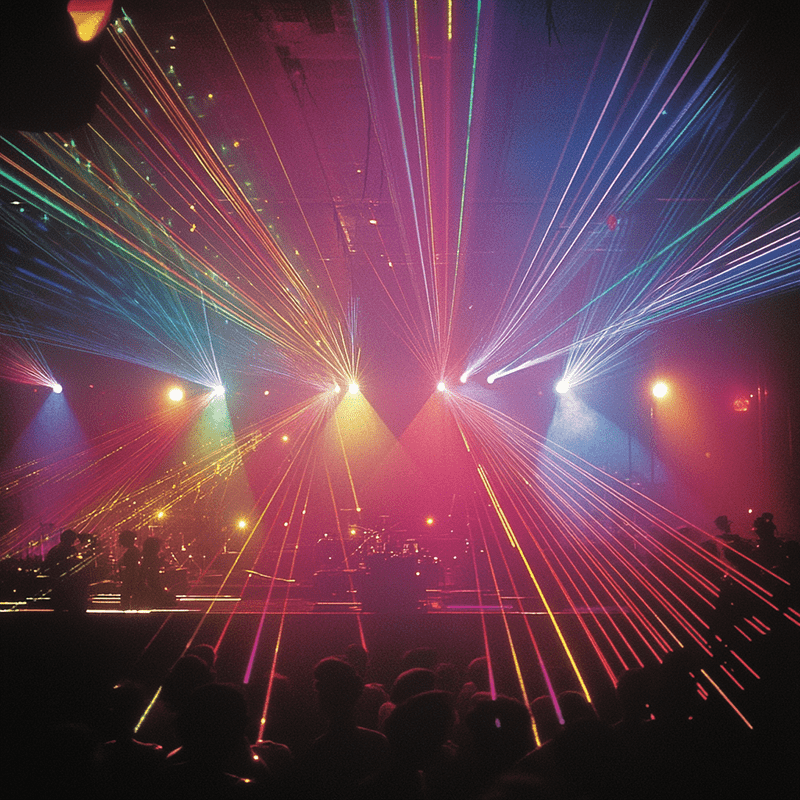
In the 1970s, disco clubs captivated audiences with laser light shows that synchronized perfectly with the music, creating electrifying visual displays. Stepping onto the dance floor meant being enveloped in a dazzling array of lights, colors, and patterns that pulsated in harmony with the beats. These laser light shows became a defining feature of disco club interiors, transforming spaces into vibrant, pulsating environments.
The technology behind these shows was groundbreaking for its time. Advanced laser systems enabled clubs to project intricate, psychedelic lighting effects that provided a sensory experience unlike any other. The lasers could create everything from simple beams to complex geometric shapes, bathing the dance floor in a futuristic glow.
This fusion of technology and artistry symbolized the essence of disco culture. It wasn't just about the music; it was about a complete sensory experience. The intricate patterns and vivid colors created by the lasers immersed attendees in an otherworldly atmosphere, making every night feel like a cosmic adventure. Laser light shows set a new standard for club design, merging visual spectacle with auditory pleasure, and forever changing the landscape of nightlife entertainment.
Introduction of Mirror Balls
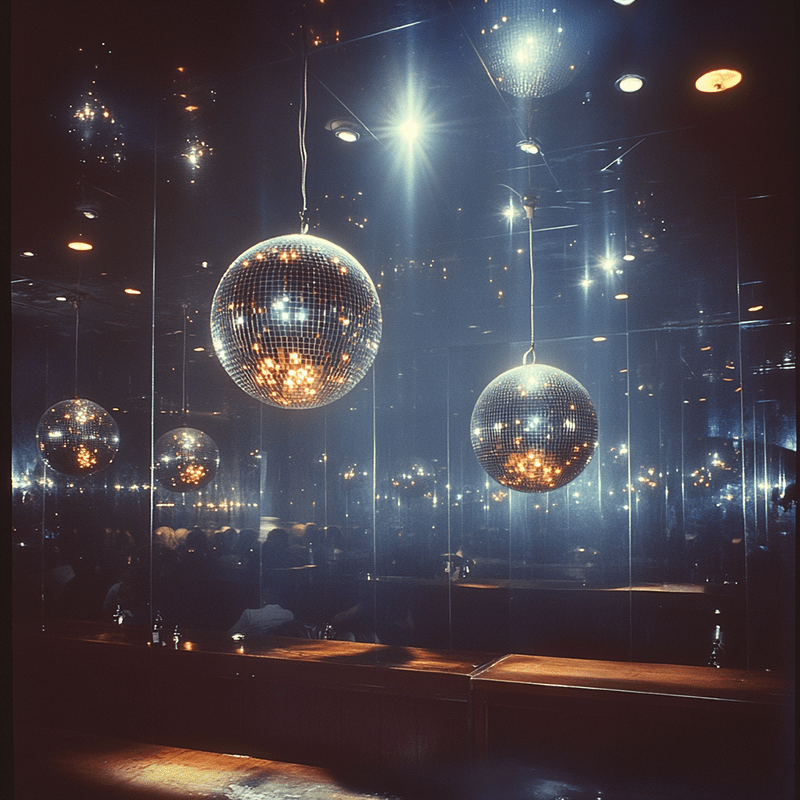
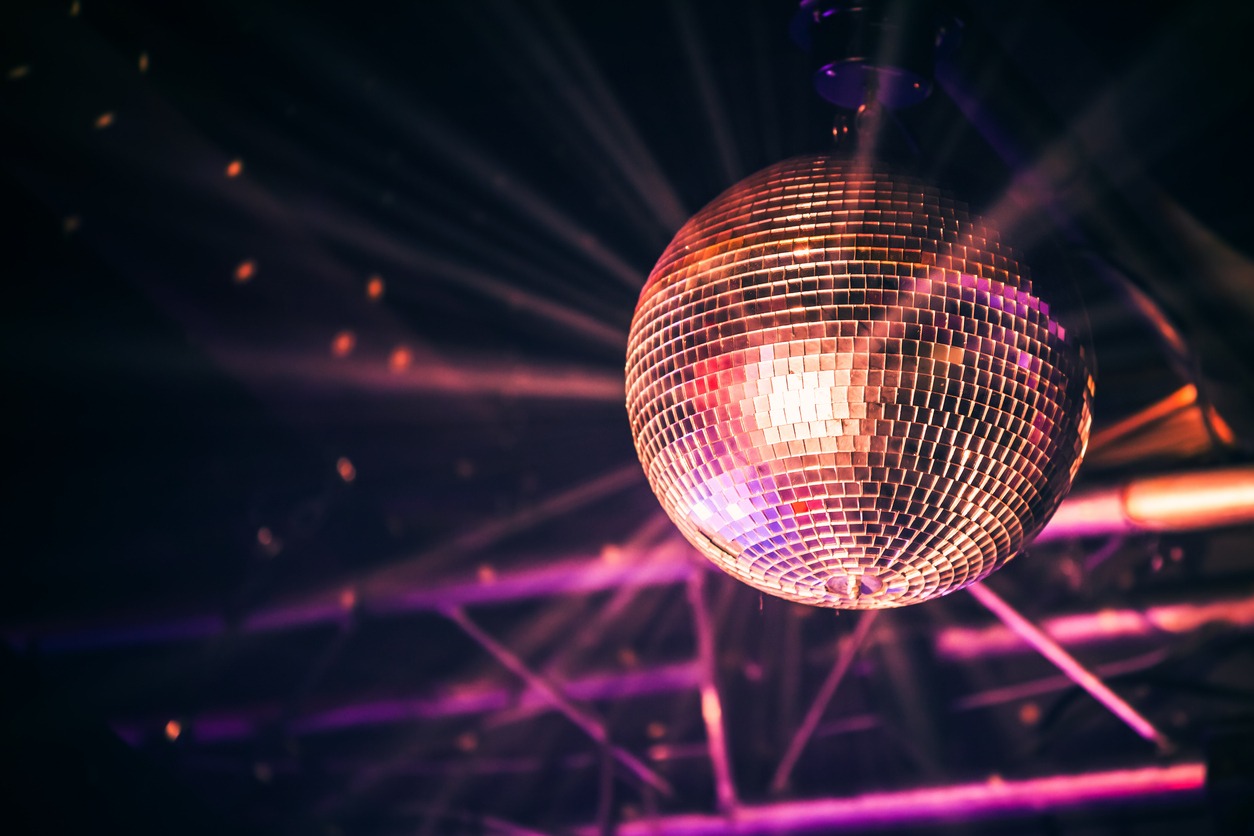
In the 1920s, mirror balls, commonly known as disco balls, began to revolutionize dance floors with their captivating light displays. Initially created by a German immigrant, these reflective spheres quickly gained popularity. However, it was the 1970s that truly solidified their iconic status in disco club interiors. Mirror balls captured and scattered beams of light, creating a mesmerizing ambiance that defined the disco era.
By the 1970s, disco balls were strategically installed above dance floors to maximize their shimmering effect. Spotlights aimed at the mirror balls would reflect countless points of light across the room, transforming ordinary club spaces into dynamic, glittering environments. This wasn't merely about visual appeal; it was about crafting an immersive sensory experience. The movement of reflected light danced along with the club-goers, enhancing the atmosphere of glamour and excitement that was central to disco culture.
The impact of mirror balls on a club's ambiance was significant. Their presence epitomized the glitz and extravagance of the period, making every night out feel special. The introduction of mirror balls was a pivotal moment in shaping the dazzling interiors of disco clubs.
Evolution of Dance Floors
The evolution of dance floors is remarkable, transitioning from basic wooden surfaces to captivating, illuminated platforms. Iconic clubs like Studio 54 pioneered this transformation with rotating dance floors and mirrored tiles, creating unforgettable experiences. Today, modern clubs feature interactive projection-mapped dance floors that sync with the music, offering a mesmerizing visual and auditory spectacle.
Illuminated Dance Platforms
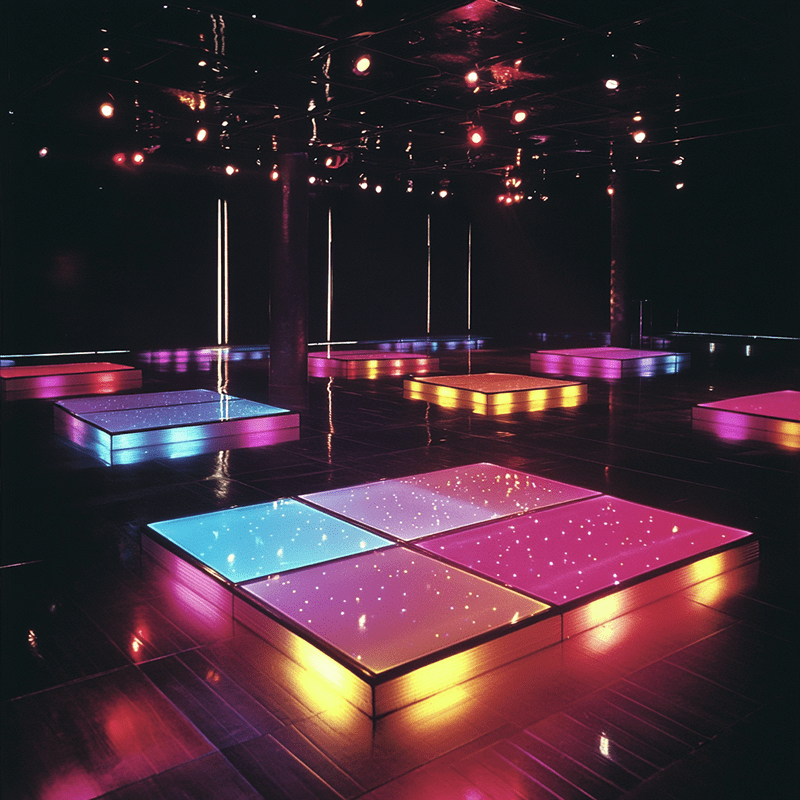
Illuminated dance platforms, iconic during the 1970s disco era, revolutionized the dance floor with their vibrant, colorful lights and reflective surfaces. These platforms weren't just elements of the dance floors; they became the heartbeat of legendary disco clubs like Studio 54.
Stepping onto one of these illuminated platforms enveloped you in a dynamic atmosphere pulsing with energy and excitement. Typically raised, these platforms created a focal point that drew everyone's attention. As you danced, the lights beneath your feet flickered and changed in sync with the music, making it feel as if the floor itself was dancing along.
Mirrors and reflective surfaces added an extra layer of visual delight, amplifying the lights and creating illusions of endless space and movement. Beyond aesthetics, these platforms enriched the entire experience. They invited you to lose yourself in the music and the moment, creating an immersive environment. Whether you were a regular or a newcomer, the magic of these platforms made every night at a disco club unforgettable.
Rotating Dance Surfaces
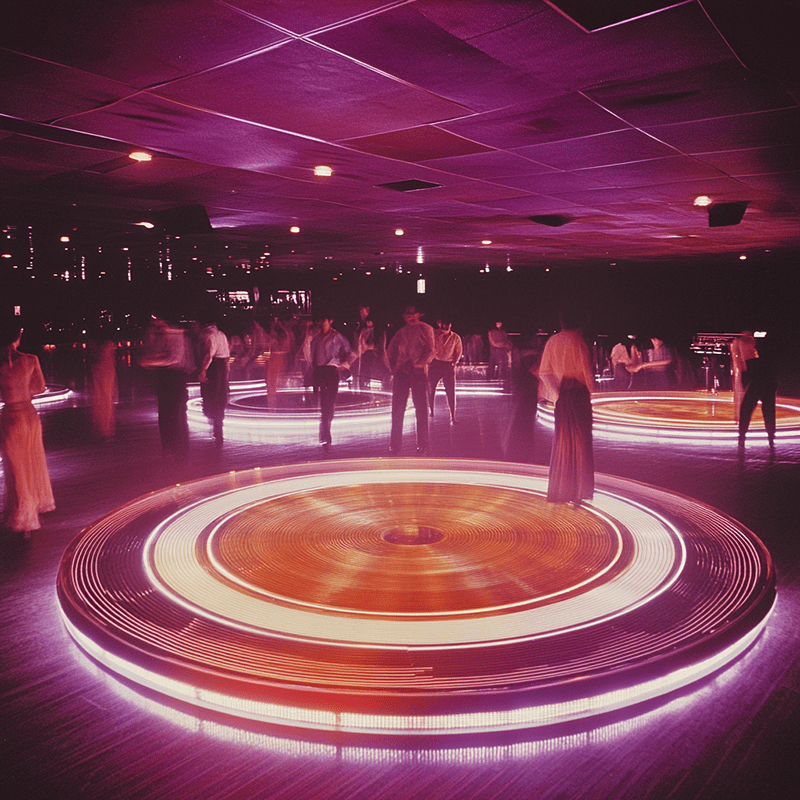
Rotating dance surfaces, such as the one at New York's Electric Circus in the 1970s, revolutionized the dance floor by creating an ever-changing environment for movement and interaction. These innovative platforms modernized club interiors, adding elements of surprise and excitement. Upon stepping onto one of these rotating surfaces, you instantly became part of a dynamic space that encouraged novel ways of dancing and socializing.
The introduction of rotating dance floors was a creative response to the growing demand for unique and immersive experiences in disco clubs. They were more than mere novelties; they became iconic features that distinguished disco clubs from traditional venues. The continuous motion of the floor harmonized with the rhythmic beats of disco music, creating a seamless blend of sound and movement that amplified the sensory experience.
These cutting-edge design elements pushed the boundaries of nightclub interiors, embodying the bold and experimental spirit of the era. The image of a rotating dance surface has become emblematic of disco clubs from that period, symbolizing the relentless quest for new ways to elevate nightlife.
Integration of Laser Shows
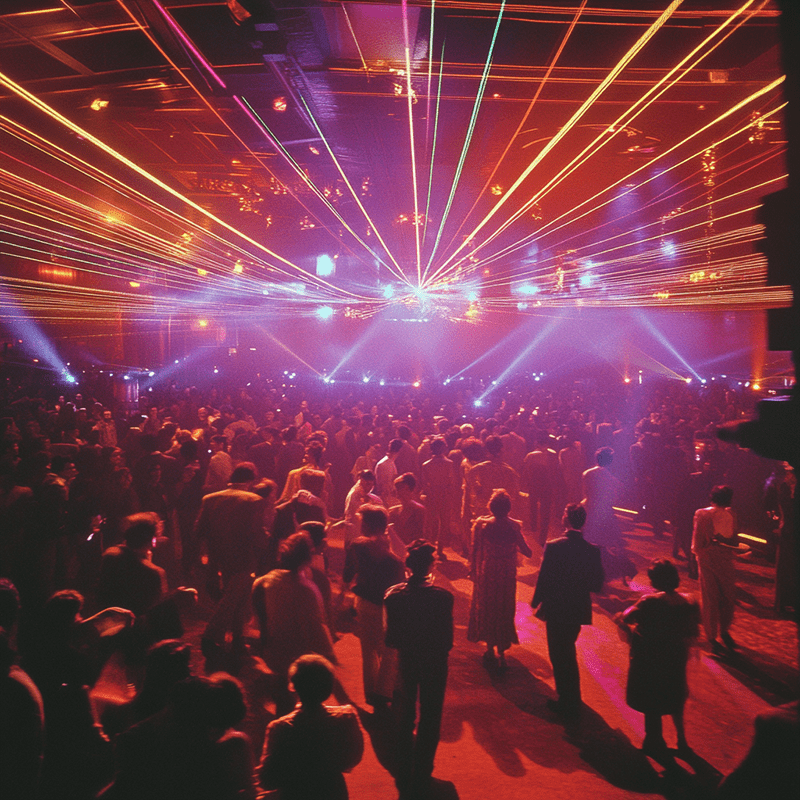
In the 1970s, disco clubs began integrating laser shows to create stunning visual effects that synchronized perfectly with the music. These laser shows transformed club interiors by adding a futuristic touch and enriching the immersive experience for club-goers. The intricate patterns, vibrant colors, and fluid movements of the laser displays fascinated everyone on the dance floor, making each night a visual spectacle.
Laser shows weren't just about flashy lights; they represented a significant design innovation. By combining lasers with music, clubs created a multisensory experience that was dynamic and unforgettable. The technology allowed for complex visuals to be projected onto walls and floors, turning any space into a pulsating, lively environment.
Here's a breakdown of the elements that laser shows brought to disco clubs:
| Element | Impact |
|---|---|
| Visual Effects | Mesmerizing patterns and vivid colors |
| Immersive Experience | Enhanced ambiance and energy |
| Design Innovation | Futuristic and dynamic environments |
| Synchronized Music | Perfect alignment with beats |
| Club Atmosphere | Engaging and captivating spaces |
This integration of laser technology not only revolutionized club design but also set a new standard for creating unforgettable nightlife experiences.
Emergence of VIP Sections
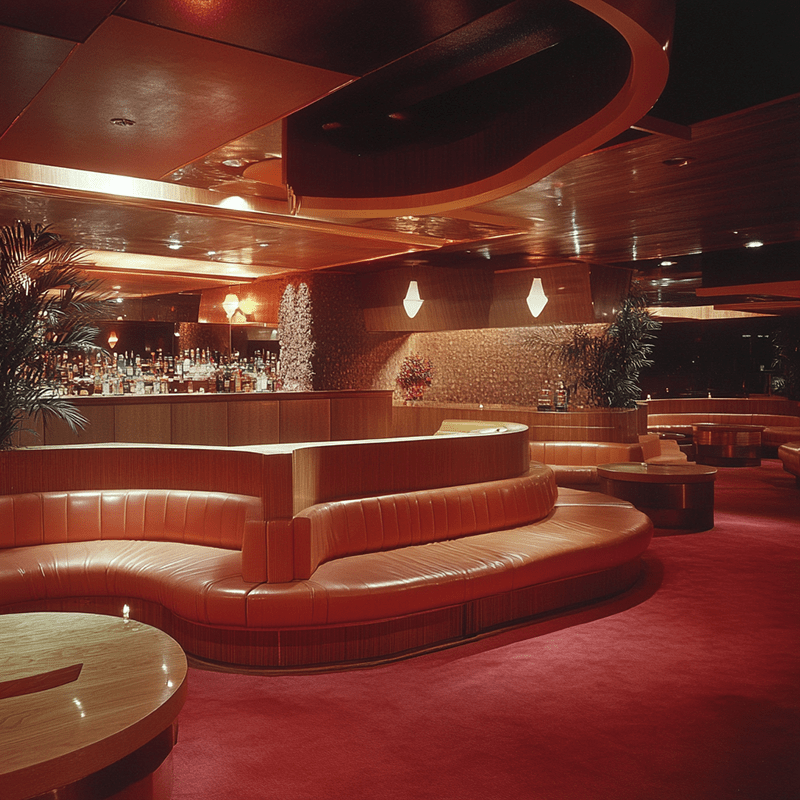
In the 1970s, disco clubs introduced VIP sections to offer elite clientele exclusive and luxurious experiences. Entering a VIP section immediately highlighted the distinction. These areas were meticulously designed to provide privacy, luxury, and unique amenities. Plush seating allowed for comfortable relaxation, while private bars ensured quick access to drinks. Dedicated service staff attended to every need, enhancing the overall experience.
VIP sections also provided superior views of the dance floor, offering the best vantage points to enjoy the club's vibrant atmosphere. Access was strictly restricted, creating an aura of exclusivity and status. Being in a VIP section signified membership in an elite group, attracting high-profile guests and celebrities.
These VIP sections became synonymous with glamour and opulence, transforming a typical night out into a lavish affair. They became a hallmark of disco clubs, enriching the ambiance and making the venues hotspots for the rich and famous.
High-Tech Sound Systems
High-tech sound systems revolutionized disco club interiors, offering patrons immersive audio experiences that redefined nightlife. These advanced systems became a cornerstone of club design, elevating the quality and clarity of the music. State-of-the-art technologies like Funktion-One systems allowed club owners and DJs to create powerful audio environments that captivated partygoers.
To highlight their impact, consider these points:
- Immersive Audio Experiences: High-tech sound systems envelop you in rich, clear sound, making every beat and note come alive.
- Funktion-One Systems: These systems set the gold standard for sound quality in clubs, ensuring that music isn't just heard but felt.
- Club Design Focus: Modern clubs prioritize sound system integration to create dynamic and engaging audio atmospheres.
Club owners didn't merely install these systems; they invested in them to enhance the entire clubbing experience. The focus on cutting-edge sound equipment shaped the energy and atmosphere within these spaces.
Themed Interiors Trend
In the 1970s, disco clubs like Studio 54 and Paradise Garage didn't stick to a single look; they combined retro aesthetics with futuristic design elements. These themes created immersive environments, transporting patrons to different worlds and offering a full sensory experience. This approach made each night out feel unique, blending nostalgia with cutting-edge style.
Retro Aesthetic Revival
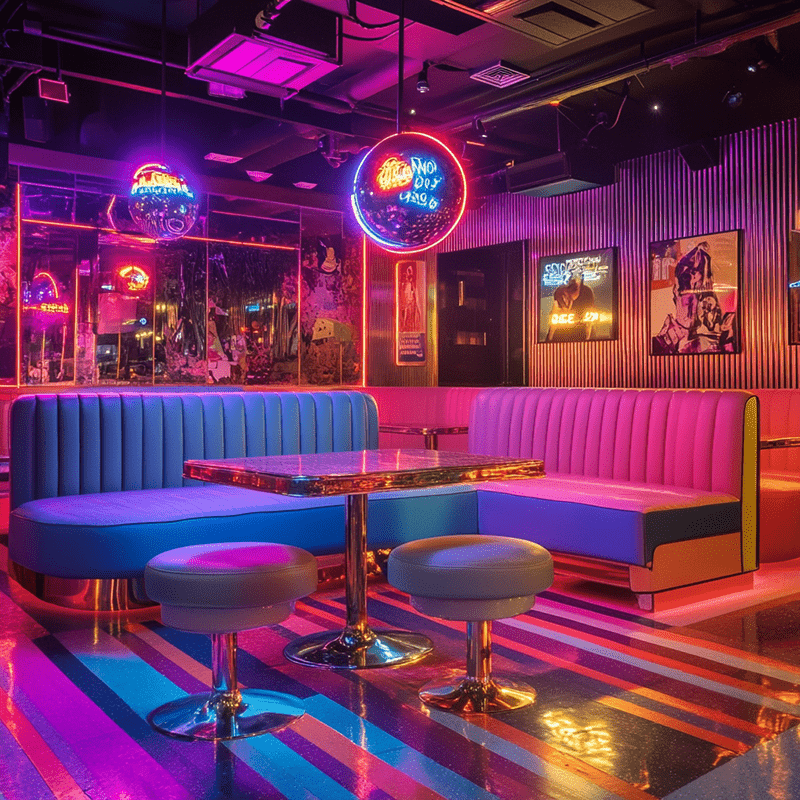
Step into a modern nightclub today, and you'll often find yourself surrounded by neon lights, retro furniture, and nostalgic memorabilia reminiscent of the vibrant 70s and 80s. This retro aesthetic revival isn't just a passing trend; it's a deliberate incorporation of vintage elements that transform themed interiors into immersive experiences.
Disco club interiors now feature a rich tapestry of styles, where every detail is chosen to evoke the charm and excitement of bygone eras. Themed interiors aim to transport you to a different time or place, enhancing the atmosphere for an unforgettable night out. Popular themes include:
- Retro disco: Glittering disco balls and colorful dance floors.
- Vintage Hollywood glamour: Red carpets, golden age movie posters, and elegant furnishings.
- Nostalgic pop culture: Iconic props and memorabilia from beloved movies and TV shows.
These immersive experiences are more than just decor; they create a passage through time that captivates and excites.
Futuristic Design Elements
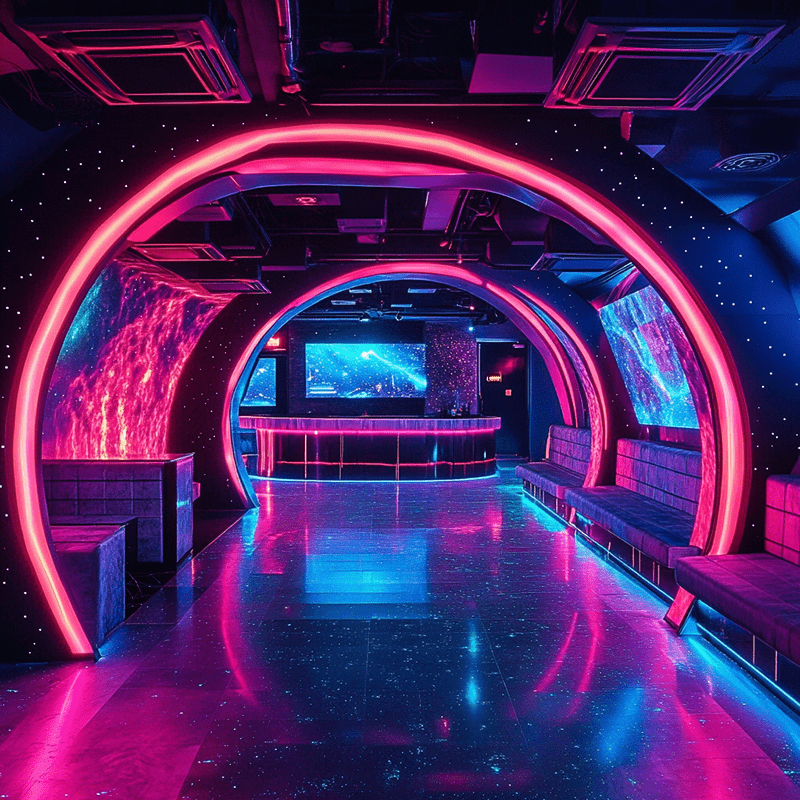
As retro aesthetics captivate with nostalgia, futuristic design elements in disco clubs push boundaries with neon lights, LED screens, and space-age decor. You step into a world that feels straight out of a sci-fi movie.
Clubs today are embracing sci-fi themes with interactive lighting systems that respond to the music, creating an ever-changing environment. Neon lights bathe the dance floor in vibrant hues, while LED screens project cosmic visuals, making you feel like you're dancing among the stars.
The goal is to create truly immersive experiences. Holographic displays and robotic sculptures contribute to the otherworldly atmosphere, making you question what's real and what's not. These futuristic design elements go beyond mere decor; they transport you to another dimension.
Imagine glowing installations that pulse with the beat or virtual reality experiences that let you journey through surreal landscapes. This trend reflects a desire for escapism and innovation. People want to be wowed, to step outside their everyday lives and into a world of awe-inspiring wonder. Futuristic design elements in disco clubs achieve this by blending cutting-edge technology with imaginative visuals, providing an unforgettable night out.
Digital Projection Mapping
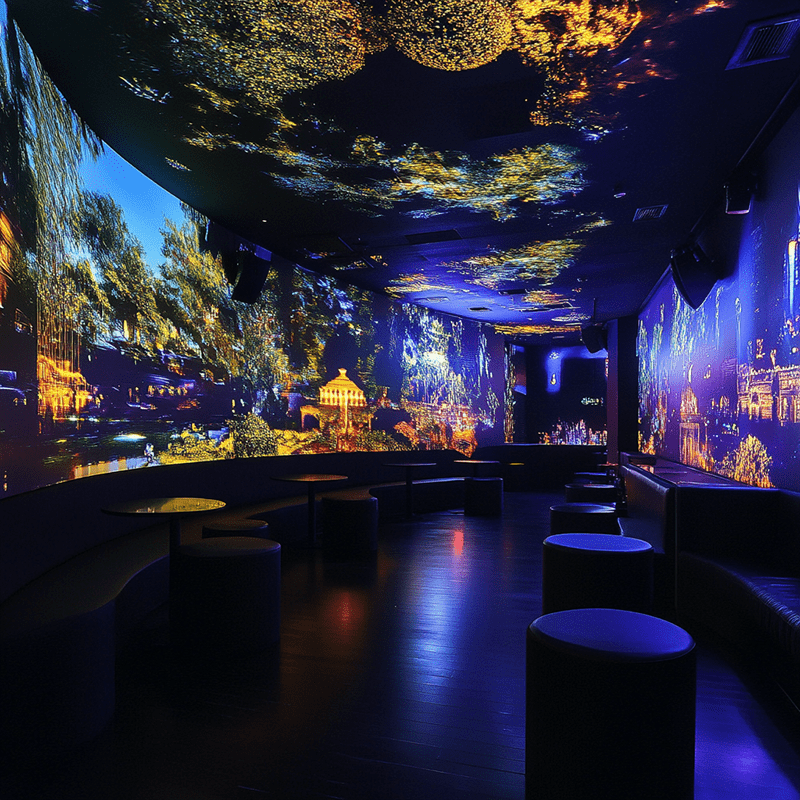
Digital projection mapping has revolutionized disco club interiors by transforming static spaces into dynamic, immersive environments. When you step into a club utilizing this technology, you're immediately greeted by stunning visuals projected onto walls, floors, and even ceilings, creating an ambiance that follows the architecture's contours and makes every corner visually captivating.
With digital projection mapping, clubs can:
- Project dynamic visuals that evolve throughout the night
- Enhance storytelling and thematic elements
- Convert static decor into interactive features
The flexibility of digital projection mapping ensures that each visit offers a unique atmosphere. One night, the walls might display lush tropical jungles, and the next, you could be immersed in a futuristic cityscape. This ever-changing environment keeps the clubbing experience fresh and exciting.
Conclusion
Disco club interiors have come a long way, evolving from their modest origins in 1940s Paris to the high-tech, immersive environments we see today. Each milestone, from the introduction of mirror balls to the advent of digital projection mapping, has played a crucial role in shaping unforgettable dance experiences. When you step into a modern club, you become part of a rich history of innovation and creativity. Embrace the evolution and enjoy the dance.