15 Epic Nerd Fandoms and Their Origins
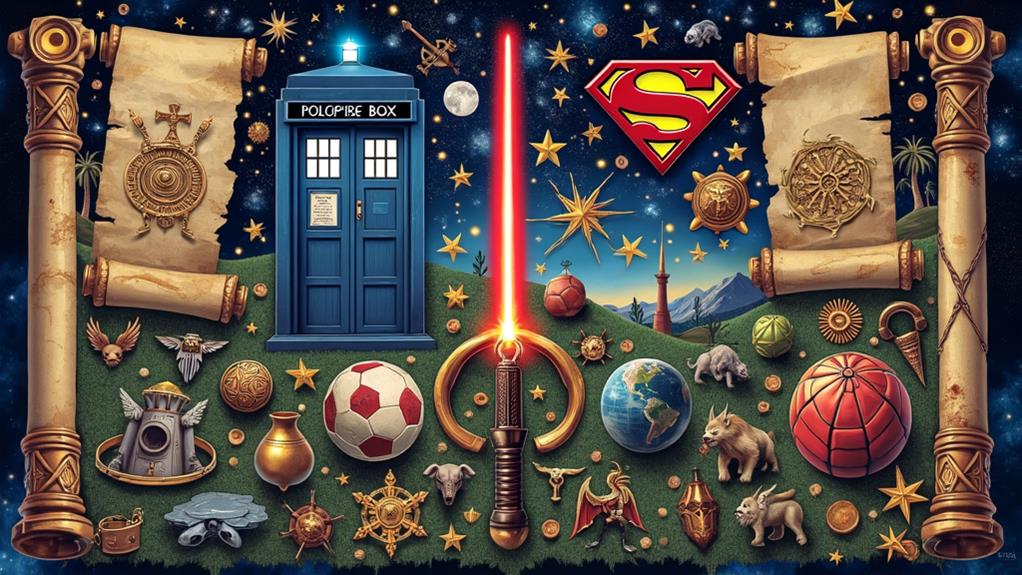
You've probably heard of "Star Wars," "Star Trek," and "Harry Potter," but do you know how these iconic fandoms began? Each has a fascinating origin story: "Star Wars" revolutionized cinema in 1977, while "Star Trek" has been captivating audiences since 1966. And these are just the start. Consider the origins of other epic fandoms like "Doctor Who," the "Marvel Universe," and "Dungeons & Dragons." What ignited these cultural phenomena, and how did they evolve into the vibrant communities we see today? Delve into the roots of these 15 legendary nerd universes and discover what makes each one a beloved cornerstone of pop culture.
Star Wars
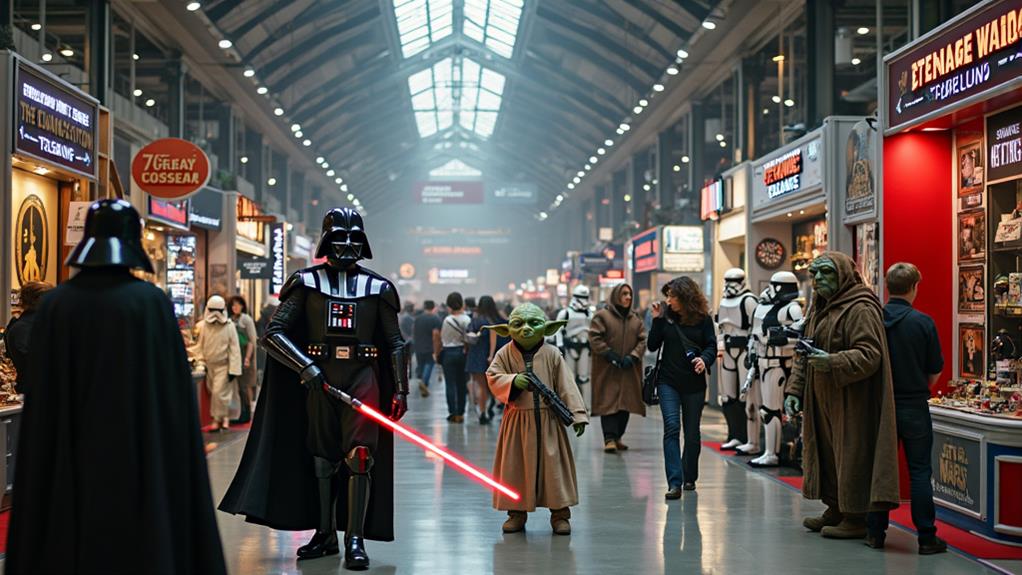
Star Wars' debut in 1977 with "Episode IV: A New Hope," created by George Lucas, instantly captivated audiences and became a cultural phenomenon. The franchise quickly expanded, spawning sequels, prequels, and numerous spin-offs. With nine main saga films and supplementary anthology films like "Rogue One," the Star Wars universe offers a rich tapestry of lore.
The animated series "The Clone Wars" and live-action series such as "The Mandalorian" have further deepened the narrative, exploring new characters and stories. Star Wars isn't just about the movies; it's also about the expansive universe that's been built around them. The franchise's financial success is staggering, generating over $70 billion in revenue, with merchandise sales playing a significant role.
Characters like Luke Skywalker, Princess Leia, and Darth Vader have become cultural icons, influencing generations and inspiring a dedicated fan base engaged in cosplay, fan fiction, and conventions. The concept of the Force, symbolizing the struggle between good and evil, resonates globally, making Star Wars a timeless phenomenon.
Star Trek
Debuting on September 8, 1966, Gene Roddenberry's "Star Trek" swiftly became a cornerstone of science fiction. The original series introduced iconic characters like Captain James T. Kirk, Spock, and Dr. Leonard McCoy. Beyond space adventures, it tackled contemporary social issues, making it both entertaining and thought-provoking.
"Star Trek" has since expanded into a vast universe, including multiple television series such as "Star Trek: The Next Generation," "Deep Space Nine," "Voyager," and "Enterprise." Its rich narrative has also been explored through numerous films, books, and comics, ensuring there's always more to discover.
The franchise's legacy is marked by its devoted fanbase, known as "Trekkies." They are often seen at conventions, in cosplay, or contributing to fan fiction. This vibrant community has been thriving since the 1970s and shows no sign of slowing down.
One of the groundbreaking concepts introduced by "Star Trek" was the "universal translator," which allows seamless communication between different alien species, influencing real-world discussions on linguistics and technology.
| Character | Series | Notable Trait |
|---|---|---|
| Captain Kirk | The Original Series | Charismatic Leader |
| Spock | The Original Series | Logical Thinker |
| Captain Picard | The Next Generation | Diplomatic Strategist |
| Captain Janeway | Voyager | Resilient Explorer |
"Star Trek" continues to inspire and challenge audiences to boldly go where no one has gone before.
Doctor Who
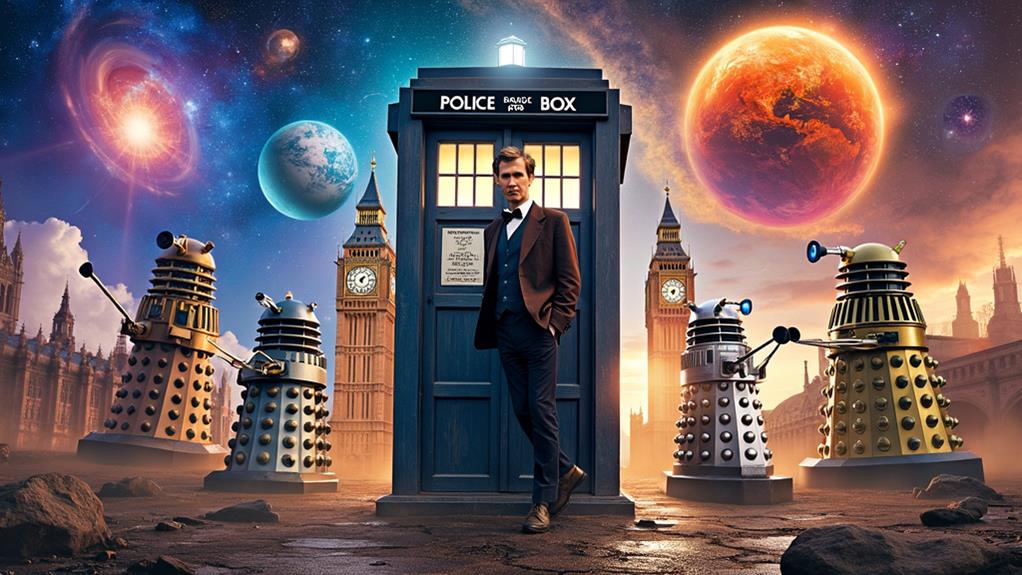
Anyone delving into British science fiction will inevitably encounter "Doctor Who," a pioneering series that first aired on November 23, 1963. It quickly became a cornerstone of the genre, captivating audiences with its innovative storytelling and imaginative premise. The show centers on the Doctor, a Time Lord from Gallifrey, who travels through time and space in the TARDIS, a time machine disguised as a blue British police box.
"Doctor Who" is notable for its unique concept of regeneration, allowing the Doctor to transform into a new form and enabling different actors to portray the iconic character while maintaining narrative continuity. This ingenious idea has allowed the series to endure for decades, making it one of the longest-running sci-fi shows in television history.
The "Doctor Who" franchise has expanded into numerous spin-offs, audio dramas, novels, and comic books, creating a vast multimedia universe. Its cultural impact is profound, generating a dedicated global fandom and influencing various facets of popular culture. Fans celebrate the series through conventions, merchandise, and countless references in other media. Undoubtedly, "Doctor Who" has left an indelible mark on the world of science fiction.
Marvel Universe
Rooted in the late 1930s with the debut of the Human Torch in *Marvel Comics* #1, the Marvel Universe has evolved into a cornerstone of popular culture. Key figures like Stan Lee, Jack Kirby, and Steve Ditko were instrumental in this transformation. During the 1960s, they introduced iconic characters such as Spider-Man, Iron Man, and the X-Men, defining the modern Marvel Universe.
In 2008, the Marvel Cinematic Universe (MCU) launched with "Iron Man," transforming the Marvel Universe into the highest-grossing film franchise ever, accumulating over $22 billion by 2021. The MCU's success lies in its interconnected storytelling across films, TV shows, and comic books. Crossover events like "The Avengers" and "Infinity War" exemplify this approach, drawing audiences into a complex, shared world.
Representation in the Marvel Universe has also expanded significantly. Characters like Black Panther and Captain Marvel have become cultural icons, championing underrepresented groups and enriching the Marvel Universe with diversity. This inclusivity makes the Marvel Universe more relatable and inspiring for its global fanbase. From its comic book origins to its cinematic dominance, the Marvel Universe continues to captivate and inspire audiences worldwide.
DC Universe
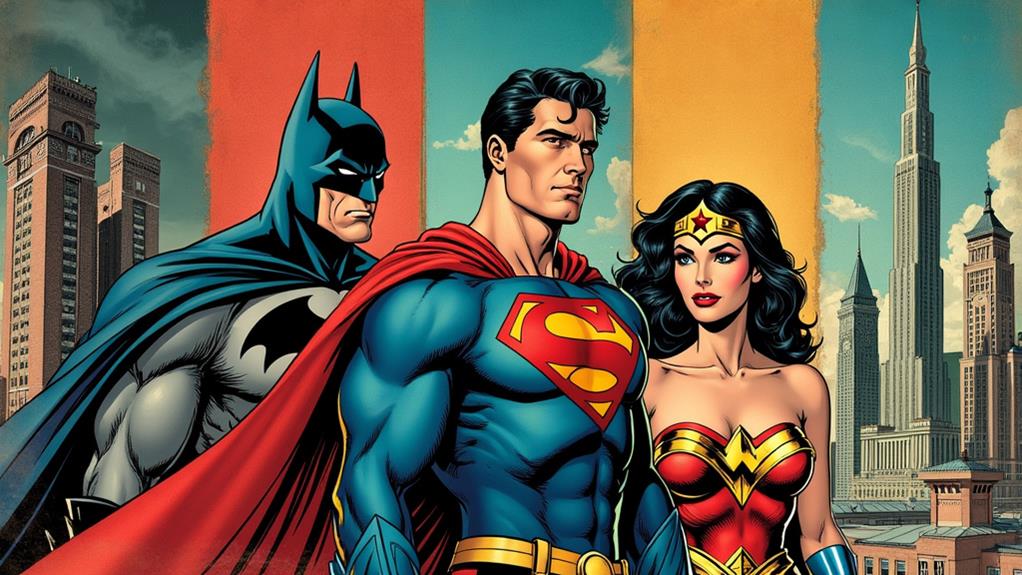
Established in 1934, the DC Universe has become a cornerstone of American comic book culture, featuring iconic characters like Superman, Batman, and Wonder Woman. The debut of Superman in Action Comics #1 in 1938 marked the inception of the superhero genre itself, setting the blueprint for countless heroes to follow and solidifying the DC Universe's place in pop culture.
Over the decades, DC expanded beyond comics, captivating audiences with animated series, live-action television shows, and blockbuster films. The launch of the DC Extended Universe (DCEU) in 2013 with "Man of Steel" brought these beloved superheroes to the big screen in new and exciting ways. Major events like "Crisis on Infinite Earths" and "The New 52" have redefined DC's continuity, allowing for fresh storytelling while honoring its rich history.
The DC Universe boasts a vast and dedicated fandom, celebrating through conventions, fan art, and an abundance of merchandise. These devoted followers revel in the expansive lore and diverse characters, ensuring that the DC Universe remains a crucial part of the superhero landscape for generations to come.
Harry Potter
When you think about "Harry Potter," the magical world-building and intricate character development are likely the first things that come to mind. J.K. Rowling's creation isn't just about spells and potions; it's about the deep relationships and personal journeys of characters you grow to love. This combination has captivated millions and created a rich universe where fans can immerse themselves fully.
Magical World Building
The Harry Potter series, crafted by J.K. Rowling, excels in magical world-building, creating an engaging universe that captivates readers. Each location, from the halls of Hogwarts and Diagon Alley to the Forbidden Forest, is richly detailed and fundamental to the narrative. Rowling's meticulous crafting of spells, potions, and magical creatures ensures that the magical elements are both believable and consistent.
Distinct magical beings like house-elves and goblins add layers of history and social commentary, reflecting various cultural myths and legends. These characters and their backgrounds deepen your understanding of the Wizarding World and its complexities. Magical artifacts such as the Marauder's Map and the Invisibility Cloak significantly contribute to the plot, offering creative avenues for character development and unexpected twists.
The thorough world-building extends beyond the pages, inspiring a vast fandom. This community engages with spin-off media, visits theme parks, and participates in online discussions, constantly expanding upon the lore. Rowling's intricate and believable magical world ensures that Harry Potter remains a beloved epic, resonating with fans worldwide.
Character Growth and Relationships
Throughout the Harry Potter series, character growth and relationships are crucial in shaping the narrative and its emotional depth. The evolving dynamics between Harry, Hermione, and Ron vividly illustrate this as they navigate adolescence and face moral dilemmas. Their deepening friendships highlight the importance of loyalty and sacrifice.
Key aspects include:
- Harry's Path: Harry transforms from a naive boy into a resilient leader, influenced by his friendships and losses. His relationship with Ginny Weasley also marks his emotional growth.
- Neville Longbottom: Starting as a timid character, Neville's evolution into a courageous leader underscores the theme of personal growth and inner strength.
- Hermione Granger: Hermione's intelligence and resourcefulness allow her to overcome prejudices about her Muggle-born status, making her a pivotal figure in the fight against Voldemort.
- Romantic Tension: The series explores romantic relationships, especially between Ron and Hermione, and Harry and Ginny, highlighting their transition from childhood to maturity.
Characters like Draco Malfoy and Harry also exhibit the impact of trauma on their identities. These complex relationships and moments of character growth enrich the Harry Potter series, making it a timeless epic.
The Lord of the Rings
J.R.R. Tolkien's "The Lord of the Rings" is a cornerstone of high-fantasy literature, initially published in three volumes between 1954 and 1955. Building upon his earlier work, "The Hobbit," this epic tale immerses readers in the richly detailed world of Middle-earth, complete with its own languages, races, and history. Unlike a space saga, Tolkien's world is grounded in medieval-inspired landscapes and cultures.
The story centers on Frodo Baggins, a humble Hobbit entrusted with the monumental quest of destroying the One Ring, an artifact of immense power forged by the dark lord Sauron. Frodo's journey is fraught with peril, friendship, and heroism as he and his companions traverse treacherous lands to save Middle-earth from Sauron's domination.
The cultural impact of "The Lord of the Rings" is monumental. It has shaped modern fantasy literature and inspired numerous adaptations, including Peter Jackson's critically acclaimed film trilogy. The saga's enduring legacy continues with video games, stage adaptations, and Amazon Prime's "The Rings of Power," which explores Middle-earth's Second Age. Fans across the globe remain captivated by Tolkien's masterful storytelling and world-building.
Game of Thrones
When "Game of Thrones" premiered on HBO in April 2011, it quickly became a cultural phenomenon, captivating audiences with its intricate political plots and complex characters. Based on George R.R. Martin's book series "A Song of Ice and Fire," the show concluded its eight-season run in May 2019, leaving a lasting impact on television history.
The series is renowned for:
- Complex Characters: Featuring a wide array of morally ambiguous individuals, the series makes it difficult to predict their actions or fates.
- Intricate Political Plots: The battle for the Iron Throne involves strategic alliances, betrayals, and power plays reminiscent of medieval history.
- Major Character Deaths: The show is infamous for its readiness to kill off beloved characters, keeping viewers on the edge of their seats.
- Expansive World-Building: Drawing from historical events like the War of the Roses, the setting includes noble houses such as the Starks, Lannisters, and Targaryens.
"Game of Thrones" received critical acclaim, evident in its 59 Primetime Emmy Awards. Beyond the screen, it sparked a massive fandom, inspiring fan theories, merchandise, conventions, and spin-offs like "House of the Dragon," which explores the history of House Targaryen.
The Matrix
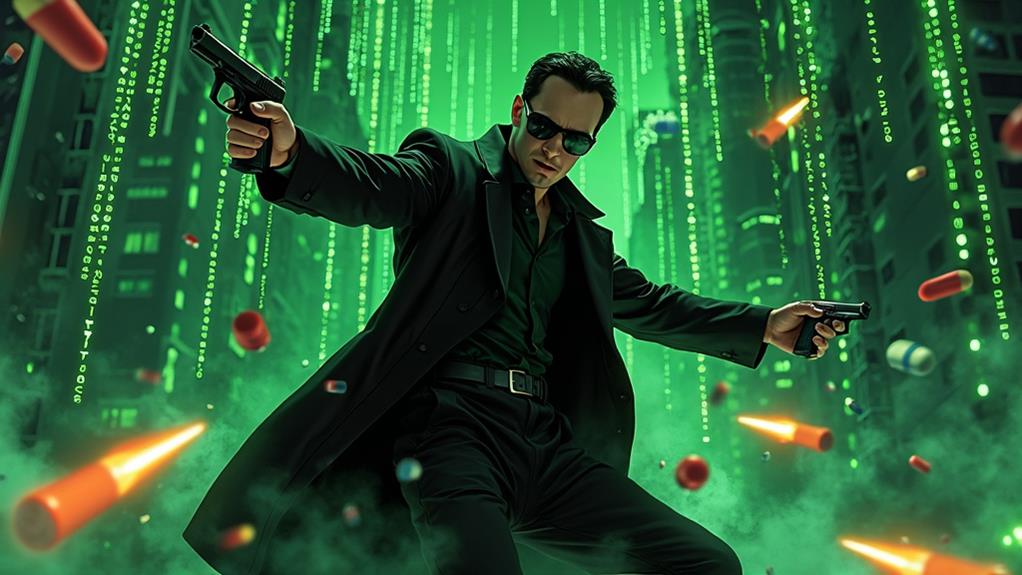
The Matrix, a film that redefined the science fiction genre, explores the profound philosophical question of what constitutes reality. Released in 1999 and directed by the Wachowskis, this groundbreaking film delves into themes of control and artificial intelligence within a dystopian future. Its iconic visual style, especially the "bullet time" slow-motion effects, has left a lasting mark on action cinema.
At the heart of the narrative is Neo, played by Keanu Reeves, who discovers he's "The One" capable of manipulating the simulated world of the Matrix. The film examines complex philosophical ideas, drawing inspiration from Jean Baudrillard's Simulacra and Simulation, questioning the nature of reality and technology's impact on human perception.
| Aspect | Details |
|---|---|
| Release Year | 1999 |
| Directors | The Wachowskis |
| Main Character | Neo (played by Keanu Reeves) |
| Key Concept | "The One" and manipulation of reality |
| Visual Innovation | "Bullet time" slow-motion effects |
The Matrix's influence extended beyond a single film, spawning two sequels in 2003, "The Matrix Reloaded" and "The Matrix Revolutions," and a fourth installment, "The Matrix Resurrections," in December 2021, cementing its legacy in popular culture.
Buffy the Vampire Slayer
Buffy the Vampire Slayer, created by Joss Whedon, premiered in 1997 and swiftly became a cultural landmark, redefining the horror genre on television. The show seamlessly blended horror, comedy, and drama while addressing significant issues like feminism and identity. It followed Buffy Summers, a high school student destined to combat vampires and other supernatural threats. This strong female lead and rich character development set a new standard for television storytelling.
The show's impact on popular culture was profound, creating a dedicated fan community known as the "Buffyverse." It expanded beyond the TV screen into a successful franchise, including comic books, merchandise, and novels. The series earned critical acclaim, winning multiple awards, including two Primetime Emmy Awards.
Buffy the Vampire Slayer has influenced numerous other shows and media. Its legacy in television history is marked by:
- Complex female protagonists: Setting the stage for more nuanced and powerful female characters in media.
- Genre blending: Masterfully integrating horror with comedy and drama.
- Cultural impact: Becoming a defining series of the late 90s and early 2000s.
- Fan engagement: Cultivating a devoted fan base that continues to thrive.
This iconic show left a lasting imprint on both the horror genre and fandom culture.
Sherlock Holmes
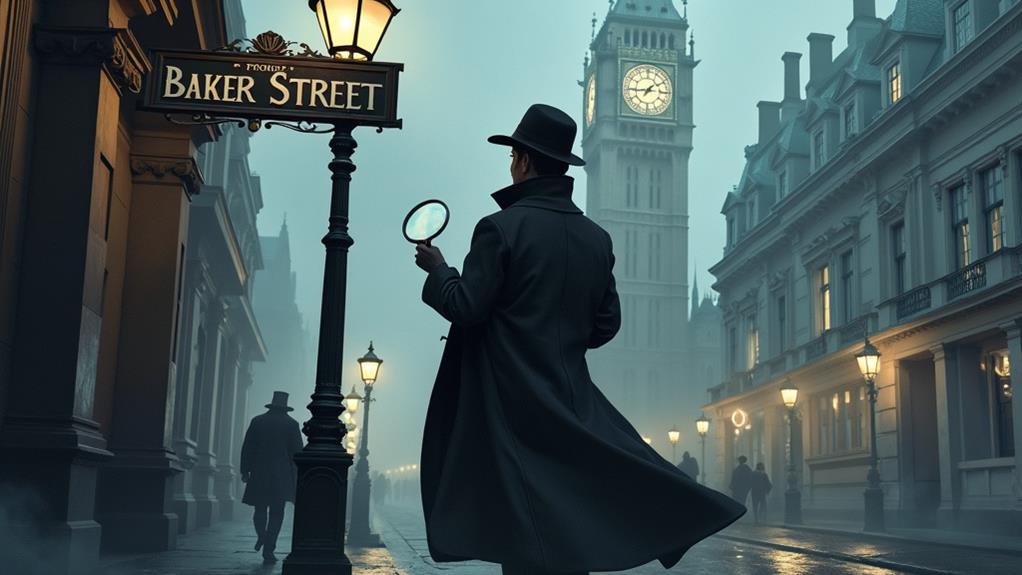
Just as Buffy the Vampire Slayer revitalized the horror genre on television, Sherlock Holmes reshaped the landscape of detective fiction in literature. Created by Sir Arthur Conan Doyle in 1887, Sherlock Holmes made his debut in "A Study in Scarlet." His unparalleled observation skills and logical reasoning set a new standard for fictional detectives.
Holmes appeared in four novels and 56 short stories. Among these, "The Hound of the Baskervilles" and "The Adventures of Sherlock Holmes" stand out as fan favorites. His adventures, often narrated by his loyal friend Dr. John Watson, immerse readers in their thrilling escapades.
Holmes' influence extends beyond the written word. He has inspired countless adaptations in films, television shows, and stage productions, cementing his status as a cultural icon. The character's enduring popularity even led to the creation of the Sherlock Holmes Museum in London, dedicated to preserving the legacy of both the detective and his creator.
From gripping novels to captivating screen adaptations, Sherlock Holmes remains a cornerstone of detective fiction, enthralling fans and inspiring new generations of sleuths.
Dungeons & Dragons
If you're intrigued by the origins of modern tabletop role-playing games, you'll find Dungeons & Dragons (D&D) groundbreaking. Created in 1974 by Gary Gygax and Dave Arneson, D&D has influenced countless other games and media through its unique blend of storytelling, strategy, and character development. Its cultural impact today is undeniable, with a resurgence in popularity driven by online streaming, podcasts, and a vibrant community of players.
Origins and Early Development
In 1974, Gary Gygax and Dave Arneson revolutionized the gaming world with the publication of Dungeons & Dragons, a groundbreaking tabletop role-playing game that seamlessly blended strategy, storytelling, and character development. This game allowed players to create their own characters and embark on adventures led by a Dungeon Master (DM), laying the groundwork for modern RPGs.
The early development of Dungeons & Dragons featured several key innovations:
- Character Classes: Players could choose from a variety of classes such as fighters, wizards, and rogues, each offering unique abilities.
- Races: The game introduced diverse races like elves, dwarves, and humans, adding depth to character creation.
- Complex Rules: The original rules were intricate, providing a detailed framework that has evolved through multiple editions.
- Community Building: The game fostered a strong community of gamers, leading to conventions, fan clubs, and extensive fan-created content.
D&D's influence extended beyond the gaming table, inspiring adaptations in video games, literature, and other media. The early development phase set the stage for the game's lasting influence, creating a rich culture that continues to thrive.
Cultural Impact and Legacy
Dungeons & Dragons (D&D) has left an indelible mark on popular culture, solidifying its place as a cornerstone of modern gaming and storytelling. Since its 1974 debut, D&D has popularized the role-playing game (RPG) genre, influencing countless games and media across various platforms. The game's collaborative storytelling and character development foster creativity and social interaction, building a thriving community and culture.
| Aspect | Impact | Examples |
|---|---|---|
| Media Influence | Inspired TV series, films, and novels | "Stranger Things," "Critical Role" |
| Community Building | Established conventions and events | Gen Con, PAX |
| Inclusivity and Diversity | Promoted representation in gaming | Diverse character options |
| Fantasy Integration | Incorporated fantasy elements into mainstream | RPG video games, fantasy literature |
D&D's cultural impact extends to inspiring popular TV series like "Stranger Things" and countless novels and films. Conventions such as Gen Con celebrate tabletop gaming, uniting enthusiasts globally. The game's evolution towards inclusivity and diversity, with varied character options and narratives, mirrors broader cultural shifts in gaming communities. By promoting these values, D&D has not only enriched its own world but also influenced storytelling across different media.
Modern Adaptations and Popularity
Over the past decade, Dungeons & Dragons (D&D) has experienced a remarkable resurgence in popularity, significantly influenced by online streaming platforms like Twitch and YouTube. Shows such as "Critical Role" have captivated millions, bringing the game into the mainstream and revitalizing interest in tabletop role-playing games. The release of the 5th Edition, known for its user-friendly rules, has been instrumental in attracting new players and fostering a diverse community. This edition's emphasis on accessibility has particularly welcomed more women and LGBTQ+ individuals into the game.
Several key factors have contributed to D&D's modern popularity:
- Streaming Platforms: Shows like "Critical Role" on Twitch and YouTube have made the game more visible and approachable.
- 5th Edition: Its streamlined gameplay and accessibility have made it easier for newcomers to join.
- Global Reach: With translations into multiple languages, D&D has facilitated cultural exchange and diverse gameplay styles.
- Media Influence: TV shows like "Stranger Things" have spotlighted D&D, integrating it into popular culture.
Moreover, D&D's commercial success is evident, with 2021 sales surpassing $1 billion, showcasing its growing appeal amidst the rise of digital gaming.
Pokémon
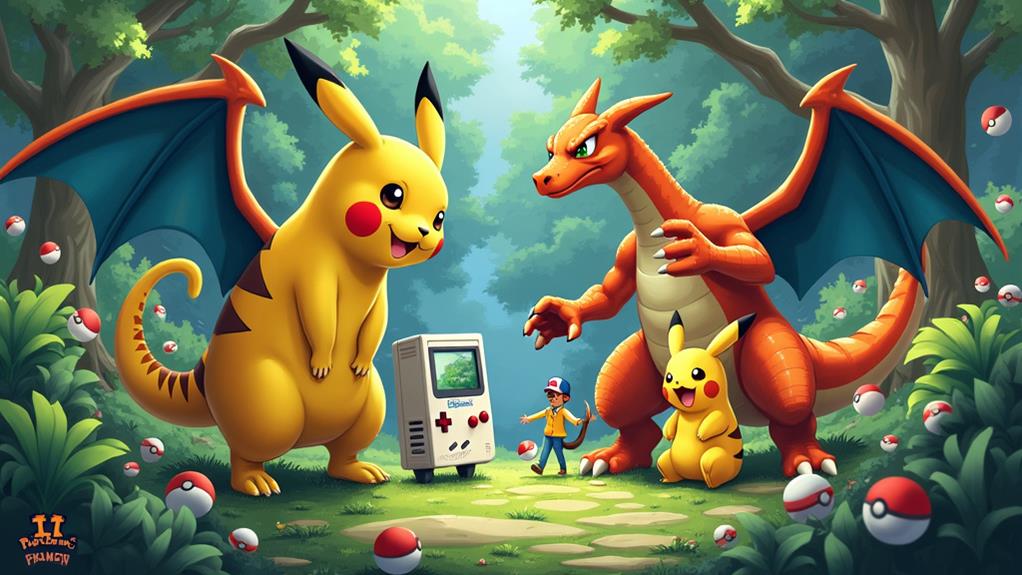
Pokémon, a cultural phenomenon created by Satoshi Tajiri and Ken Sugimori, first appeared in Japan in 1996 as a Game Boy video game and quickly expanded into a multimedia empire. Over time, this franchise has captivated millions worldwide, evolving from its humble beginnings into one of the highest-grossing media franchises ever. With over 900 Pokémon to discover, fans have dedicated countless hours to capturing, training, and battling these intriguing creatures.
From the very start, Pokémon's core concept of "Gotta Catch 'Em All" has resonated deeply with fans. The animated series, which debuted in 1997, follows Ash Ketchum in his quest to become a Pokémon Master. This ongoing journey has significantly fueled the franchise's enduring popularity.
| Year | Event | Impact |
|---|---|---|
| 1996 | Game Boy game release | Birth of the Pokémon phenomenon |
| 1997 | Animated series debut | Expanded fan base, global recognition |
| 2021 | Franchise revenue | Over $100 billion generated |
Pokémon's organized events like the Pokémon World Championships and community-driven activities such as Pokémon Go Fest have further solidified its place in pop culture, bringing fans together to celebrate their shared passion.
Supernatural
While Pokémon has captivated audiences with its adventurous spirit and imaginative creatures, another fandom has emerged with a darker, more mysterious allure. "Supernatural," created by Eric Kripke, premiered on September 13, 2005, and quickly became a staple for fans of horror and fantasy. Running for 15 seasons, this series followed the thrilling lives of brothers Sam and Dean Winchester.
Portrayed by Jared Padalecki and Jensen Ackles, Sam and Dean became iconic figures within the supernatural genre. They hunt demons, ghosts, and other supernatural beings, drawing from rich lore that incorporates multiple mythologies, folklore, and urban legends. This diverse storytelling kept the series fresh and engaging throughout its run.
The "Supernatural" fandom, known as the "SPN Family," is exceptionally dedicated. They actively participate in conventions, create fan fiction, and engage in social media discussions, showcasing a strong sense of community. The show's influence is evident in:
- Spin-off series like "Wayward Sisters" and "Supernatural: Bloodlines."
- A vast assortment of merchandise, including collectibles and graphic novels.
- Pop culture references in other media.
- Enduring popularity even after the series finale.
"Supernatural" remains a cornerstone of modern fantasy and horror.
The Legend of Zelda
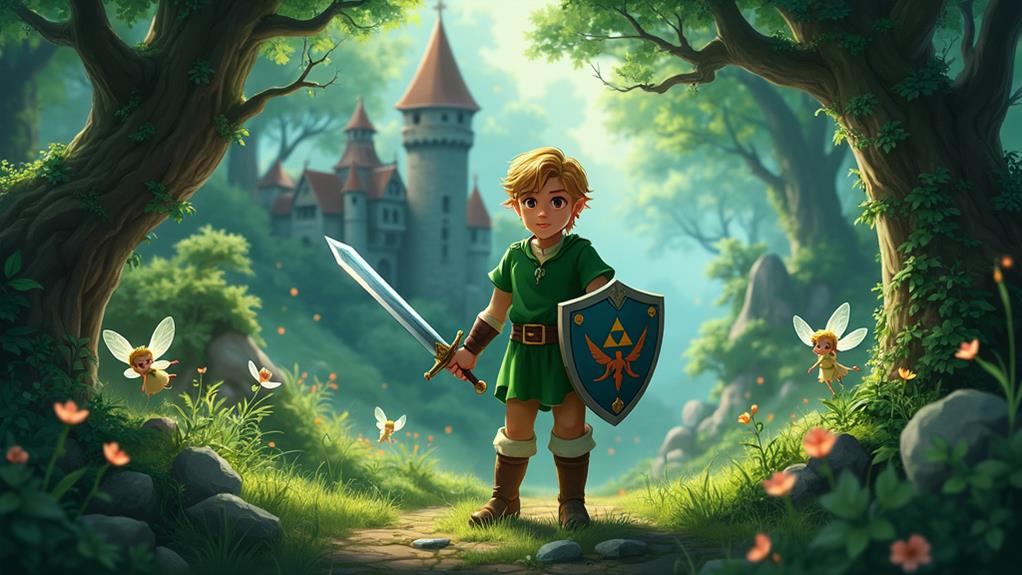
When you think about The Legend of Zelda, you're not just recalling the intricate puzzles or expansive worlds; you're witnessing an evolution in gameplay that began in 1986 and continues to set industry standards. Iconic characters like Link, Princess Zelda, and Ganon shape the lore, creating a rich narrative that has captivated fans for decades. From the original game to Breath of the Wild, each installment has redefined what's possible in action-adventure gaming.
Gameplay Evolution Over Time
The evolution of gameplay in The Legend of Zelda series has consistently pushed the boundaries of action-adventure games. Since its debut in 1986, the series set a high bar with its blend of exploration, puzzle-solving, and combat. Over the years, its gameplay innovations have not only defined the franchise but also significantly influenced the gaming industry.
Consider these key milestones in Zelda's gameplay evolution:
- 3D Revolution: The Legend of Zelda: Ocarina of Time (1998) introduced the series to 3D, featuring a lock-on targeting system that redefined player interactions with game environments and combat.
- Open World Innovation: The Legend of Zelda: Breath of the Wild (2017) moved away from linear gameplay, offering players unprecedented freedom to explore and interact with a dynamic open world.
- New Mechanics: Each installment has introduced fresh mechanics such as crafting, cooking, and dynamic weather systems, keeping the series adaptable and engaging.
- Industry Impact: The gameplay innovations pioneered by Zelda have inspired countless developers, influencing the design of numerous titles across various genres.
Iconic Characters and Lore
Embark on the epic adventure of The Legend of Zelda, where you step into the role of Link, the valiant hero destined to rescue Princess Zelda and defeat the evil Ganon. As you journey through the realm of Hyrule, you will encounter a rich tapestry of lore and iconic characters that have defined the series since its inception by Nintendo in 1986.
Armed with the legendary Master Sword, Link undertakes quests that span various timelines, with landmark titles like "Ocarina of Time" and "Breath of the Wild" offering distinct gameplay experiences. In "Ocarina of Time," players navigate time travel, while "Breath of the Wild" invites exploration of a vast open world. These elements not only shape the narrative but also enhance the immersive experience of Hyrule.
The Triforce, a sacred relic, and essential items like bombs and boomerangs play crucial roles in your adventure. The lore of Hyrule is further enriched by adaptations into animated series, manga, and a plethora of merchandise, solidifying The Legend of Zelda's iconic status in video game culture. Immerse yourself in this legendary saga and discover why these characters and their stories continue to captivate fans worldwide.