Disco and Dystopia: How 1970s Disco Reflected Social and Cultural Shifts
Disco wasn't just about glittery balls and funky beats. It emerged as a powerful cultural force in the 1970s, reflecting significant social shifts. You'll find that disco provided a sanctuary for marginalized groups, including LGBTQ+ individuals, African Americans, and Latinos. It celebrated diversity and self-expression in the face of widespread discrimination. As disco rose to mainstream fame, it faced backlash from conservative elements, culminating in the "Disco Sucks" movement. This tension mirrored broader societal struggles of the era. Despite its short-lived popularity, disco's influence on music, fashion, and social inclusivity continues to resonate today. There's more beneath the surface of this seemingly frivolous phenomenon.
The Underground Roots of Disco
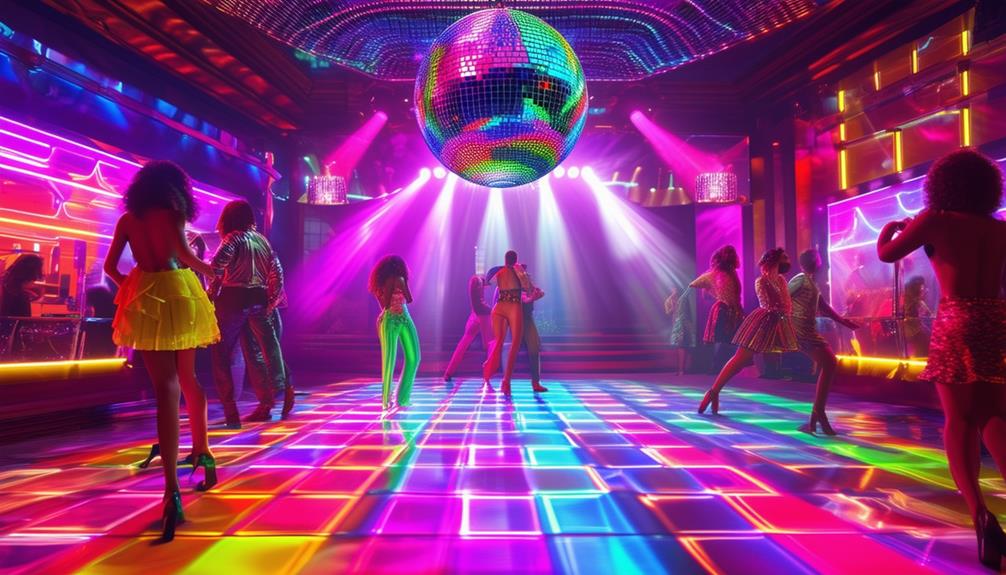
While many associate disco with glittering dance floors and chart-topping hits, its roots lie in the underground clubs of occupied Paris during World War II. These discotheques played recorded music for marginalized groups, defying Nazi bans and moral condemnation. The word discotheque was used in French for a type of nightclub that played records during the Nazi occupation.
As disco evolved, it blended jazz, soul, funk, and African beats to create a new post-Motown sound. This fusion provided a platform for marginalized communities, including African Americans and the LGBTQ+ community, to find visibility and fight for equality. Disco emerged in the late 1960s as a way to escape rising social and economic issues, with discos in New York City, like Paradise Garage and Studio 54, serving as avenues for these communities.
In the early 1970s, New York City became the epicenter of the disco movement. David Mancuso's legendary parties at The Loft laid the foundation for disco's inclusive community. These gatherings, reminiscent of rent parties, created a haven for self-expression and social connection.
The underground dance music culture that emerged from these roots focused on the experience and community rather than commercialization. Disco clubs became social hubs where marginalized groups could freely express themselves and find acceptance.
As disco gained mainstream popularity, it faced backlash from those who perceived it as shallow. However, its impact on social and cultural shifts remained significant, serving as a catalyst for future dance music movements.
Marginalized Communities Unite on Dancefloors
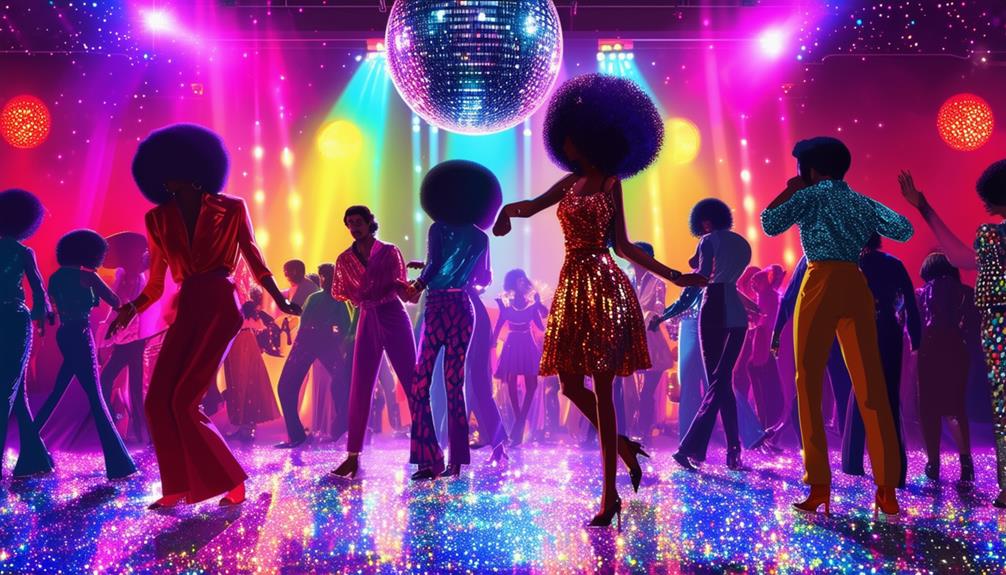
The underground roots of disco laid the foundation for a revolutionary social movement. As you stepped into a 1970s disco club, you'd find yourself in a melting pot of marginalized communities. The disco scene became a sanctuary for:
- African Americans and people of color
- LGBTQ+ individuals fighting for gay liberation
- Latinos and other ethnic minorities
- Working-class people seeking escape from daily struggles
These groups, often excluded from mainstream society, found unity on the dance floor. Disco clubs became more than just places to party; they were modern-day rent parties where marginalized communities could freely express themselves. African-American designers' contributions were revolutionary, shaping the iconic disco fashion era, and Latinx artists and communities played an essential role in defining the essence of disco culture.
The period's social upheavals were reflected in disco's inclusive atmosphere. You'd witness a celebration of diversity that stood in stark contrast to the discrimination faced outside the club doors. As you moved to the music's blend of jazz, soul, funk, and African beats, you'd feel the empowerment coursing through the crowd. The disco scene provided visibility and a platform for equal rights, transforming dance floors into battlegrounds for social change. When backlash against disco arose, it was clear that it targeted more than just the music—it was an attempt to silence the voices of those who'd found strength in unity.
Disco's Rise to Mainstream Fame
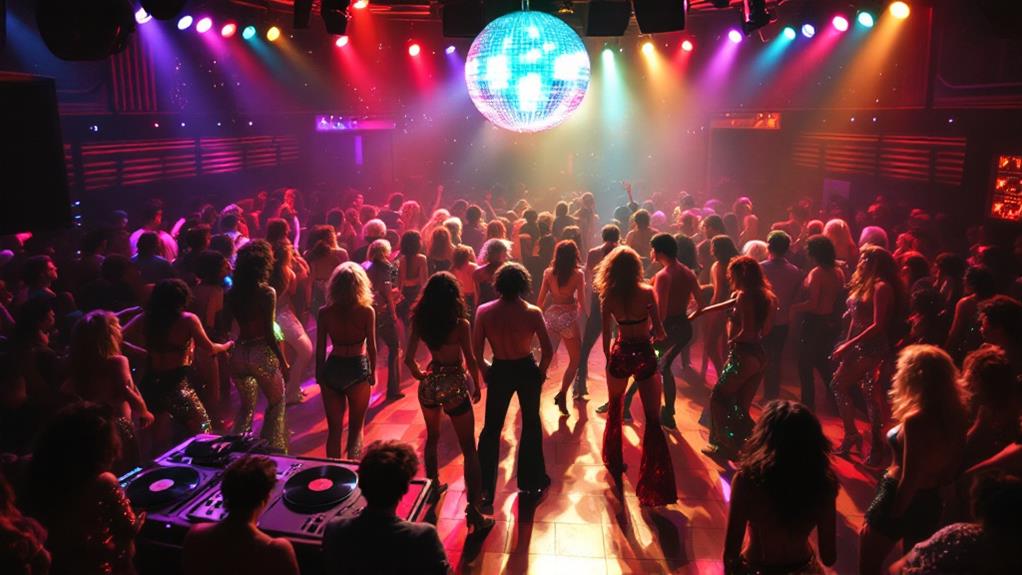
Disco's meteoric rise to mainstream fame in the late 1970s plunged the genre from an underground phenomenon to a cultural juggernaut. You couldn't escape the infectious beats and glittering Disco Culture that had spread far beyond its New York disco origins. Donna Summer and Giorgio Moroder's "I Feel Love" forced even rock critics to take notice, acknowledging disco's artistic merit.
As the genre's popularity soared, you'd find rock radio stations switching formats to capitalize on the disco craze. The Saturday Night Fever soundtrack became the embodiment of this mainstream success. However, this rapid ascent came at a cost. The hitmakers behind disco became less diverse, moving away from its roots in marginalized communities. The genre began to feel more generic, with novelty tracks like "Disco Duck" reaching the Billboard charts.
This widespread popularity provoked a fierce backlash. The "Disco Sucks" movement gained traction, culminating in the infamous Disco Demolition Night at Chicago's Comiskey Park. Disco's rise to fame had set the stage for its own downfall, reflecting the complex social and cultural shifts of the era.
Fashion and Excess in Disco
How did disco's flamboyant fashion reflect the era's cultural shifts? As you delve into investigate the History of disco, you'll find that its extravagant style was born from a desire for self-expression and rebellion against conservative norms. The glimmers of sequins and metallic fabrics became visual references to the excess and hedonism of the time.
Disco fashion wasn't just about looking good; it was a statement. You'd see:
- Androgynous looks challenging gender norms
- Platform shoes elevating dancers to new heights
- Spacesuits and other outlandish outfits pushing boundaries
- Bold colors and patterns expressing individuality
From Mancuso's parties to popular culture, disco fashion permeated every aspect of society. It wasn't just a private affair; it was a public spectacle. The over-the-top style became so ingrained in the disco scene that it even played a role in its downfall, as seen in the infamous Disco Demolition Night.
As you study explore disco's impact, you'll find that its fashion was more than just clothing. It was a visual representation of a cultural movement that embraced excess, celebration, and the freedom to be oneself.
The Disco Sucks Movement Emerges
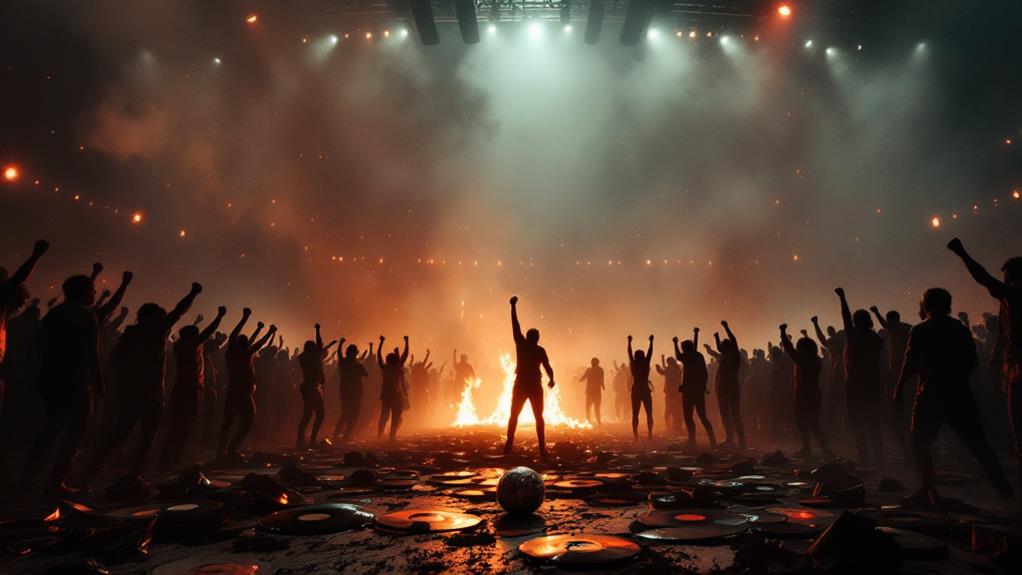
As disco's flamboyant fashion reached its zenith, a countermovement was brewing. You might've heard of the "Disco Sucks" movement, which gained momentum in the late 1970s. This backlash against disco culture culminated in the infamous Disco Demolition Night at Chicago's Comiskey Park.
The event was orchestrated by Steve Dahl, a radio DJ who'd lost his job when his station switched from rock to disco. Fans stormed the field, burning records and chanting "Disco sucks!" in a rejection of the genre's growing popularity. What you might not learn from films like "Saturday Night Fever" is that this backlash was seen by many as a fear of the power and unity disco provided to marginalized communities.
The impact of Disco Demolition Night was swift and severe. Disco's popularity plummeted, and the pendulum swung back towards rock and other genres. The movement's span was short, but its effects were long-lasting. From the heights of "Love Saves the Day" to the lows of record burning, disco's rapid rise and fall reflected deeper social and cultural shifts in American society.
Social Tensions Reflected in Backlash
The backlash against disco wasn't just about music; it was a reflection of deeper social tensions simmering beneath the surface. The Disco Sucks movement, culminating in the infamous Disco Demolition Night, revealed a clash between the rock music establishment and the marginalized communities that had found a home in disco culture.
As you examine the events surrounding this cultural upheaval, you'll notice several key factors at play:
- Fear of change: The rapid mainstream success of disco threatened traditional rock's dominance
- Scapegoating: Destruction of disco records symbolized silencing minority voices
- Cultural conflict: Conservative backlash against perceived excess and hedonism
- Loss of identity: Marginalized groups saw their space for self-expression under attack
The Disco Sucks movement wasn't just about musical preferences; it represented a conservative backlash against the social and cultural changes of the era. Disco's association with excess and hedonism made it an easy target for those who felt threatened by shifting societal norms. As a result, the decline of disco following the Disco Demolition Night incident dealt a significant blow to the LGBTQ+, African American, and Latino communities that had thrived within the genre's inclusive atmosphere.
Disco's Influence on Future Genres
Legacy is a powerful force, and disco's impact on the music world extends far beyond its heyday in the 1970s. You'll find disco's DNA in the pulsating beats of house music and the relentless rhythms of techno. The genre's emphasis on the DJ's role, pioneered by innovators like Francis Grasso, laid the groundwork for electronic dance music as we are familiar with it today.
But disco's influence doesn't stop there. The sampling and remixing techniques that were perfected in disco clubs became the building blocks of hip-hop. You can trace a direct line from the Bee Gees to the birth of rap music.
Disco's legacy is also evident in the inclusive, community-driven ethos of LGBTQ+ nightlife spaces. The genre's spirit of self-expression lives on in these vibrant communities.
Moreover, disco's international appeal and diverse influences foreshadowed the globalization of popular music. Artists like Donna Summer helped pave the way for cross-cultural musical exchange.
Even the backlash against disco highlighted important cultural tensions, sparking ongoing debates about appropriation and musical taste that continue to shape the industry today.
Legacy of Inclusivity and Self-Expression
Beyond the glittering dance floors and pulsating beats, disco's most enduring legacy lies in its celebration of inclusivity and self-expression. You'll find that disco music provided a platform for marginalized groups to find visibility and freedom. It created welcoming spaces where LGBTQ+ individuals, racial minorities, and women could express themselves without judgment.
The impact of disco's inclusive nature can be seen in:
- Empowering anthems like Gloria Gaynor's "I Will Survive"
- Non-commercial dance floors encouraging uninhibited self-expression
- A focus on community over commercialization
- Its role as a catalyst for social and cultural liberation
You'll notice that disco's power extended far beyond its rhythms. It became a movement that championed the rights of marginalized communities, providing them with a voice and a sense of belonging. The genre's emphasis on community cultivated an environment where people could celebrate their identities freely. This legacy of inclusivity and self-expression continues to influence modern music and culture, reminding us of disco's role in shaping a more accepting society. The backlash against disco only serves to highlight the genre's significance in challenging social norms and promoting unity among diverse groups.
Disco's Enduring Cultural Impact
Decades after its heyday, disco's influence continues to permeate through popular culture. You'll hear its echoes in contemporary genres like house, electronic, and dance music, showcasing the genre's lasting impact on the music industry. Despite the infamous "Disco Demolition Night" and declarations that "Disco died," its legacy lives on.
The history of American music wouldn't be the same without disco's contributions. From its beginning in the early 1970s to its peak with stars like Donna Summer and John Travolta's iconic performance in "Saturday Night Fever," disco left an indelible mark on society. Its inclusive nature paved the way for future movements celebrating diversity and marginalized communities.
You'll still see disco's influence in fashion, with its glitz and glamour inspiring modern styles. The innovative DJ techniques developed during this era, such as mixing and remixing, have become integral to music production. Even today, the focus on communal experiences and the transformative potential of the dance floor continue to inspire musicians, artists, and event organizers, proving that disco's spirit lives on long past its supposed Valentine's Day demise.