Disco Dances Through History: How Moves Like The Hustle Evolved Over Time
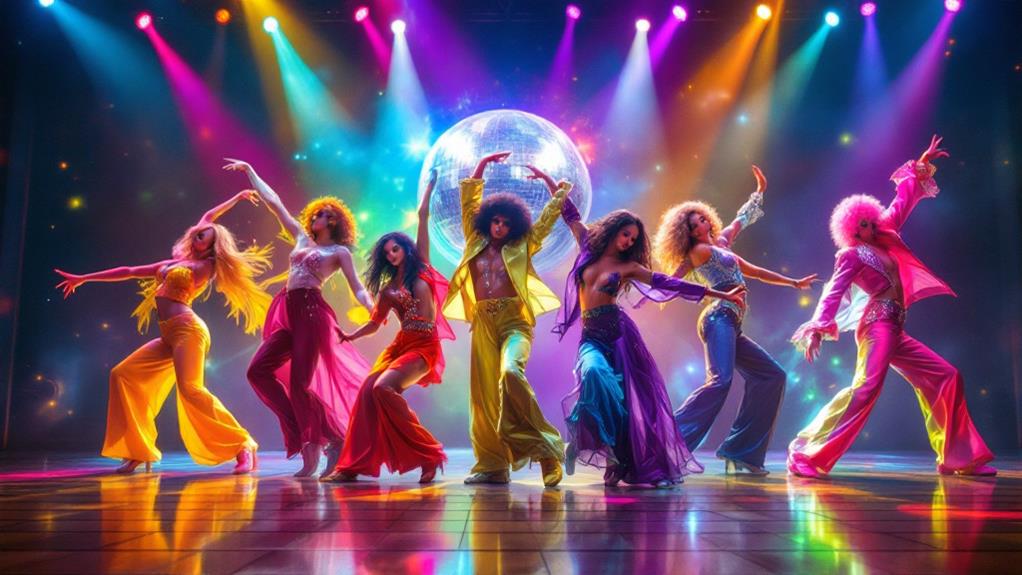
Disco dancing emerged from 1960s New York City Hispanic communities, blending swing traditions with Latin influences. The Hustle, born in 1970s discotheques, became the quintessential disco move. It evolved from a simple 6-count touch dance to intricate partner routines with acrobatic elements. As disco fever spread, styles like the Electric Slide and Tango Hustle gained popularity. The release of "Saturday Night Fever" in 1977 sparked a shift towards more freestyle solo dancing. Throughout its evolution, disco incorporated elements from various dance forms, leaving a lasting impact on modern dance culture. Exploring this rhythmic expedition reveals the vibrant mosaic of disco's enduring legacy.
Origins of Disco Dancing
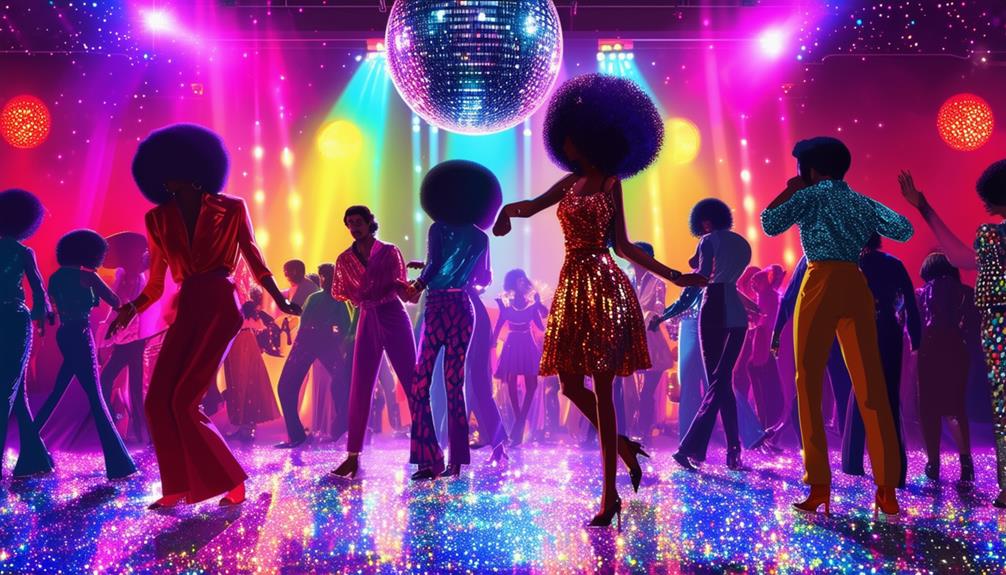
Disco dancing shimmied its way into popular culture with roots deeper than many realize. You might be surprised to learn that the origins of disco dance trace back to 1960s New York City, where Hispanic communities kept swing dance traditions alive. These vibrant communities played an indispensable role in preserving partnered dance styles that would later influence disco. The disco era fashion trends like sequined dresses and platform shoes also played a significant role in shaping the visual aesthetic of disco dancing.
As the 1970s rolled around, disco dancing emerged as a revival of the 1950s teen swing tradition. The Hustle, a popular disco dance, shared many structural elements, step patterns, and figures with its jitterbug and bop predecessors. However, the music and upright walking style gave the Disco Hustle a distinct look and feel.
It's important to note that the term "Latin Hustle" refers specifically to the New York City Hispanic style, not dances from Latin America. This distinction highlights the unique fusion of cultures that occurred in the city's dance scene. As you delve into the world of disco dancing, you'll find that its evolution is a manifestation of the enduring appeal of partner dancing and its ability to adapt to changing musical trends.
The Birth of the Hustle
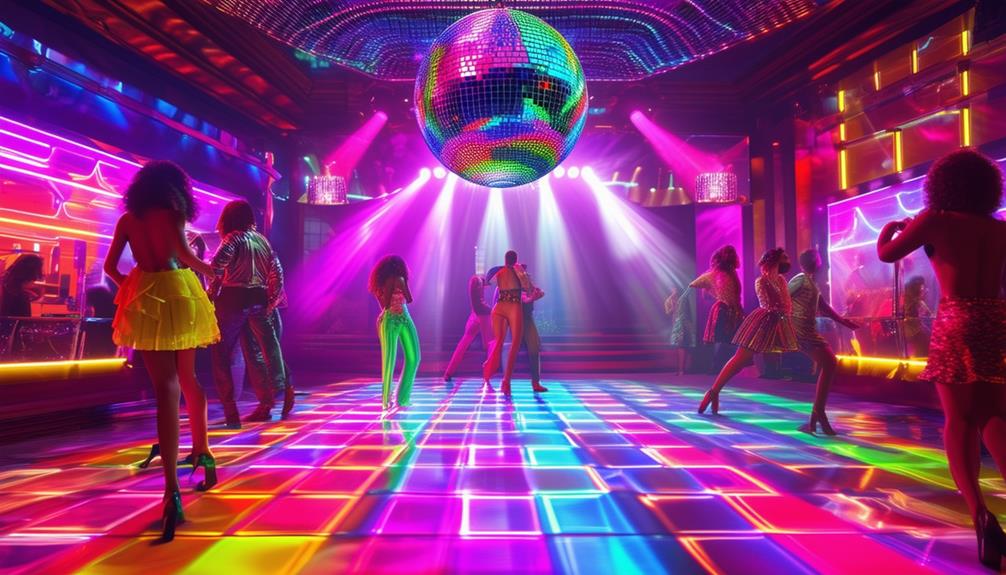
As the 1970s ushered in a fresh chapter of music and dance, the Hustle emerged as the quintessential disco move. You'd find its origins in New York City's lively discotheques, where women pioneered a simple 6-count touch dance at venues like The Grand Ballroom.
As this new SOCIAL DANCE gained popularity, it evolved rapidly. You'd see elements from Mambo, Salsa, Cha Cha, and Bolero blending into the Hustle, modifying it into a more complex partner dancing experience. The dance shifted from a solo performance to a side-by-side routine, featuring intricate turn patterns and hand changes. This evolution led to nicknames like "Rope Hustle" and "Latin Hustle." The vibrant nature of disco music echoed in bold colors and dazzling textures, which influenced the development of the Hustle.
The gay community's influence added balletic arms and elasticity, altering the Hustle from a slotted pattern to a rotational one. As disco dancing fever spread, the Hustle became faster and more exciting. Acrobatic and adagio movements were incorporated for performances and competitions, cementing the Hustle's status as the ultimate expression of disco fashion and culture.
Disco Dance Styles and Variations
Several iconic dance styles emerged during the disco era, each with its own unique flair and rhythm. You'd find the Hustle, Electric Slide, and Tango Hustle on dance floors, each boasting distinct step patterns and partnering techniques. The Hustle, born in 1970s New York City, blended swing dance traditions with Latin influences like mambo and salsa.
As you danced the Disco Hustle, you'd feel its upbeat &1-2-3 count and might even incorporate acrobatic moves. This touch dancing style was heavily influenced by the gay community, adding flair to the disco scene. However, disco dance styles didn't stay static. You'd notice a shift from partnered dances to more freestyle solo dancing, especially after "Saturday Night Fever" hit theaters.
Line dances like the Bus Stop and Hot Chocolate gained popularity, allowing you to join in without a partner. These disco dance styles continued to evolve even after the disco era faded, showing how the genre left a lasting impact on dance culture. Whether you preferred touch dancing or solo moves, disco offered a dance style for everyone.
Partnered vs. Solo Disco Dancing
Throughout the disco era, you'd witness a fascinating evolution in dance floor dynamics. In its early years, partnered dancing ruled supreme, with the Hustle taking center stage as the epitome of serious disco dancing. This style echoed elements of Ballroom Dancing, adapted to the pulsating rhythms of disco music.
As the decade progressed, a shift began to occur. The release of "Saturday Night Fever" in 1977 ignited a true Disco Fever, showcasing John Travolta's iconic solo moves and inspiring dancers to break free from partnered constraints. This transition was further fueled by increased alcohol consumption on dance floors, as revelers preferred individual expression over coordinated pairs.
While the Hustle remained popular, you'd see a diversification of styles emerge. Disco Swing, Continental Hustle, and Tango Hustle offered new ways to sink into the beat. This evolution from partnered to solo freestyle dancing mirrored broader SOCIAL changes of the 1970s. As disco music evolved, so did the way people expressed themselves on the dance floor, reflecting a cultural shift towards individualism and personal freedom.
Hustle Step Patterns Explained
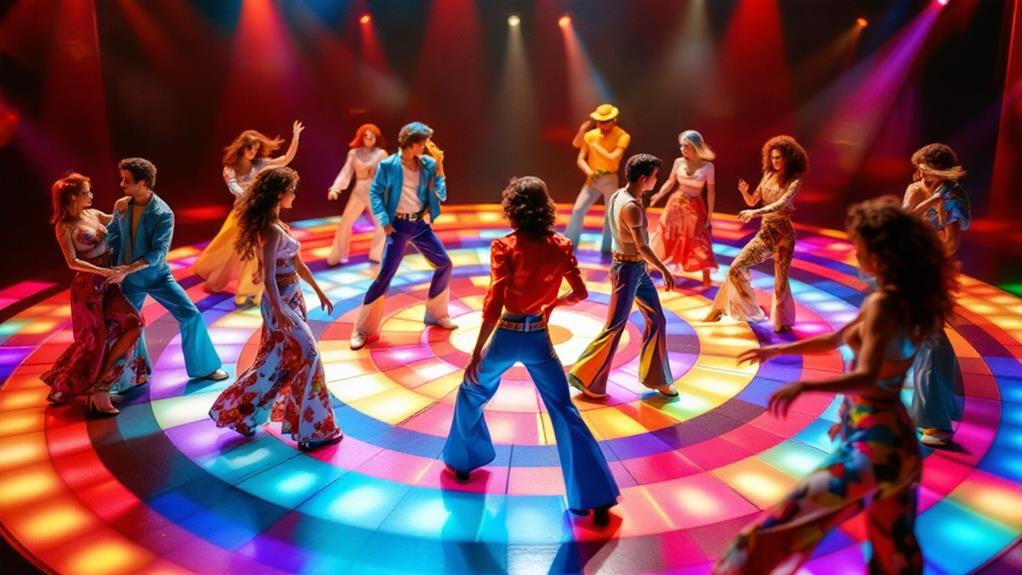
While the disco dance floor evolved from partnered to solo styles, the Hustle remained a cornerstone of disco dancing. This partner dance, with its roots in 1960s Hispanic communities in New York City, showcases a variety of step patterns that reflect its rich history.
You'll find the Latin Hustle's tap, close, back, close, forward, side, side sequence echoing the rhythms of its cultural origins. In contrast, the American Hustle features a simpler tap, close, tap, close, forward/back/in place pattern, making it more accessible to newcomers. If you're looking for a different feel, try the Four-Count Hustle with its rock, replace, side, side structure.
Interestingly, Disco Hustle step patterns share similarities with 1950s jitterbug and bop dances, connecting the Disco Era to the earlier Swing Era. This link is particularly evident when you compare the Hustle to dances like the Lindy Hop. As you practice these patterns, you'll notice how the Hustle's evolution reflects the blending of various dance styles throughout history, creating a unique and fluid partner dance that defined the Disco Era.
Disco Partnering Techniques
How did disco dancers stay connected on the dance floor? They used partnered techniques that combined elements from earlier dance styles like the jitterbug and Latin dances. Two popular moves were the 2-hand Follows Loop Turn and the 2-hand Waist Slide.
In the 2-hand Follows Loop Turn, you'd start with an open 2-hand hold or crossed hands. The lead would raise both hands, turning the follow under, then guide them inward to wrap clockwise to the lead's right side. Once wrapped up, you'd walk around each other before unwinding with a Dishrag move.
These partnered techniques allowed dancers to maintain a connection while showcasing their skills. Even as solo freestyle dancing gained popularity after "Saturday Night Fever," serious disco dancers continued to focus on partnered moves.
Influential Disco Dance Crazes
Disco fever sparked a series of dance crazes that swept across clubs and dance floors in the 1970s. You couldn't escape the infectious rhythms and moves that defined the era. The New York Hustle, popularized by Van McCoy's hit song "The Hustle," became the quintessential disco dance. It featured a basic six-count step pattern that you could easily adapt to various tempos and styles.
The disco craze reached its peak with the release of "Saturday Night Fever" in 1977. John Travolta's iconic dance moves in the film inspired millions to hit the dance floor, attempting to recreate his smooth steps and finger-pointing gestures. The movie's soundtrack, featuring the Bee Gees, fueled the disco frenzy even further.
Other popular dances emerged during this time, including the Electric Slide. This line dance, choreographed to Marcia Griffiths' "Electric Boogie," became a staple at parties and weddings. Its simple, repetitive steps made it accessible to dancers of all skill levels, ensuring its enduring popularity long after the disco era faded.
Legacy of Disco in Modern Dance
The beat goes on long after disco's heyday. You'll still find the spirit of disco dances alive and kicking in today's social dancing scene. From energetic movements to synchronized partner choreography, disco's influence is unmistakable in contemporary club culture.
Look closely, and you'll spot disco's DNA in the evolution of dance styles like salsa. These modern forms have incorporated techniques and rhythmic patterns from the hustle and other disco-era partnered dances. The athleticism and showmanship that defined disco paved the way for breakdancing and other expressive street dance styles in the 1980s.
Even the settings for dance music events draw inspiration from the discotheques of yesteryear. Today's nightclubs and festivals continue to shape the spaces where people come together to celebrate through movement.
While disco dance styles have transitioned over time, their core values of self-expression, community, and celebration remain intact. You'll find these elements woven into the fabric of popular and social dance, keeping disco's legacy alive and grooving well into the 21st century.