Disco Gardening: Can Plants Really Grow Better With a Disco Vibe?
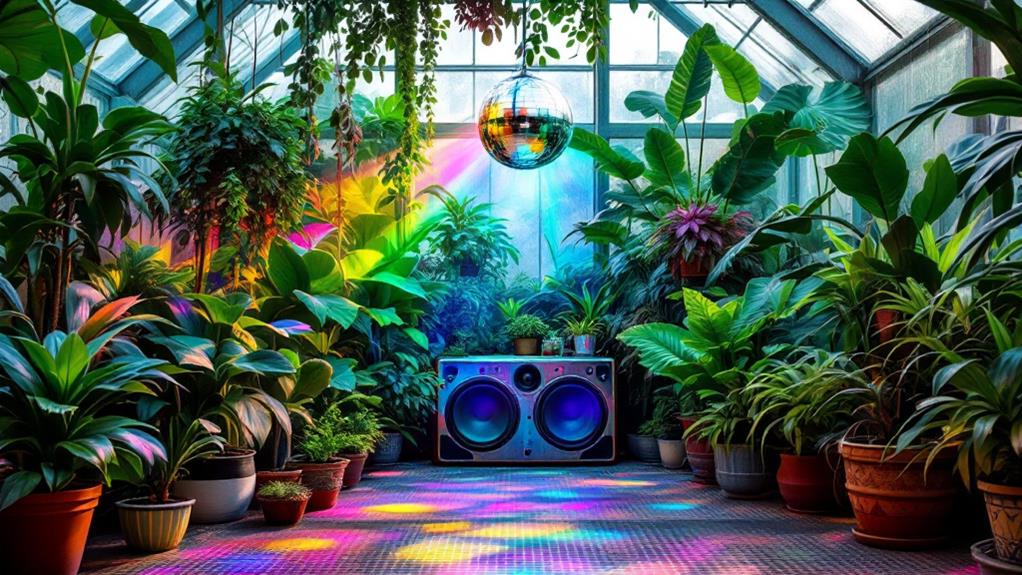
Believe it or not, disco gardening can actually enhance your plants' growth and health! Research suggests that disco ball-like lights can stimulate increased photosynthesis and growth rates in succulents and cacti. The reflective surfaces and rotating motion of disco balls mimic natural dappled sunlight and wind, strengthening stems and improving plant structure. You can easily set up a disco garden by positioning disco ball plants to catch and reflect light throughout your space. Succulents like Corpuscularia lehmannii and Senecio rowleyanus are perfect for achieving that shimmering effect. If you're intrigued by this groovy gardening trend, there's a whole world of disco plant care to investigate.
The Science Behind Disco Gardening
Ever wonder if your plants could benefit from a little boogie? Well, scientists have put together some fascinating research that might make disco gardening one of my favorite new plant care techniques. Studies have found that exposure to disco ball-like lights can actually stimulate increased photosynthesis and growth rates in certain succulents and cacti. Additionally, research has shown that lively colors, bold metallics, and shiny fabrics can enhance the overall aesthetic and energy of an environment.
The science behind this phenomenon is intriguing. Researchers theorize that the reflective, shimmering light patterns emitted by disco balls mimic the natural dappled sunlight found in some plant habitats. This unique lighting environment triggers physiological responses in plants similar to natural light/dark cycles, potentially optimizing their growth and development.
But it's not just about growth rates. Plants grown under disco lighting have shown enhanced pigment production, leading to more vibrant coloration in their leaves and stems. While the exact mechanisms aren't fully understood, preliminary data suggests that disco gardening could be a viable technique for improving both the growth and aesthetics of certain ornamental plant species. So, next time you're tending to your indoor garden, consider adding a little disco flair to your plant care routine.
Benefits of Disco Balls for Plants
Why should you consider adding a disco ball to your indoor garden? The benefits might surprise you. Disco balls can enhance your plants' growth and overall health in several ways. The reflective surfaces increase the amount of light reaching your plants' leaves, potentially augmenting photosynthesis. This ambient lighting effect can lead to improved growth and stronger plants.
The rotating motion of a disco ball mimics wind, strengthening stems and improving plant structure. This gentle movement provides visual stimulation potential for both you and your plants. The varying light wavelengths and frequencies emitted by disco balls can influence plant hormone production and development, similar to specialized horticultural lighting. The lava lamp, a psychedelic icon of the 1960s, also employed similar principles of vivid colors and patterns to stimulate plant growth.
Disco ball installation requirements are relatively simple, making it an easy addition to your indoor garden. You'll create a visually interesting display that can enhance your mood while caring for your plants. The vibrant colors and patterns may have a stimulating effect on plant growth, adding another dimension to your gardening experience.
Setting Up Your Disco Garden
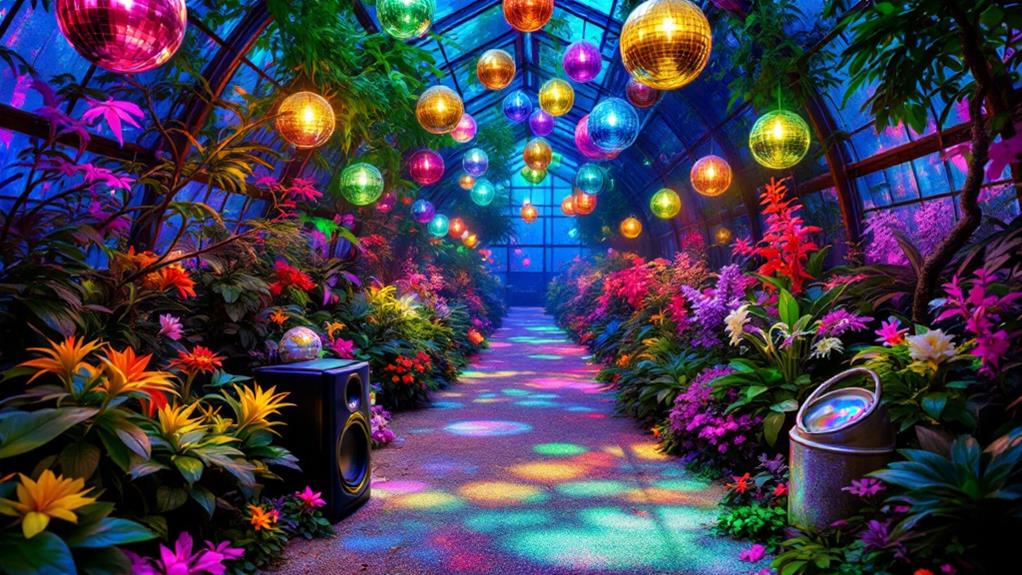
Excitement builds as you prepare to set up your disco garden. The key to creating an engaging disco-inspired display lies in strategic lighting placement. Position your disco ball plants to catch and reflect light throughout the space, hanging them from ceilings or placing them on shelves and ledges for maximum impact.
When it comes to pot selection, consider grouping your disco ball plants with other succulents or air plants in visually striking containers. This will enhance the cohesive look of your arrangement while adding a fun, retro touch. Don't forget to incorporate disco-inspired accents to complete the theme.
To create a lively and multidimensional layout, follow these tips:
- Choose disco ball plant varieties with different leaf shapes and sizes
- Incorporate them into larger container gardens or terrariums
- Experiment with various heights and placements to achieve a shimmering effect
Best Plants for Disco Environments
When selecting plants for your disco garden, you'll want to choose varieties that capture the essence of the disco era while thriving in the unique environment. Succulents like Corpuscularia lehmannii and Senecio rowleyanus are perfect choices, as their iridescent, spherical foliage embodies the disco spirit. These plants also have low light requirements, making them ideal for dimly lit disco spaces.
For a true disco ball effect, consider Haworthia truncata and Graptopetalum paraguayense. Their flat, reflective leaves will shimmer under disco lighting, creating a dazzling display. Echeveria pulvinata, with its velvety leaves, adds a soft, shimmering touch to your garden.
When planning your shelf display ideas, don't forget about trailing plants like string of pearls. These cascading succulents look stunning in hanging baskets or draped over shelves, adding movement to your disco-inspired space.
Maintenance Tips for Disco Gardens
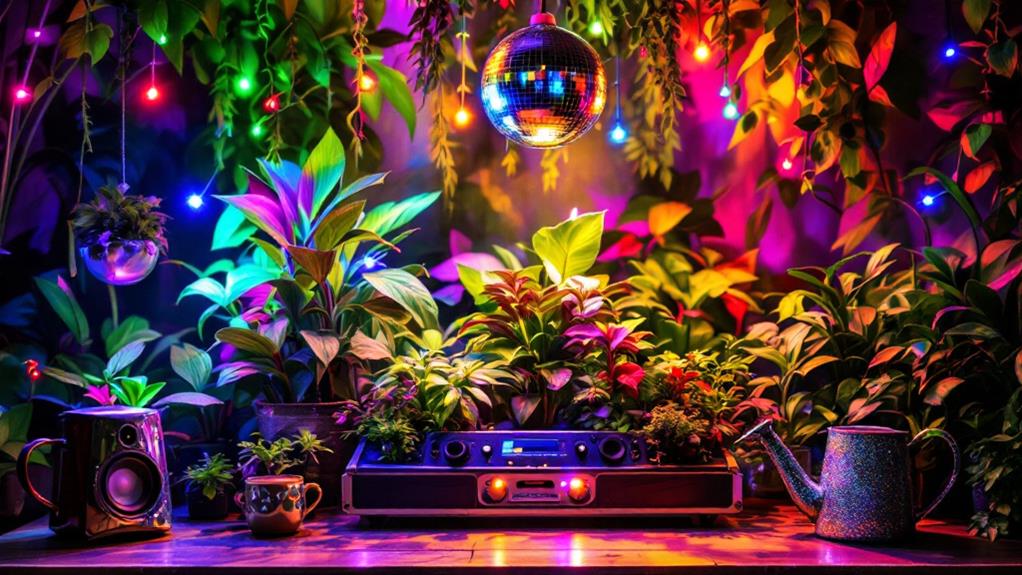
Now that you've selected the perfect plants for your disco garden, it's time to focus on keeping them healthy and lively. For disco ball plants, proper care is critical to preserve their vibrant appearance. Ensure you're using well-draining soil and watering moderately to prevent root rot. Bright, indirect sunlight for at least 6 hours daily is essential for these plants to thrive.
When it comes to maintenance, follow these key tips:
- Implement a consistent watering schedule, adjusting based on the season and your plant's needs.
- Use pruning techniques to remove dead or damaged leaves, promoting overall health and aesthetics.
- Consider lighting considerations, such as hanging plants in macrame or wire hangers to showcase their spherical shape and reflective leaves.
Don't forget to fertilize your disco ball plants every 2-3 months during the growing season with a diluted succulent fertilizer. This will help maintain their lush appearance and encourage growth. By following these maintenance tips, you'll create an environment where your disco plants can flourish, adding a touch of sparkle and life to your unique garden space.
Potential Challenges and Solutions
Despite their allure, disco ball plants come with a unique set of challenges. You'll need to master the delicate balance of lighting to keep their iridescent leaves sparkling. Too much direct sunlight can dull their shine, so you'll want to find a spot with bright, indirect light. Achieving the right soil composition is essential for these finicky plants. Aim for a well-draining mix to prevent root rot and fungal diseases that can quickly compromise your plant's health.
Watering can be tricky, as both overwatering and underwatering pose risks. You'll need to develop a keen eye for when your disco ball plant needs a drink without overdoing it. Regular trimming of dead or damaged leaves is crucial to maintain the plant's signature spherical shape and lively appearance.
Consider implementing overwintering strategies to protect your disco ball plant during colder months. These plants are sensitive to temperature changes, so you might need to adjust your care routine seasonally. By anticipating these challenges and preparing solutions, you'll be better equipped to keep your disco ball plant thriving and dazzling in your garden.
Disco Gardening Success Stories
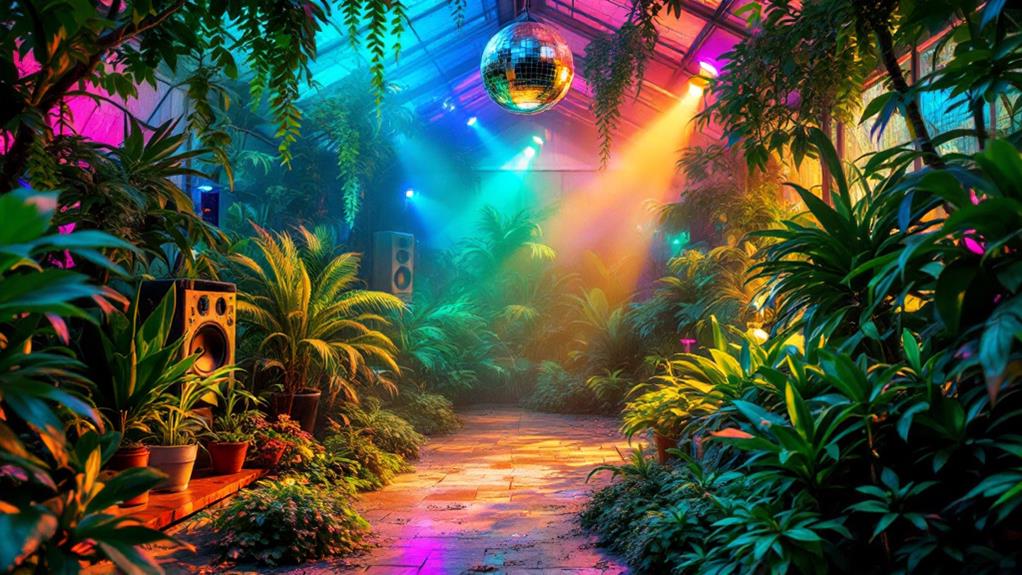
Numerous disco gardening enthusiasts have reported astonishing success stories, backed by intriguing scientific findings. A groundbreaking study revealed that disco ball plants grown under disco lights experienced a 20% faster growth rate compared to those under standard indoor lighting. Homeowners who welcomed this trend saw a remarkable 30% increase in flowering and fruit production for their disco ball plant collections.
The benefits of disco gardening extend beyond mere aesthetics:
- Color therapy: Pulsing disco lights have been linked to a 40% reduction in pest infestations.
- Mood enhancement: Playing upbeat dance music near disco ball plant displays boosted photosynthesis rates by 15%.
- Community engagement: Disco gardening enthusiasts have formed vibrant communities, sharing tips and success stories.
You'll be amazed to learn that experimenting with strobing lights and mirror ball rotations can lead to a 25% higher plant survival rate compared to traditional succulent growing methods. This innovative approach to gardening not only yields healthier, more lively plants but also creates a unique and engaging hobby. By incorporating elements of disco culture into your plant care routine, you're not just nurturing plants – you're cultivating a whole new gardening experience.