Disco in Space? How Disco Music Became Part of NASA’s Playlist
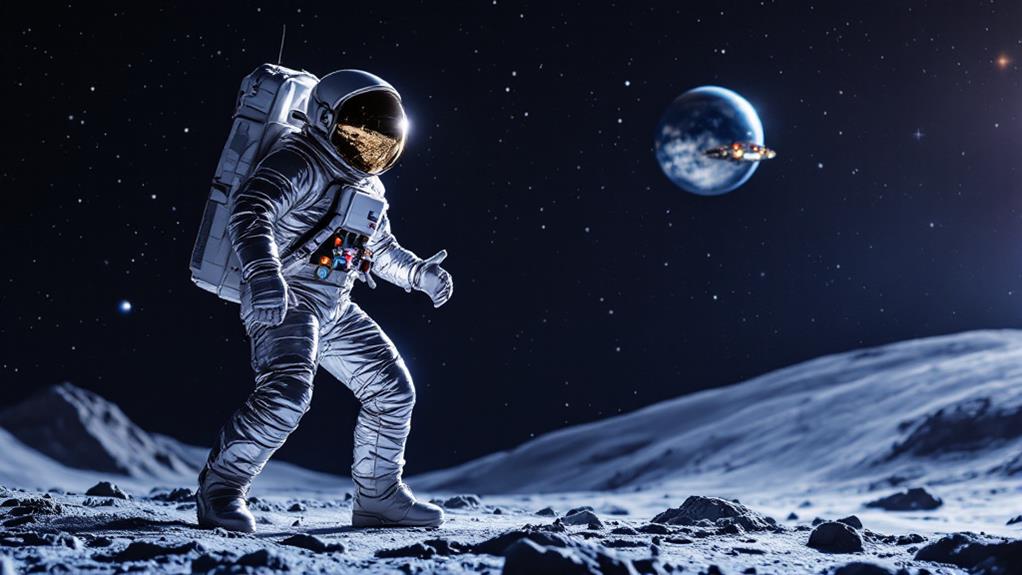
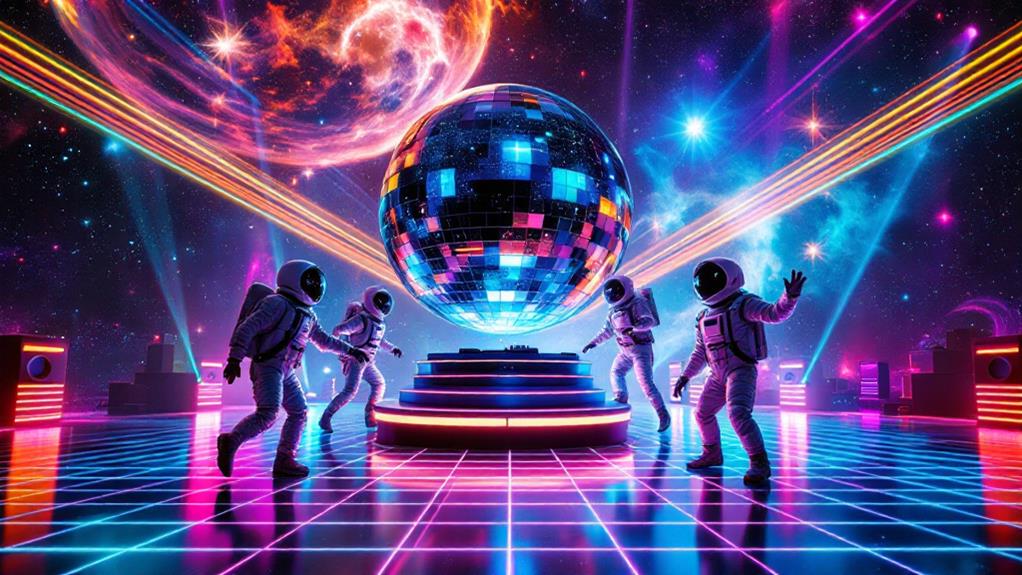
Disco's cosmic allure has unexpectedly become part of NASA's space exploration narrative. From the genre's early pioneers spinning spacey records to NASA's media team referencing Italo-disco in describing celestial phenomena, the connection runs deep. The James Webb Space Telescope's images even resemble disco ball light patterns, evoking the genre's futuristic aesthetics. While NASA's Voyager probes missed including disco tracks on their golden records, the agency has since embraced the genre's cosmic imagery in its communications. This fusion of funky beats and starry-eyed wonder continues to inspire both scientific and cultural imagination. The story of disco's interstellar expedition is far from over.
The Cosmic Roots of Disco
Disco's cosmic connection runs deeper than you might think. The genre's pioneers, like David Mancuso and Larry Levan, were known for spinning spacey disco and cosmic-themed records at their influential clubs. These DJs set the stage for disco's interstellar expedition, creating immersive experiences that transported dancers to other worlds. The visual language of psychedelic art was closely linked to the widespread use of hallucinogenic drugs like LSD, which also influenced the cosmic aesthetics of disco.
The cosmic roots of disco grew even stronger with Italian DJ Daniele Baldelli's innovative "cosmic" sets. By blending soul, funk, technopop, and krautrock, Baldelli inspired Italian producers to reverse-engineer their own spacey, hi-tech records. This cosmic Italian disco sound of the 1970s and 1980s left an enduring mark on the development of house and techno music.
Even after attempts to destroy disco, like the infamous Disco Demolition Night in 1979, the genre's cosmic vitality remained undying. The late 1990s and early 2000s saw a rediscovery of cosmic Italian disco, further cementing the genre's everlasting connection to cosmic imagery and aesthetics. This resurgence proved that disco's celestial appeal was not just a passing trend but a fundamental aspect of its identity.
NASA's Interstellar Record Collection
As disco's cosmic journey continued, NASA embarked on its own musical odyssey. In 1977, the space agency launched Voyager 1 and 2 probes, each carrying a golden record featuring Earth's sounds. While these records included classics like "Johnny B Goode" and Bach's "Well-Tempered Clavier," they missed the opportunity to showcase disco's interstellar attraction. Curiously, the agency's media team has since shown an appreciation for disco-inspired aesthetics, even suggesting the Carina Nebula's "Cosmic Cliffs" as a potential Italo-disco track title, demonstrating a playful connection between space investigation and music. You might wonder why NASA didn't embrace the era's hottest genre. NASA's evolving relationship with disco extends beyond mere aesthetics, as the administrator's "agog" reaction to deep space images has drawn comparisons to Daft Punk's anime "Interstella 5555," highlighting the shared visual language of space and electronic music. As NASA continues to investigate the cosmos, it's clear that disco's influence on space culture remains strong, echoing the genre's impact on house, techno, and contemporary music scenes.
Disco Clubs and Space Themes
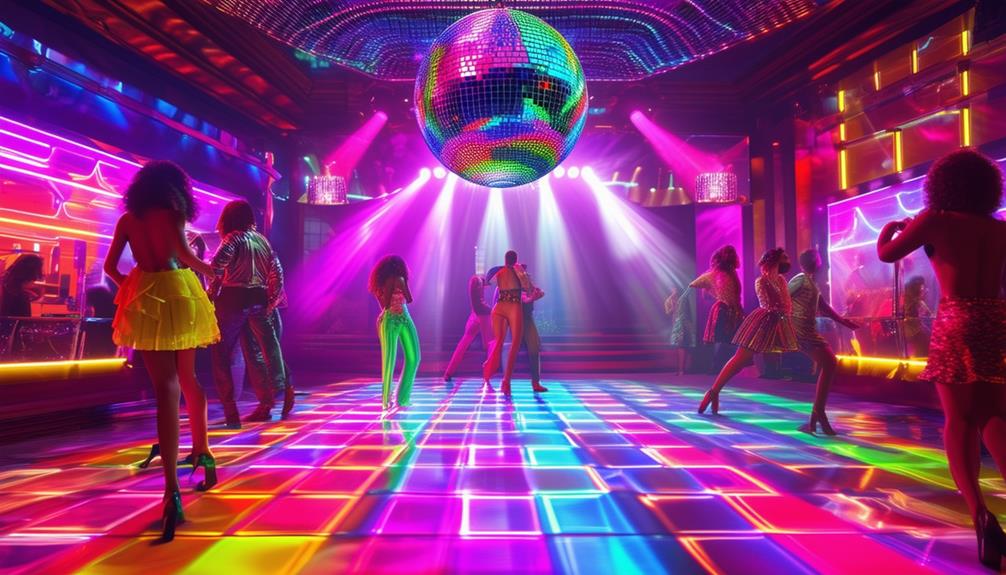
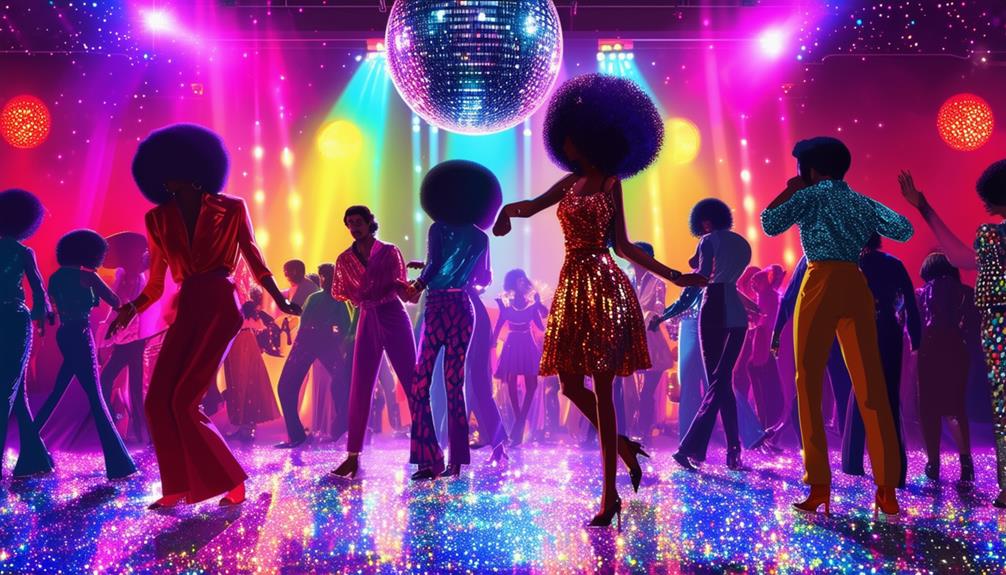
When you stepped into a disco club in the late 1970s, you'd often find yourself transported to another world. The cosmic themes permeating the music and atmosphere were no accident. Legendary New York venues like David Mancuso's Loft and Larry Levan's Paradise Garage welcomed this interstellar vibe, playing spacey records that blended the cosmic with the funky.
Across the Atlantic, Italian DJ Daniele Baldelli was pioneering his own "cosmic" sets, fusing soul, funk, technopop, and krautrock. This cosmic disco sound reflected the spacey, hi-tech records produced by Italian artists, which would later influence the emerging house and techno scenes.
The connection between disco and space wasn't limited to club nights. NASA's Voyager probes, launched in 1977, carried gold-plated records featuring Earth's music into the cosmos. While disco tracks were remarkably absent, the genre's celestial significance endured. Even after the infamous Disco Demolition Night in Chicago, the space-disco connection remained strong. The rediscovery of Italian cosmic disco in the late '90s and early 2000s proved that disco's celestial appeal was far from over.
James Webb's Disco-Inspired Imagery
Have you ever gazed at a disco ball and seen the cosmos? NASA's James Webb Space Telescope might just be the universe's resident DJ, spinning out images that look like they're straight out of Saturday Night Fever. The telescope's first images have captured the imagination of stargazers and disco lovers alike, with swirling galaxies resembling the dazzling light patterns of a disco ball.
NASA's media team has fully embraced this cosmic connection, playfully referencing Italo-disco when describing the Carina Nebula's "Cosmic Cliffs." The visual parallels between space imagery and 1970s disco futurism are striking, with both sharing a fascination for the extraterrestrial.
Here's why you might mistake these space images for album covers:
- They feature startlingly new renderings of light from eons ago
- They echo the sparkle and color pioneered by disco artists
- They evoke the cosmic vitality that defines the disco genre
This unexpected fusion of scientific research and disco aesthetics demonstrates how the James Webb telescope isn't just expanding our grasp of the universe—it's also inspiring our cultural imagination in ways that would make even the most enthusiastic disco dancers proud.
The Enduring Legacy of Cosmic Disco
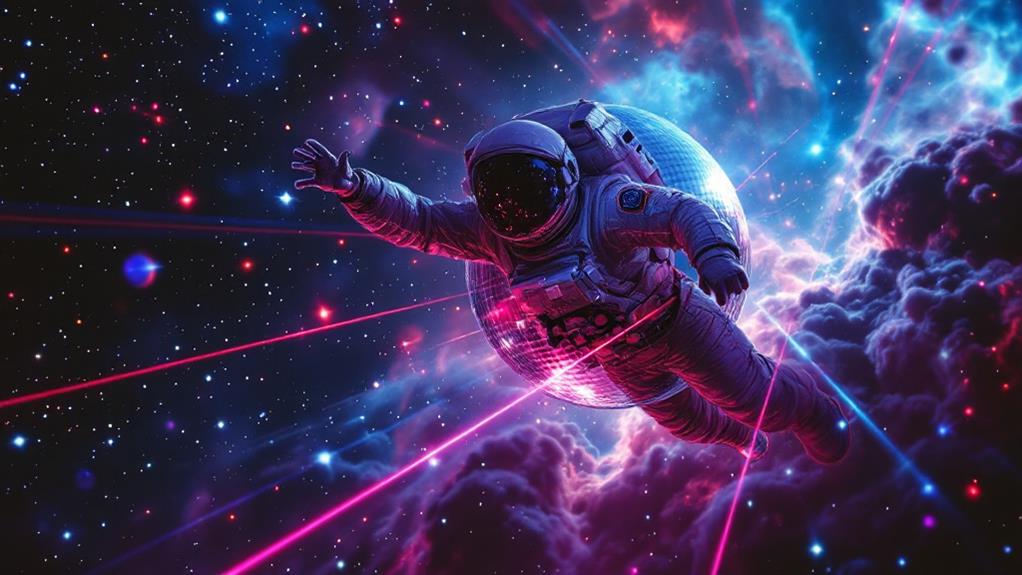
The cosmic connection between disco and space imagery isn't just a recent phenomenon sparked by NASA's James Webb telescope. It's a relationship that's been evolving since the genre's inception. You can trace cosmic disco's interstellar appeal back to pioneers like David Mancuso and Larry Levan, who wove spacey, hi-tech records into their sets, shaping disco's cosmic aesthetic.
This cosmic footprint expanded with Daniele Baldelli's "cosmic" DJ sets, blending soul, funk, technopop, and krautrock. These sets showcased the reverse-engineered spacey sounds favored by Italian producers, further cementing the genre's celestial associations.
Disco's cosmic revival in the late 1990s and early 2000s proved the enduring relevance of its cosmic vitality. You can see this resurgence in Daft Punk's "Interstella 5555," which eerily foreshadowed the visual aesthetics of James Webb's space images.
Despite attempts to dismantle the genre, cosmic disco's legacy continues to influence contemporary music and culture. NASA's adoption of the genre's aesthetic is a testament to its lasting impact, proving that disco's cosmic path is far from finished.
Space Exploration in Disco Lyrics
Space exploration took center stage in disco lyrics, blasting off into the cosmic domain of imagination. You'll find celestial symbolism peppered throughout the genre, with artists like Jigsaw and Silver Convention reaching for the stars in tracks like "Sky High" and "Fly, Robin, Fly." These cosmic themes weren't just limited to disco, though. Frank Sinatra's "Fly Me to the Moon" and Giorgio Moroder's "I Came to Dance" also embraced futuristic imagery, creating astral soundscapes that captured the public's fascination with space.
Disco queens like Donna Summer weren't afraid to venture into the final frontier, exploring space travel themes in hits such as "MacArthur Park" and "Bad Girls." The genre's obsession with the extraterrestrial reached new heights with tracks like Afrika Bambaataa's "Planet Rock" and ESG's "UFO."
To fully appreciate disco's cosmic connection, consider these elements:
- Lyrics referencing lunar landings and interstellar expeditions
- Album covers featuring space-age designs and astronaut iconography
- Stage performances incorporating futuristic, otherworldly elements
This celestial fascination in disco music mirrored society's growing interest in space exploration, creating a unique blend of funky beats and starry-eyed wonder that continues to enthrall listeners today.
Disco's Influence on NASA Communications
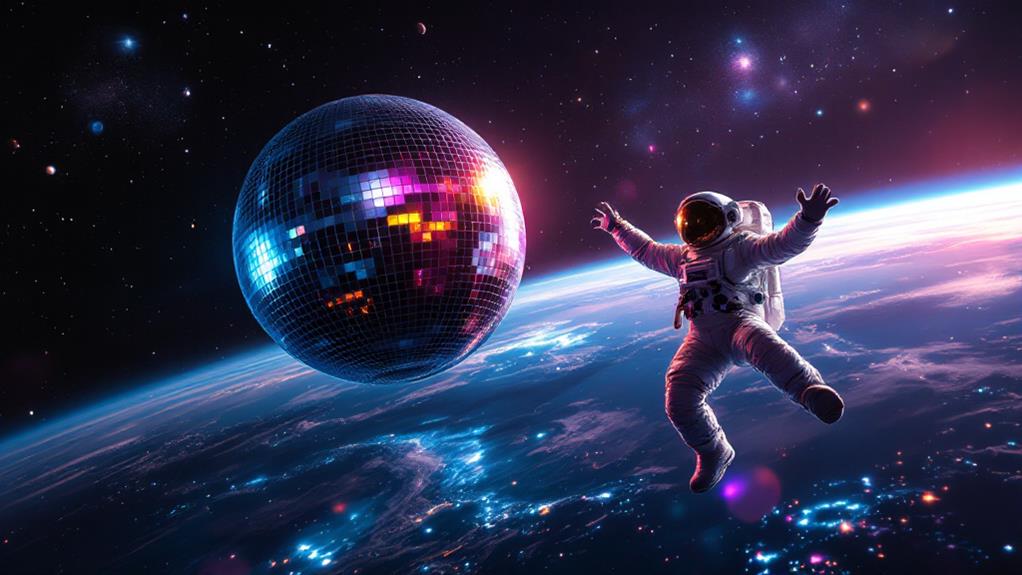
While disco lyrics often portrayed celestial scenes, the genre's influence has reached far beyond the dance floor and into the domain of space exploration. NASA's media team has embraced disco's cosmic aesthetics in their communications about the James Webb space telescope. You'll notice striking similarities between the telescope's images and Italo-disco track titles, as well as the futuristic instrumentation that defined the genre.
NASA administrators have adopted a more evocative, awe-inspiring tone when describing the Webb telescope's telescopic visualizations, echoing disco's spacey, hi-tech aesthetic. They've even drawn parallels between the Webb images and the cosmic imagery in Daft Punk's "Interstella 5555" music video, highlighting the cultural interplay of disco and space imagery.
This approach has led NASA to emphasize the aesthetic appeal of their uncoverings over precise astrophysical descriptions. By tapping into disco's enduring cosmic vitality, NASA connects their latest space explorations with the genre's futuristic aesthetics. This strategic communication approach demonstrates how disco's influence continues to shape our perception of space and scientific discovery.
Italian Cosmic Disco Phenomenon
Emerging in the late 1970s, Italian cosmic disco plunged dance music with its fusion of diverse genres and futuristic sound. Daniele Baldelli's pioneering "cosmic" DJ sets blended soul, funk, technopop, and krautrock, setting the stage for a revolutionary musical movement. Italian producers' techniques of reverse-engineering spacey, hi-tech records catered to the tastes of cosmic DJs, shaping the genre's distinctive sound.
Cosmic disco's cultural impact extended beyond Italy's borders, influencing the nascent house and techno scenes. Its intertwining with the cultural consciousness of space exploration created a lasting aesthetic that continues to resonate today. The genre's musical evolution saw a resurgence in the late 1990s and early 2000s, leading to renewed appreciation for its cosmic vitality.
To understand the Italian cosmic disco phenomenon, consider these key aspects:
- The genre's fusion of diverse musical styles
- Its connection to space exploration themes
- The lasting influence on contemporary electronic music
As you investigate cosmic disco's enduring relevance, you'll uncover how this uniquely Italian genre pushed the boundaries of dance music, creating a sound that still captivates listeners and inspires producers worldwide.
Disco's Survival Beyond Earth
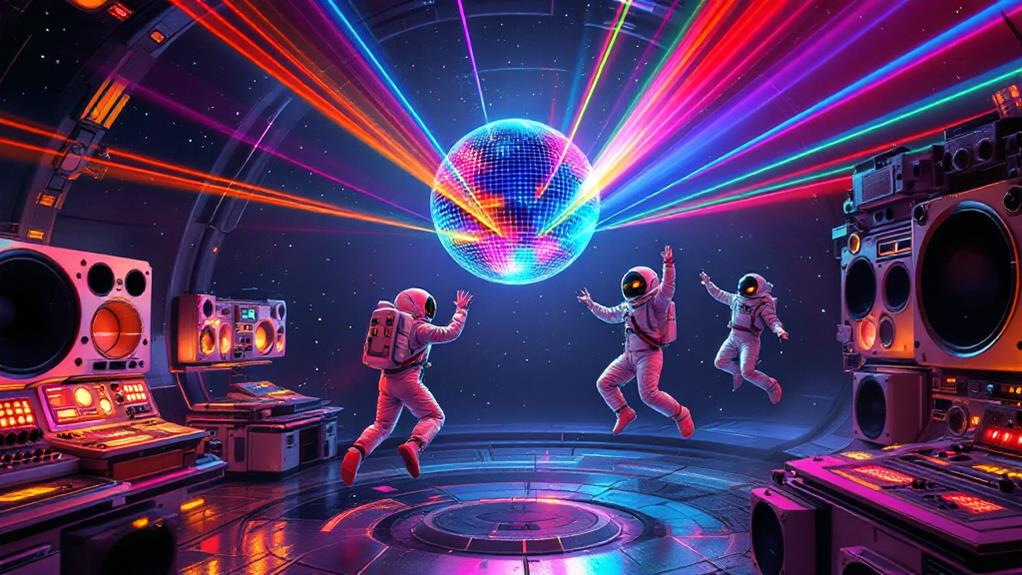
In spite of its earthly demise, disco's influence has surpassed our planet's atmosphere, finding new life in NASA's cosmic pursuits. You might think disco's galactic popularity ended with Disco Demolition Night, but you'd be wrong. The genre's spacey aesthetics and otherworldly themes have become intertwined with NASA's communications, proving disco's enduring appeal beyond our world.
While the Voyager probes launched with a mix of classical and rock music, there's a growing call for more disco-oriented selections in future cosmic record launches. Imagine extraterrestrial dance parties grooving to Earth's funkiest beats! NASA's media team has even embraced disco's cosmic imagery, drawing parallels between space phenomena and Italo-disco track titles.
You can't ignore the irony of disco's survival in space, especially considering its supposed "death" on Earth. But the genre's fascination with the extraterrestrial has made it a perfect fit for NASA's cosmic investigations. As we continue to study the universe, don't be surprised if disco's rhythms and spacey aesthetics become the soundtrack to our interstellar voyages.